
The early 20th century was a time of rapid transformation, particularly in transportation. Automobiles were no longer just a novelty for the wealthy but were increasingly shaping everyday life.
While more modern images look back on early motoring, Royal Doulton’s Motoring Series, produced from 1905 to the early 1920s, was made in real time and offers a humorous and sometimes satirical take on the motoring world.
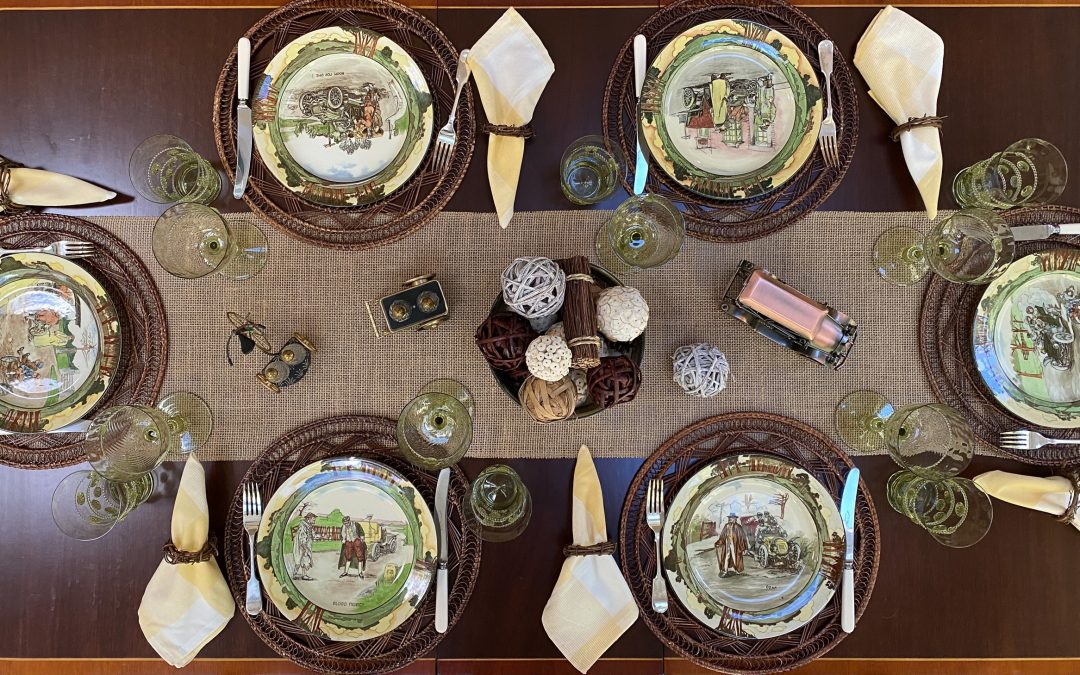
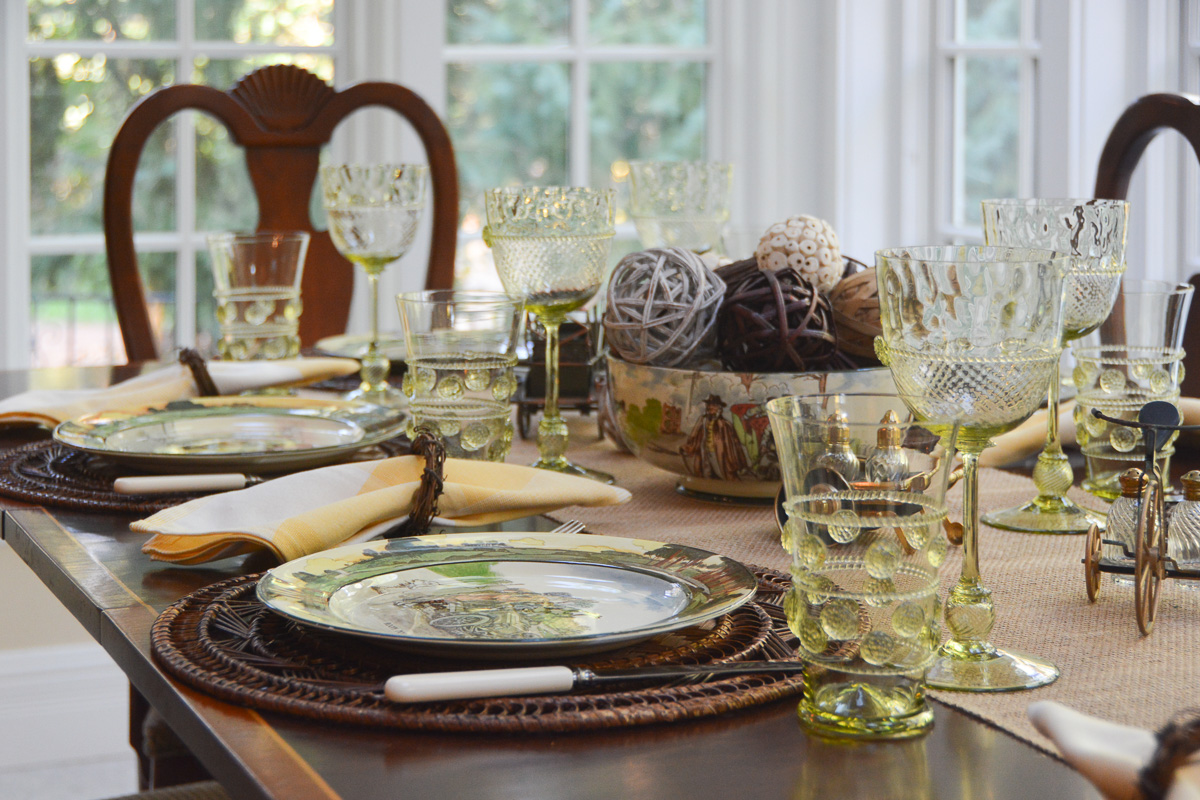
This table setting is built around six original Royal Doulton Motoring Series plates from 1908, paired with a serving bowl from the same collection. It took me a while to get all the plates – often when collecting series ware. Luckily, an antique dealer in Australia (?!) had three of them, so I was able to get half in one fell swoop.
The series doesn’t depict a romantic, wistful view of the past. It portrays the chaotic, exhilarating, and sometimes frustrating reality of early motoring. The humour in each scene reflects the societal shift as automobiles entered daily life—reckless drivers, bewildered pedestrians, and the occasional lawman trying (often in vain) to maintain order.
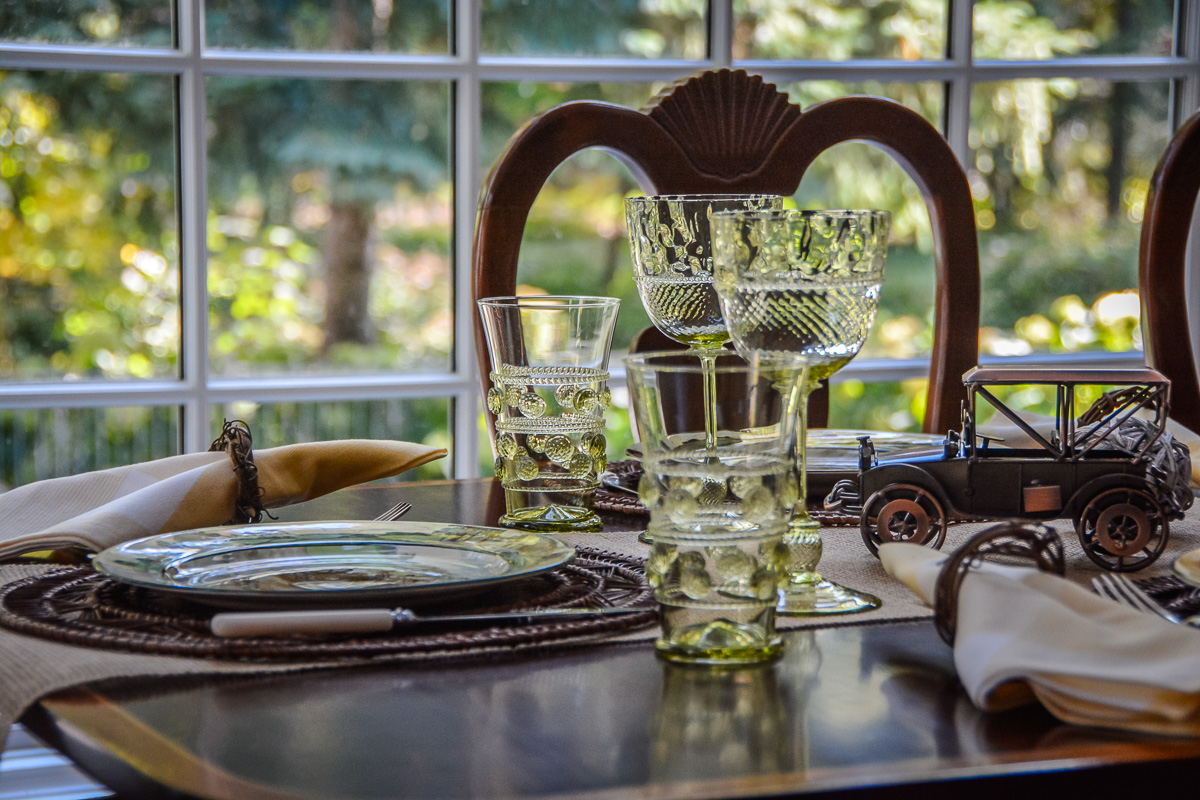
The Juliska Graham Green glassware complements the plates, drawing out the muted greens in the transferware and maintaining an earthy, vintage aesthetic.
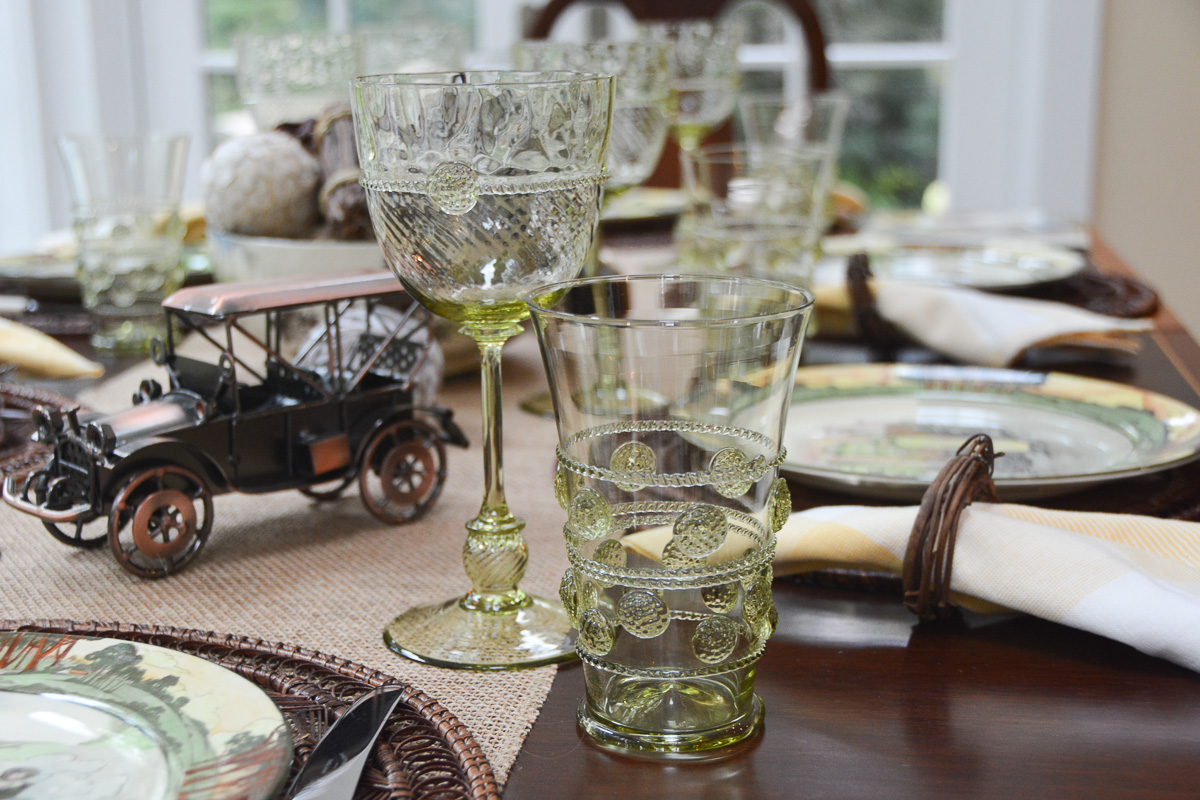
Woven chargers and natural-textured elements, such as the burlap runner and rattan napkin rings, echo the countryside roads so frequently travelled by these early motorists.
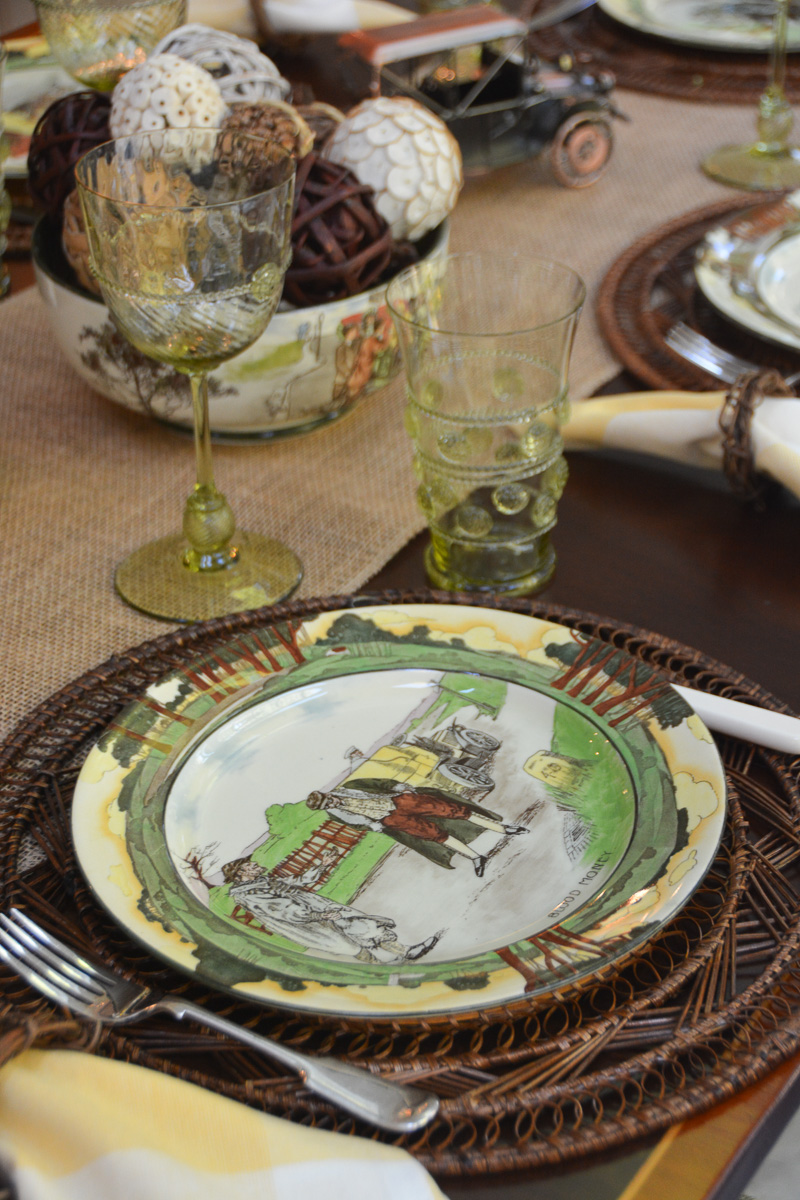
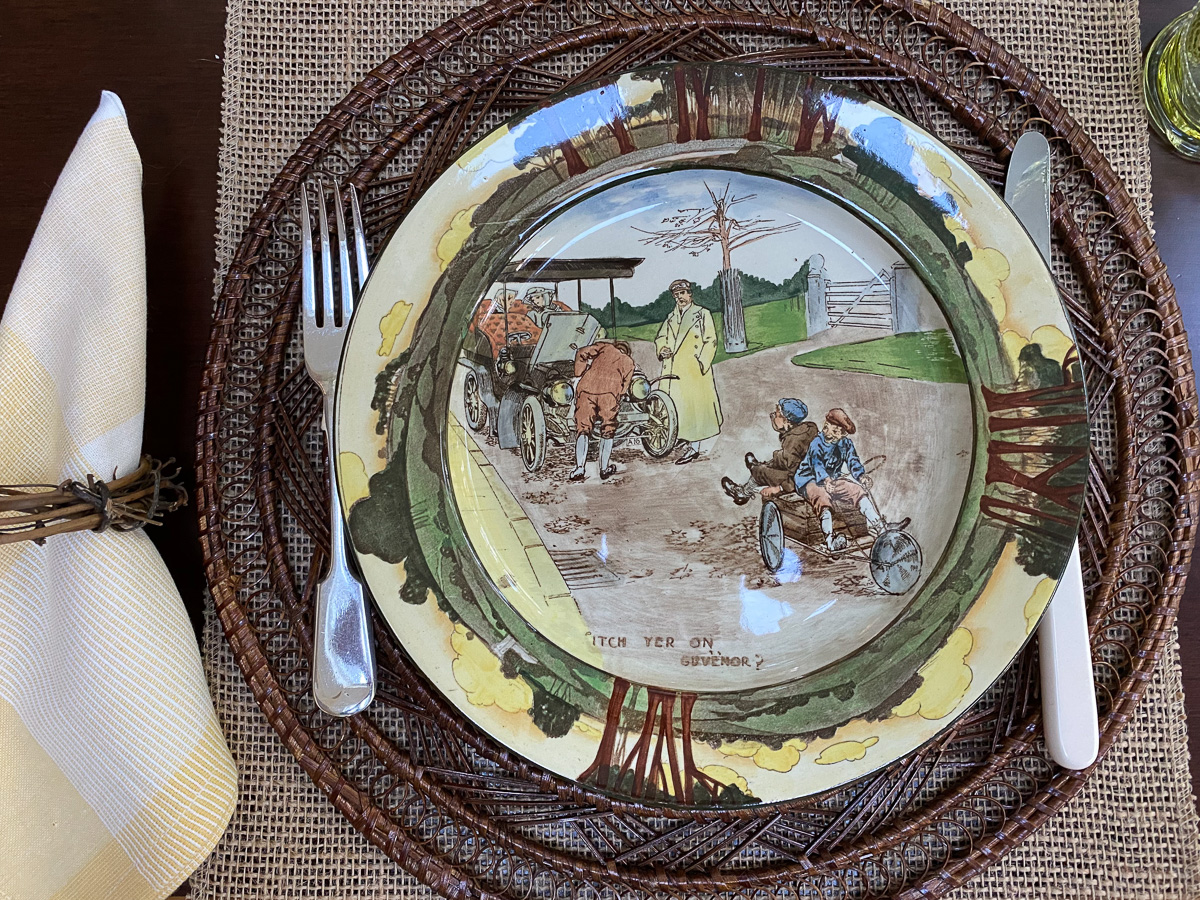
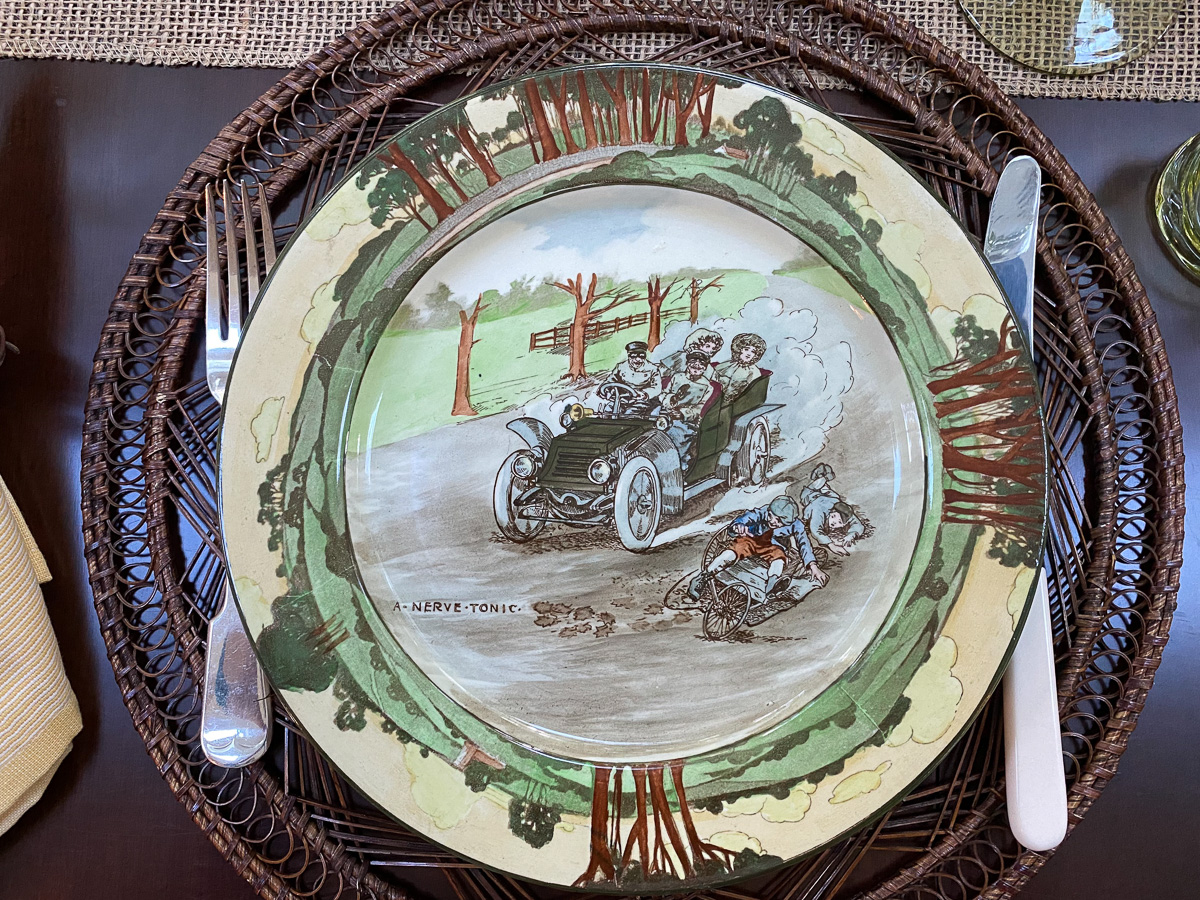
Each of the six plates in the Motoring Series tells a unique and often comical story.
Itch Yer On, Guv’nor? – Two mischievous boys in a wooden cart watch as a motorist struggles with a broken-down car, a common sight in the early days of unreliable automobiles.
A Nerve Tonic – A driver barrels down the road at breakneck speed, causing a cyclist to fly headfirst off his bike—an all-too-familiar hazard as roads became more populated with these fast-moving machines.
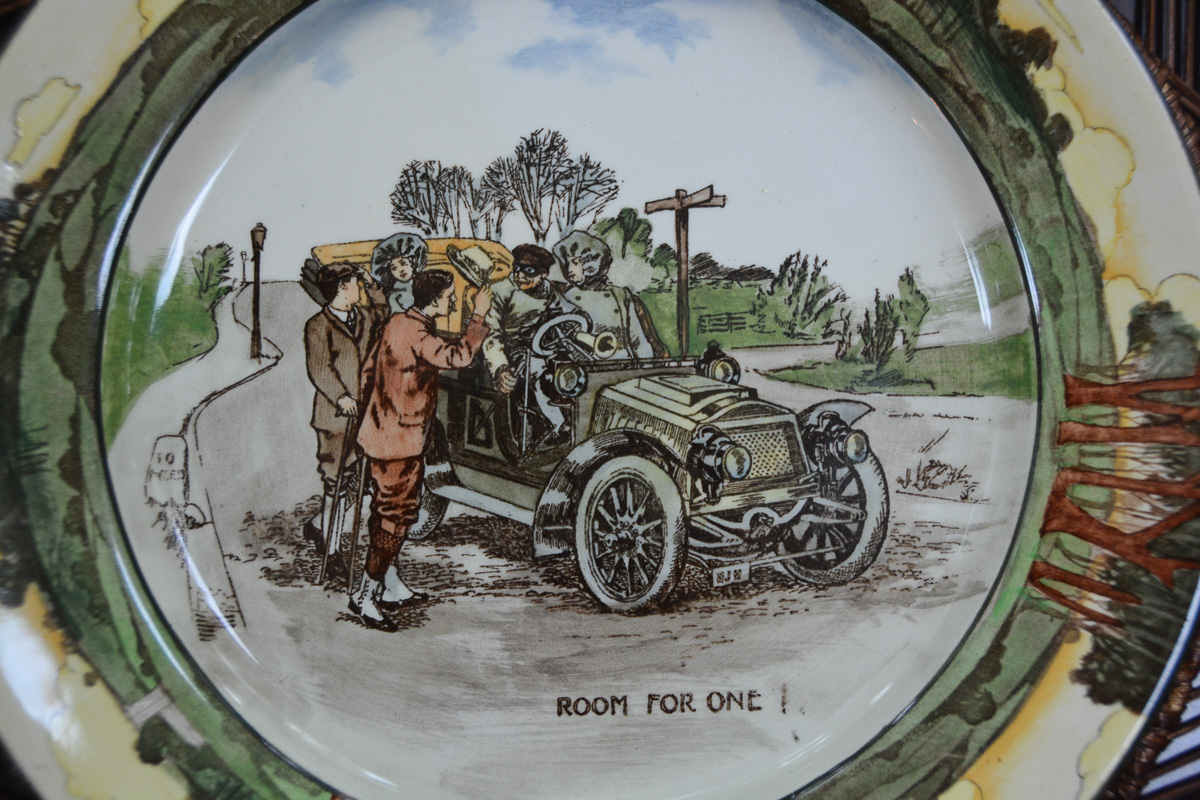
Room for One – A well-dressed couple attempts to squeeze into an already-packed automobile, illustrating both the social nature of motoring and the limits of early vehicle space.
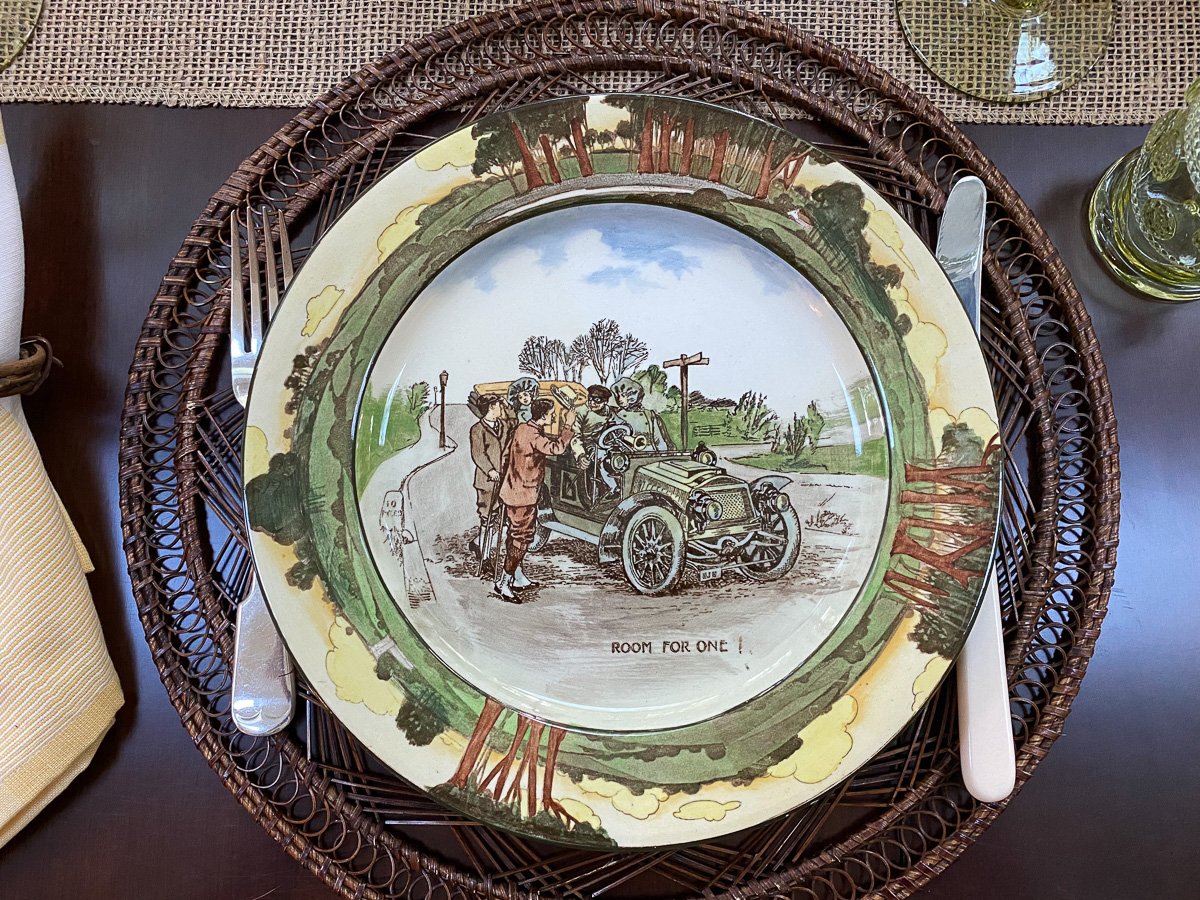
A Policeman’s Intervention – An officer in a long coat appears to be issuing a reprimand or warning to a driver outside an inn—a nod to the early enforcement of speed limits and road safety.
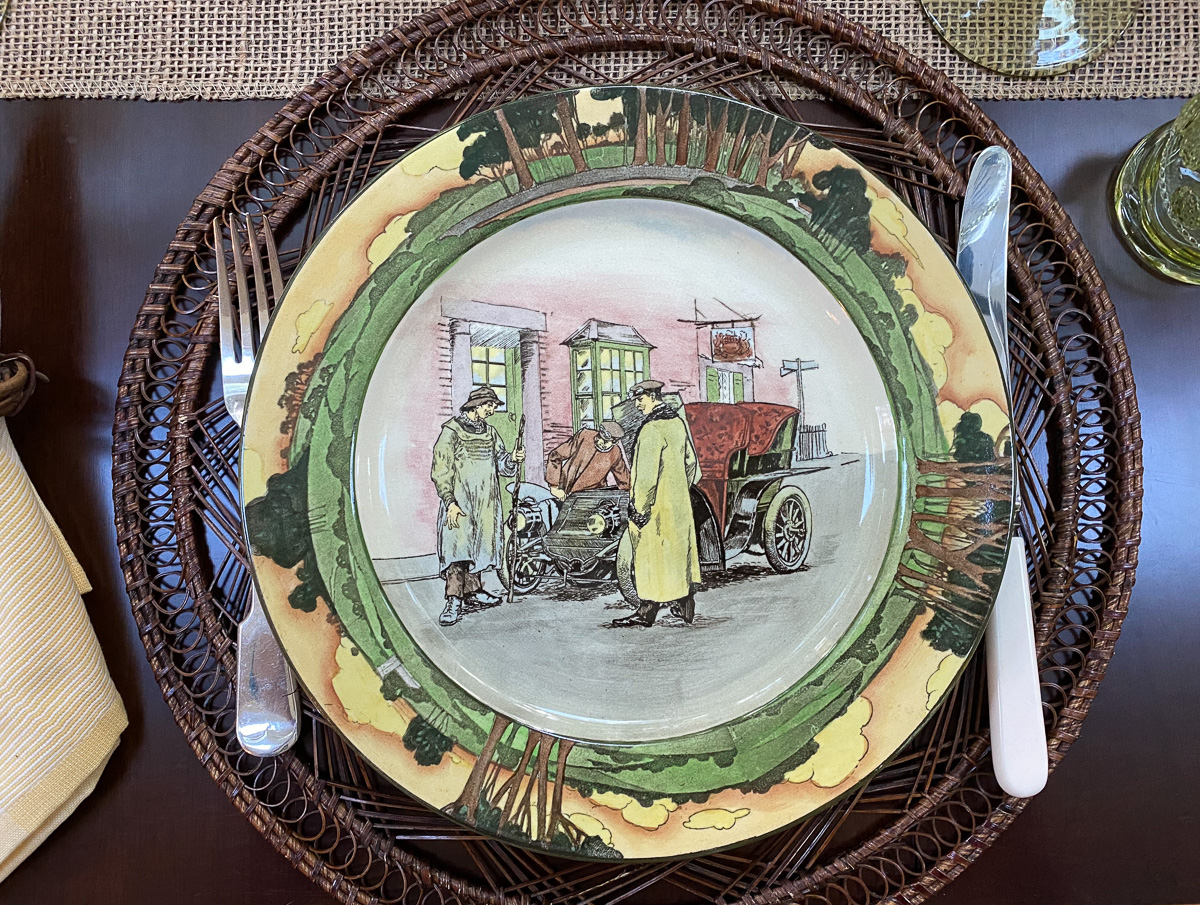
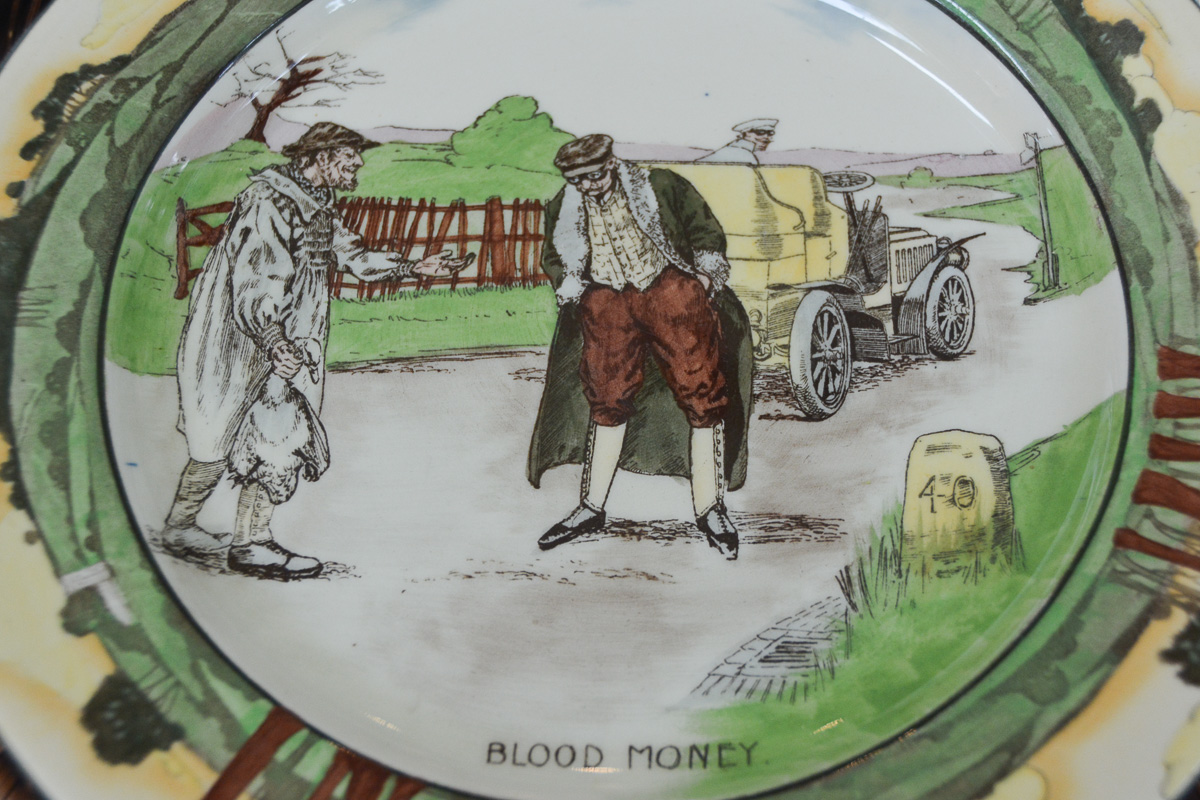
Blood Money – A motorist and a bystander exchange a bribe, possibly in an attempt to settle an accident outside of legal proceedings, highlighting the early struggles of road governance.

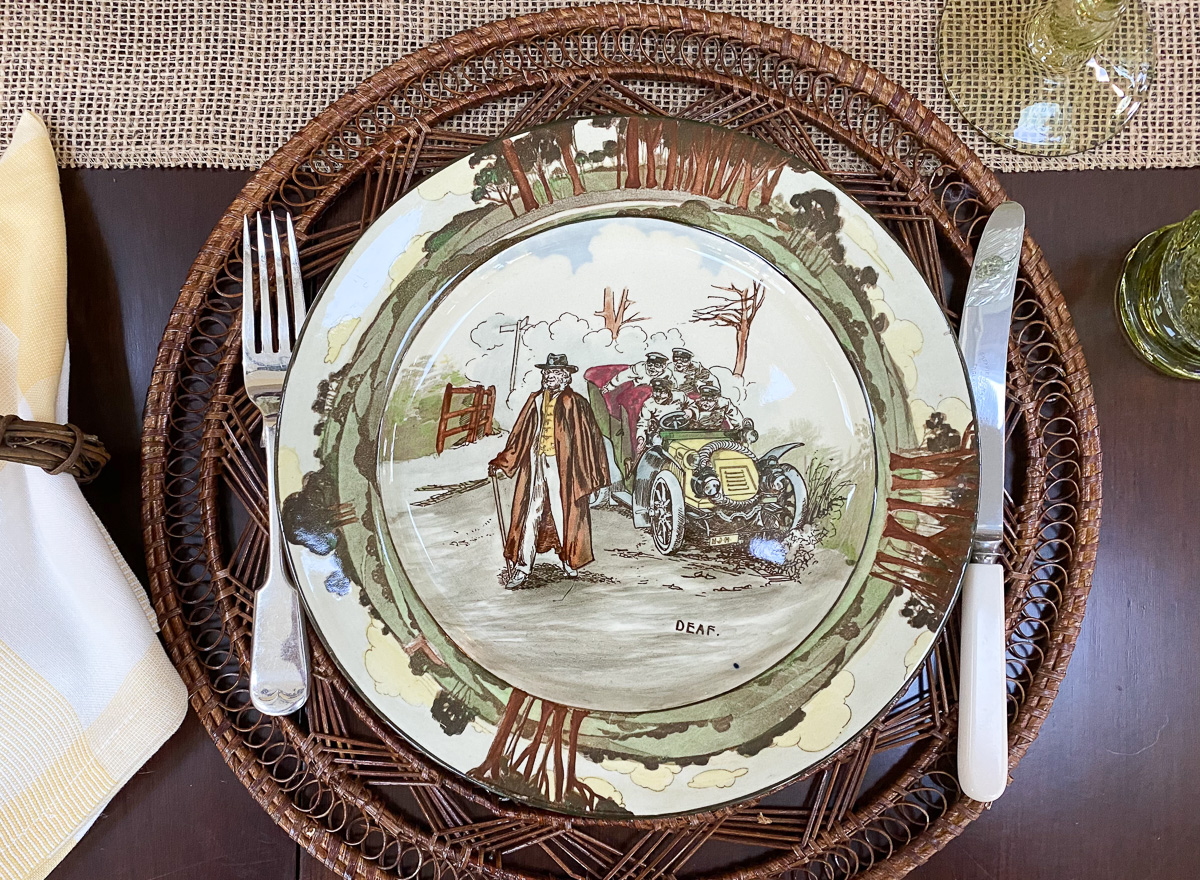
Deaf – A motorist and his companion, completely absorbed in their journey, speed past a pedestrian, oblivious to any attempts to communicate. I suspect said pedestrian was in the middle of the road as the car roared around the corner and nearly got run down. The caption humorously reflects how the roar of early engines often drowned out everything else, making interaction with motorists nearly impossible.
I searched out some accoutrements to enhance the Edwardian motoring theme, starting with a miniature vintage automobile model. I especially liked the metal perforated seats — the back one higher than the front — the steering wheel coming out of the floor, and the headlamps.


Brass and glass salt and pepper shakers shaped like an antique bicycle add a layer of period charm.
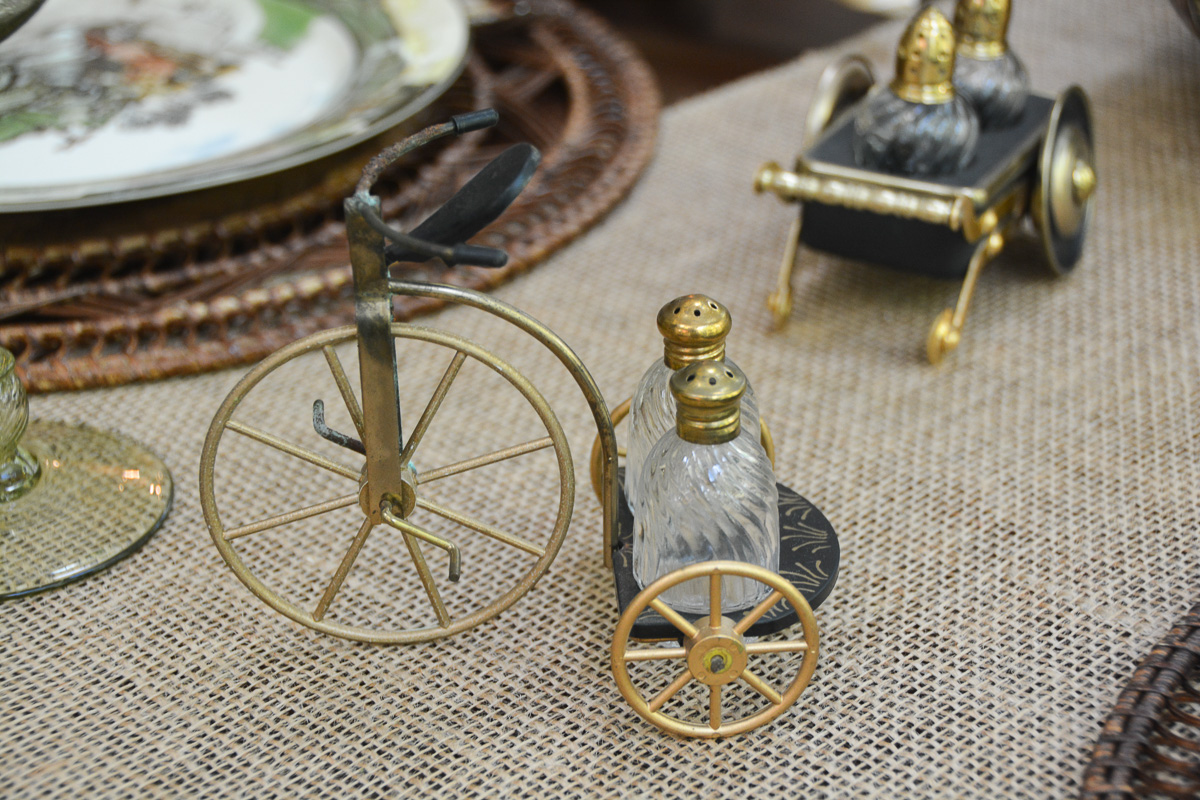
A brass wheelbarrow with salt and pepper shakers seemed to fit the vibe.

Flowers didn’t seem to fit— so I went with fillers for the bowl, whose rustic, natural tones and materials seemed to reflect the broader historical landscape of the early 1900s when country roads were still the primary terrain for adventurous motorists.
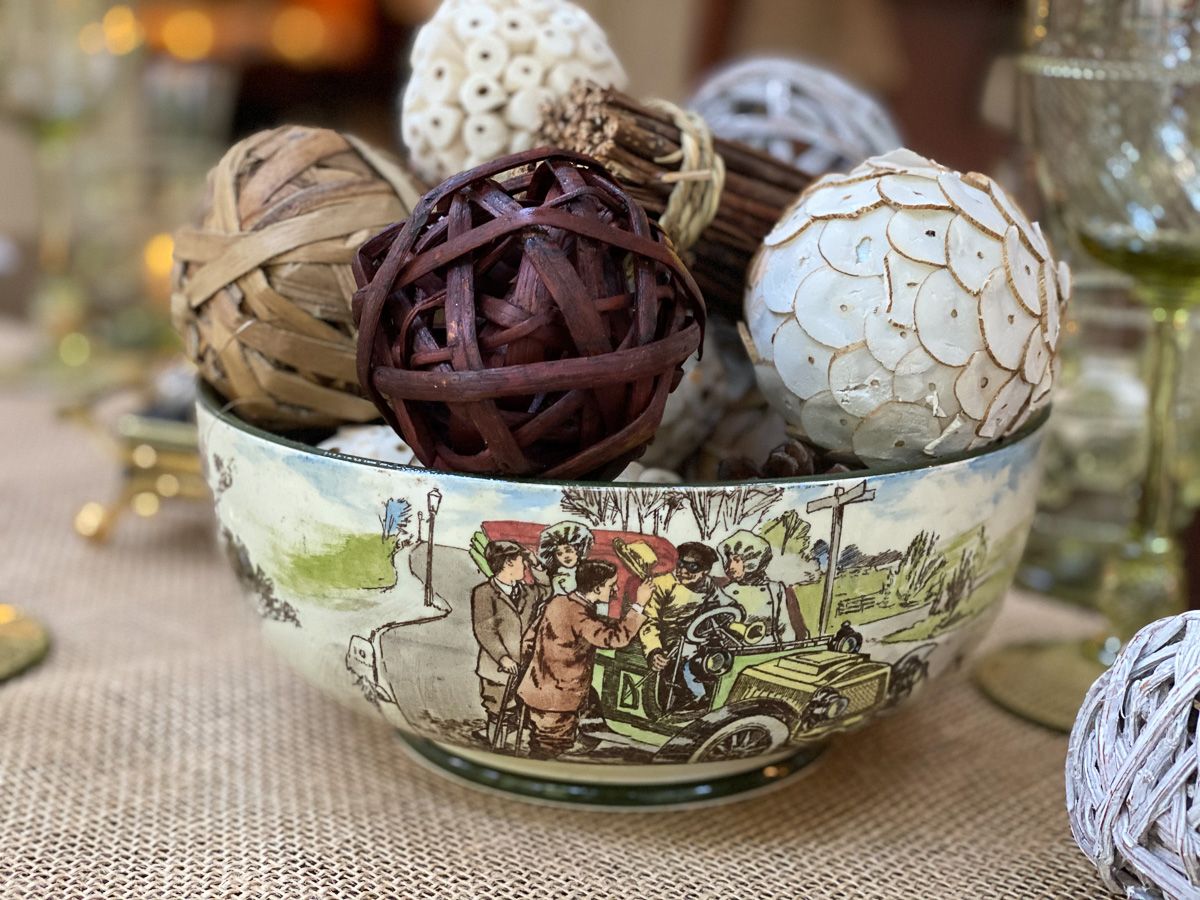
When these plates were made, cars shared the roads with horses, bicycles, and pedestrians, often leading to chaotic interactions—perfectly captured in Royal Doulton’s illustrations. Road rules, traffic lights and speed limits were still being worked out when these plates were produced; the rise of motoring brought about significant regulatory changes in the UK.

The first speed limits were introduced in 1865 under the Locomotive Act, restricting vehicles to 2 mph in towns and 4 mph in the countryside, with a man required to walk ahead carrying a red flag. By 1903, speed limits had increased to 20 mph, and the first formal driving licenses were issued. In 1934, following a rise in accidents, a 30 mph limit for built-up areas was established—similar to what we see today.
Traffic control also evolved rapidly. The world’s first mechanical traffic signal was installed outside the Houses of Parliament in 1868, but it was gas-powered and exploded shortly after installation! The first electric traffic lights in the UK were introduced at Piccadilly Circus in 1926, a significant milestone in modernizing road safety.
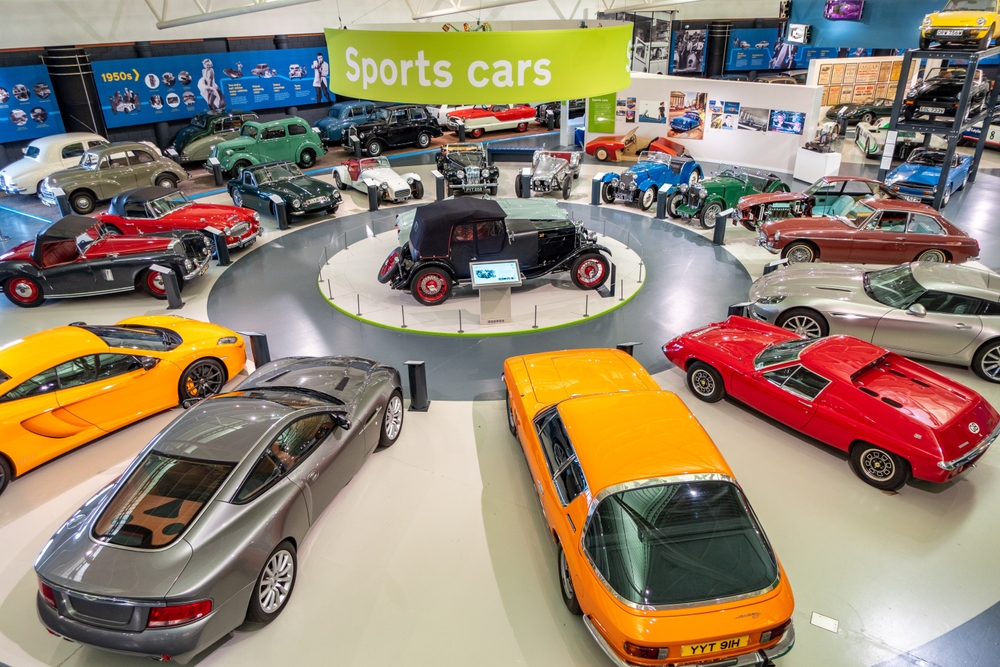
I had the chance to explore these changes firsthand during a visit to the British Motor Museum last fall with my husband, Glenn, a vintage car enthusiast. A display showed how motoring has evolved over the past 100 years. The walls surrounding the historic vehicles were lined with fascinating information on speed limits, road signs, and early driving laws—a vivid reminder of how far we’ve come in regulating motoring.
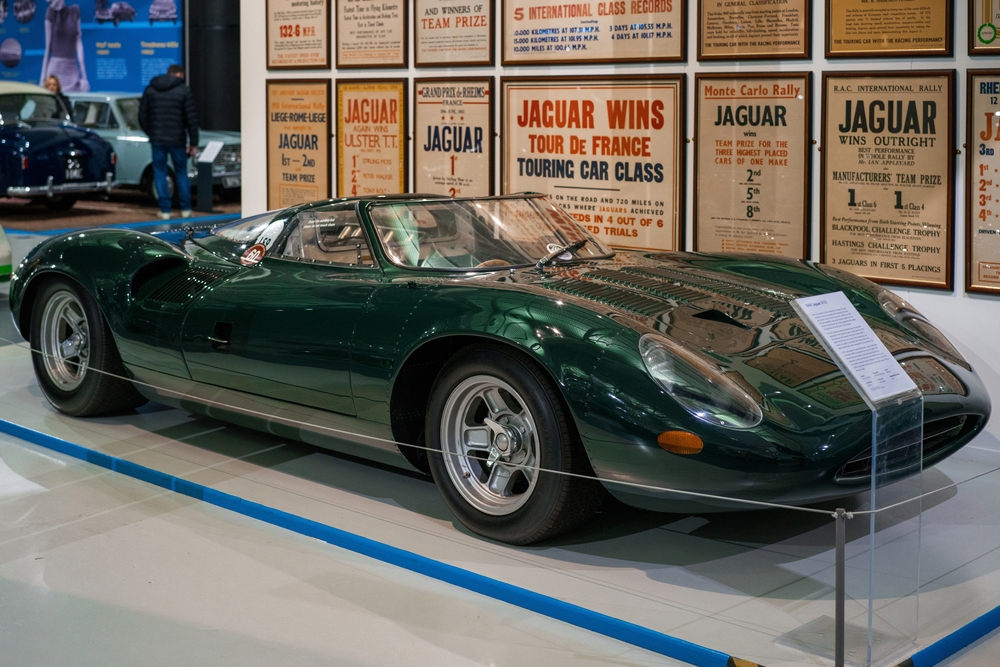
Glenn has a particular love of Jaguars, and the museum offers an exceptional display.
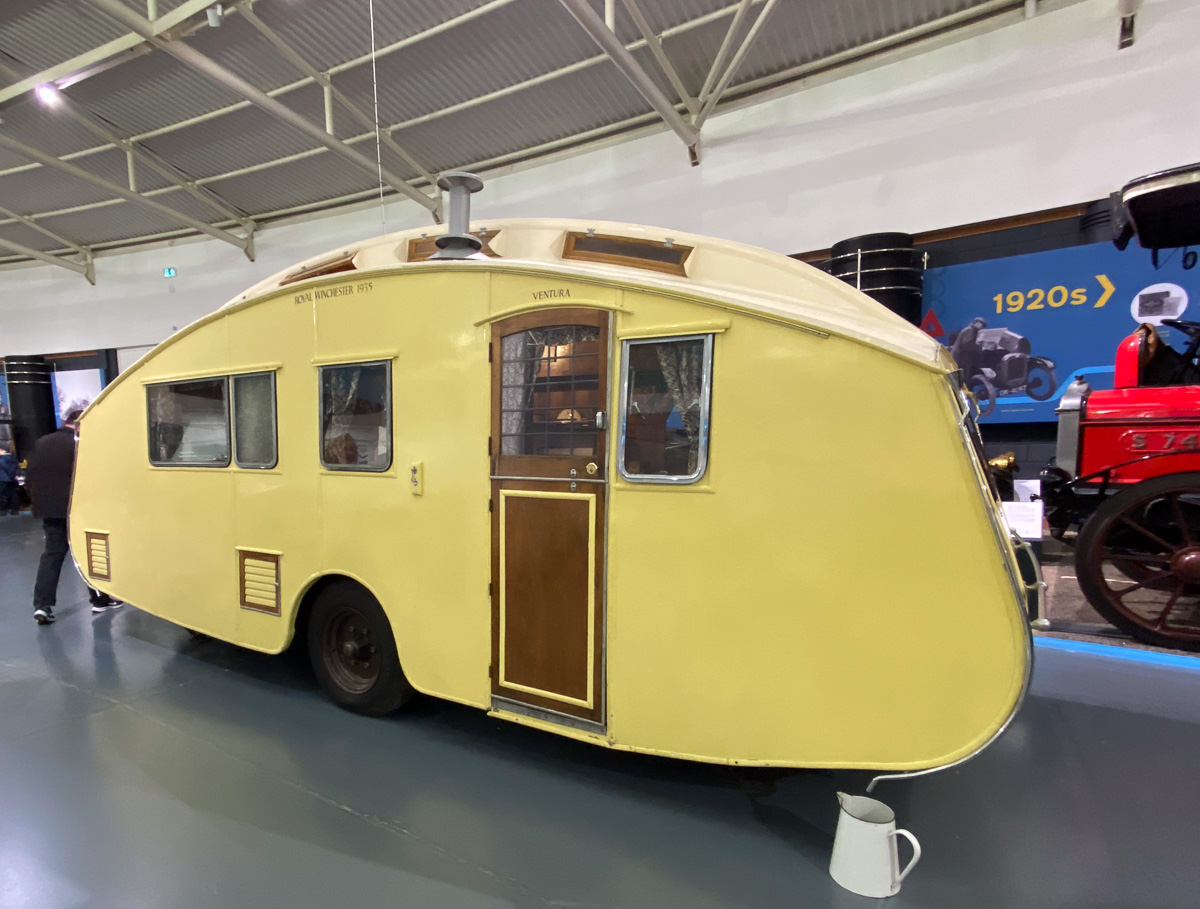
One of the vehicles that caught my eye was a 1935 caravan. It was fascinating to see that while the materials used in construction have changed, the basic human needs they serve have not.


Note the cruet, a set of crystal bottles for salt (usually with a spoon, though this set has a shaker), pepper, vinegar and oil.
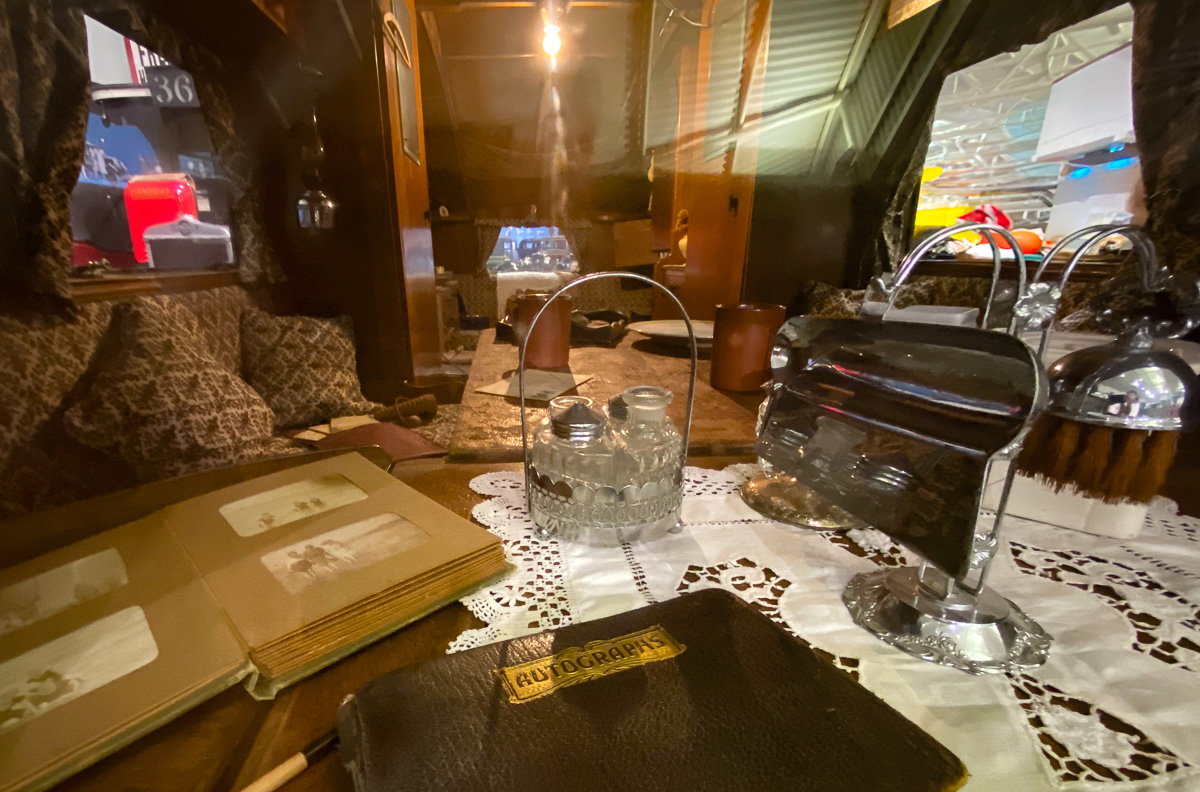
Bench seating with a table for serving meals. I don’t think much of the hand brush and dustpan on the table, do you?

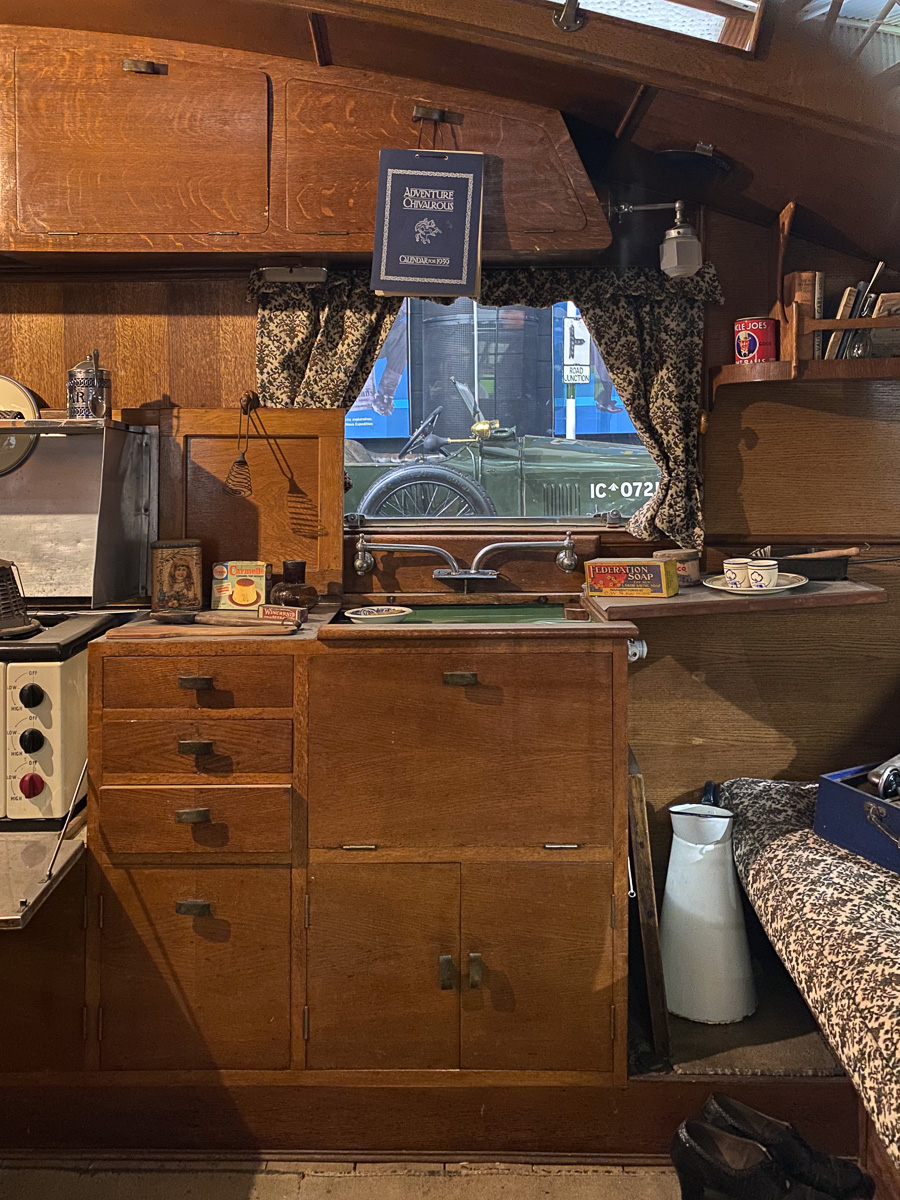
It has all the basics: cupboards for storage, a sink for washing up, and a stove is off to the left.
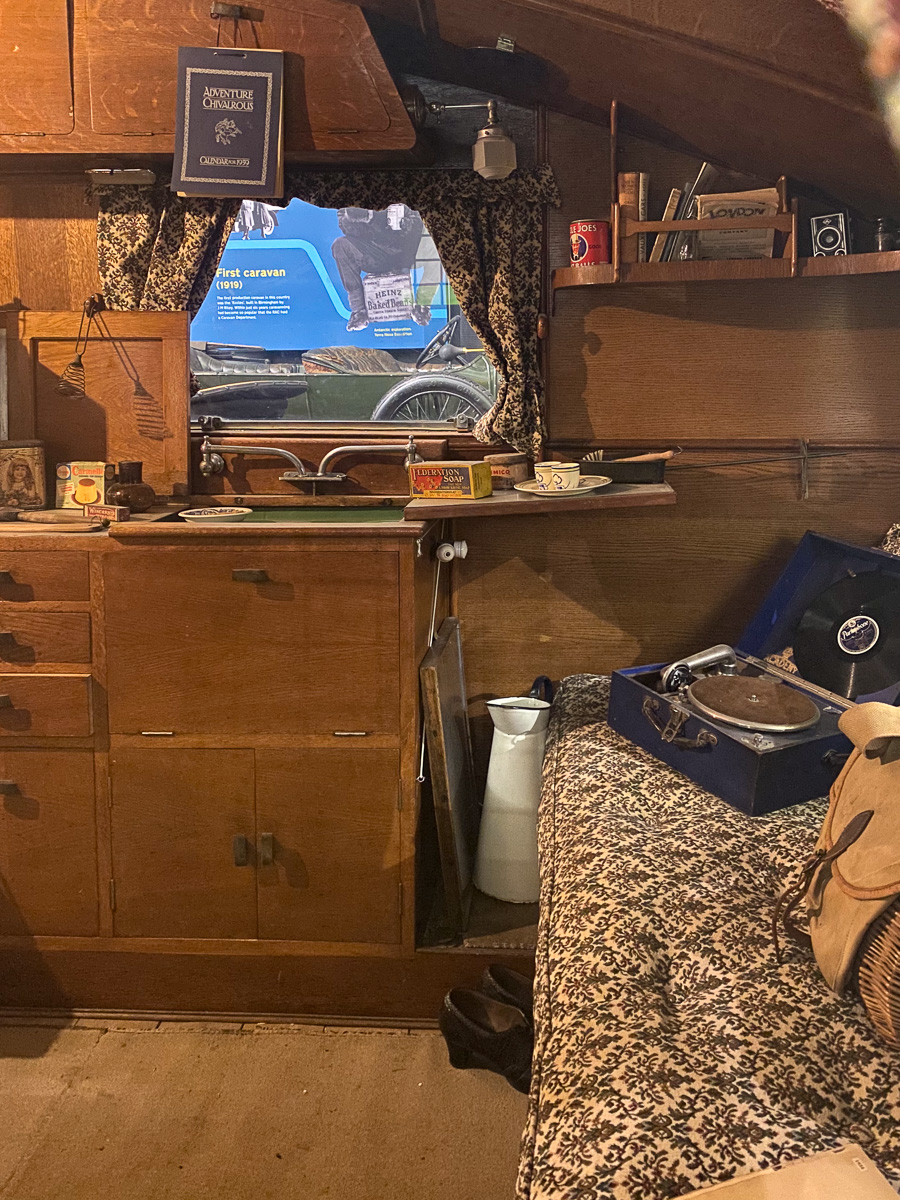
An early gramophone sits on the bench, awaiting a record, which would have been a 78 in those days!
But back to our table setting, which celebrates the artistry of Royal Doulton’s Motoring Series and the spirit of early automotive history. It reminds us of a time when motoring was as much about adventure as it was about everyday frustrations—a period of transition, captured in ceramics and now on the table, bringing Edwardian motoring culture to life once more.
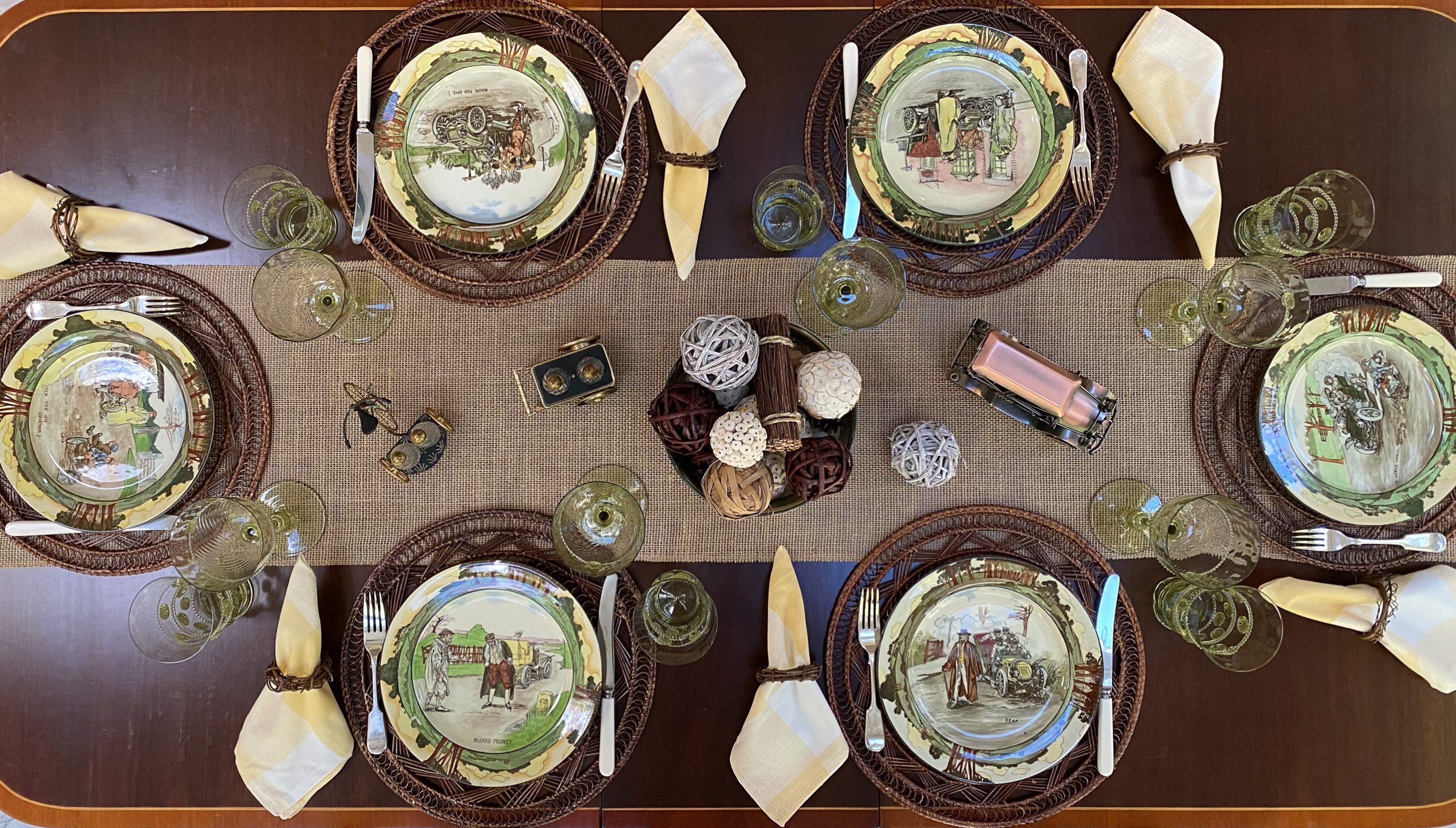
Besides, I had a hoot setting it. Wouldn’t it be great for Father’s Day?


A different type of plates which are quite unique! You seem to collect very rare plates or for me ones I have never encountered in my travels. Thank you for sharing.
Thanks, Maureen. Sourcing them is one of my guilty pleasures. I love doing searches for series ware, both English and French Faience. My favourite have some satirical or humorous bent to them.
I love the plates and .narrative. You have such a magnificent collection. Have the children or dogs ever broken a piece ?
Mi Myrna,
I’m so glad you like the table; I’m really partial to plates that tell a story
Oddly enough, we have only had one incident with a dog. The inevitable golden retriever tail swept a Venetian glass bowl off the lower shelf of a console table. It was entirely my fault for putting it there. What was I thinking? Dundee weaves his way between the glassware on set tables sometimes, but cats are incredibly agile. No issues from that quarter.
The kids and grandkids are really good. We try to use age appropriate items, so when they were toddlers we stuck to the easily replaced.
The usual culprit if something gets broken is yours truly! Followed by Glenn when washing up.
You can’t have delicate tableware and use it without accidents happening from time to time! Such is life.
Best,
Helen
I loved these unusual plates but enjoyed your story more on the evolution of cars. There is so much humor in every plate! Have you found the crockery yet with the caravan motif on it? Great read on a sunny Sunday morning
Wouldn’t that crockery be a find, Maura? As good as the Morgan plates I managed to track down for Himself!
Glad you enjoyed it and hope you’re enjoying the warm, sunny weather. The North East is having yet another storm…
What a fun tablescape! I love the look of old cars, but I don’t think I would have enjoyed riding in them. You found a beautiful one for your table. I had to laugh at the original speed limit – 4mph!
I think the ‘blood money’ is reimbursement for the duck the motorist killed. A while ago I read that at one time, if a motorist killed a chicken, he had to reimburse the farmer for all the eggs that chicken would have laid for him.
Barb, that’s brilliant! I bet you’re right about the blood money. That makes perfect sense.
I hope you are well!
Dear Helen, I took personal joy from this table, as my grandfather was an early car-adopter. In 1914 he bought a custom-built Abbott-Detroit motorcar as a family car(!) I have a picture of it with the whole family inside. Its souped-up engine was said to achieve 115MPH, and it cost him $12,500. It had massive headlights for better night vision. He drove it over 1600 miles to attend the 1915 Pan-Pacific Exhibition. In those early days the roads were in a poor condition, and people, out of hubris or necessity, tended to drive in the centre. Of course they were much slower than Granddaddy, so he kept a store of hand grenades under the driver’s seat. He would chuck one under the rear axle of each “road hog.” The drivers, thinking they had a blowout, would pull over, and he would blast through. He finally donated the car to the Ford museum because he was afraid my uncle would kill himself driving it. I am still in touch with the man who bought it around 15 years ago when the museum divested itself of non-Ford cars. Thanks for the memories!
Beatrice, I laughed out loud at your grandfather’s robust action to clear the road of slow drivers! What a hoot. He sounds like quite a character. What fun!