

Few tableware patterns are as instantly recognizable or enduringly beloved as Botanic Garden by Portmeirion. With its cheerful blossoms, leafy garlands, and sturdy, oven-to-table form, Botanic Garden is more than just dinnerware—it’s a celebration of natural beauty, family life, and casual elegance.
The Vision of Susan Williams-Ellis
Portmeirion Pottery was founded in 1960 by Susan Williams-Ellis and her husband, Euan Cooper-Willis, in Stoke-on-Trent, the heart of England’s ceramics industry. Though not formally trained as a potter, Susan was a passionate designer and illustrator who sought to create beautiful, useful tableware for modern living. Her work combined practicality with a distinctly artistic vision.
In 1972, Susan launched Botanic Garden, the pattern that would define the brand. Inspired by 19th-century botanical illustrations, each piece was adorned with a different flower, labelled with its Latin name and framed with a laurel-leaf border. No two pieces were exactly alike, encouraging collectors to mix and match—a revolutionary idea at the time.

Design Meets Durability
Portmeirion’s success lies in its blend of:
- Artful illustration: detailed florals based on antique botanical prints
- Everyday strength: vitrified earthenware that’s dishwasher, microwave, and freezer safe
- Versatile use: the same pattern graces teacups and salad bowls, serving trays and baking dishes
It became a go-to choice for families who wanted to bring a bit of the English garden indoors, without worrying about babying the china.
A Collector’s Dream
Over the decades, Portmeirion expanded The Botanic Garden to include hundreds of pieces: cake stands, napkin rings, candlesticks, egg cups, tureens, and more. The pattern has also evolved subtly, with seasonal flowers and new formats joining the original lineup.
The table pictured here was set by a dear friend who spent over two decades overseas, collecting every piece Portmeirion offered. Her collection reflects the pattern’s global popularity and its enduring charm. From rattan chargers to vintage pink stemware, her setting illustrates just how well Portmeirion plays with others, both modern and traditional.

Beyond the Garden: Other Beloved Patterns
While Botanic Garden is the brand’s signature line, Portmeirion has produced several other highly collectible and beautifully illustrated series:
- Botanic Garden Terrace: A contemporary interpretation of the original, Botanic Garden Terrace softens the design with a lighter palette, scalloped rims, and a more delicate feel. It’s ideal for casual entertaining and blends seamlessly with both the original pattern and more neutral tablescapes.
- Pomona (1980): This richly coloured celebration of fruit is named for the Roman goddess of orchards. Each piece features ripe, lush fruit illustrations and the Latin name, bordered by green leaves.
- The Enchanted Garden: A dreamy, painterly floral pattern with butterflies and a softer colour palette. A more romantic counterpart to the Botanic Garden.
- Botanic Roses: A focused floral series dedicated to rose cultivars, including Peace, Queen Elizabeth, and Sweet Juliet.
- Harvest (Fruit): Often mistaken for Pomona, Harvest includes naturalistic renderings of pomegranates, figs, and grapes with a more minimalist border.
- The Woodland Collection: This nature-themed line features British wildlife, including owls, foxes, and pheasants—perfect for autumn tables
These patterns reflect Portmeirion’s enduring love of nature and its ability to balance fine art with practical use.
I have Portmeirion’s Garden Terrace in my collection.
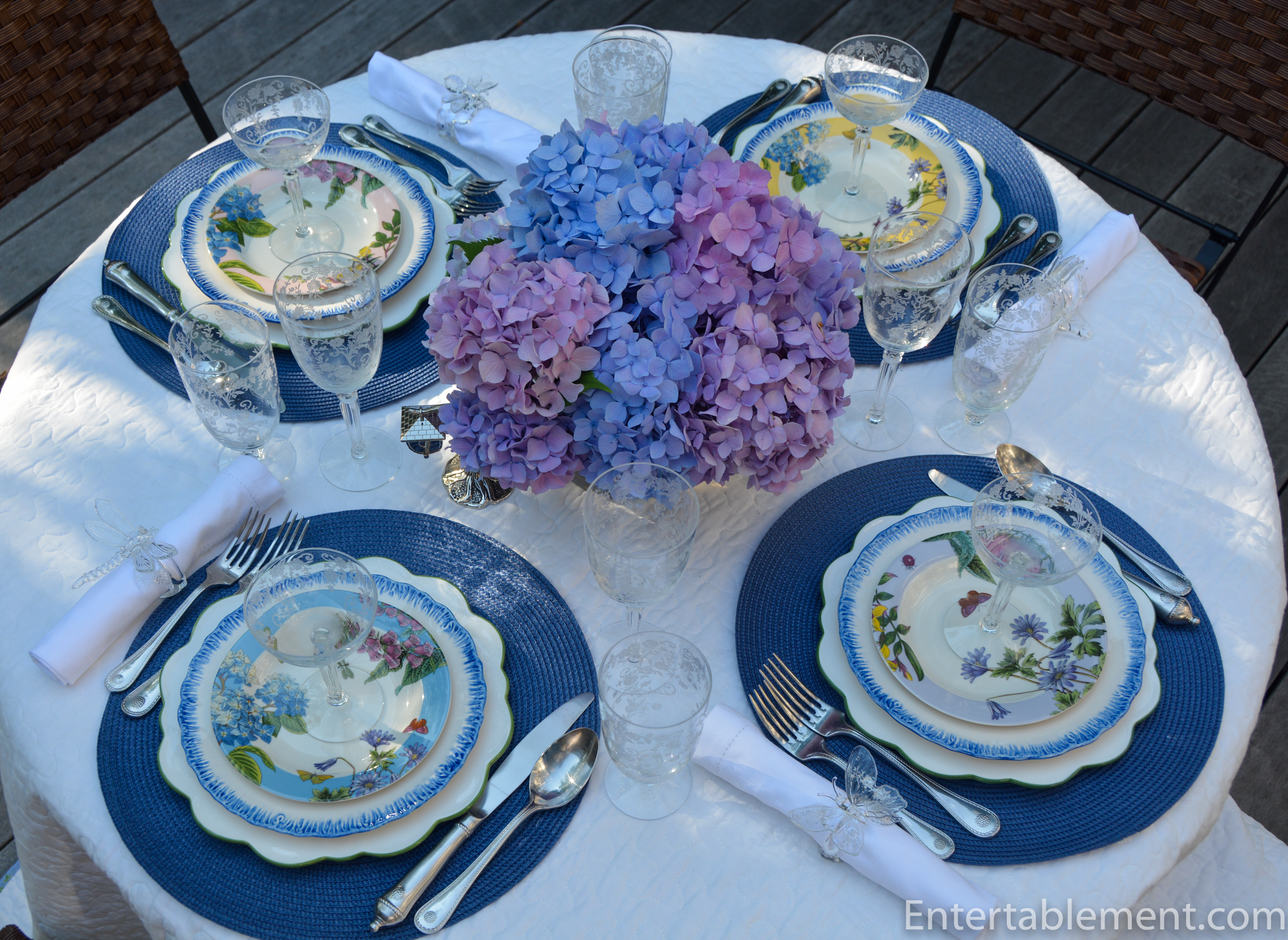
Though the Garden Terrace collection is quite extensive, I have only the four dessert plates, each featuring garden blooms (of course!) with differently coloured rims.

Still Growing
Now part of the Portmeirion Group (which also owns Spode, Royal Worcester, and Pimpernel), the brand continues to produce Botanic Garden and its companion lines. It remains a favourite for bridal registries and family dinners alike, as relevant today as it was when it first debuted.
What began as a personal passion project for a female designer has become a global icon. Portmeirion’s Botanic Garden is not just a pattern—it’s a legacy.
Enjoyed this post? Explore more in our Makers Behind the Magic series, from the artistry of Gien to the heritage of Johnson Brothers.


