
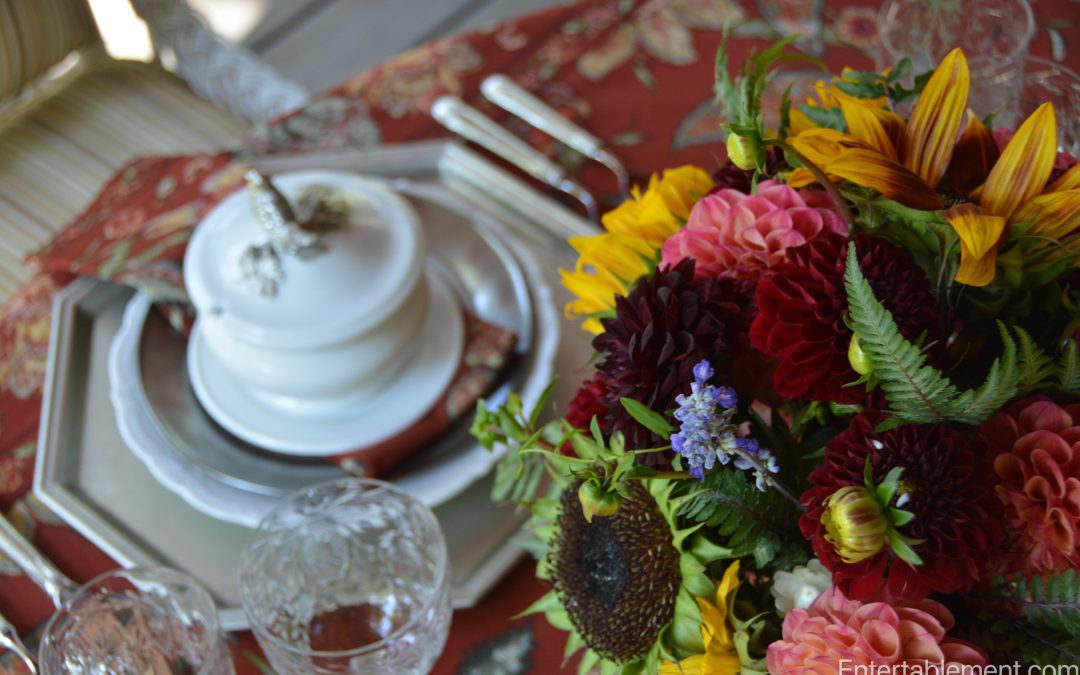
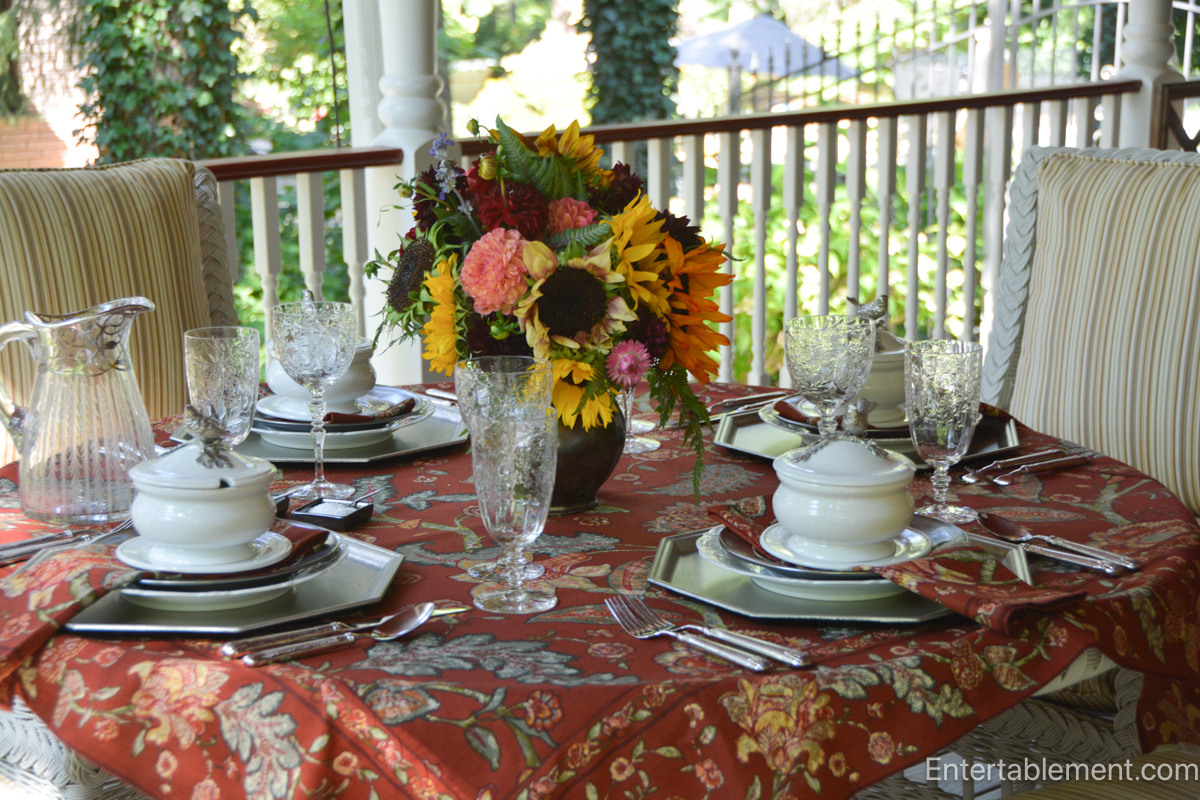
Returning to Canada after being overseas since mid-August, I was delighted to find that summer had not entirely left us. Temperatures in the high 70s tempted us onto the porch to enjoy an alfresco meal.
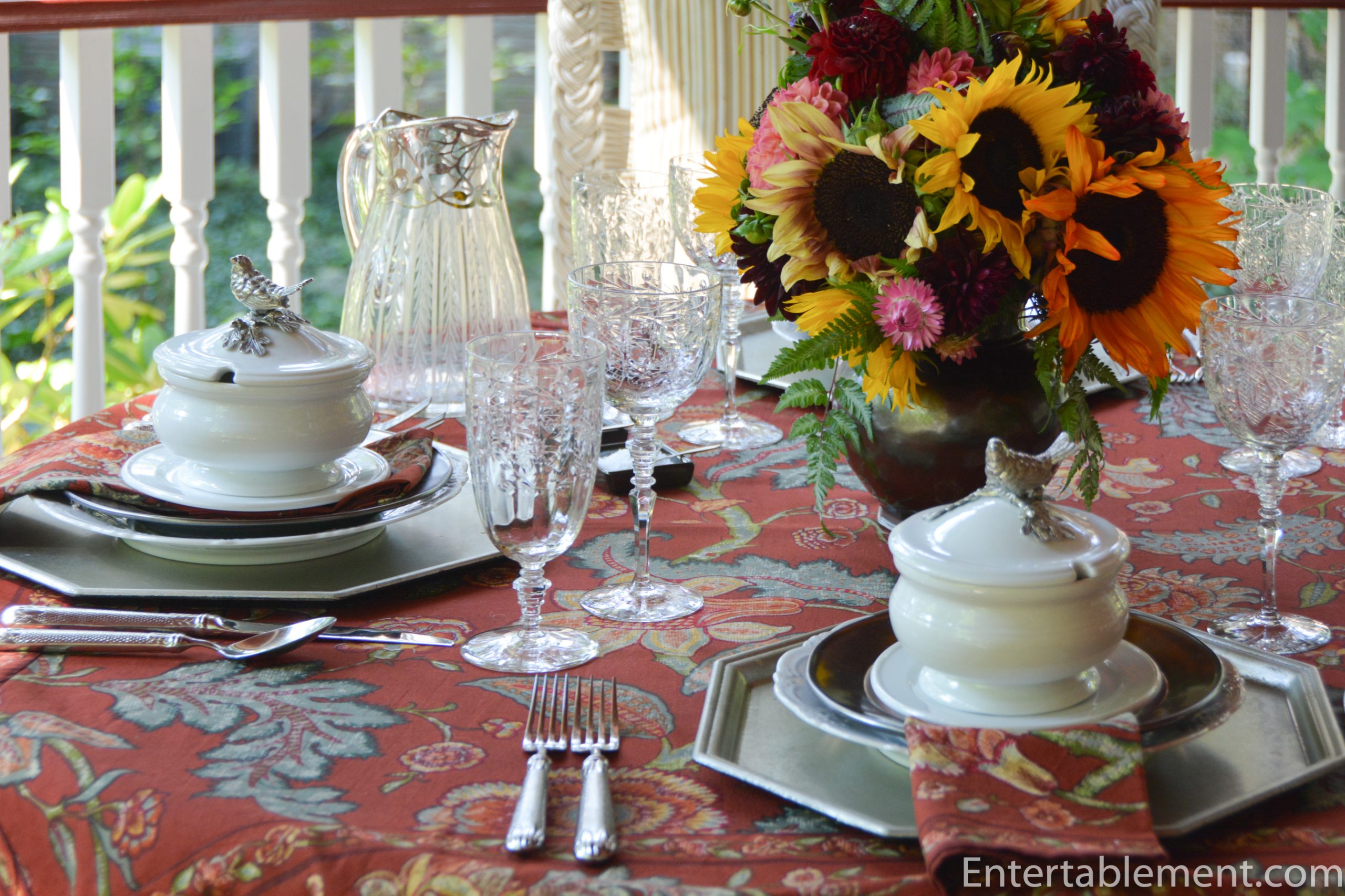
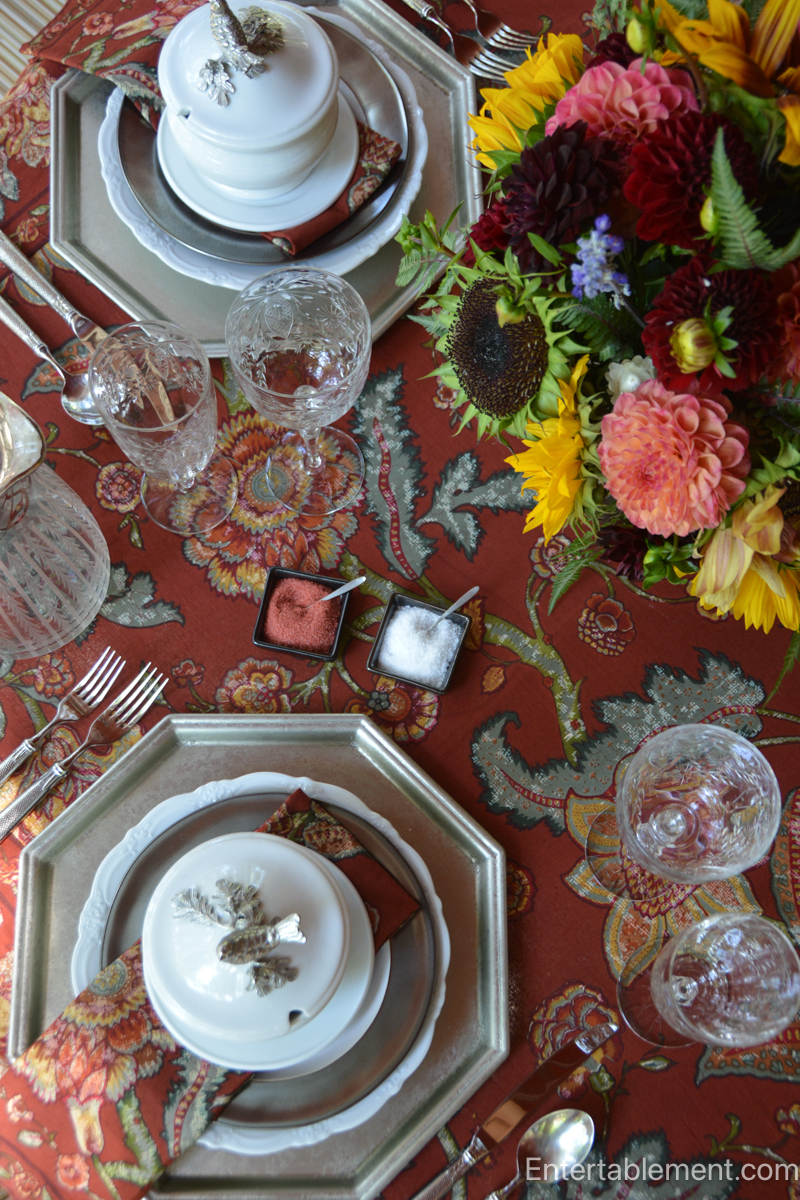
Our local grocery store is overflowing with sunflowers and dahlias. They practically arrange themselves. I tucked Japanese ferns from the garden into the centrepiece for some green relief to all that colour!
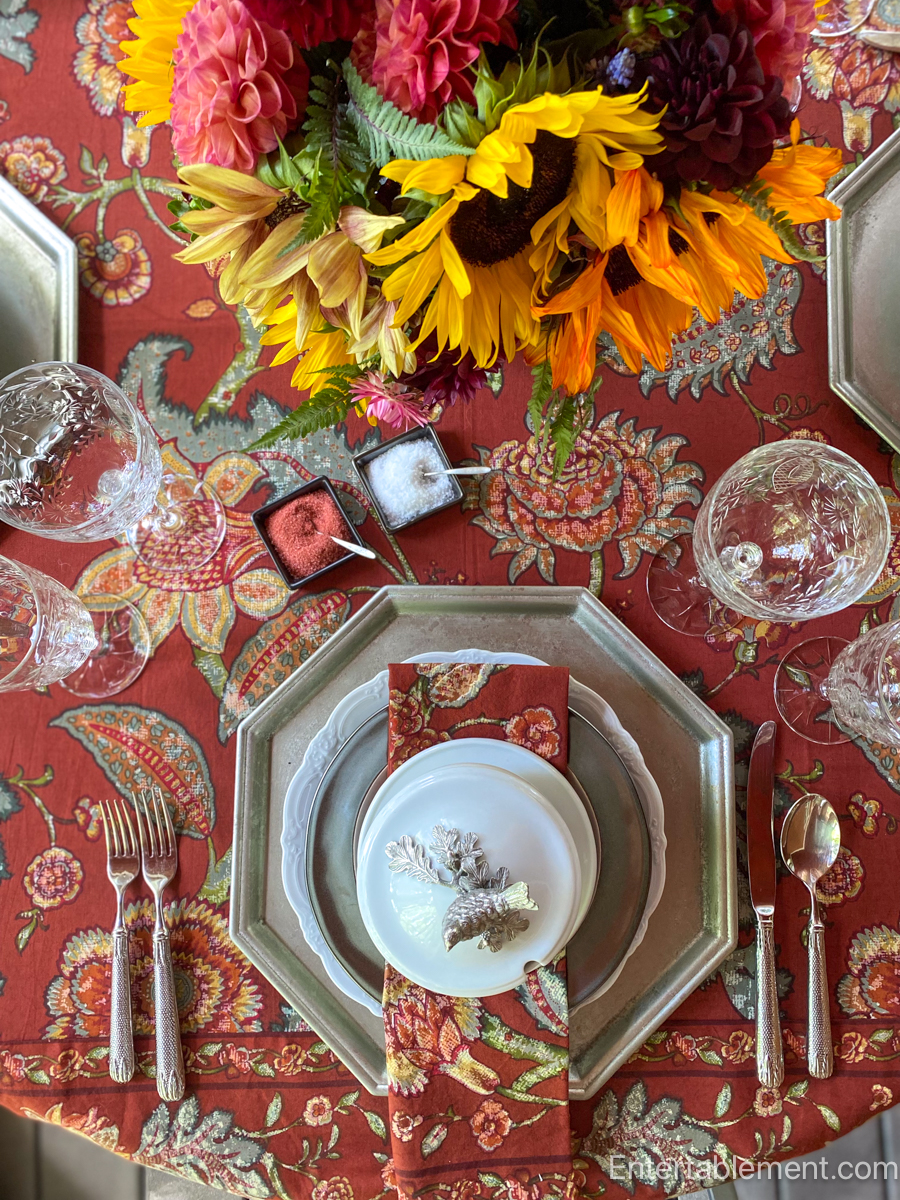
The rust and pewter tablecloth is from April Cornell a few years ago. With all the colourful exuberance of the floral centrepiece, I highlighted the greys in the linen when choosing the tableware.
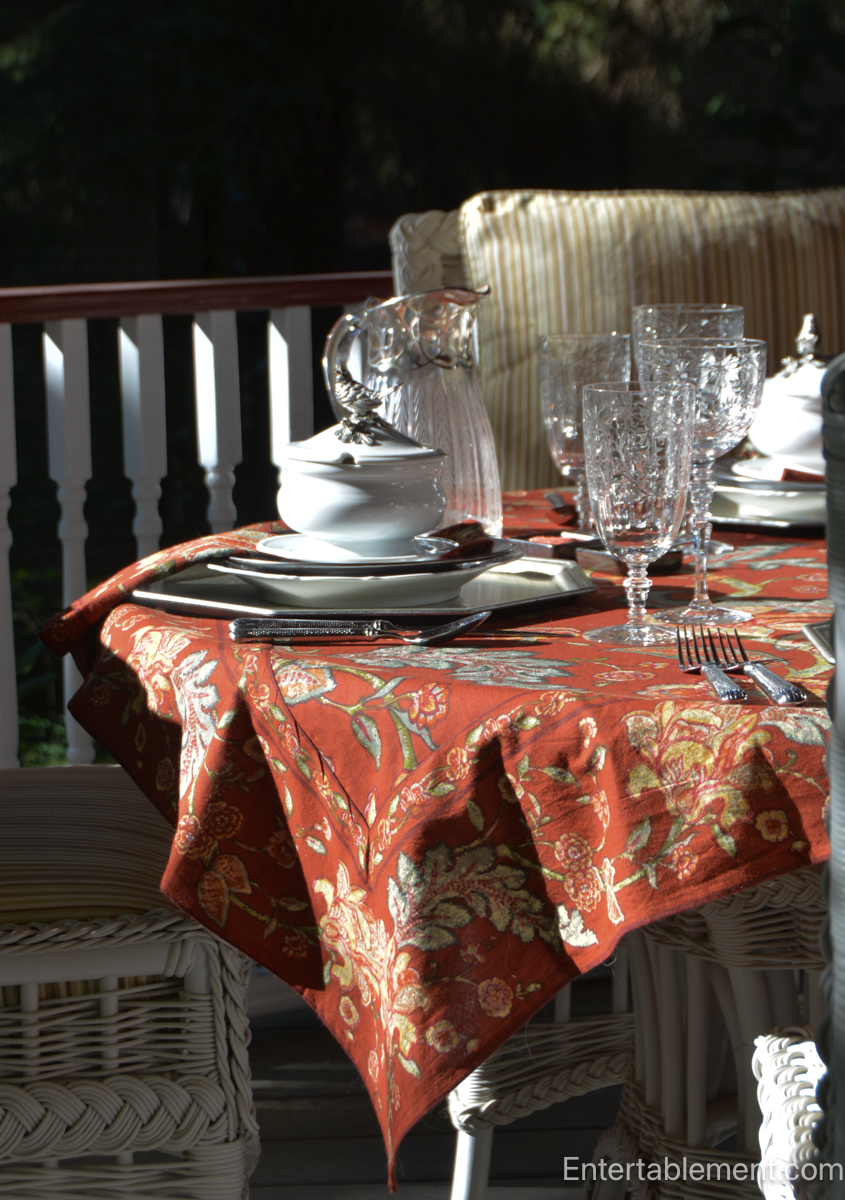
The Songbird Tureens from Vagabond House always make me smile. Look at those chubby little birds. This one has his beak open, chirping a happy song.

I didn’t realize the birds were different until I processed these photos. This little guy has a much more dignified expression.
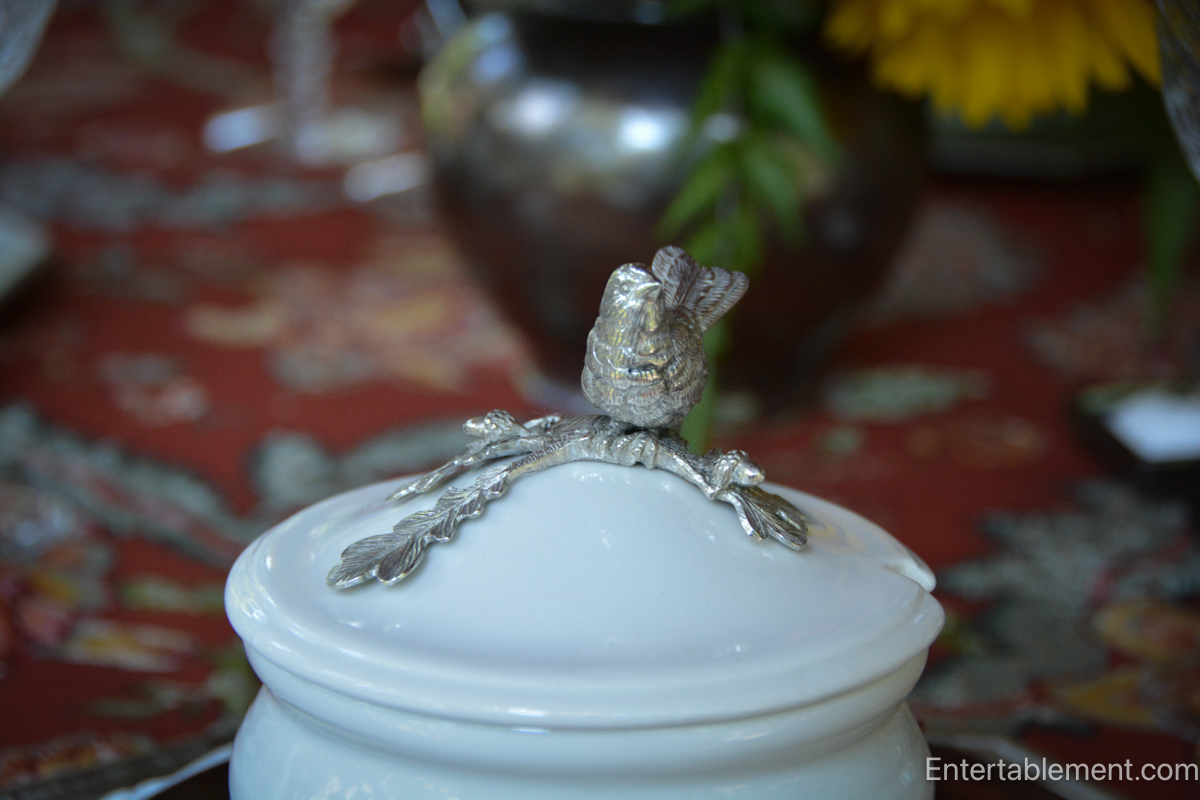
Octagonal chargers from Pottery Barn years ago anchor the place settings. Baronesse White dinner plates hold Juliska’s Emerson Pewter salad plates, where the tureens and their saucers rest.

The weather continued to cooperate, and we enjoyed a lovely evening out of doors. All too soon, we will have to hunker down inside. So I’m determined to make the most of what used to be called Indian Summer, now termed “Second Summer” or “St Martin’s Summer”.
I was curious about where the original term came from. For over two centuries, The Old Farmer’s Almanac has gone by the adage If All Saints’ (November 1) brings out winter, St. Martin’s brings out Indian summer. Europeans and the British still use “St. Martin’s Summer”, referring to St. Martin’s Day on November 11. That’s the official start of the late warm spells in Europe and Britain. But here in the Frozen North, we identify “Second Summer” (The American Meteorological Society’s replacement for Indian Summer) quite a bit earlier. By November 11, we are usually in full winter gear.

Speaking of Europe and Britain, I came away with a renewed appreciation for the enduring nature of silver tableware, which likely contributed to the genesis of this table setting. Though the glass water jug with silver overlay is an antique, we use it all the time. It’s sturdy, holds a generous quantity of water, and pours beautifully. With its frequent use, it only needs a quick wipe to keep the silver tarnish-free. That’s the beauty of silver – you don’t have to polish it if you use it.

So now I’m on the hunt for a silver teapot after experiencing the no-drip qualities of the hotel teapots employed at The Goring Hotel. They had wooden handles, so no scalded hands, either!

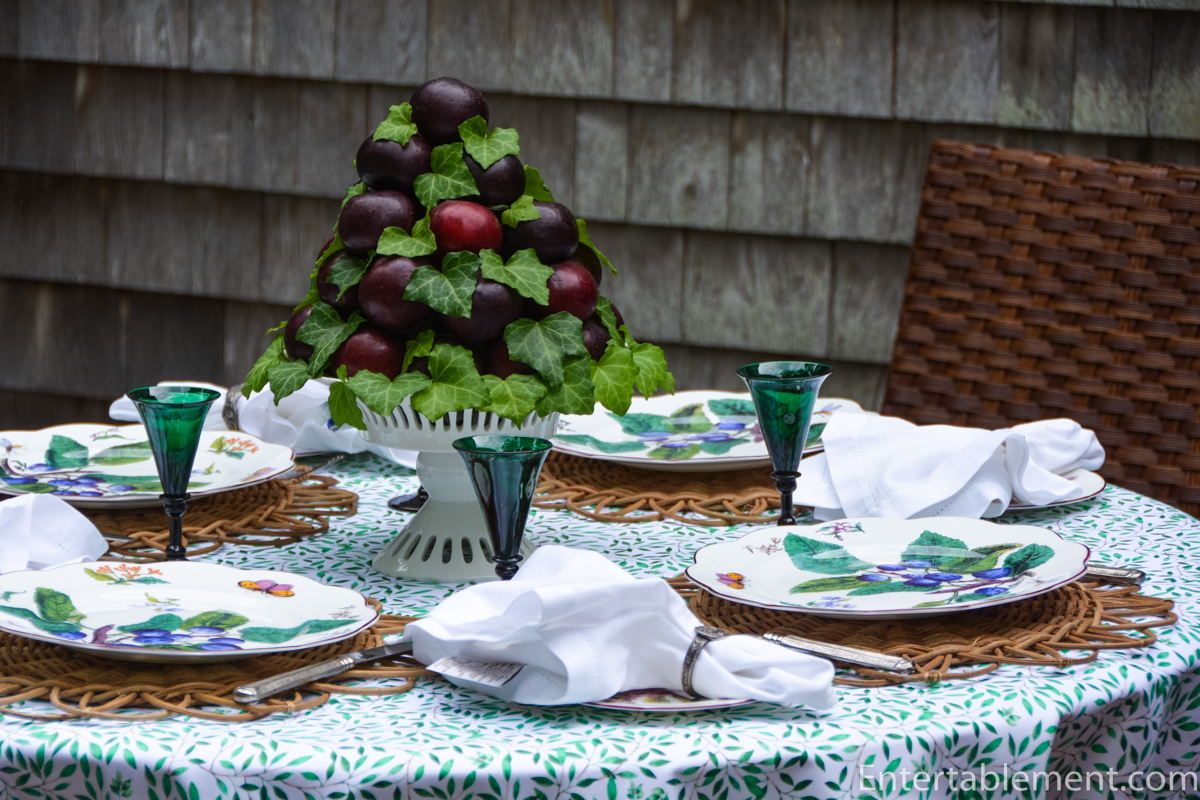
Over the last few weeks, we have enjoyed our fair share of afternoon teas. I treated the grandgirls and their mums to tea at the Café at Holyrood Palace. Maddie immediately recognized the Chelsea Porcelain from the Royal Collection shop, which I’ve used on several tables.
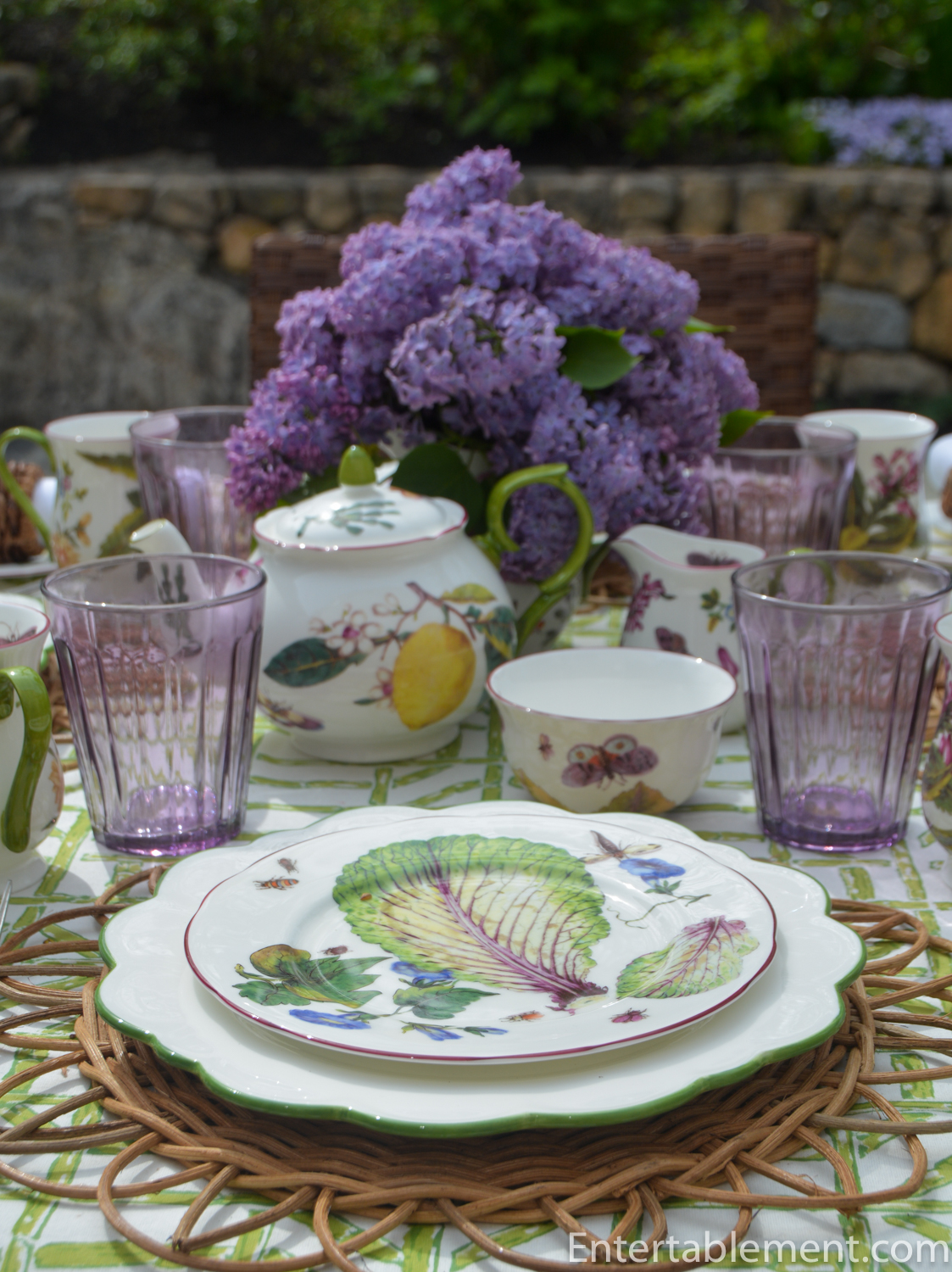
At Holyrood Palace, each diner is given a three-tier server with tea sandwiches, scones, desserts, and their own teapot, cup, and saucer. The plethora of china made for a very crowded table but a highly personalized experience.
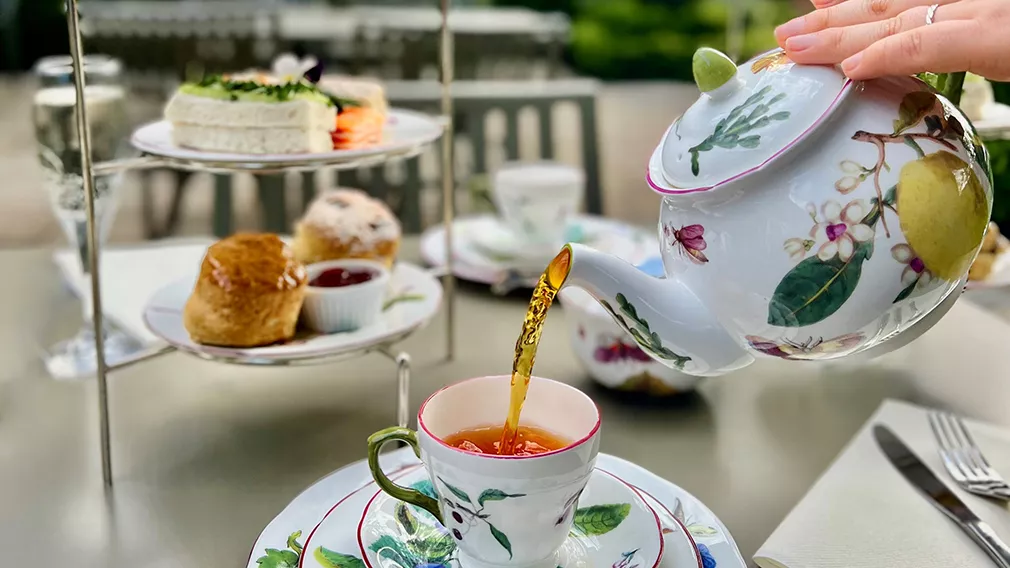
More modest teas consisted of plain or fruit scones with clotted cream and jam or cheese scones with soup at the stately homes we visited. I was delighted to be reminded of the joys of a lovely cuppa with some toothsome treats in the late afternoon. I’ve dug out my Book of Scones by the National Trust for some scone inspiration and am happily perusing back issues with Victoria and TeaTime magazines on the Readly App. If we’re going to have winter, I am determined to enjoy hot tea and goodies!
I will share more about what we saw in England, Scotland, and on the Rhine River in the coming weeks over on Entertablement Abroad. Enjoy the day, everyone!


Glad you were able to enjoy your alfresco meal when you arrived home. Your table looks lovely. Unfortunately, it was a bit chilly here when we arrived home so alfresco dinners are finished for the summer. See you soon.
We were surprised to find how warm it was! Sorry you didn’t get the same boost. After a chilly month, it’s nice to be experiencing a little warm weather again. It feels like summer was very short this year. See you very soon!
Here in the mountains of N Georgia, we still call it Indian summer – and it’s usually in early October. Your table is lovely and certainly celebrates the season, whatever it is called.
Hi Joy. So glad you liked the table. 🙂 It must be beautiful in North Georgia right now!
Beautiful table Helen! The AC tablecloth is so perfect for fall. The Chelsea Porcelain is indeed memorable – the colors are so pretty. Love the flowers too – I never knew there was such a thing as green sunflowers. I remember the term Indian Summer – it was usually late September early October in Saskatchewan where I grew up. Hope all is well over there and happy Thursday!
While we were in England, I saw several coloured sunflowers that I don’t commonly see, from burgundy to green. It seems the colour spectrum is widening. I didn’t know you grew up in Saskatchewan! Another Canuck! . Have a great day, Kim.
Helen, This is my first time to see your website, and I just love your tablescapes! The April Cornell Tablecloth is just perfect with your fall flower arrangement!! I love all the pretty items – pitcher, birds, and more!!!! -Patty
Thanks, Patty. So glad you like it! Welcome to the site.