
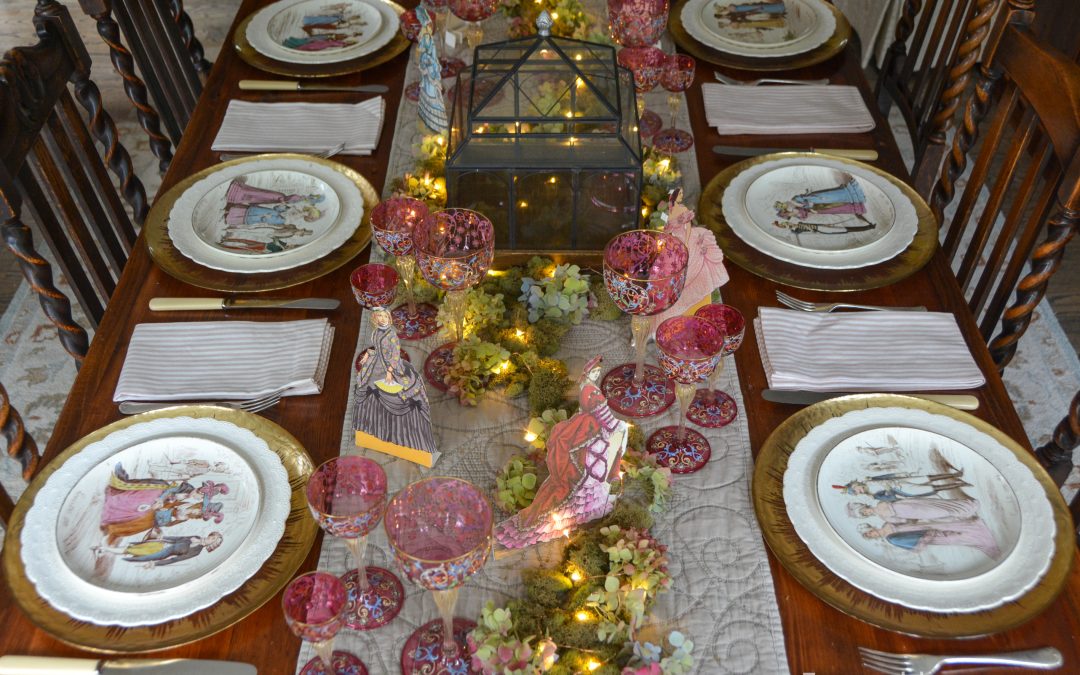
There is something irresistibly girly about this table — in the best possible way. Pink enamelled antique Venetian glass provides the requisite Valentine colour, fashion illustrations flirt from every place setting, and the overall mood feels lighthearted, romantic, and just a touch over the top.
It’s a light-hearted table that invites lingering, laughter, and perhaps a second glass of champagne.

Originally featured in Much Depends on Dinner, the inspiration comes from a series of French faience plates titled Le Monde Depuis Cent Ans, produced by Creil et Montereau. Translated as The World Over the Last Hundred Years, the series tells the story of a century of French life through dress — featuring people promenading, conversing, and being seen.
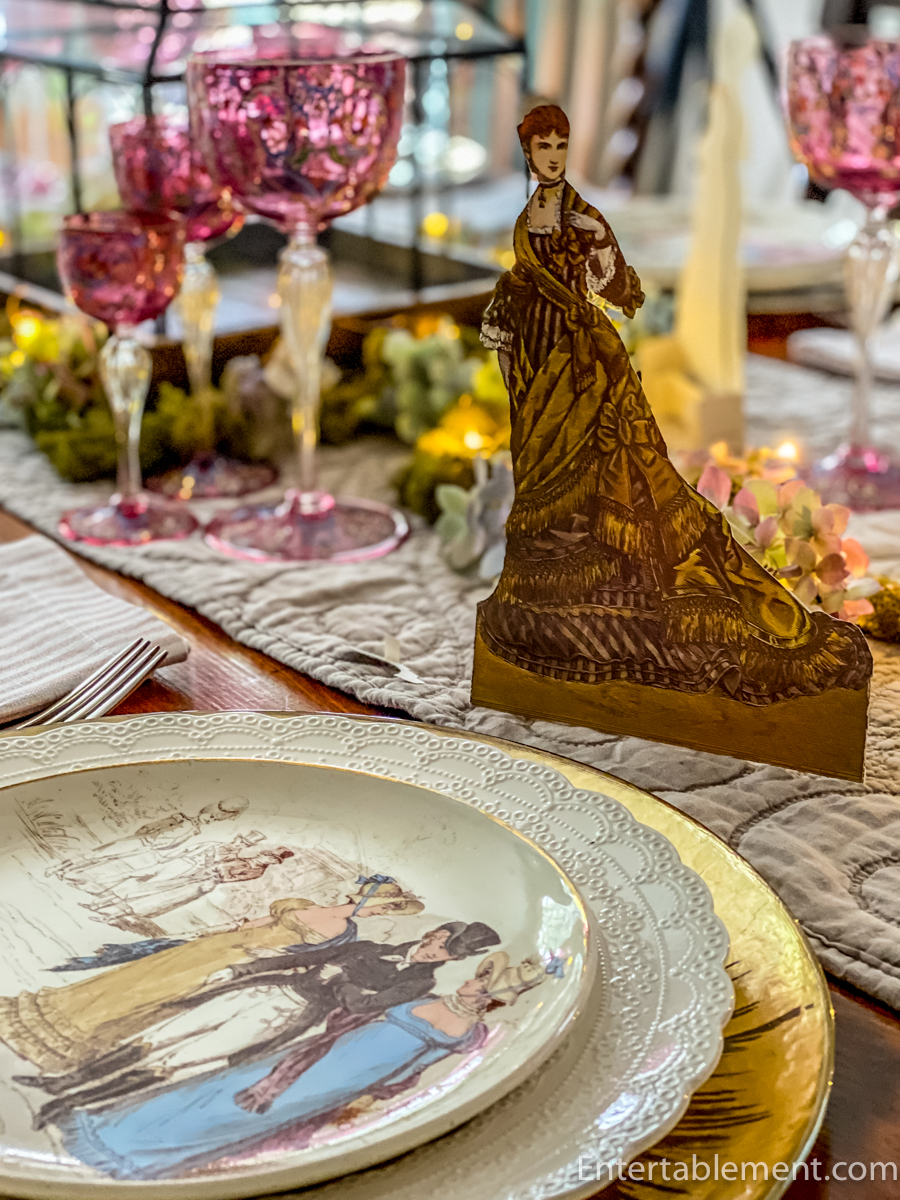
Created in the mid-19th century, Le Monde Depuis Cent Ans is believed to have originally comprised twelve plates, each representing a distinct political era and its corresponding fashions.
Rather than grand historical events, the focus is social life — what people wore, how they moved, and how they presented themselves to one another in public.
For Valentine’s Day, it felt like the perfect marriage of fashion, history, and romance.

A Little Historical Background
The century depicted in Le Monde Depuis Cent Ans was one of the most turbulent — and transformative — periods in French history. It may help to think of this series as the French equivalent of watching a young nation repeatedly reinvent itself, sometimes overnight, and often dramatically.
The End of Kings and the Shock of Revolution
The story begins in the final years of the French monarchy, under Louis XVI. This was a world of powdered hair, elaborate gowns, and strict social hierarchies — elegant on the surface, but deeply strained beneath.
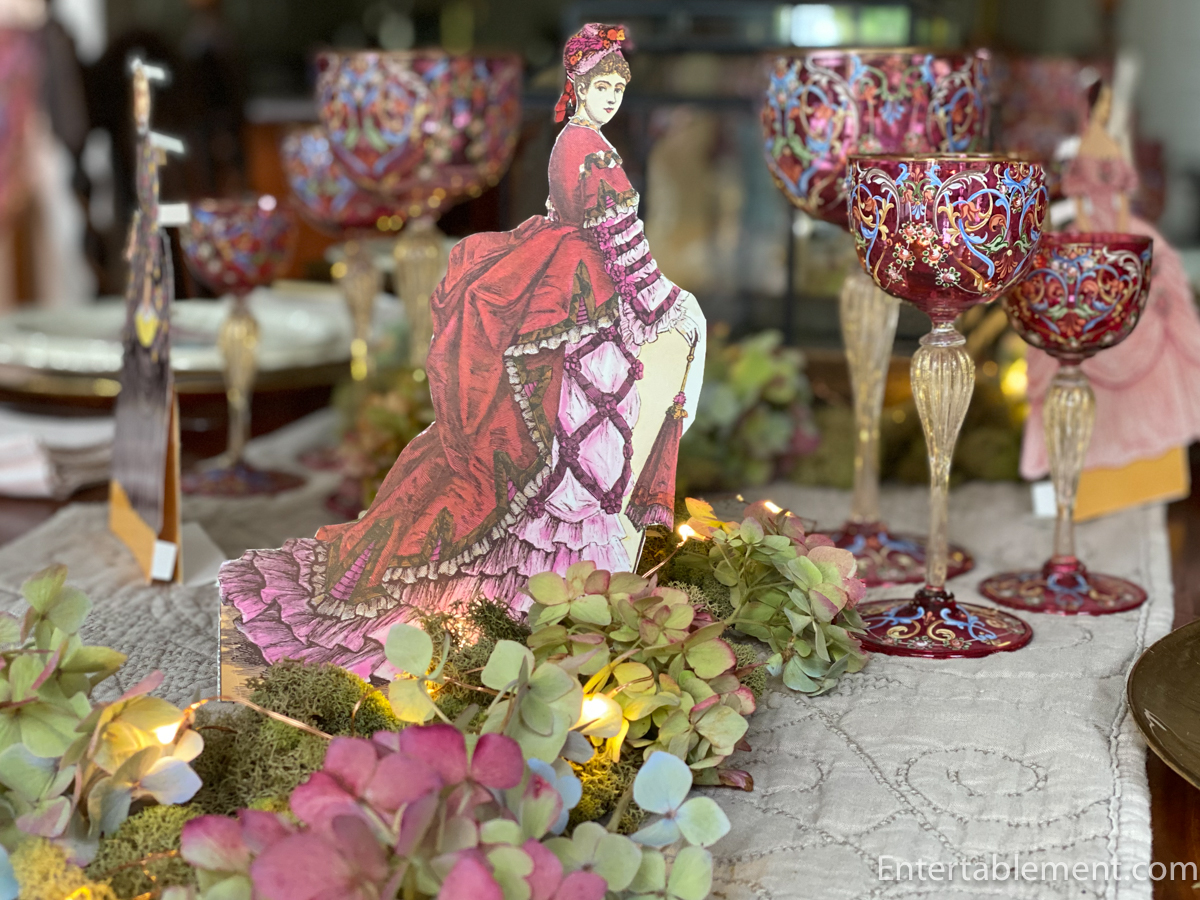
In 1789, the French Revolution erupted, violently upending centuries of tradition. Aristocratic privilege was abolished, the monarchy collapsed, and France entered a period of radical political experimentation — one enforced not only by ideology, but by terror. Heads quite literally rolled, as the guillotine became an industrial instrument of social erasure. Under figures like Maximilien Robespierre, an entire class was systematically dismantled.
Clothing changed almost immediately: fashion became simpler, more classical, and deliberately less extravagant, reflecting revolutionary ideals of equality and restraint.
Republics, Reforms, and Reinvention
What followed was a dizzying succession of governments — republics rising and falling, each attempting to redefine France’s identity. During these years, dress echoed uncertainty and change. Ancient Greek and Roman styles inspired flowing gowns and unstructured silhouettes, symbolizing reason, virtue, and a break from the excesses of the past. For the people living through it, this was not a neat transition but a time of constant adjustment — socially, politically, and personally.
Empire and Ambition
Order returned under Napoleon Bonaparte, whose rise to power reshaped Europe. As First Consul and later Emperor, Napoleon used fashion as a tool of statecraft. Empire-style gowns with high waistlines and classical symmetry echoed imperial authority, while military tailoring reinforced discipline and control. France was no longer reacting to revolution — it was projecting confidence and ambition.

Restoration and the Rise of the Bourgeoisie
After Napoleon’s fall, the monarchy returned, but France had changed forever. Kings ruled again, yet society was increasingly shaped by the middle class. Fashion softened, becoming more practical and wearable, reflecting stability and domestic life rather than courtly display. Public promenades, parks, and city streets became stages where fashion was worn to be seen, not just to impress royalty.

Industry, Urban Life, and Spectacle
By the mid-19th century, France entered an era of industry, modernization, and renewed prosperity. Under Napoleon III, Paris transformed into a grand, modern capital. Fashion followed suit: skirts grew wider, fabrics richer, and silhouettes more dramatic. This was the age of crinolines, social display, and confidence — a France looking outward, embracing progress and pleasure in equal measure.

Why This Matters at the Table
What makes Le Monde Depuis Cent Ans so compelling is that it captures these shifts not through battles or speeches, but through people going about their lives — walking, conversing, courting, and promenading.
Fashion became a visual language:
- Revolution simplified it
- Empire disciplined it
- Prosperity embellished it
On the Table
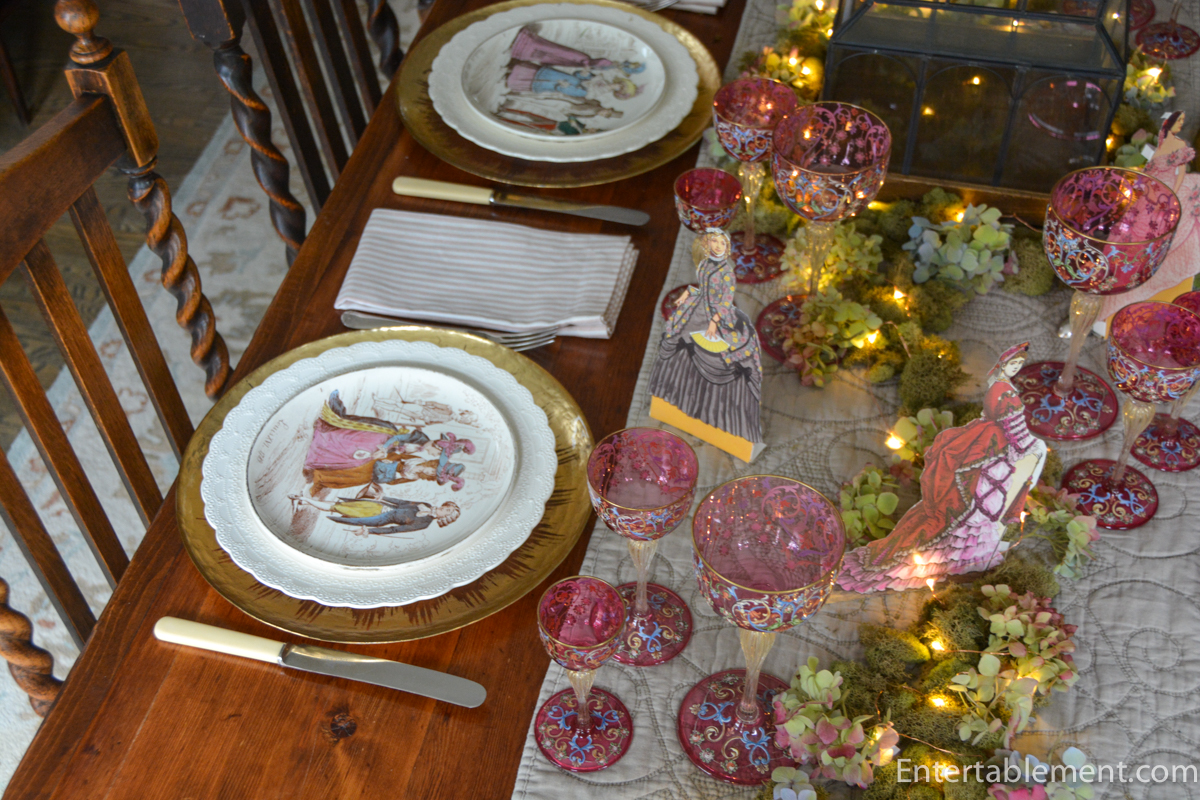
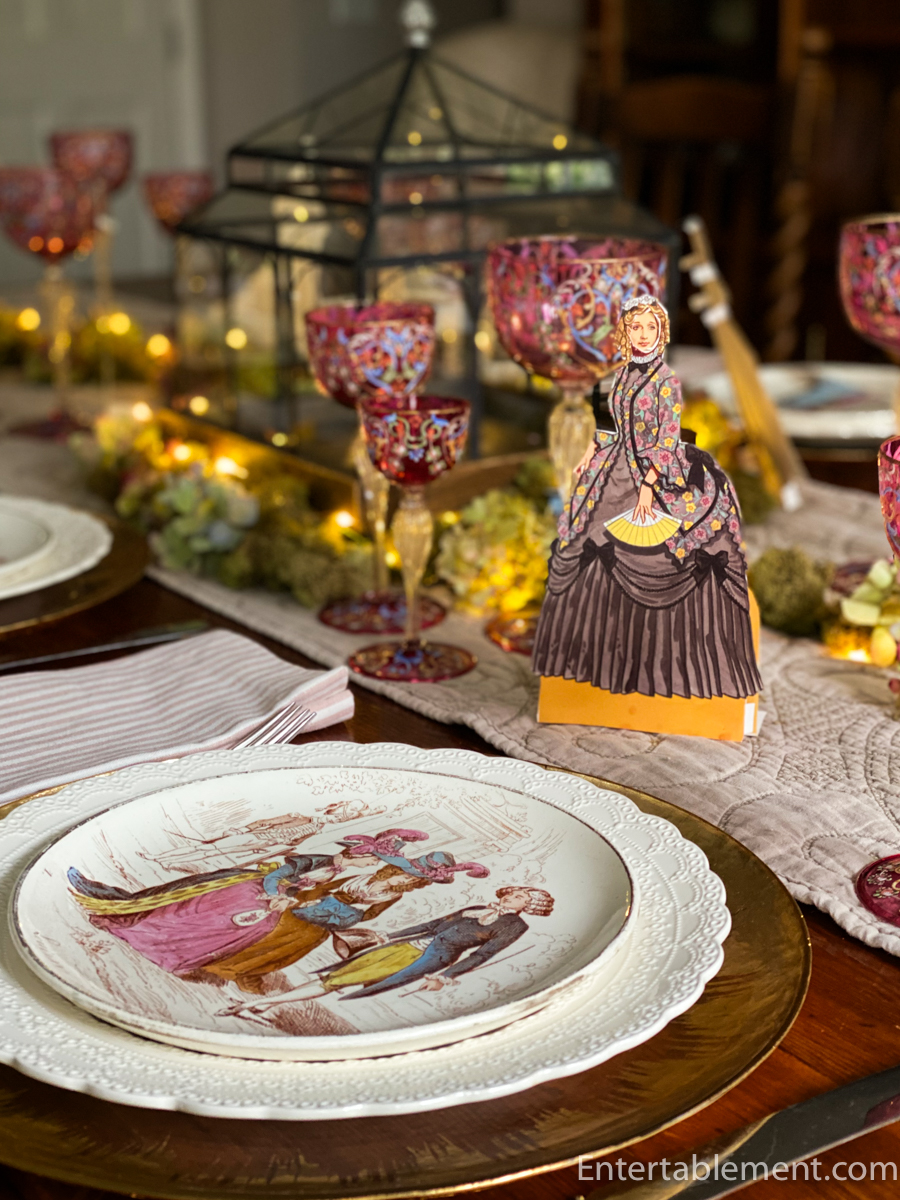
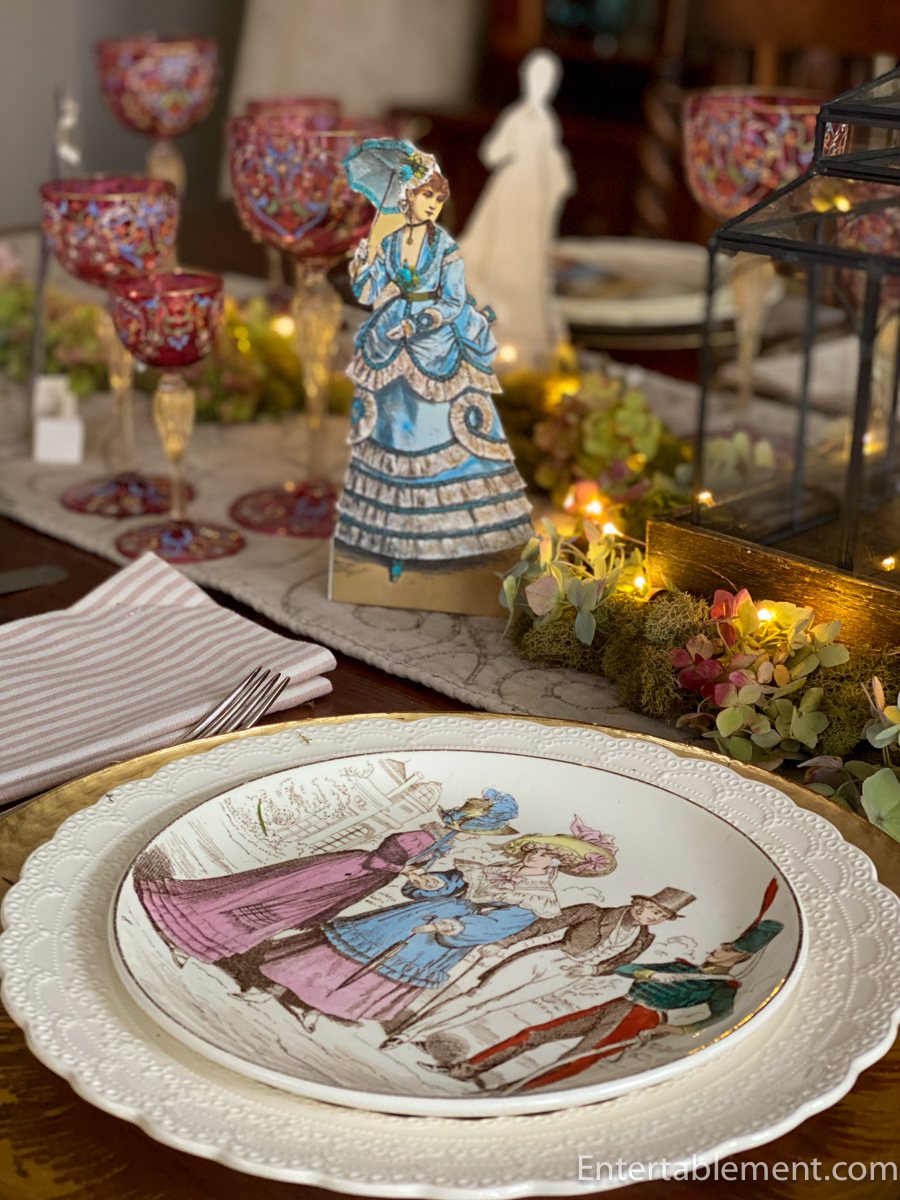
Here are the six plates with which I set the table in chronological order.
Louis XVI (1789)
This plate captures the final moment of ancien régime elegance. Women wear richly decorated gowns with feathered hats and structured bodices, while men appear in tailored coats and breeches. The scene reflects the refined social rituals of late 18th-century France, poised delicately on the brink of revolutionary change.

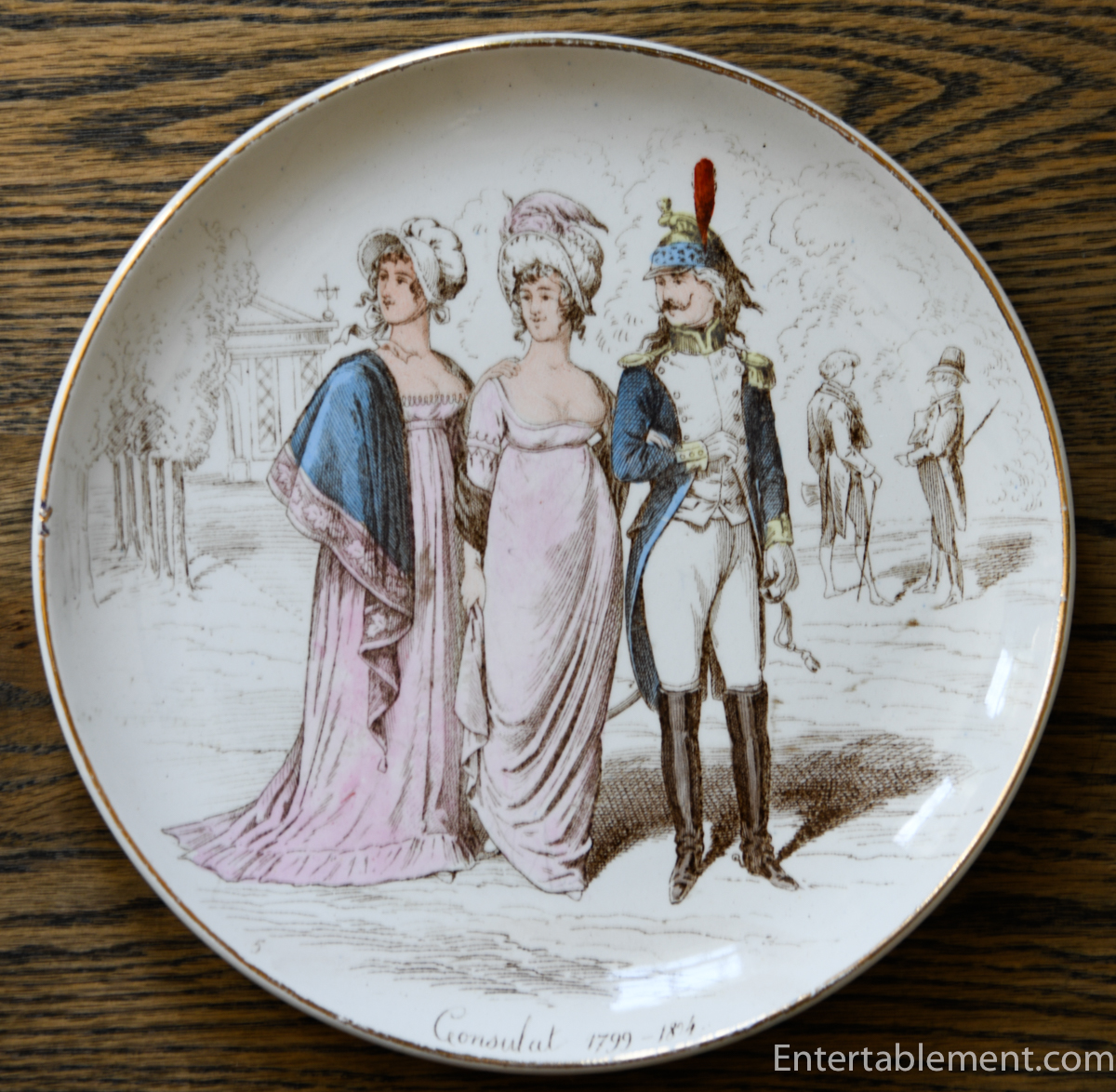
Consulat (1799–1804)
Here, fashion reflects a society emerging from revolution and moving toward order. Empire waistlines begin to take shape, while men’s dress grows more disciplined and military in tone. The figures suggest a cautious optimism — a France redefining itself with clarity, restraint, and renewed purpose.
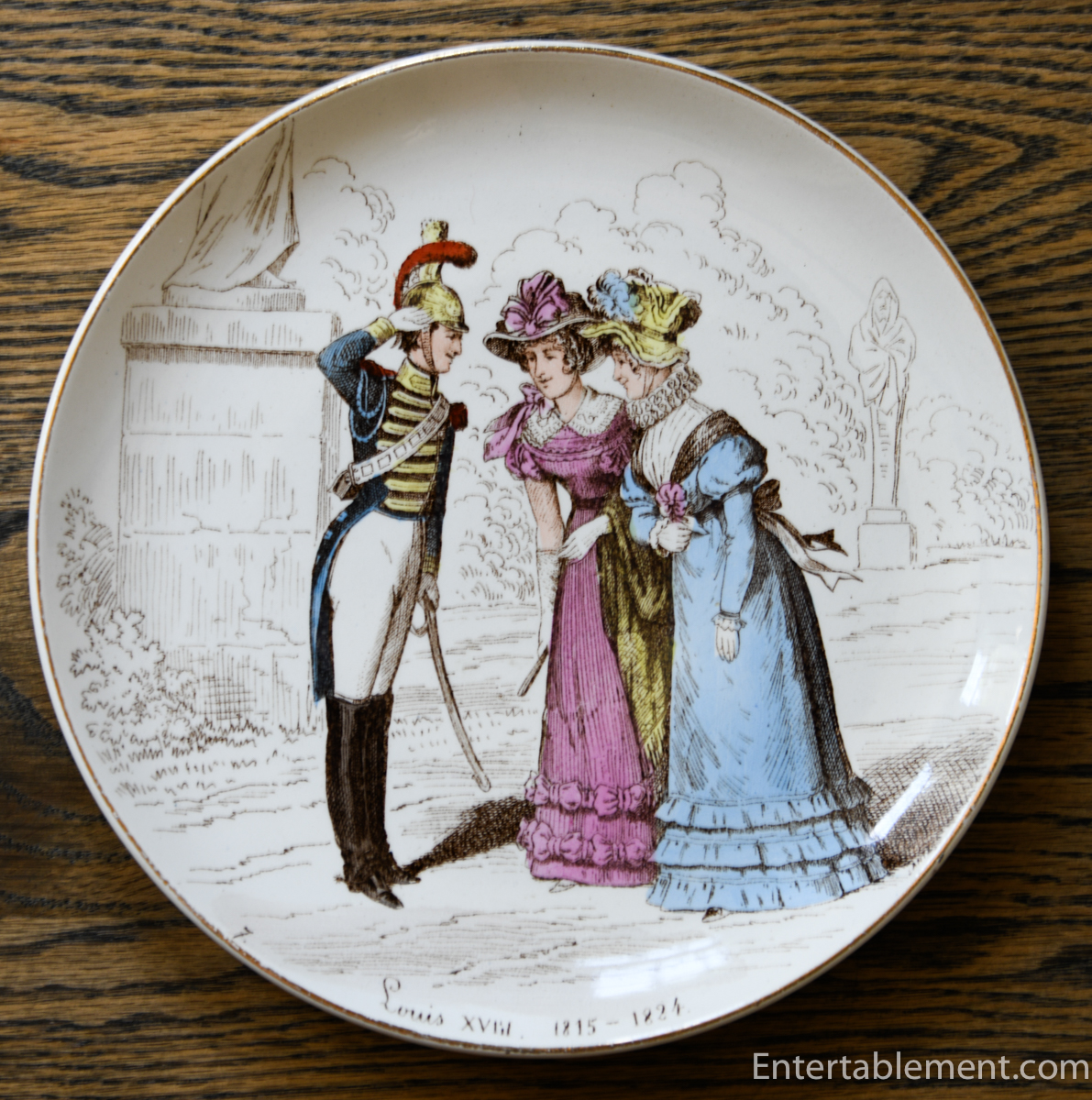
Louis XVIII (1815–1824)
On display is the gentle return to monarchy following the fall of Napoleon, during a period known as the Restoration. Fashion softens noticeably: women wear flowing gowns with lowered waistlines and delicate ornament, while men’s dress becomes less overtly military and more restrained. The scene conveys a sense of calm and civility — a society seeking balance, grace, and reassurance after years of upheaval.
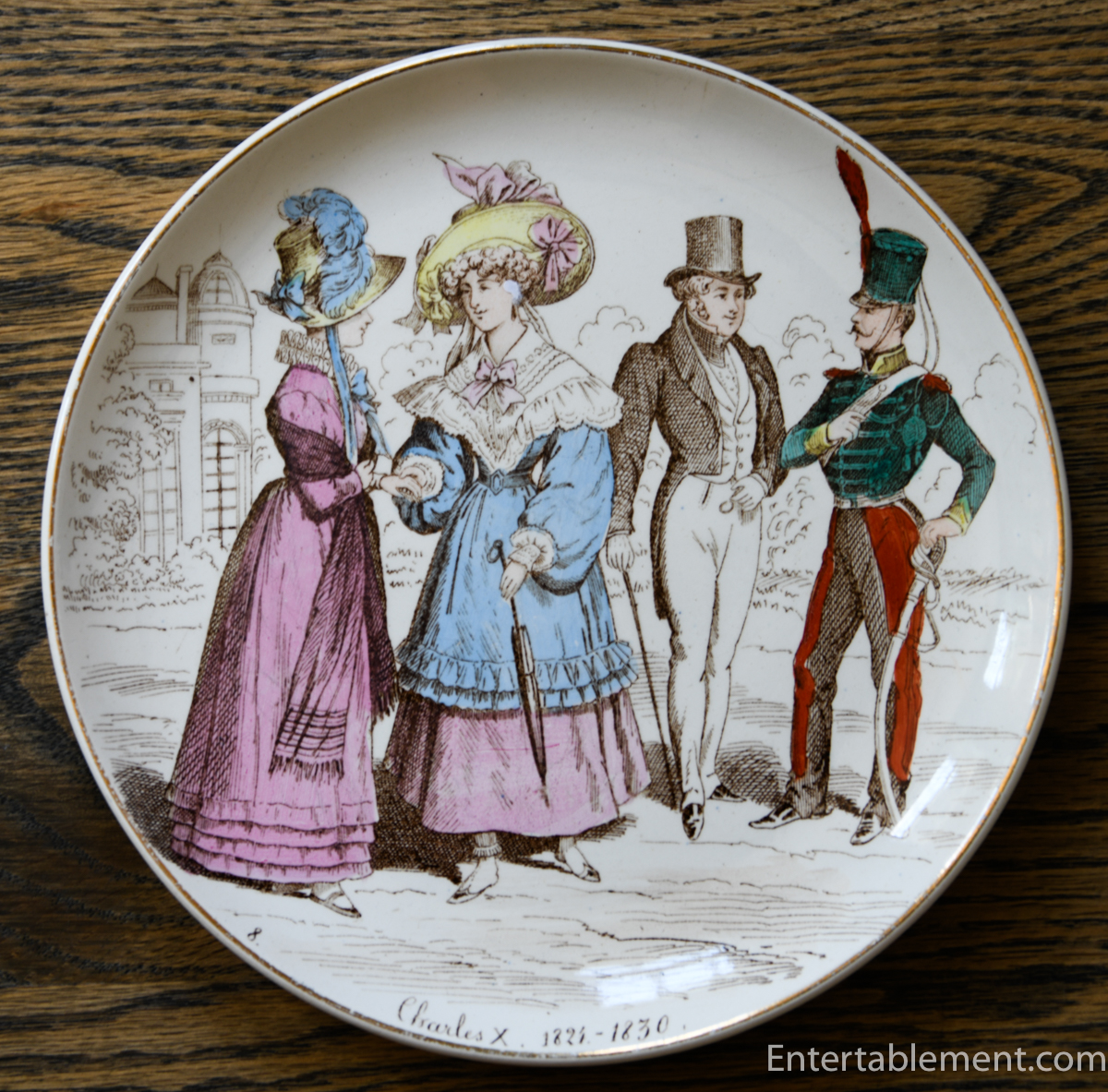
Charles X (1824–1830)
This plate reflects the romantic turn of Restoration-era France. Women wear fuller skirts and decorative bonnets adorned with feathers and ribbons, while men’s tailoring grows more refined and expressive. Fashion during this period balances formality with ornament, capturing a society leaning back toward elegance after years of restraint.
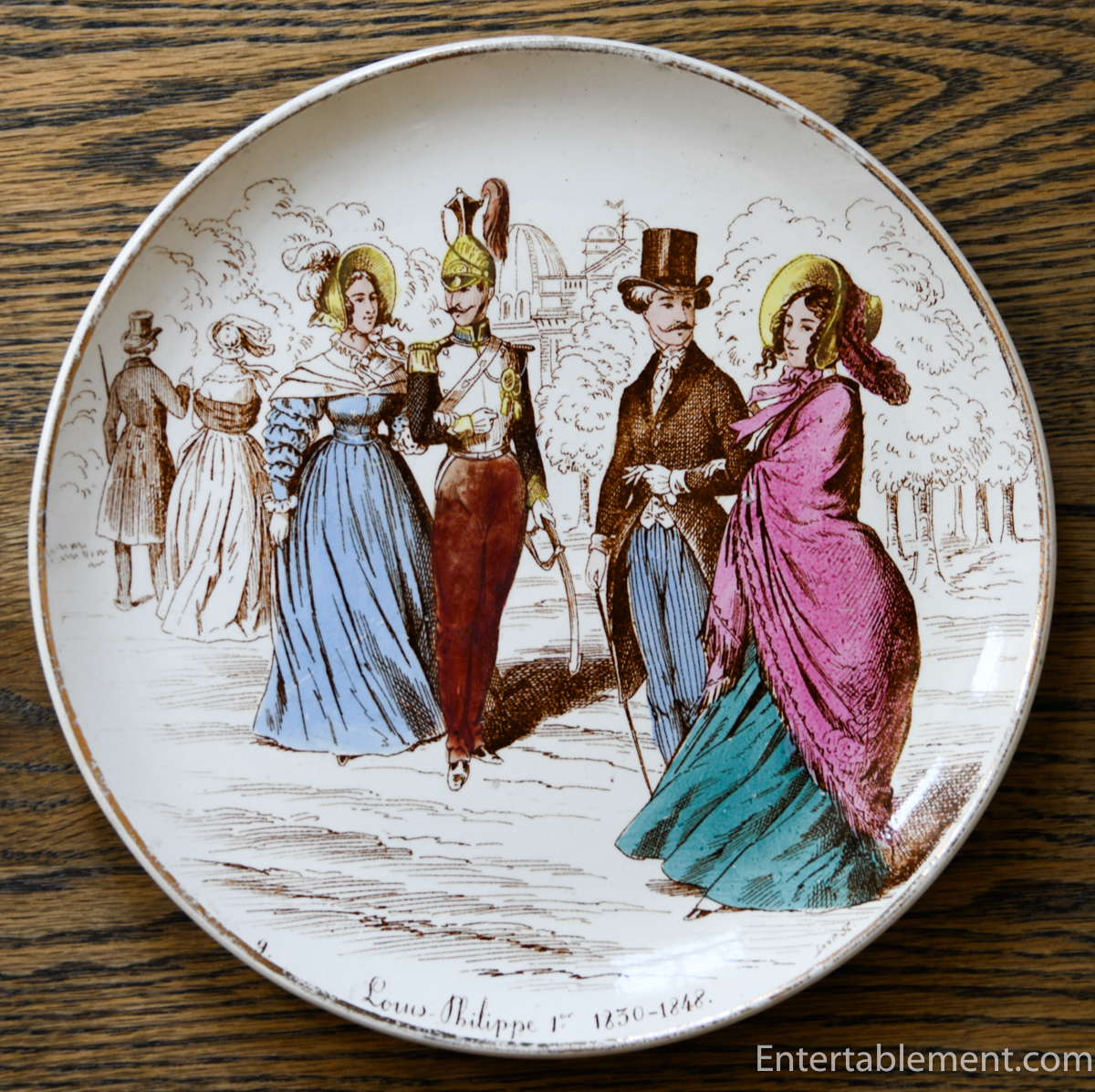
Louis-Philippe I (1830–1848)
Under the July Monarchy, fashion turns outward toward public life. The figures promenade with relaxed assurance, dressed in practical yet polished attire suited to the growing bourgeois class. This is fashion for the city — sociable, modern, and designed to be seen rather than displayed at court.
Seconde République (1848–1852)
A moment of civic restraint and composure, this plate reflects a France once again in transition. Women’s skirts gain fullness without extravagance, while men’s tailoring signals respectability and presence. The overall tone is measured and urban — elegant, but grounded.

A Living Collection
While this table features six moments from Le Monde Depuis Cent Ans, the story continues. I’ve managed snag several additional plates — currently back in Canada — extending the narrative further. I believe the two I am still short are the most difficult to track down, which figures. But I shall continue the hunt.
Set on a Valentine’s table, the series feels especially charming — a reminder that even during upheaval, people still dressed beautifully, gathered socially, and found joy in being together.
And perhaps that’s the most romantic message of all.


Helen, your tablescapes are always so beautiful – you are my favorite blogger by far – but they always seem to include one component that I *must* have, and it’s not identified! I even went to my copy of Much Depends on Dinner to see if it was described there, but had no luck. Please tell me about the mini greenhouse/solarium in the center of the table…
Thank you!!
First of all, Barb – so glad you enjoyed the blog. 🙂 Once I had settled on the paper dolls, the rest kind of fell into place.
Secondly, the mini greenhouse was from Pier 1 (I know, grrrrr….). I thought it looked like the glass houses on the old country estates, such as Syon Park.
And if there is anything I fail to mention, please don’t hesitate to ask! Always glad to rummage around in my memory to answer. Have a lovely day.
What a wonderful table! I love the history and the table itself! Your glassware is stunning, and I love the standing figures. The whole package is really fabulous,Helen! Thanks for another beautiful, inspiring, and fascinating table!
Hi Barb,
I almost didn’t buy that glassware as it seemed way too ornate. But I have ended up using it a number of times. Most of my Venetian glassware is fairly plain. But I noticed when we visited the production facilities in Murano that they have a big area just for enamelled glass. It seems to be very popular.
And…I managed to track down the two missing plates yesterday on eBay in France. Woot!!! Couldn’t believe my luck.
Enjoy your day.
Best,
Helen
Dear Helen, what a perfect setting for a fashion show…except I can’t think of 6 people I’d trust with those glasses–they are a work of art on their own. I love the nod to lace in the dinner plates, too. The paper ladies are just the right touch. There’s a virtual exhibit that may interest you:
https://en.chateauversailles.fr/news/life-estate/fashion-versailles#the-project
Thank you so much for the link, Beatrice! What a marvellous exhibit—they did an excellent job explaining all the subtle differences in fashion. When I was in England for the Christmas Markets last November, my friend Leanne and I went to the Marie Antoinette exhibition at the Victoria & Albert Museum. We both enjoyed it very much, and I received the book for Christmas (haven’t yet had a chance to dig into it). It seems incredible now to think of how young she was: married at age 14, queen consort at 18. Good grief.
Did you see that the King’s Gallery will have an exhibit of Queen Elizabeth’s fashions this year, including both her wedding and coronation gowns?