
I am always on the hunt for series ware, and recently discovered La Chasse à la Licorne, or The Hunt of the Unicorn. Produced in the 1970s by Haviland, it comprises six plates with blue backgrounds and six with red, all featuring unicorns. After mulling some combinations of blue and red, I decided to style them separately, and the blue ones got first dibs.
The scenes draw on the celebrated Unicorn Tapestries, woven in the Southern Netherlands around 1495–1505 and now held at The Met Cloisters in New York.
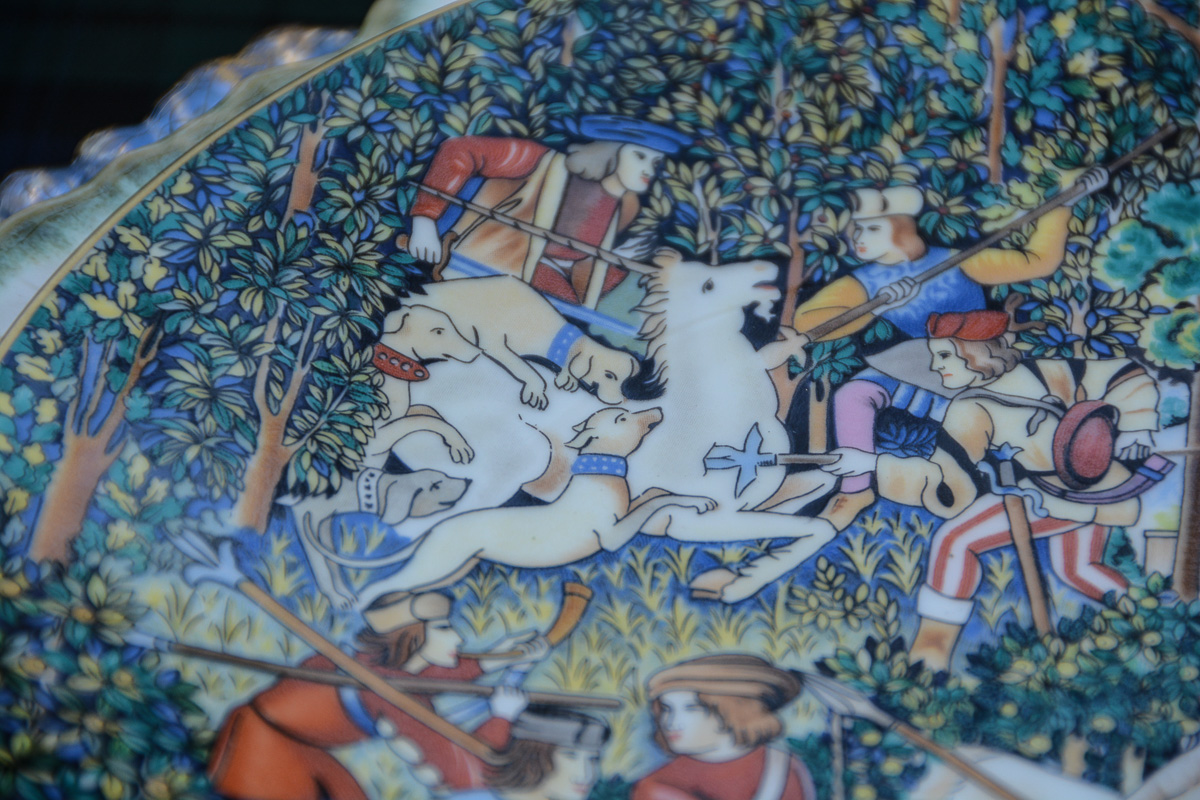
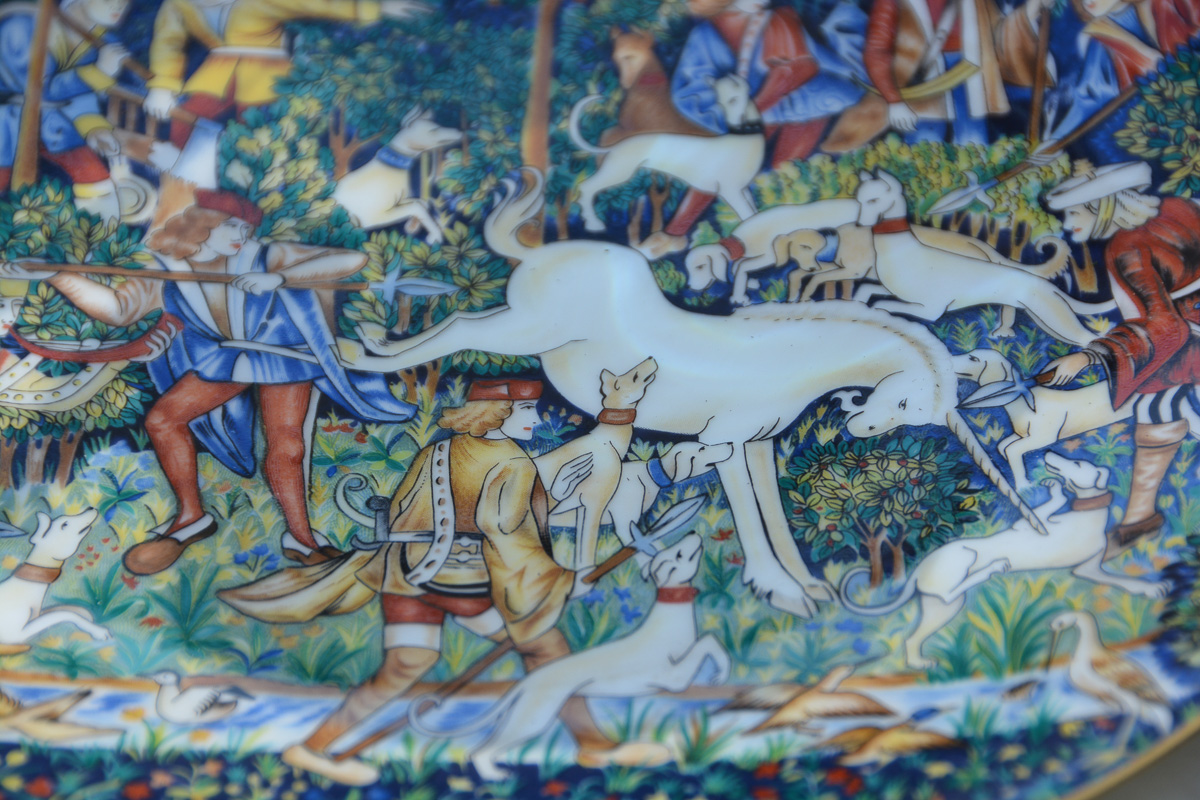
Hunters and dogs pursue the unicorn through woods thick with trees and flowers. There is a great deal of detail, which is apparent on each plate. I sense a trip to New York coming on; I would love to see the actual wall hanging.
One scene was already very familiar. The unicorn enclosed by a circular fence has appeared on countless reproductions. In the 1980s, I hooked a large rug to use as a wall hanging, believe it or not. Yes…I know… it was the 80s. Big hair, big shoulder pads, big everything.
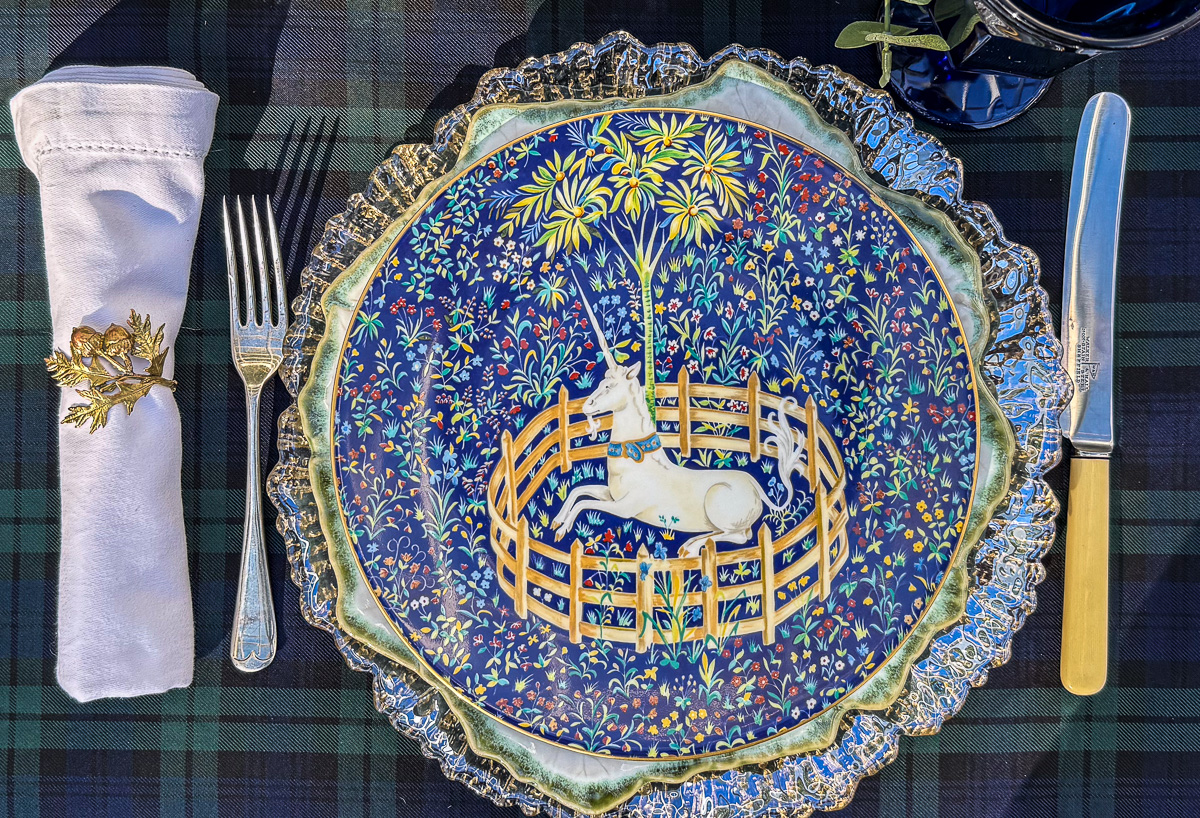
I knew the image as The Unicorn in Captivity. The Met now calls it The Unicorn Rests in a Garden. Given the preceding hunt, the fence and the chain attaching him to a tree, “rests” seems an optimistic description, at best.
The original tapestries were objects of extraordinary luxury. Around 1500, the workshops of the Southern Netherlands supplied courts and wealthy households throughout Europe, with Brussels emerging as the leading centre. The industry drew on generations of expertise in weaving, dyeing and the cloth trade.

These were pictures built in thread. Working from full-sized painted designs known as cartoons, weavers constructed small areas of colour that became faces, folds of clothing, leaves and animals. Several people could work alongside one another at a loom, but a large, finely woven series still represented many months of skilled labour. Wool was supplemented with silk and, in the most expensive work, silver and gilt threads. The Unicorn Tapestries themselves include all of these materials.

The tapestries served more than one purpose: they helped keep out draughts, filled rooms with colour and proclaimed their owner’s wealth. They could also be rolled up and moved between houses. Portable magnificence had its advantages.

On the plates, that richness survives in the crowded foliage, elaborate clothes and small flowers filling the spaces between the figures. Some scenes are all movement: dogs leap, hunters advance and the unicorn makes his objections clear.

While others allow a little more breathing room.

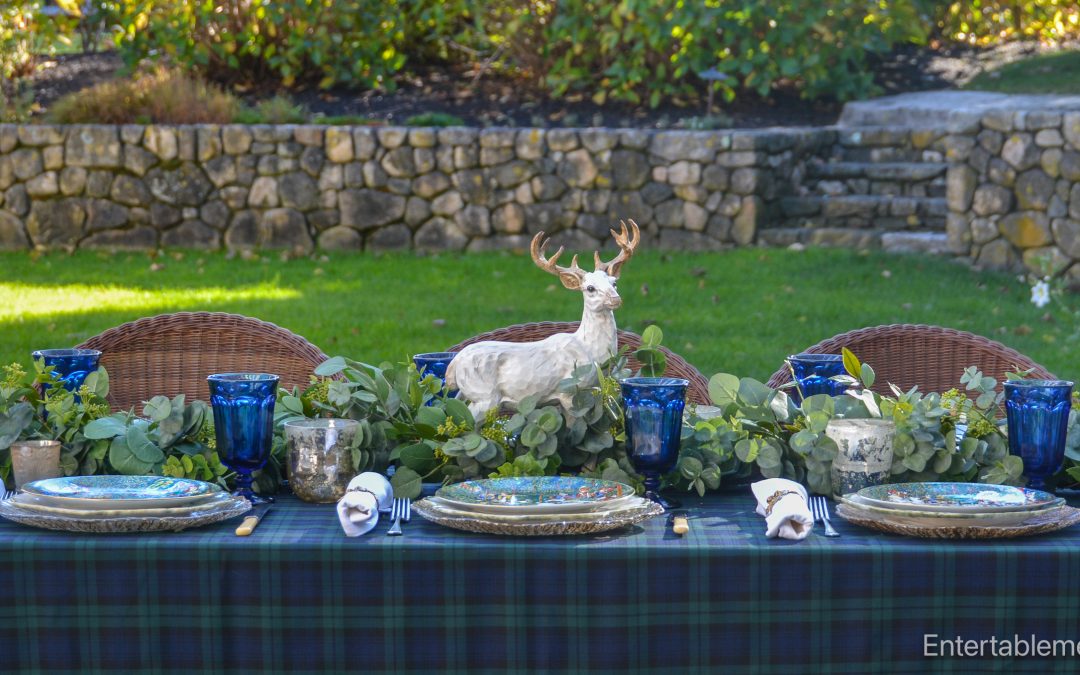
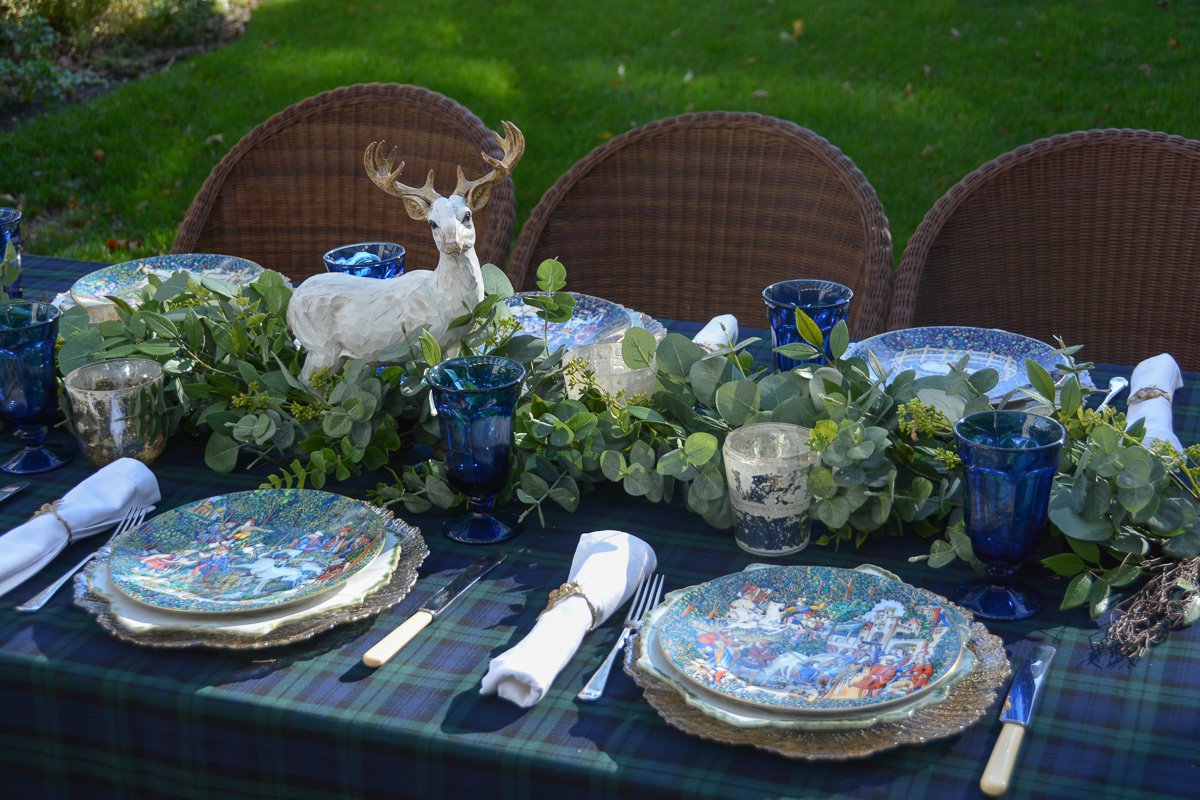
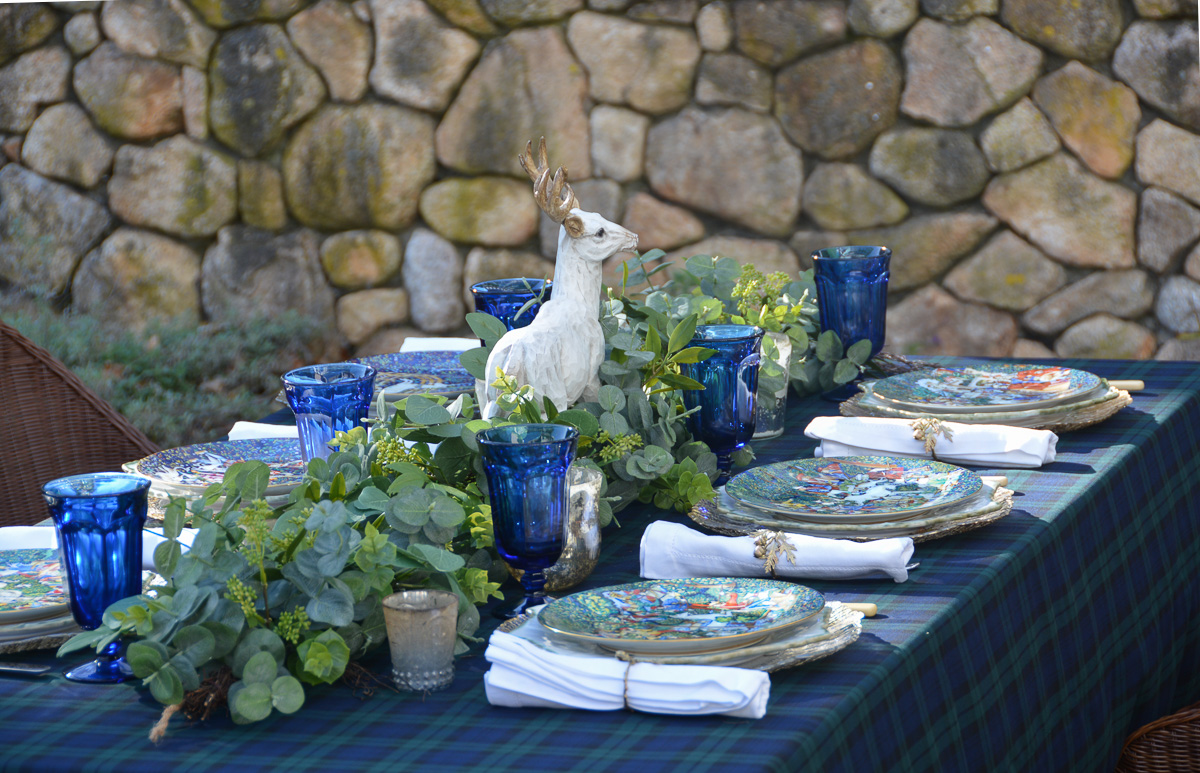
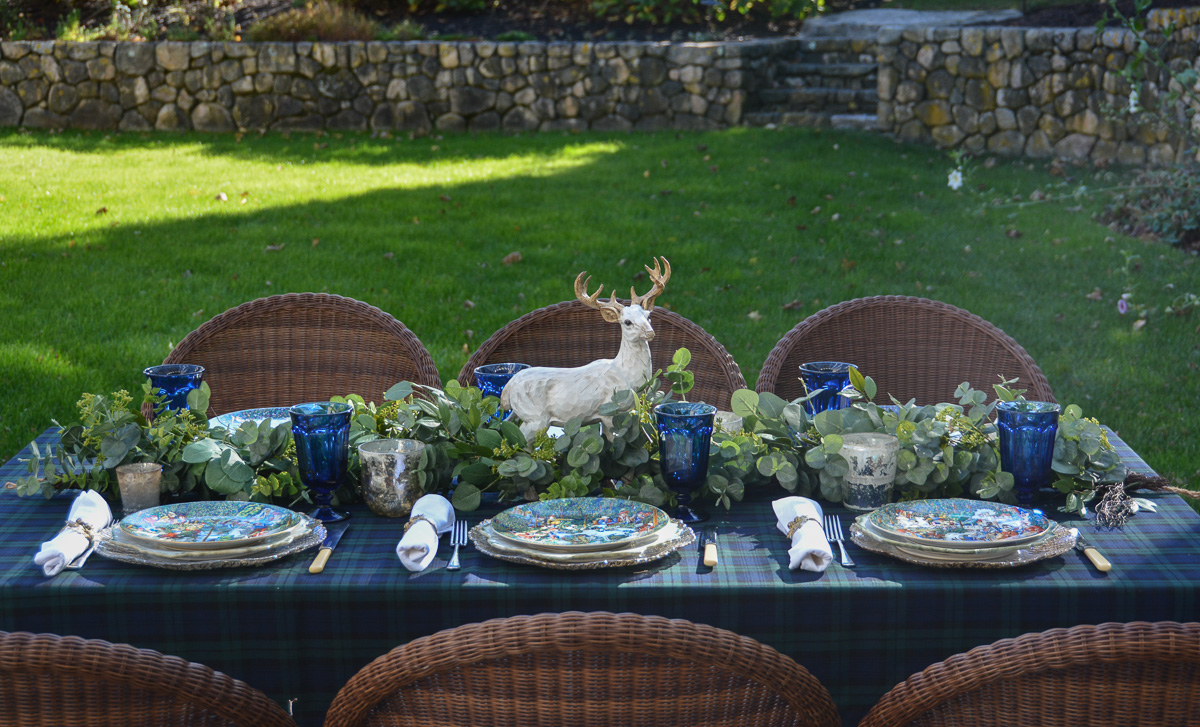
I used a Black Watch plaid tablecloth to ground the plates. Its geometric precision was a nice contrast to all those curling stems and busy branches.
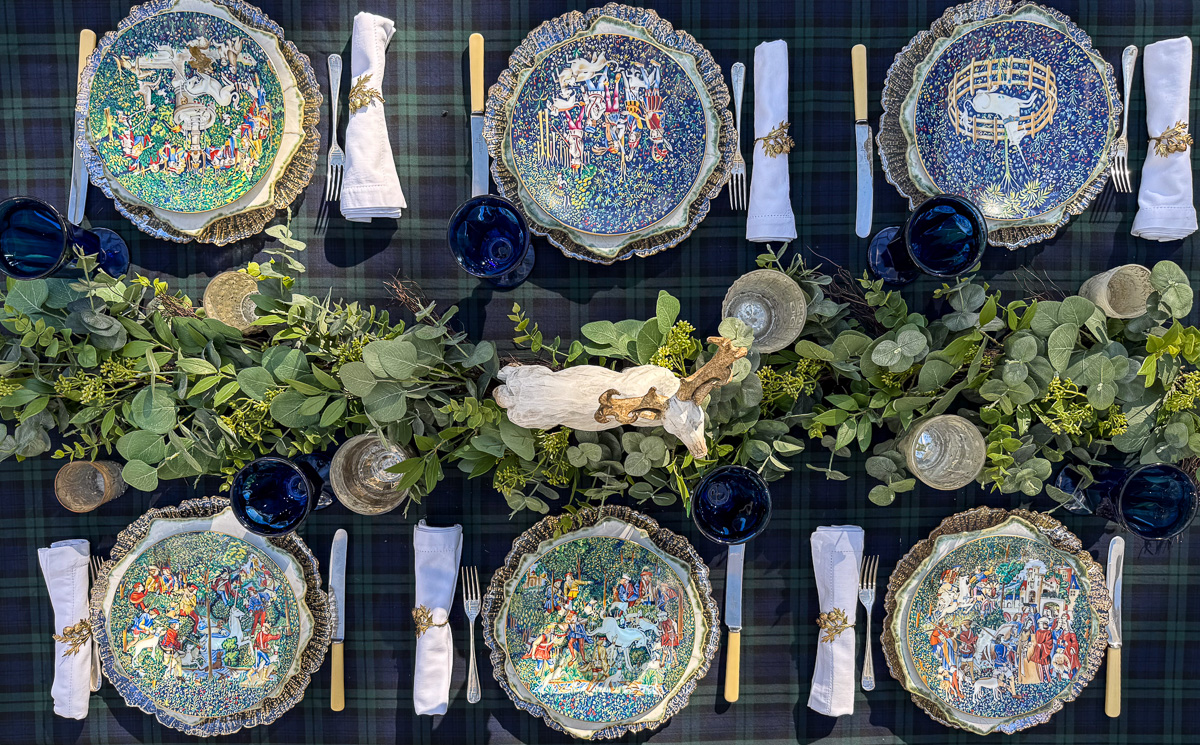
With that sombre background, I decided to use gilded chargers for a bit of sparkle. On top of those, oversized Vietri Leaf plates frame the unicorn plates.

Cobalt glasses repeat the deep blue of the plates, while plain white napkins in gold acorn rings provide a pause between the detailed place settings.

Down the centre of the table, a lush runner of greenery provides some cover for the white stag. Though he is short of a horn in the middle of his forehead, he otherwise stands in for the unicorn fairly well. I did try to find a unicorn centrepiece, but the available specimens tended towards Pepto-Bismol pink and were clearly intended for a child’s birthday party.
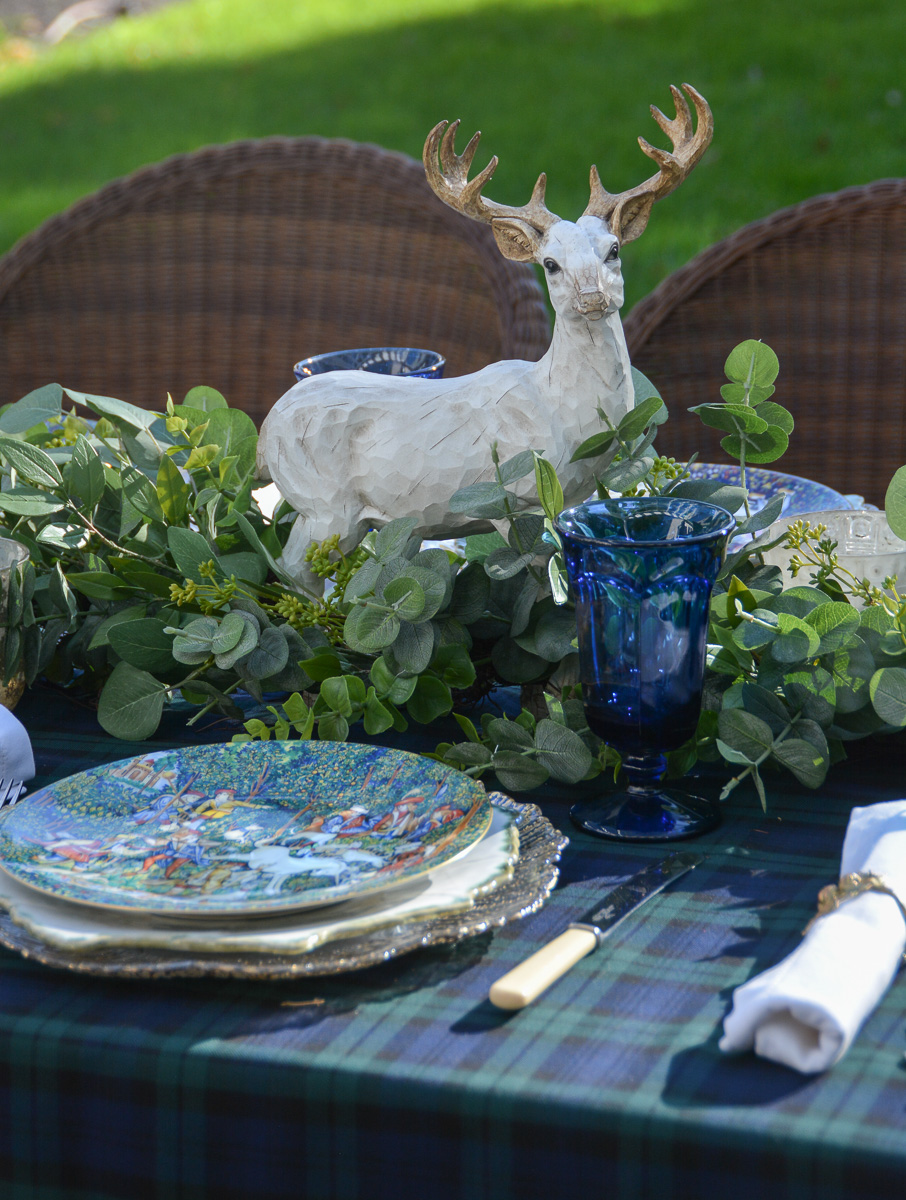
Outside, with the lawn and stone wall behind it, the table had all the woodland setting it needed.
Sources:
- Charger plates: by Pier 1 (defunct)
- Dinner plates: Vietri (discontinued)
- Salad Plates: La Chasse à la Licorne, or The Hunt of the Unicorn by Haviland (eBay)
- Glasses: Old Williamsburg Blue Deep Ultra iced tea glasses (Replacements)
- Napkin Rings: Michael Michaud