
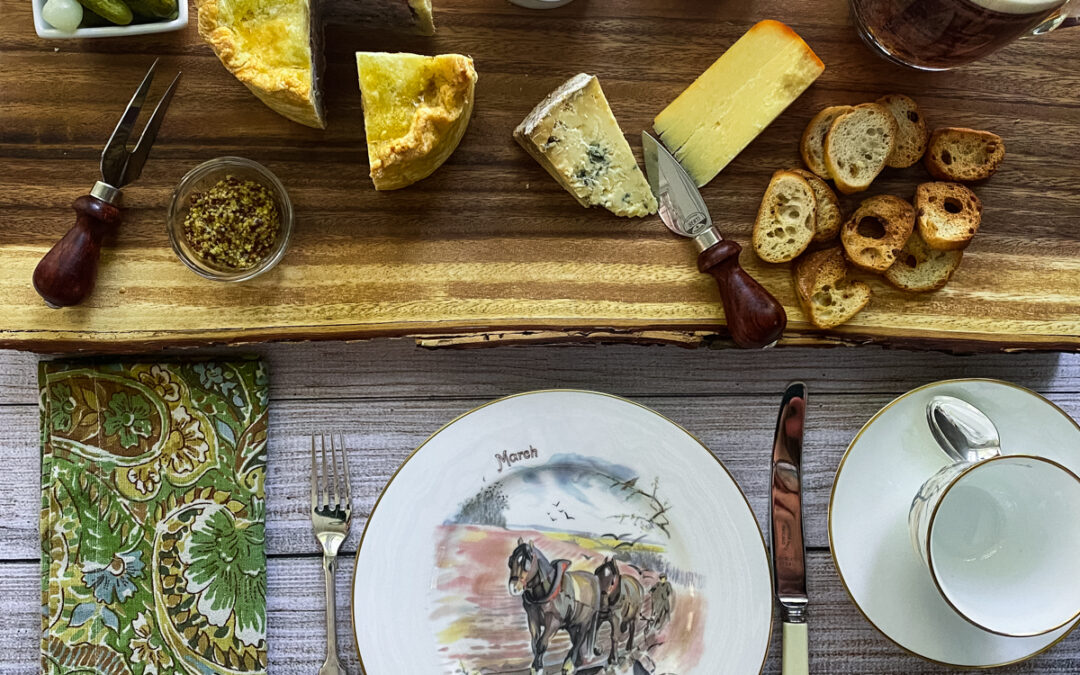
Considering the chill, blustery weather in which we started March, I wondered if the maxim “Comes in like a Lion, Goes out like a Lamb” quoted in Edith Holden’s Nature Notes and the Country Diary of an Edwardian Lady would hold. Sure enough, we were blessed with warm weather and sunshine yesterday, Easter Sunday.
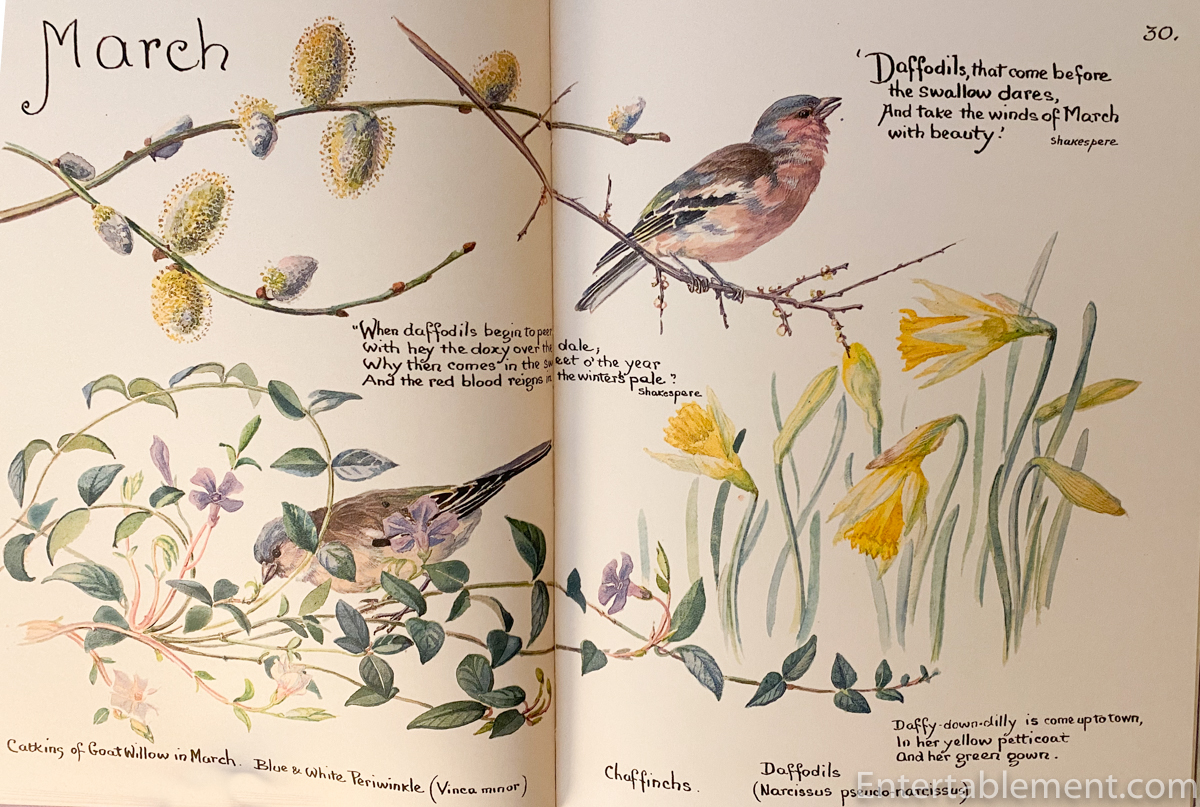
Sadly, there are not a lot of daffodils yet. They’re coming at a snail’s pace here in Cape Cod. England is awash in daffodils in March, as this picture from a visit to Hartwell House a few years ago shows.

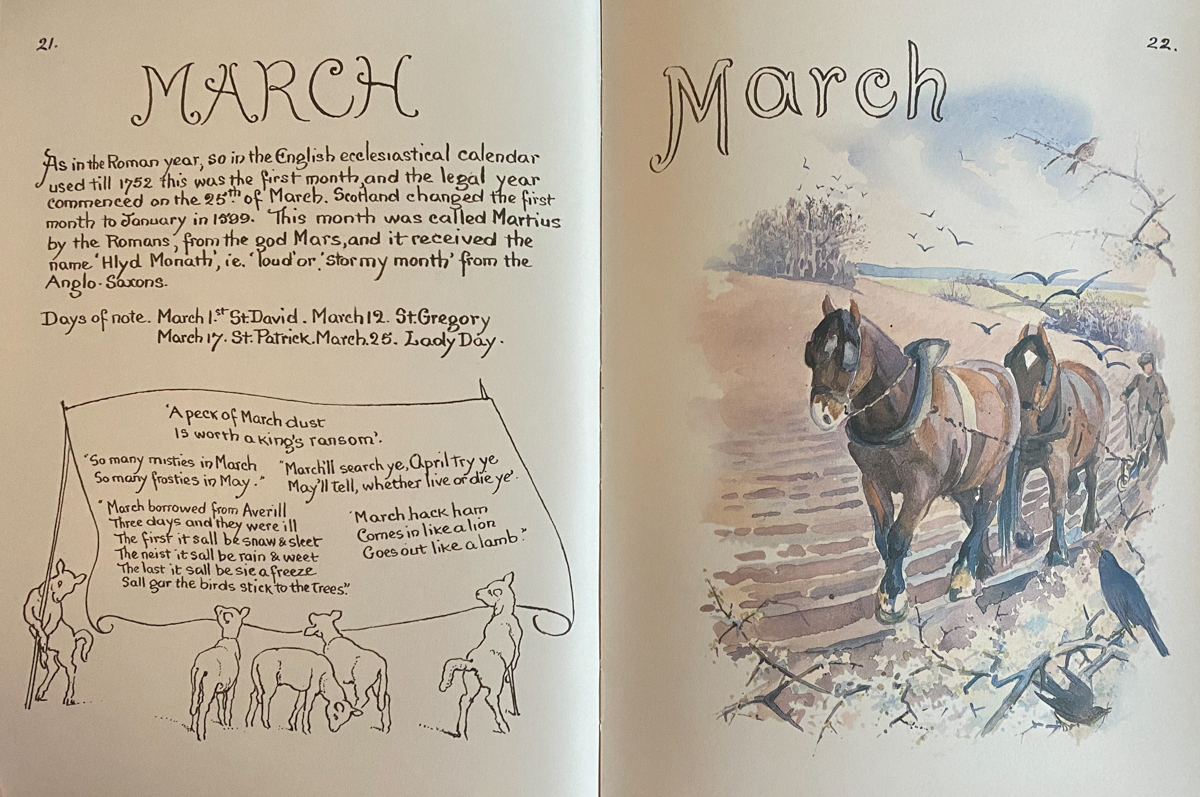
March’s main illustration features a horse and plough.
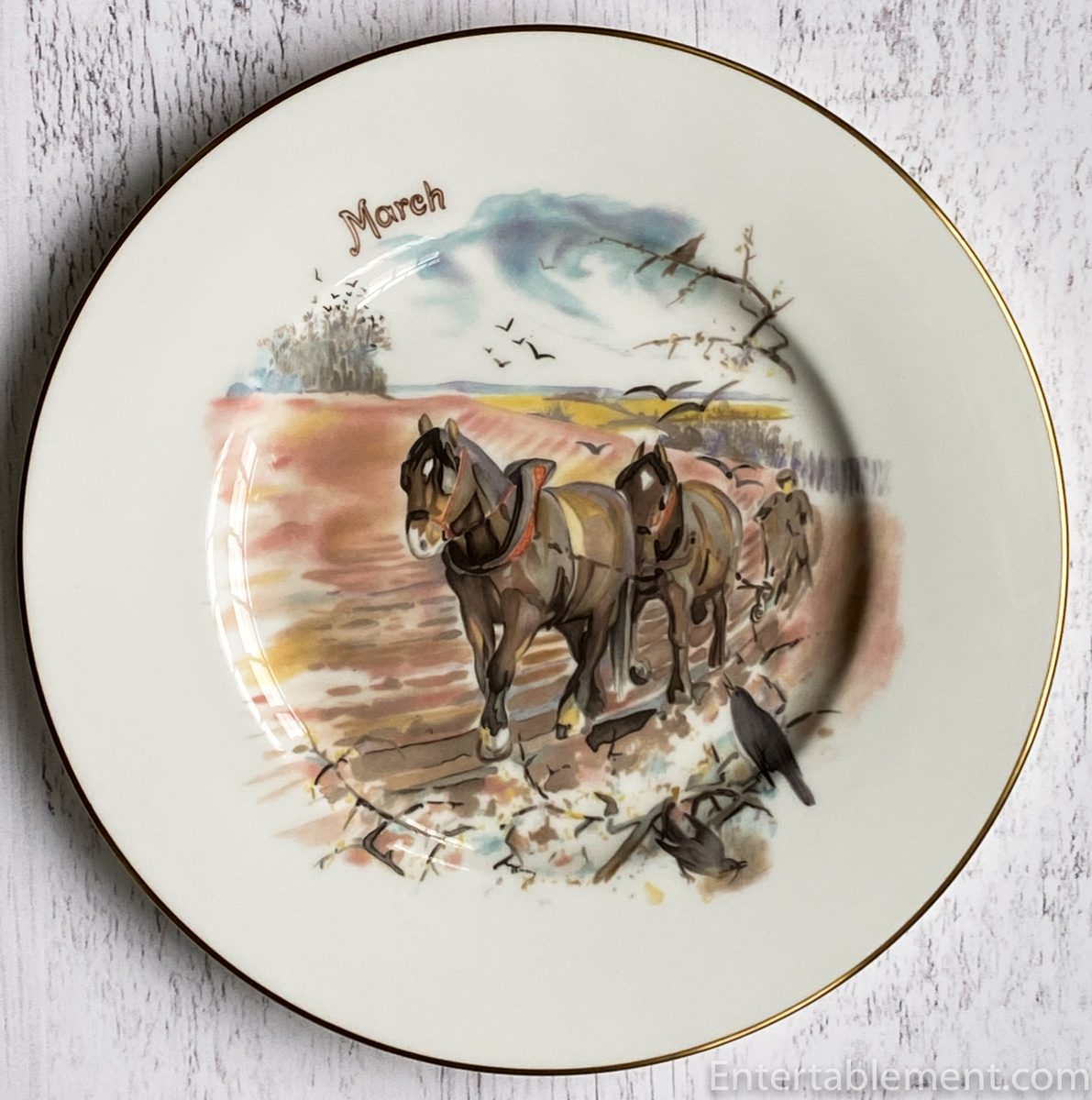
As does the Heinrich H & C (now part of Villeroy & Boch) set of luncheon plates I picked up a few years ago.
That got me thinking about the Ploughman’s lunch, which is so prevalent in “British” pubs and has been exported worldwide. In England, your Ploughman’s will likely feature a slice of Pork Pie alongside Cheddar and Stilton cheeses, Branston pickle, grainy mustard, and some slices of bread. In more adventurous establishments, you might also get cornichons and some crudities. Wikipedia claims that Pork Pie is typically served with salad. Seriously? Please, dear readers, let me know if you’ve ever had pork pie served with salad.
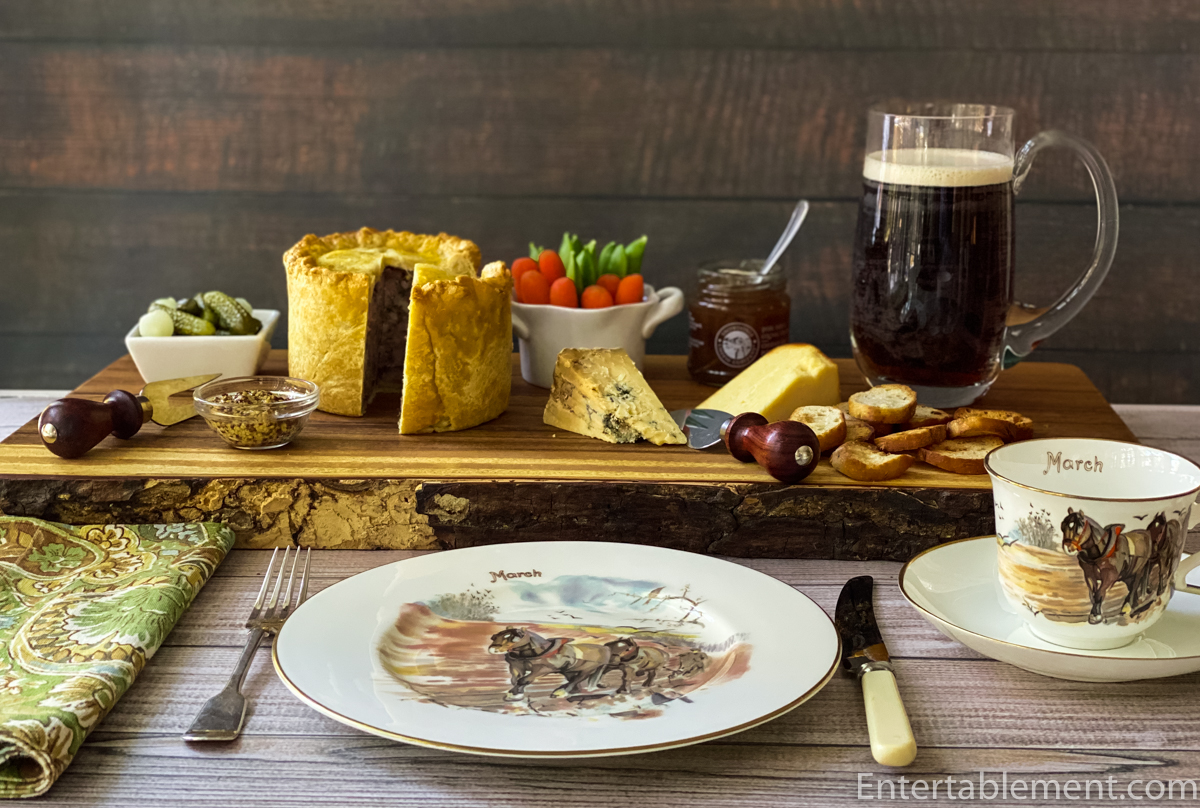
Pork pies can be served hot, often with mashed potatoes and peas. The same Wikipedia article claims that this is often done in Yorkshire; this is not my experience in my travels or at home. My father was a Yorkshireman and enjoyed his pork pie at room temperature.
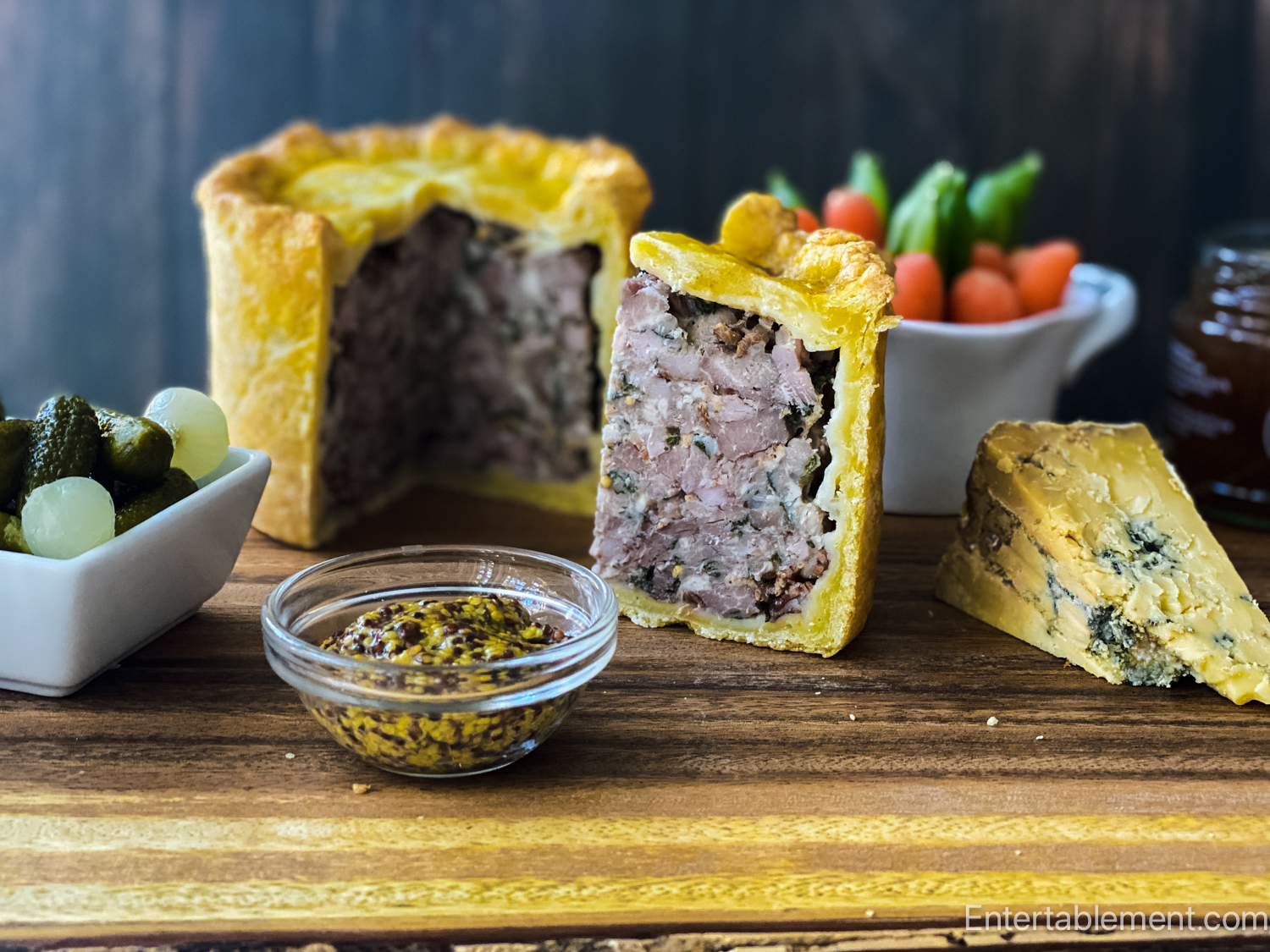
The pork pies we enjoy today derive from the raised meat pies of medieval cuisine. Those were encased in a dense hot water crust pastry to transport and preserve the precious meat filling. The pastry was tough and rigid, called a “coffin”. The content of the pies was meant to be eaten cold, and the crust was discarded.
Hannah Glasse (one of the Domestic Divas in Entertablement — Much Depends on Dinner) wrote The Art of Cookery Made Plain and Easy in 1747, featuring a recipe for a Cheshire pork pie, whose filling comprised layers of pork loin and apple, sweetened with sugar and filled with half a pint of white wine (poured through the funnel in the pie). A similar technique was used for Sweet Lamb Pie in the Entertablement Seasonal Autumn Quarterly.
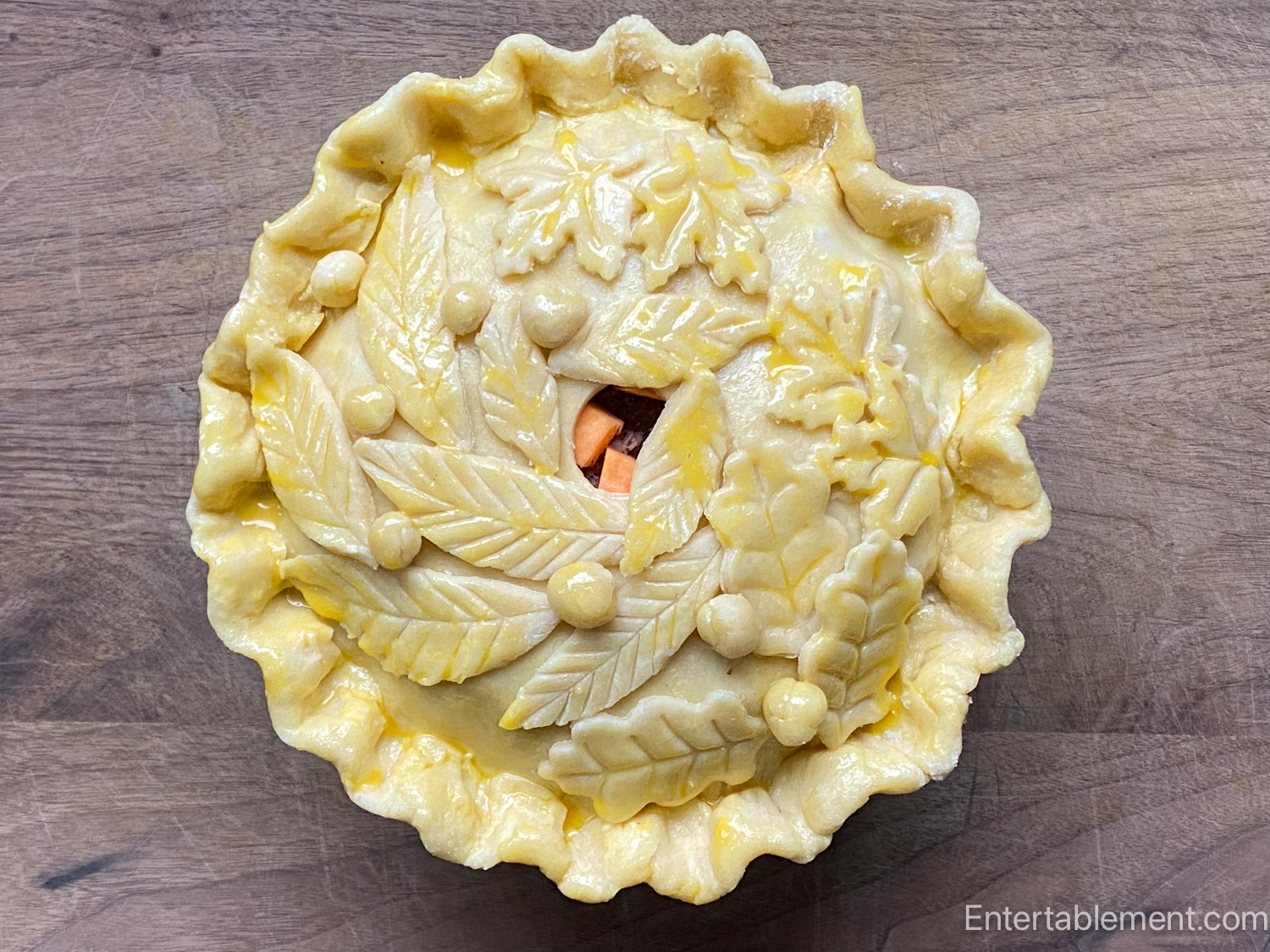
Sweet Lamb Pie
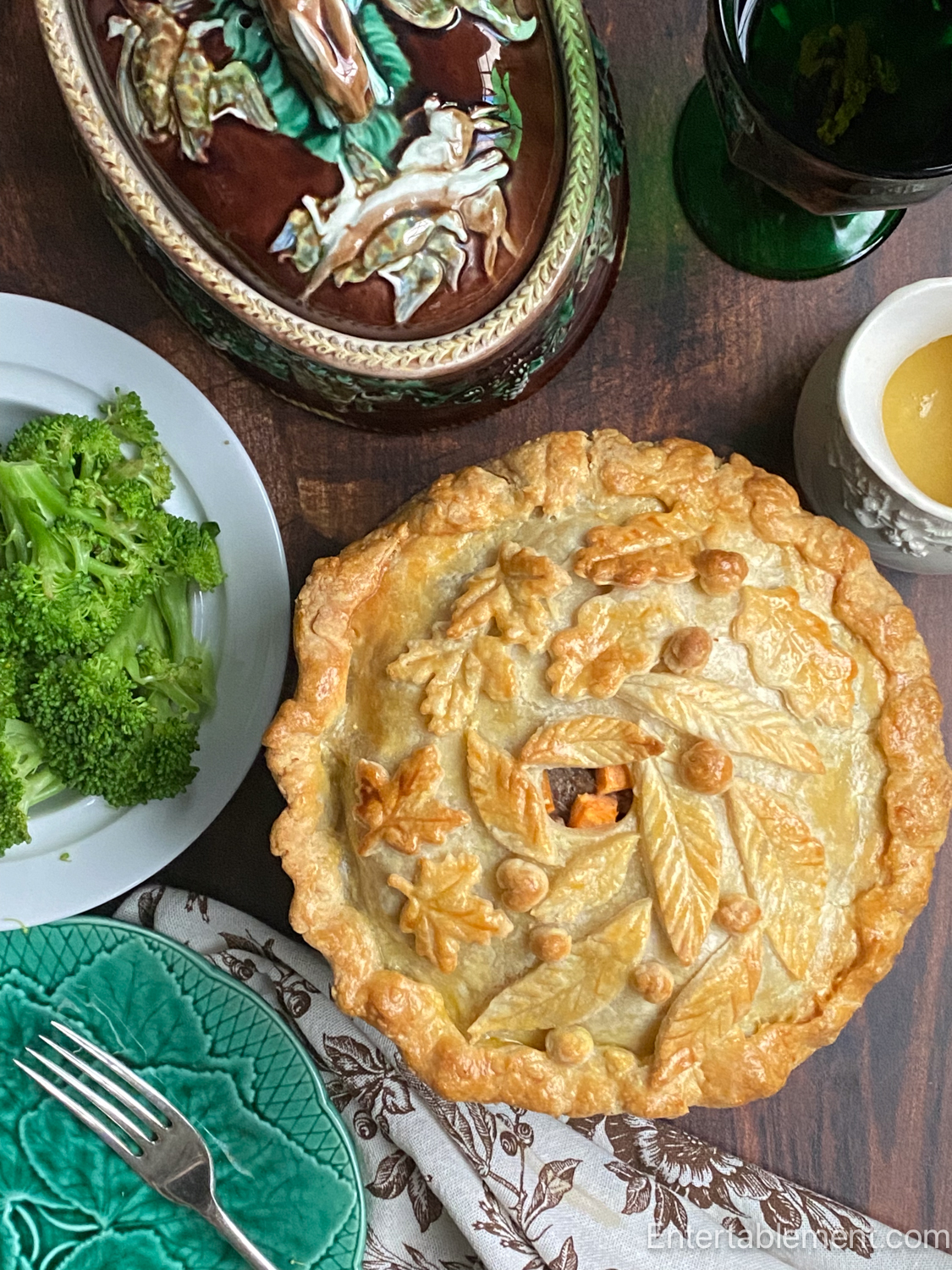
By the 19th century, sweetened fruit and meat combinations had declined in popularity, and the raised-crust pork pie took its modern form. In France, the same recipes morphed into paté en croute.

The meat tends to shrink when the pie is cooked, leaving an unsightly gap between the filling and pastry. Before refrigeration, this could lead to air getting in and spoiling the meat. The solution was to pour clarified butter or hot pork stock into the pie right after baking, which effectively sealed the meat. Today, commercial bakers immediately add a gelatine mixture to the pie after baking. I don’t care for the gelatinous filling’s appearance, texture or taste, so leave it out.

Melton Mowbray Pork Pies are today’s most popular commercial brand, named after Melton Mowbray, a town in Leicestershire famous for its 18th-century fox hunt. Some speculate that riders to hounds took the pork pies with them. However, it seems highly unlikely that aristocrats in their tailored red hunting jackets had chunks of pie stuffed into their pockets while soaring over fences and galloping over hills and dale. Perhaps pork pies were served in inns and taverns, though.
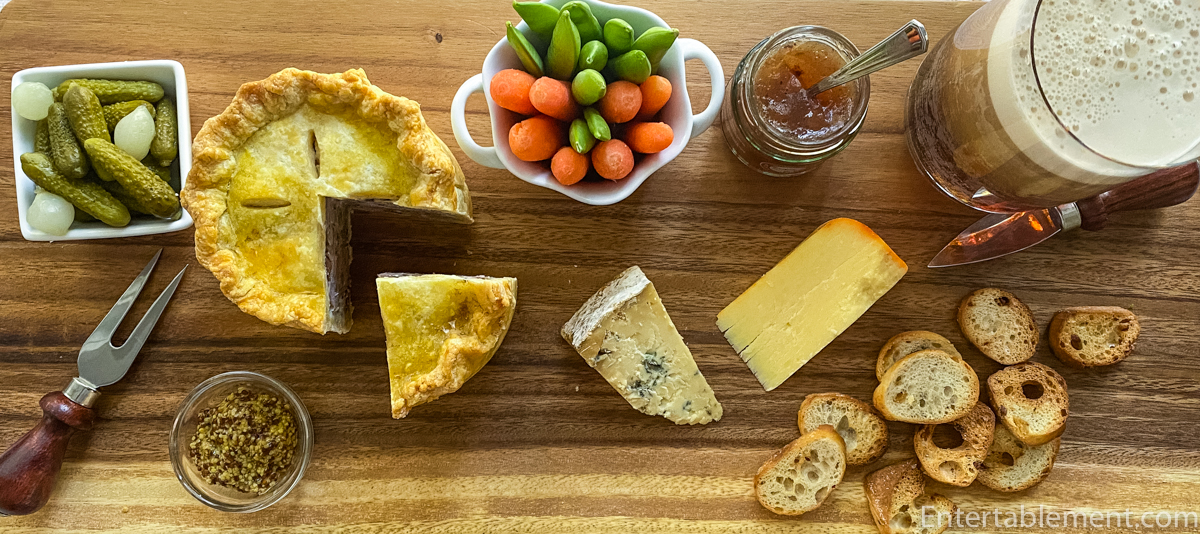
I love the complexity of working with raised pastry, with its beautiful cutouts and decorated tins. Though many recipes call for the traditional hot water crust, I find it makes a thick, chewy pastry. I much prefer Column Franklin’s recipe for Shortcrust, which makes a beautiful, easily handled pastry that bakes up into a light buttery crust. I used it in Beef and Mushroom Raised Pie for St Patrick’s Day a few years ago. As you can see, it stands up beautifully.
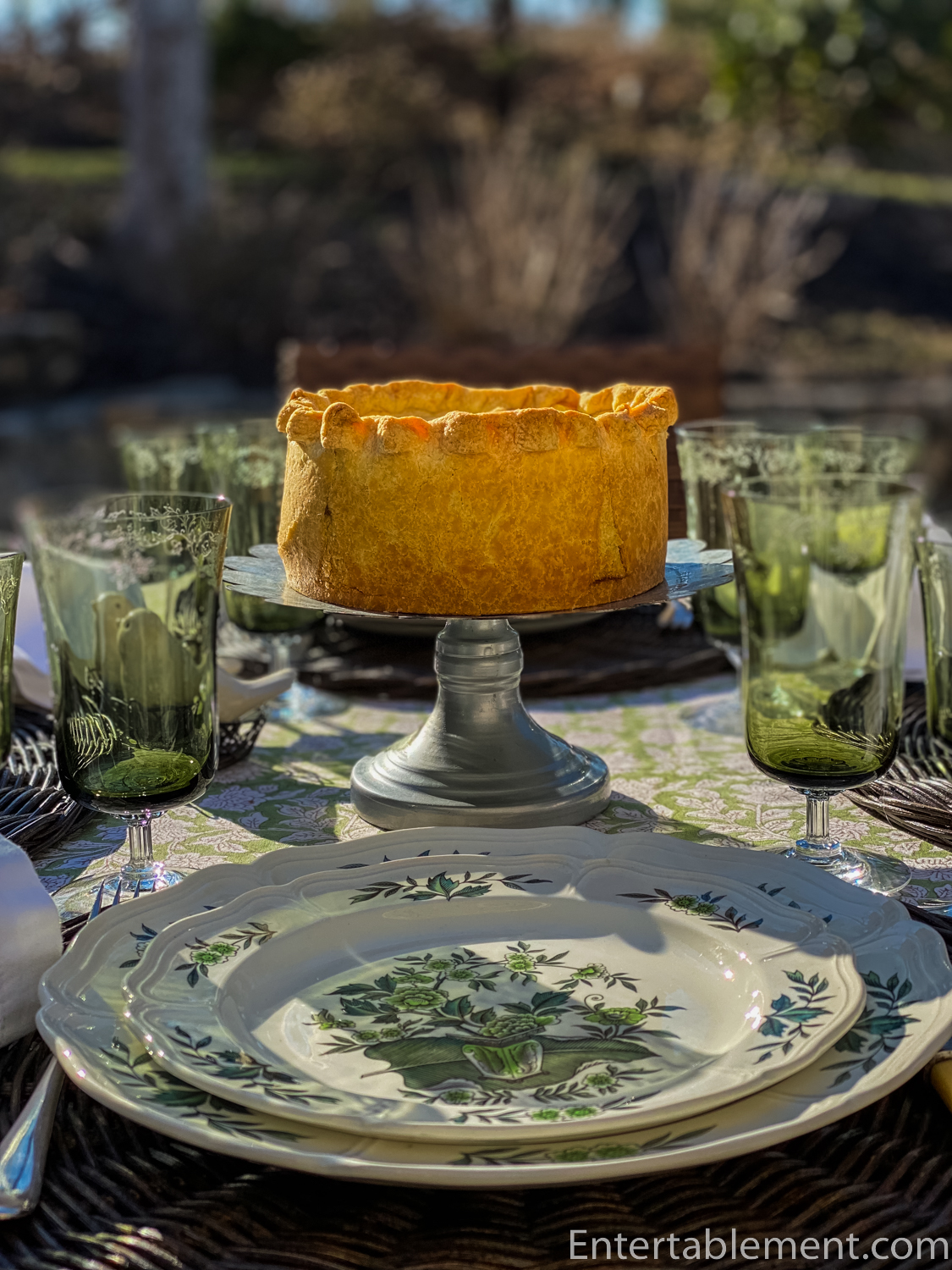
And still produces a lovely, flaky crust.

I used the same Shortcrust recipe to make the ornamental Raised Chicken and Ham pie for Entertablement — Much Depends on Dinner.

The elegant three-part tin is a work of art. The two sides fit on either side of the bottom piece, clamped together with “s” shaped clips.
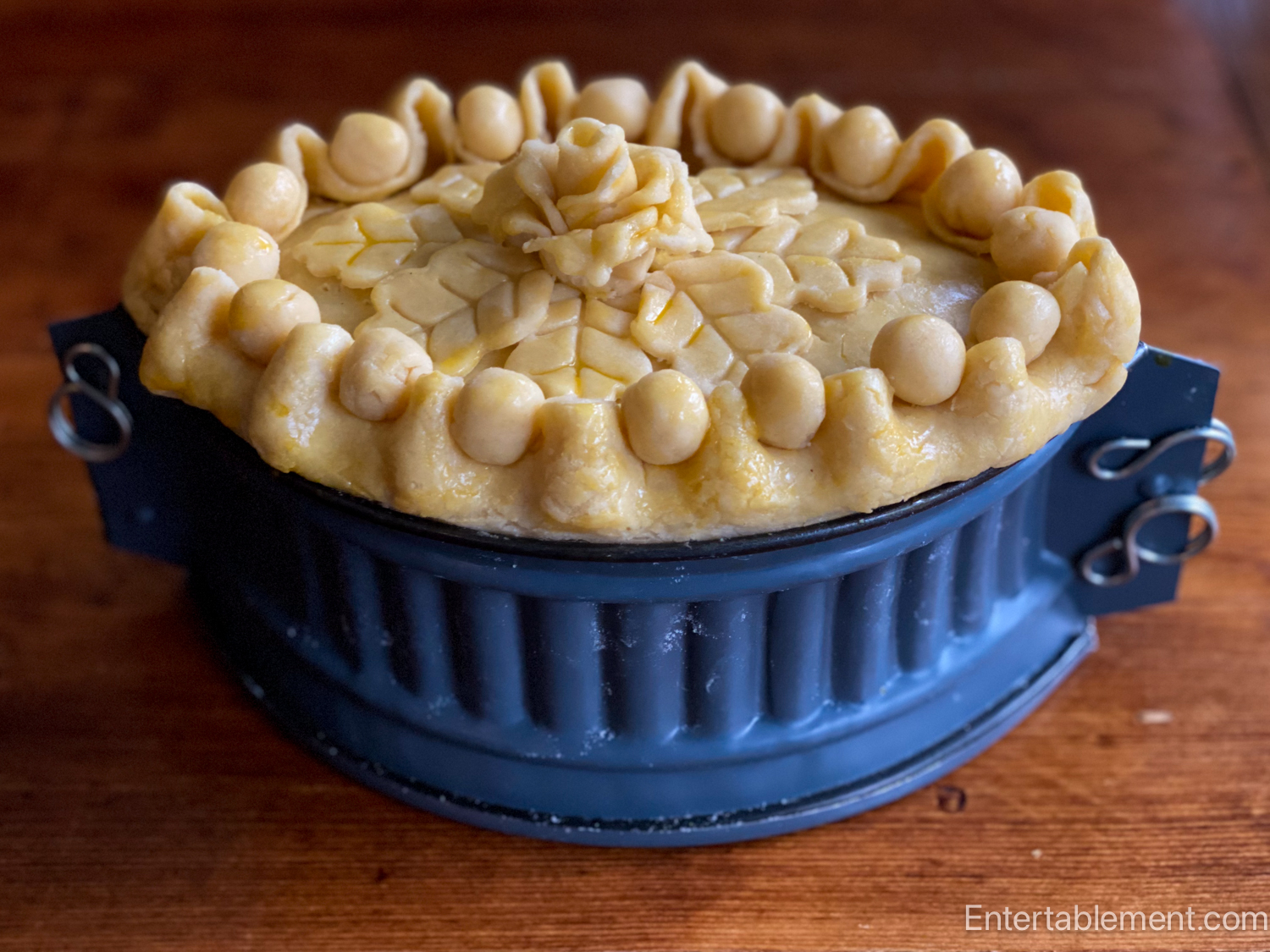
It gives the pie a distinctive ridging around its wasp waist, reminiscent of the corseted ladies of days gone by. Once baked, the ie is allowed to cool thoroughly before removing the tin.
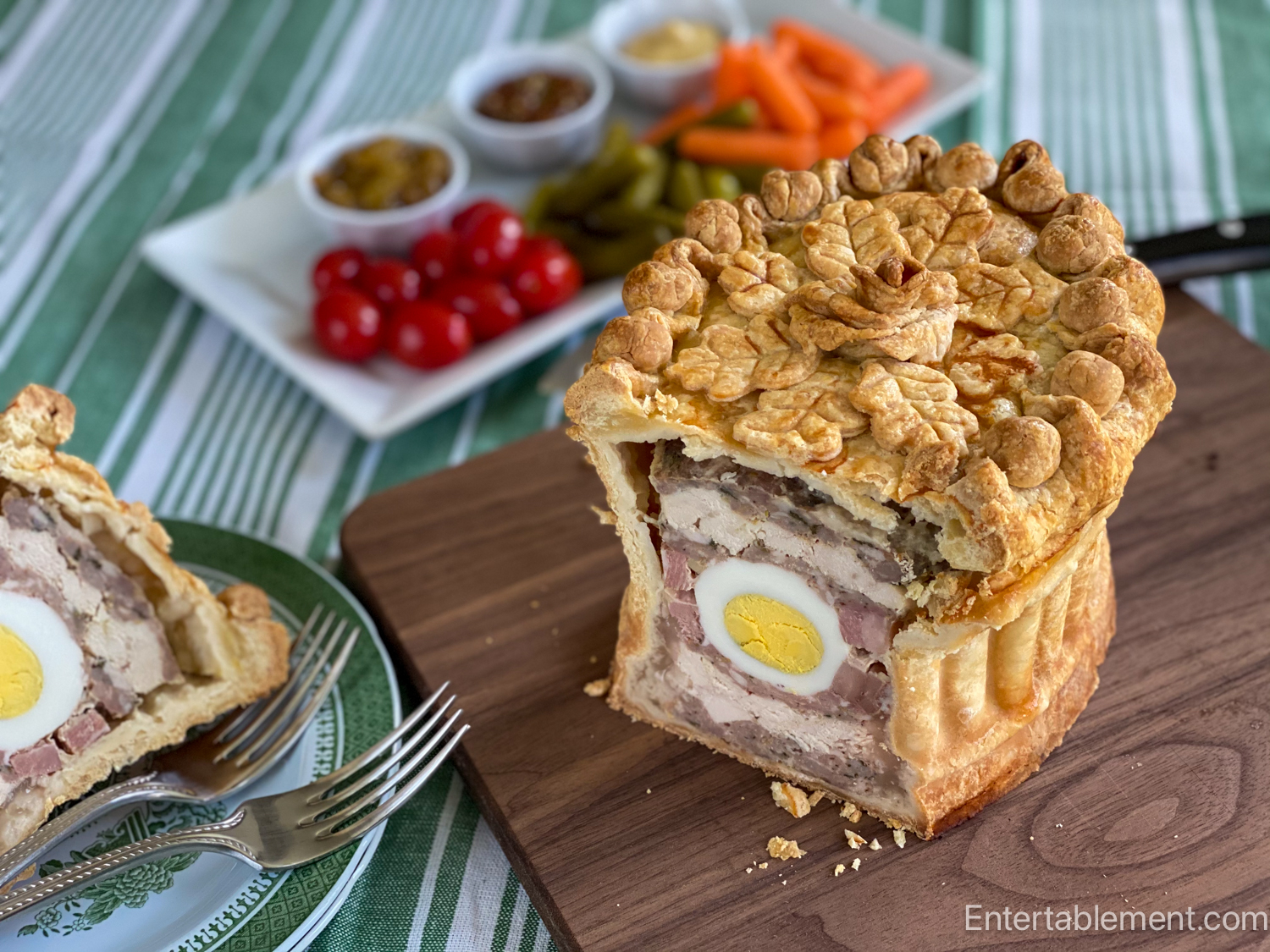
Such a pie was considered essential for Victorian picnicgoers. The sturdy crust made it suitable for jostling in carriages and carrying it to remote picnic spots.
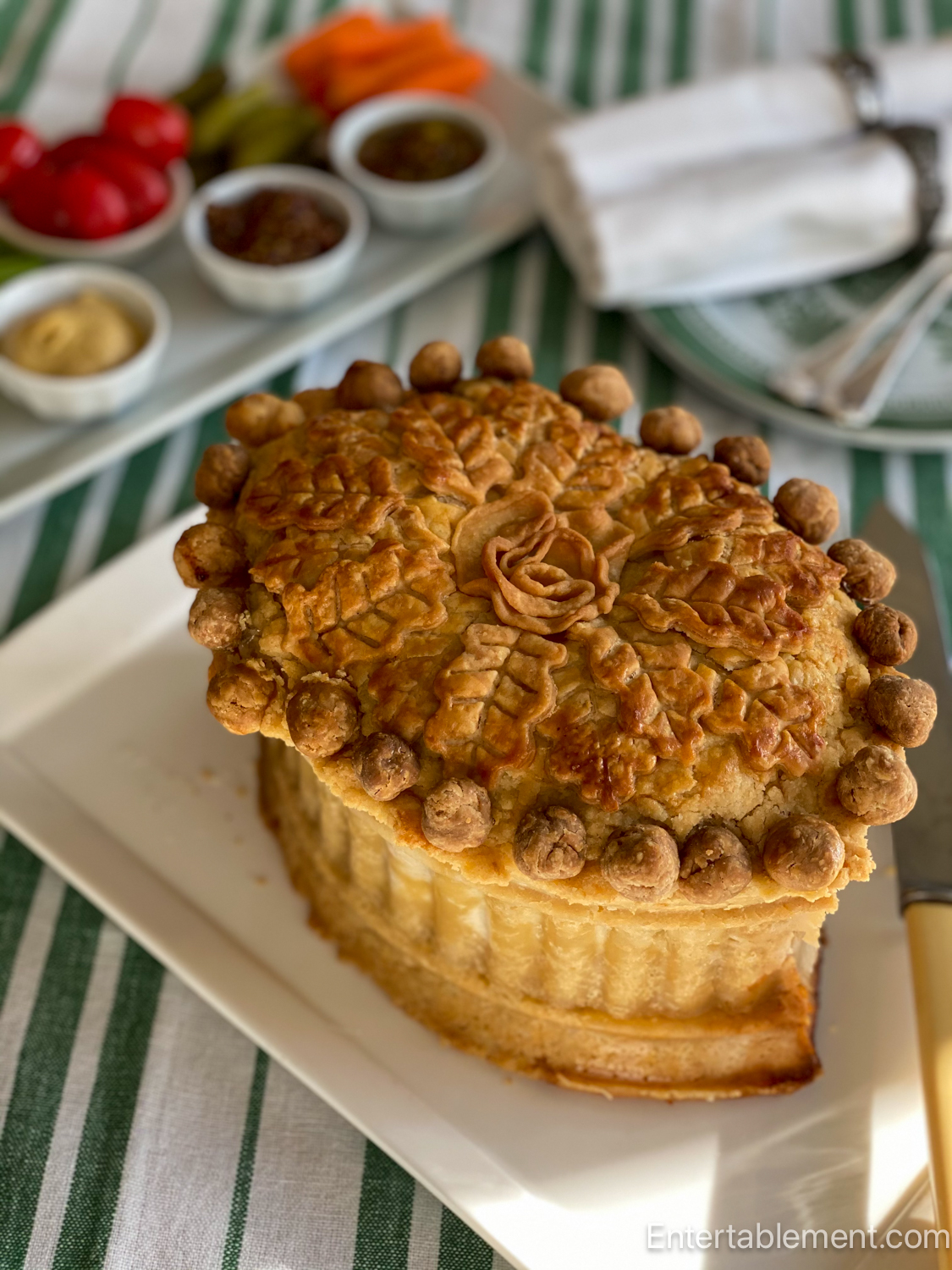
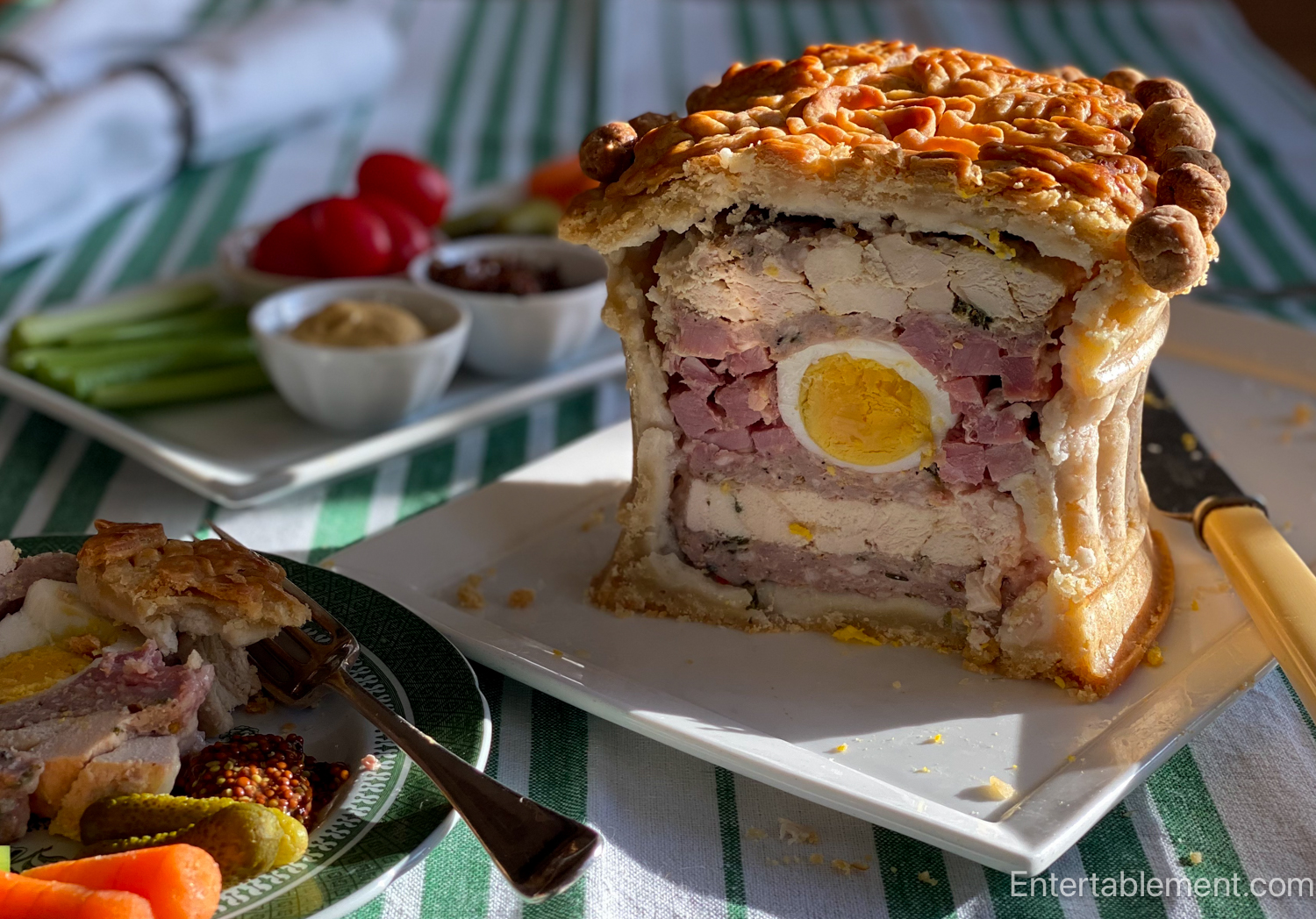
Interestingly, though the eggs are hard-cooked and peeled before being placed in the centre of the layers, they don’t cook any further whilst in the oven. Similar to a Ploughman’s, I serve the Raised Chicken and Ham pie with various mustards, pickles, and crudités.
The Victorians knew how to picnic! Mrs Beeton’s Book of Household Management, first published in 1861 and edited, revised, and enlarged many times, was still in print in 2020. It has several picnic menus, this one for 40 people.

Those picnics were very different from the ones we enjoy today. For starters, lots of servants were around to hump the baskets to the appointed spot. Can you imagine the weight of all that food? To say nothing of the plates, glasses, cutlery and linens. Then there is the carving of all the joints of meat. Quite an endeavour!
I’m thrilled that April is here. We now embark on the lightest six months of the year, peaking with the summer solstice in late June. The garden is slowly coming to life, and I’m itching to get out there. Pansies beckon at the nursery; I’m sitting on my hands to avoid the temptation of tucking in a few herbs. We could still have frost, so I’ll wait a bit longer.
I hope everyone had a lovely Easter!



I always learn so much from you! Thank you!
Thanks, Barb! One of the reasons I keep the Entertablement sites is to challenge myself. Otherwise, I’d dither forever intending to get to baking or researching an historical person or place.