
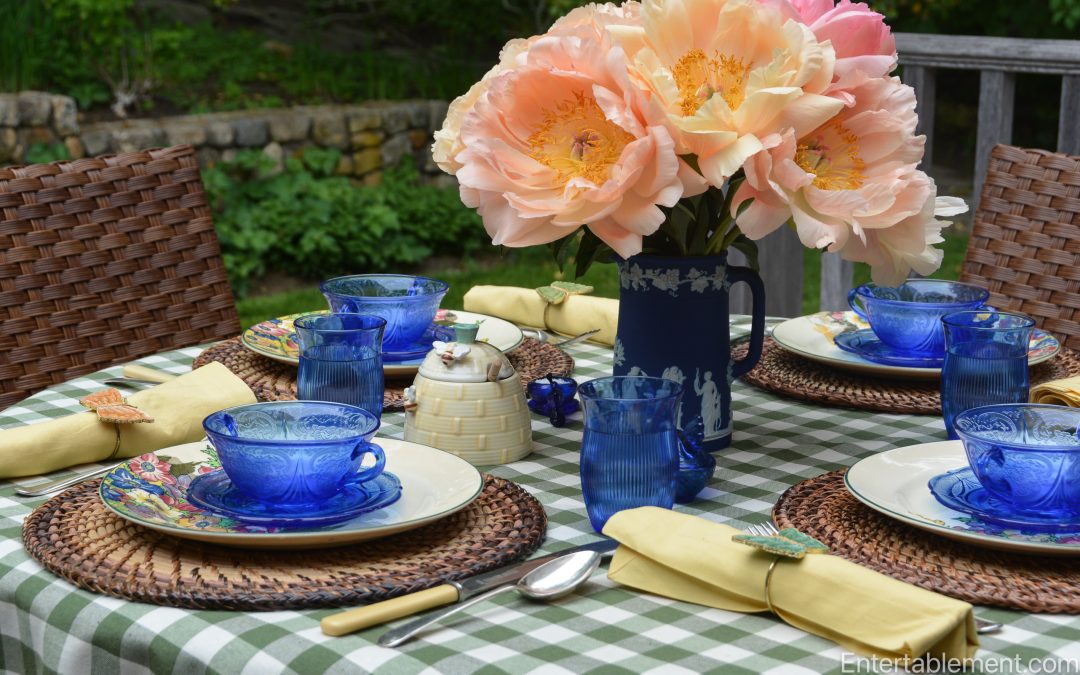
I had intended to wait.
The Royal Doulton Anemone plates had only recently arrived, tucked into my luggage on a recent trip back from England. I had discovered them months earlier on eBay while searching for a Royal Doulton series ware pattern I might have overlooked. Since the seller was unwilling to ship to North America, the plates waited for me in England until I could collect them in person.
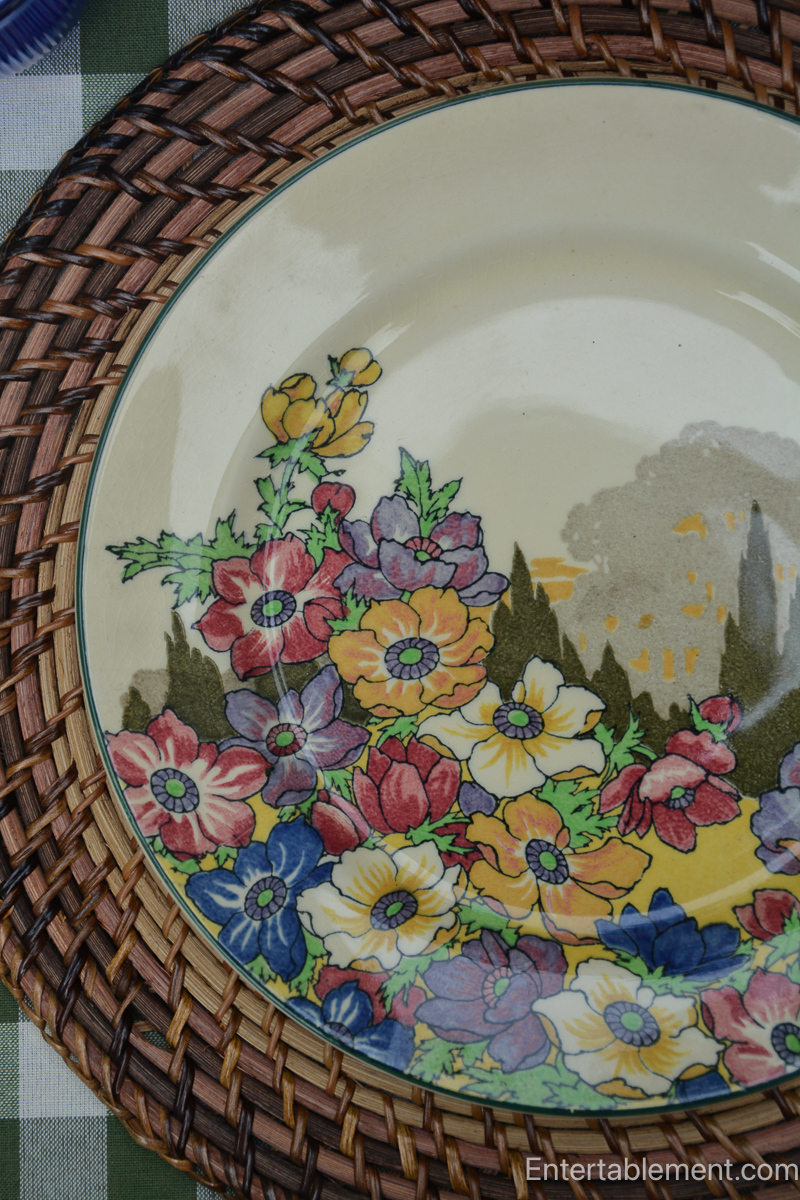
I already had plans for them: late summer, my own garden anemones in bloom, perhaps something soft and painterly to echo the flowers on the china.
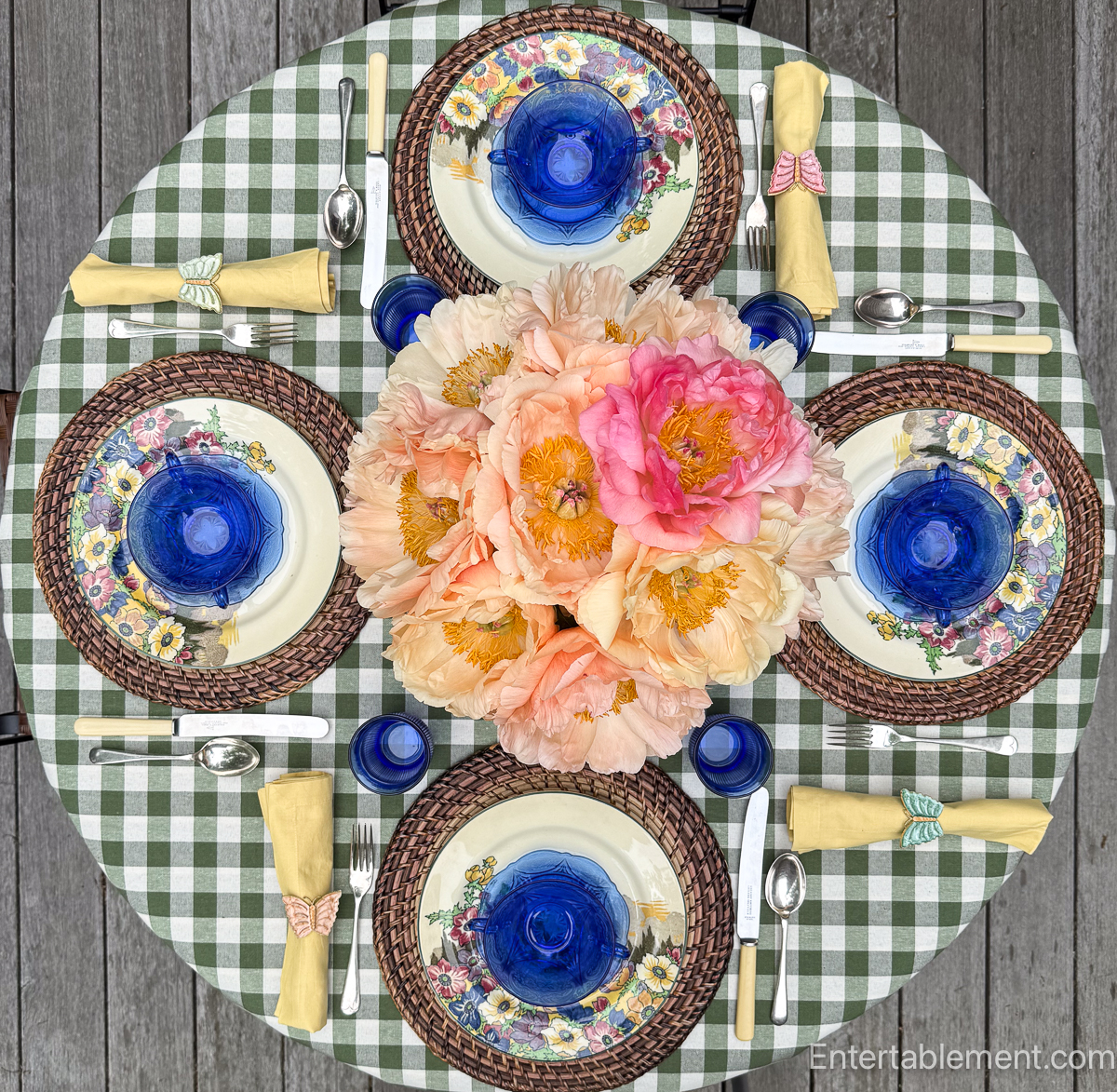
But spring and Trader Joe’s intervened. I noticed they had begun stocking peonies nearly a month before mine would bloom at home. As I stood admiring them, the woman unpacking the flowers pointed toward a cluster of tightly closed strawberry-pink buds.
“These,” she said confidently, “open into fluffy peach ballerina blossoms.”
We both paused and looked at them skeptically. It sounded improbable. But she insisted she had seen it herself — blooms that shifted dramatically as they opened, moving from vivid coral-pink into softer shades of peach, cream, and apricot over several days.
So naturally, I brought them home and waited for the miracle to unfold. And unfold it did.
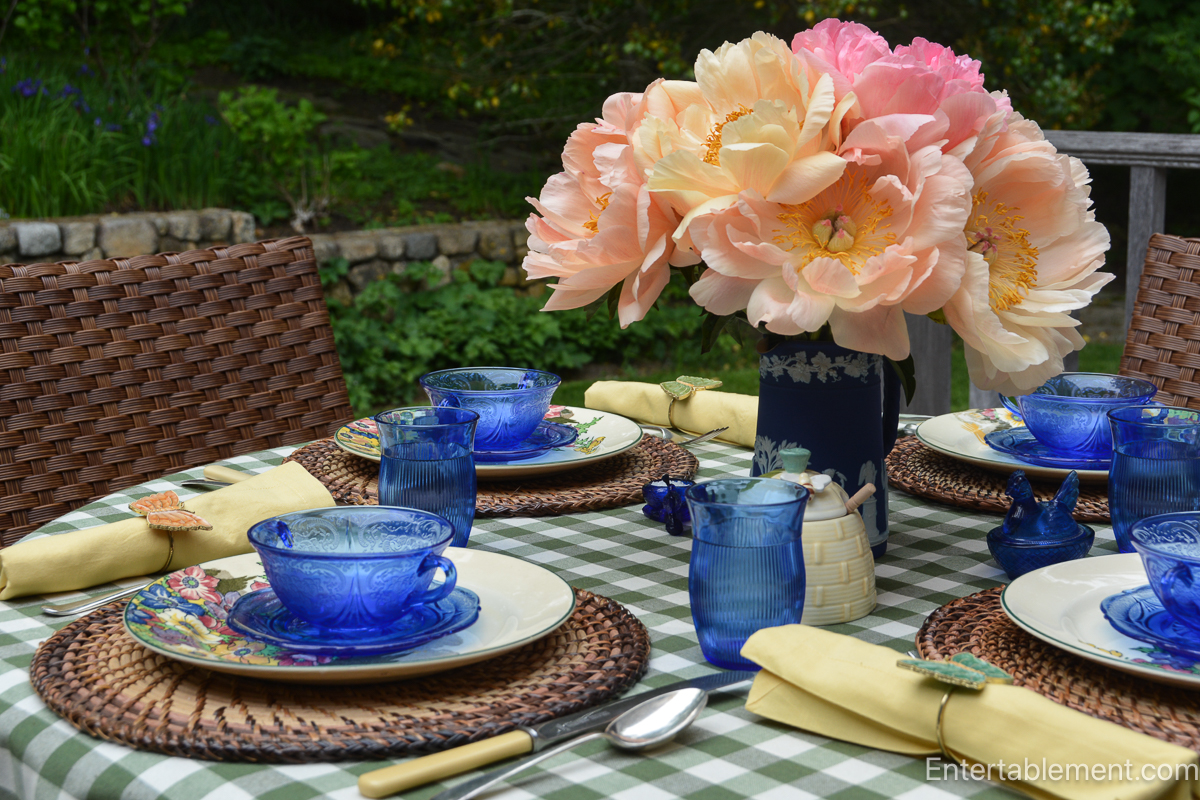
As the peonies opened and changed colour daily, I suddenly realized they were perfect for the Royal Doulton Anemone plates.
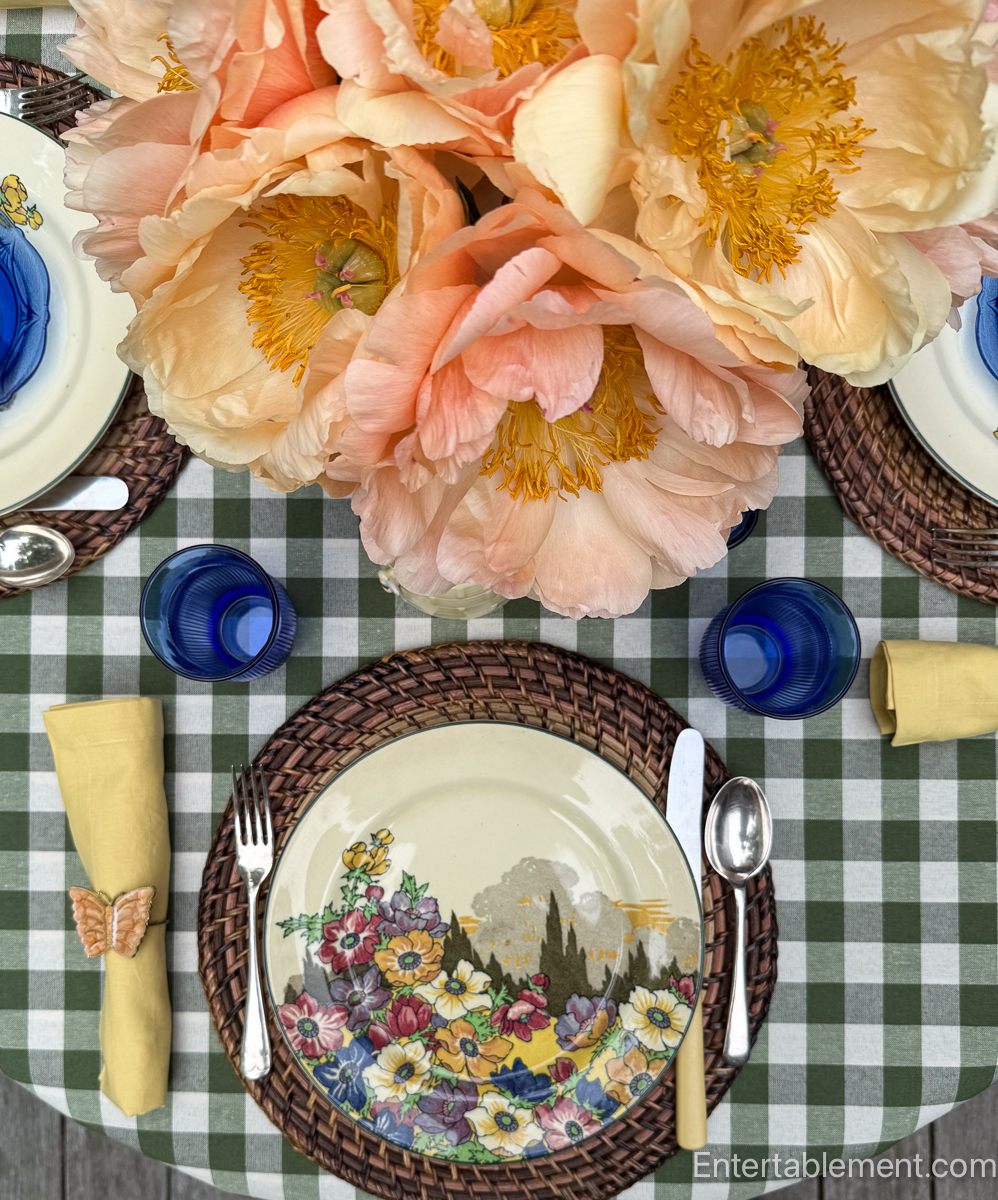
The softness of the petals echoed the painterly floral pattern beautifully, while the warm coral tones brought life and movement to the vintage china.
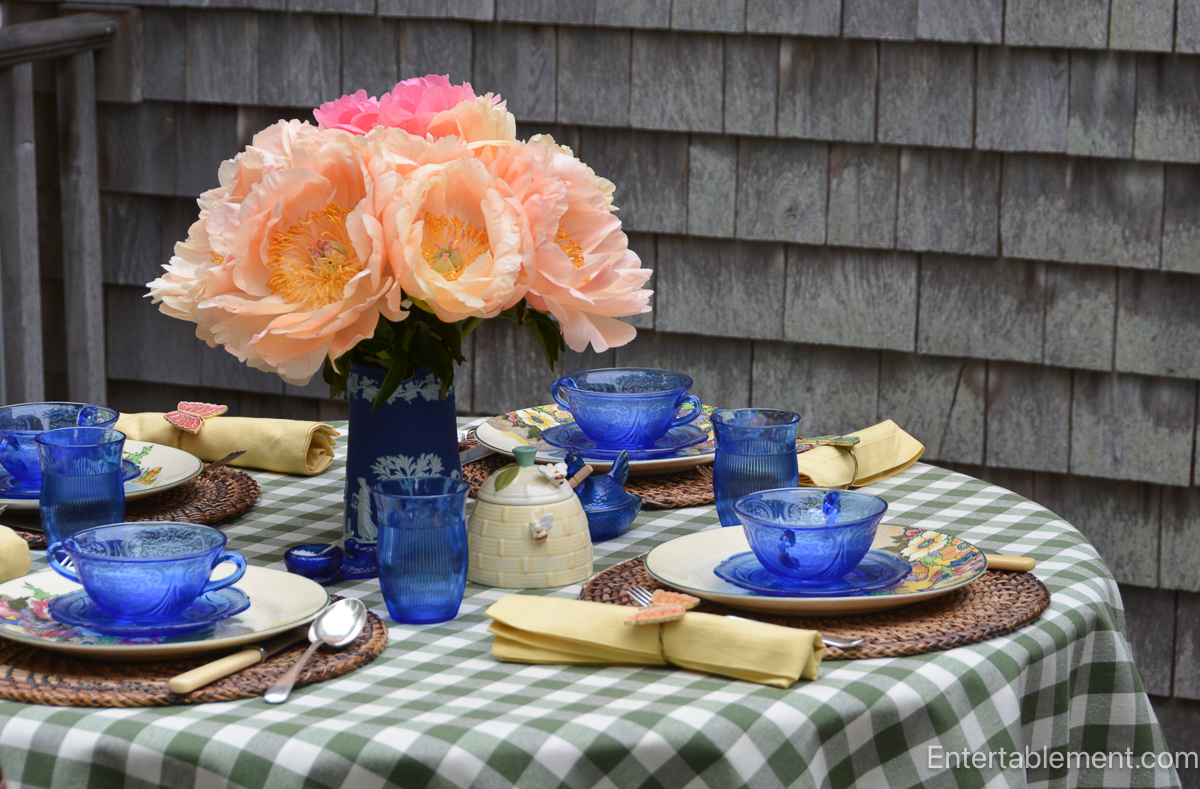
From there, the table assembled itself. Once I had settled on the deep green gingham tablecloth, the rest seemed to come together.
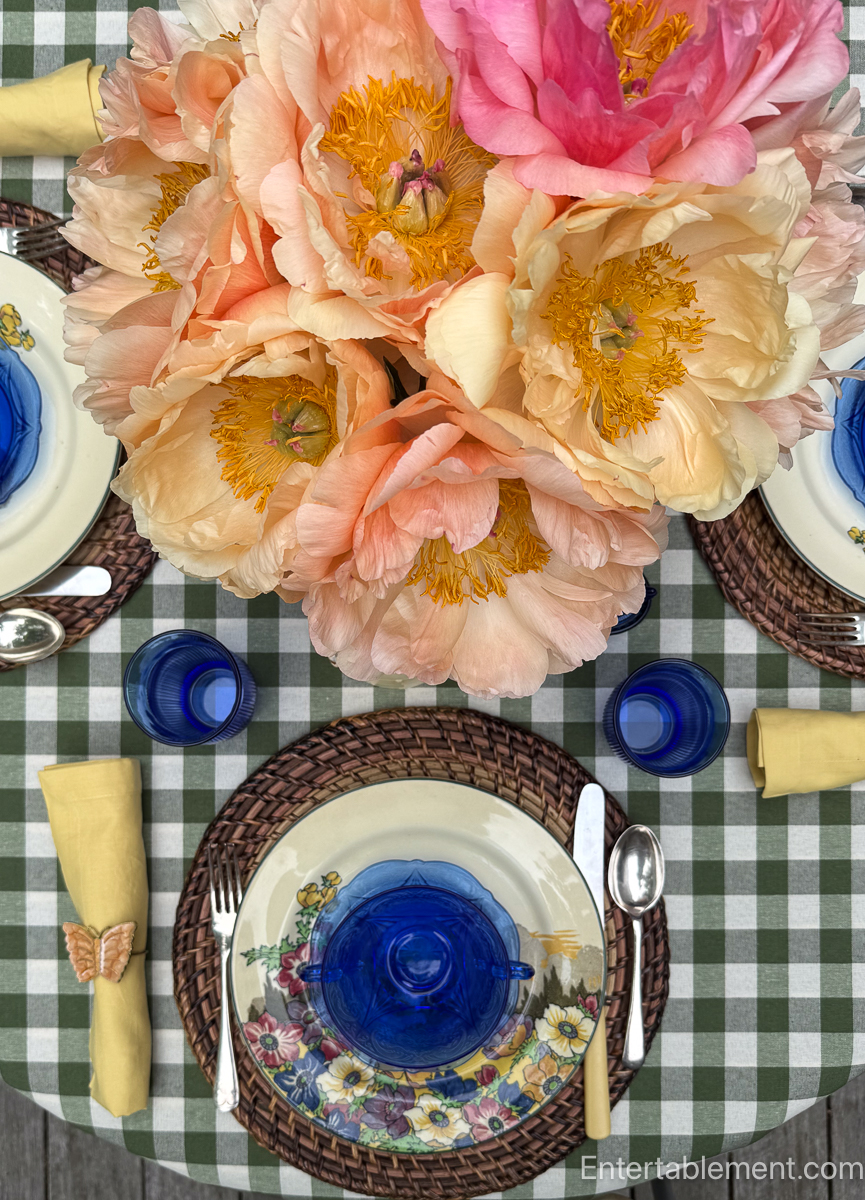
The cobalt blue Depression glass picked up the accent colour on the plates and provided a strong contrast to what could have been overpowering peachy and yellow tones.

The soup cups and tumblers are by Hazel Atlas, and like the plates, are from the 1930s—which is probably why they seem to go so well together.
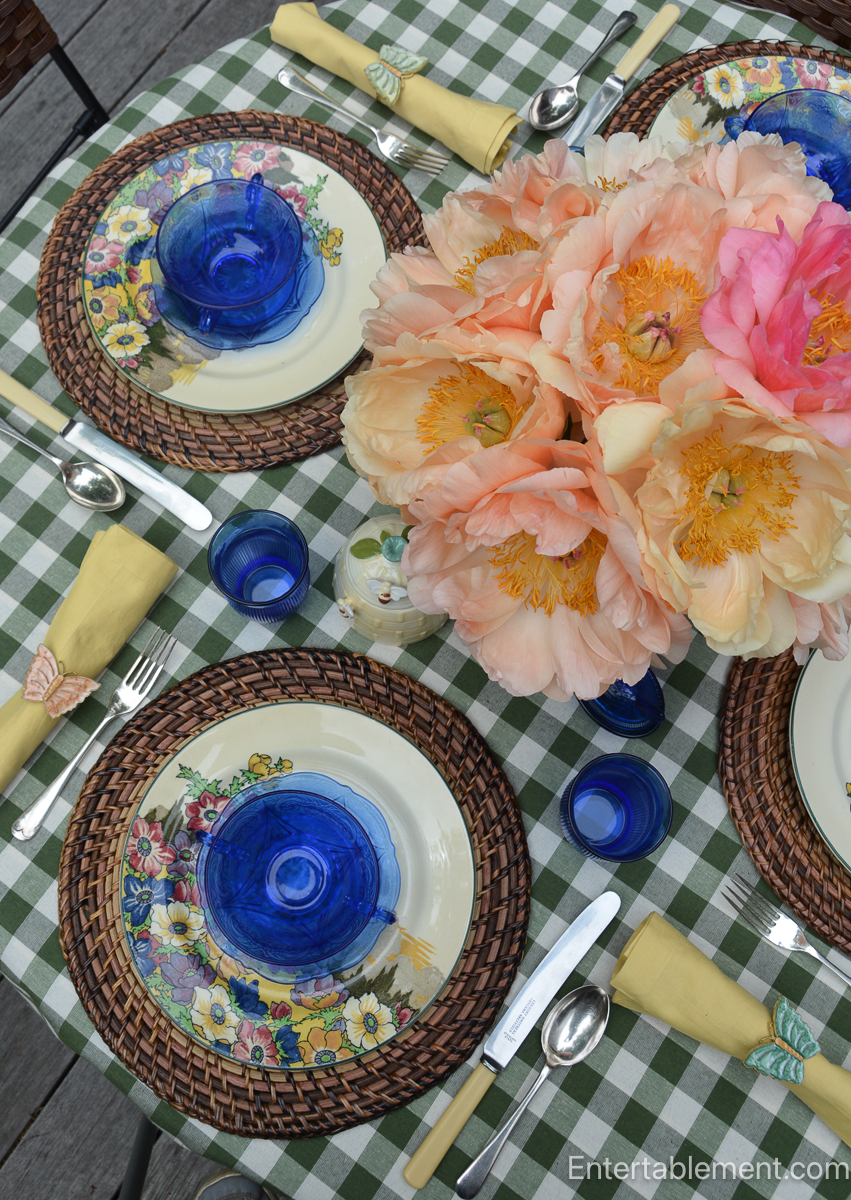
Royal Doulton and the Art of Storytelling
Much of Royal Doulton’s enduring fame rests on its richly narrative series ware —The Gleaners and Gypsies
and Motoring — patterns that transformed tableware into storytelling.
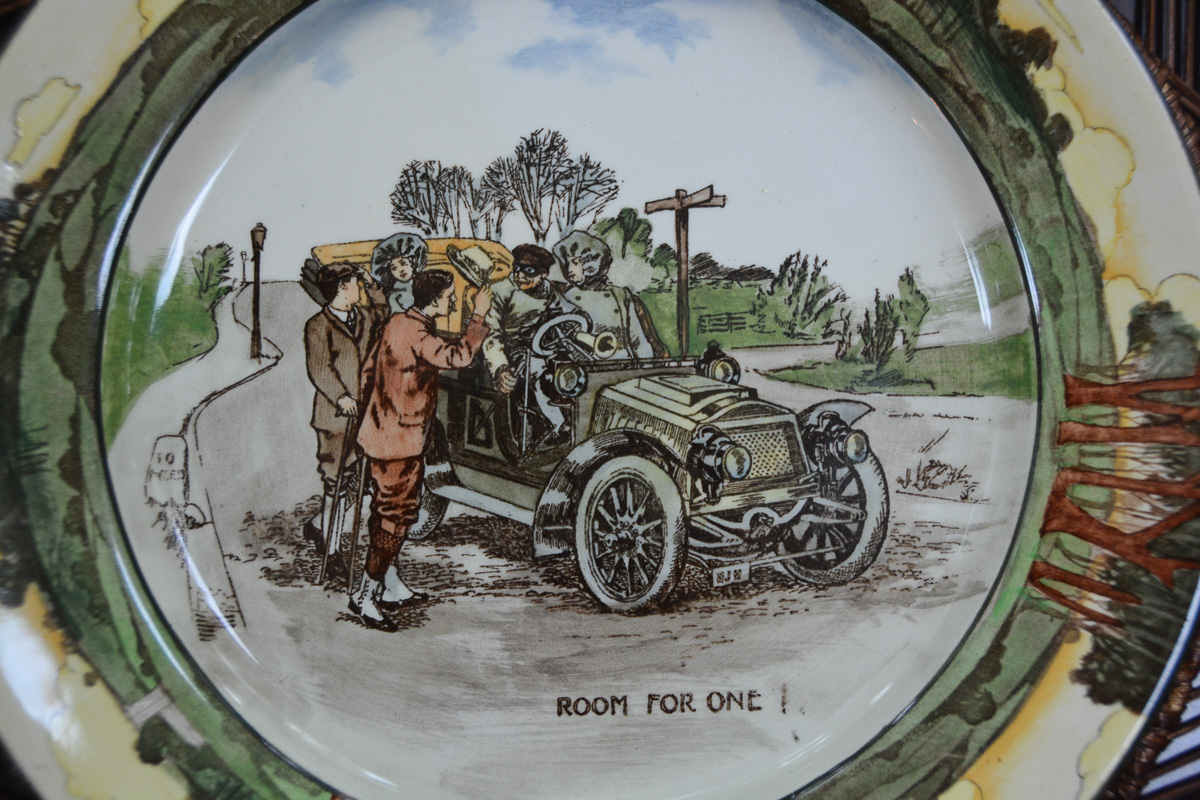
Introduced in 1905, Coaching Days would remain one of the company’s most enduring and collectible series for decades; the table is from Entertablement—The Four Seasons.

During the 1930s, Royal Doulton also produced a remarkable range of floral designs that reflected the softer domestic optimism of the period, including the Indian pattern.

Painterly blooms, gently stylized forms, and Art Deco-influenced colour palettes such as Nankin brought warmth and romance to the table during an increasingly uncertain decade.

The Anemone plates belong very much to that tradition.
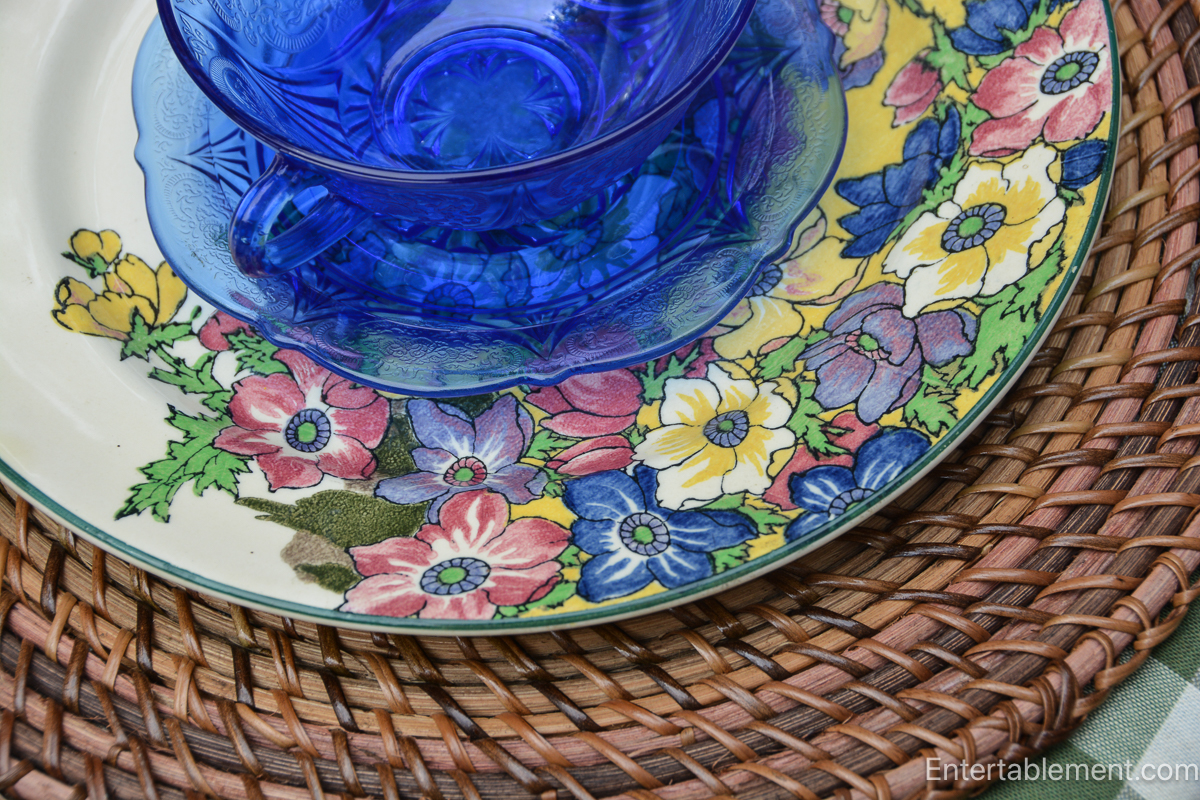
Both the series ware and floral patterns share the same essential quality: the ability to evoke a mood, a season, and a deeply English sense of domestic beauty.
I wrote more about Royal Doulton’s long and remarkably varied history — from Lambeth stoneware to Bunnykins and series ware — in an earlier Makers Behind the Magic piece, Royal Doulton: Two Centuries of Craftsmanship, Character, and British Style.
Today I must gather my about-to-bloom peonies into their peony-cage corsets. They are poised to bloom, and unlike the Coral Charm or Coral Sunset peonies, mine are top-heavy doubles. One heavy June rain and they’ll be flattened.
Have a great weekend, all.
Sources:
- Plates: Royal Doulton Anemone china (1930s)
- Soup Cups & Saucers: Royal Lace by Hazel Atlas (1934–1941)
- Tumblers: Fine Rib by Hazel Atlas (1936–1939)
- Flowers: Coral Charm or Coral Sunset peonies from Trader Joe’s
- Flatware: Vintage bakelite handled flatware
- Linens: Pottery Barn
- Napkin Rings: Butterflies by Lenox



Haven’t received an Entertablement email in a while. No idea why. This was so very welcome. Gorgeous, as always.
Hi Lynda, Great to hear from you! I will look into why you aren’t receiving posts get that fixed. Hope all is well with you. Cheers, HK