
It’s late-November. Just a month from the shortest day of the year, and outside, the final fall clean-up has begun. The Japanese Maple has shed its brilliant red foliage; the oaks are the last to surrender their leaves. Canadian Thanksgiving is long past, American Thanksgiving beckons, and Christmas lights are popping up all over.
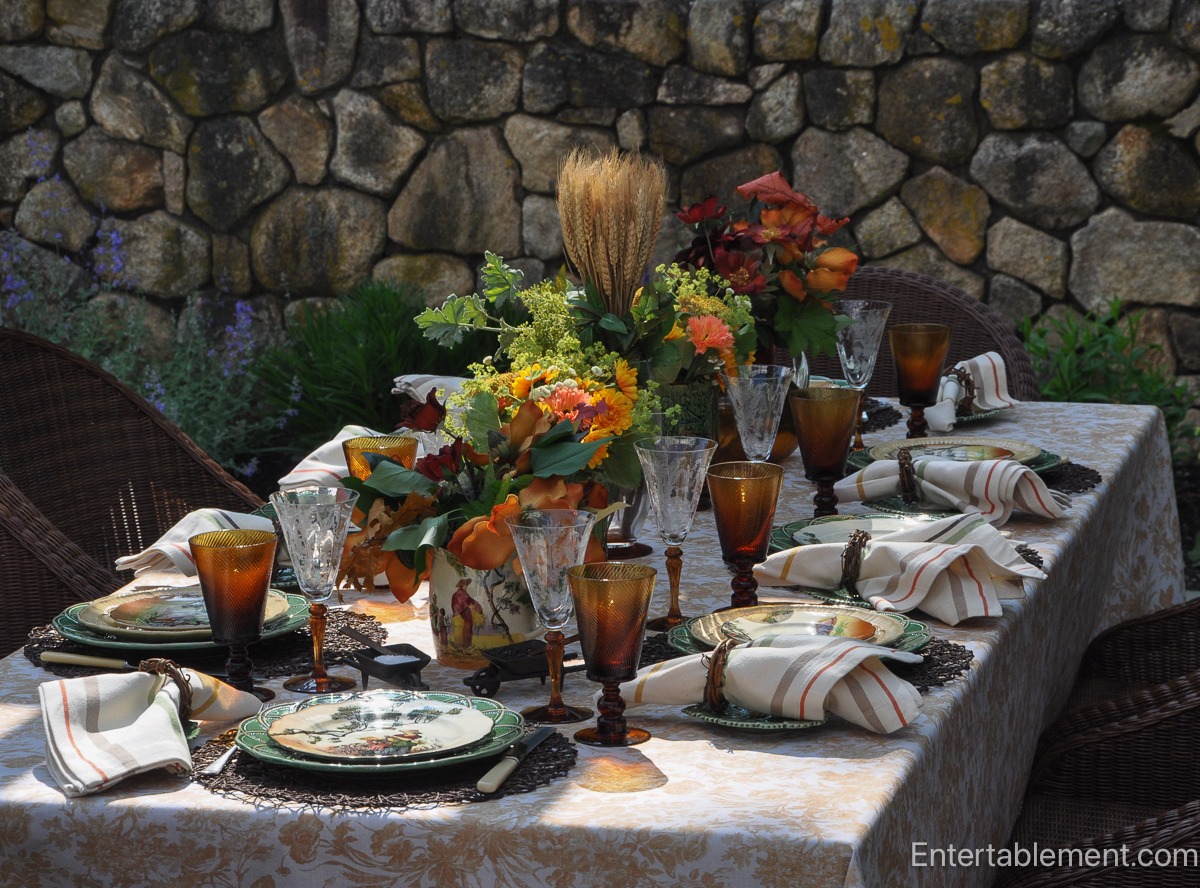
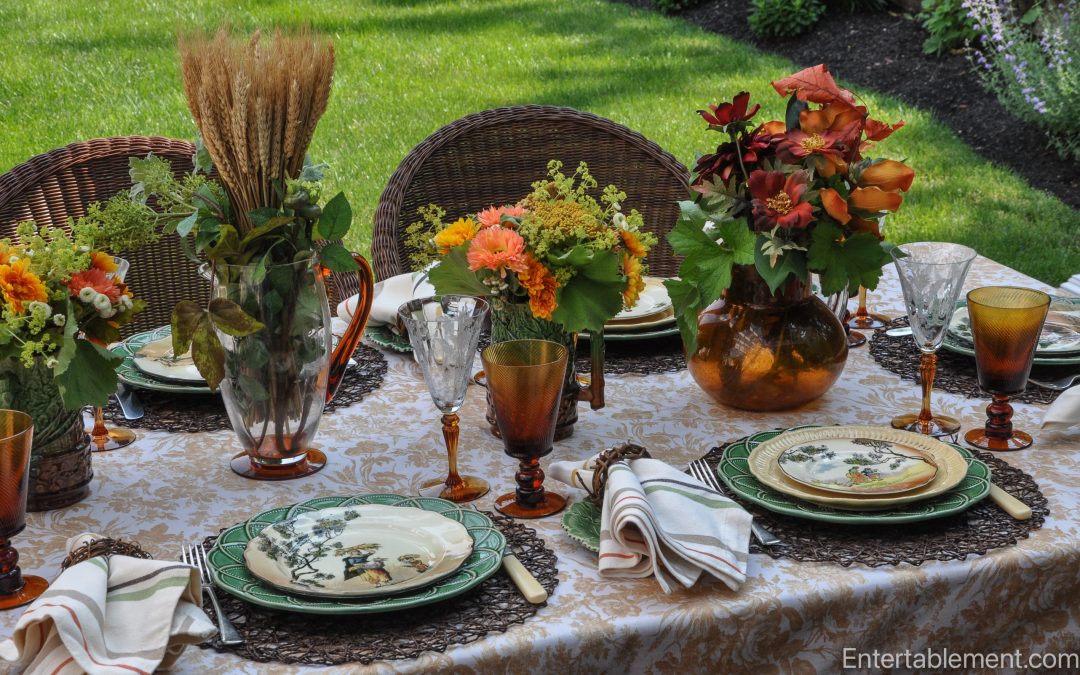
In this “between season,” when autumn’s glow is fading and winter’s hush hasn’t quite arrived, I find myself wanting to share one last autumn table before we tumble into the joy and glitter of Christmas. A quiet table — one that reflects the bounty of the season while also remembering the hands that once gathered it.

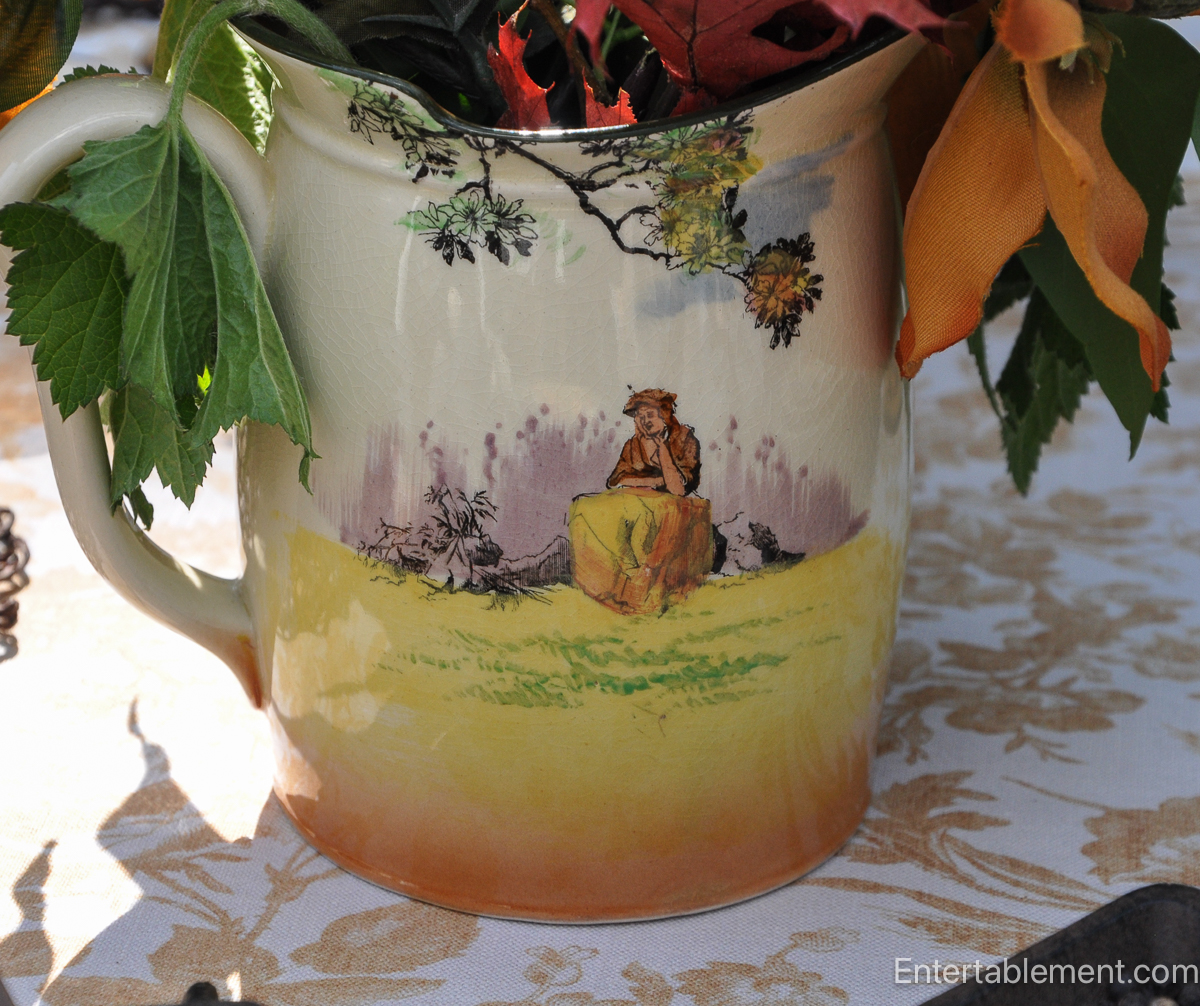
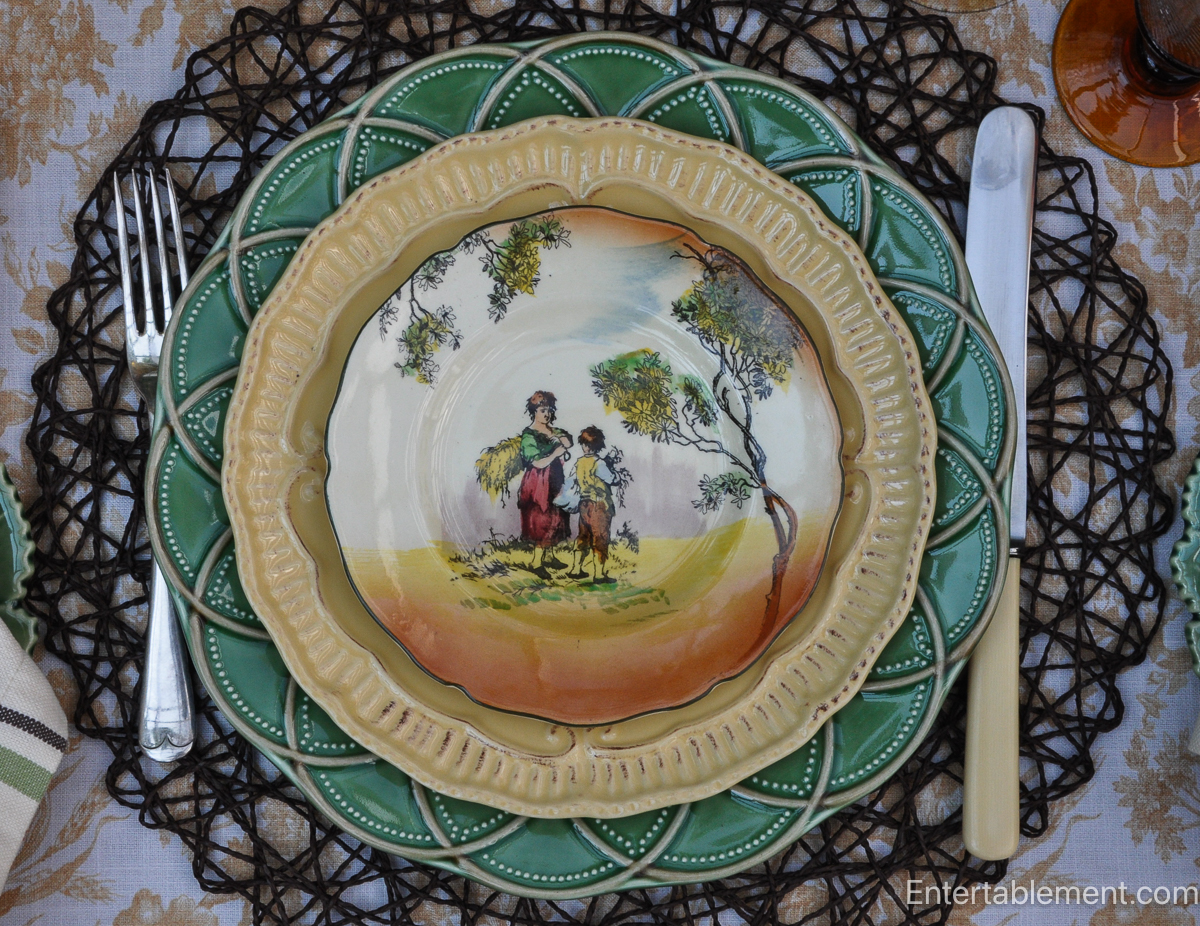
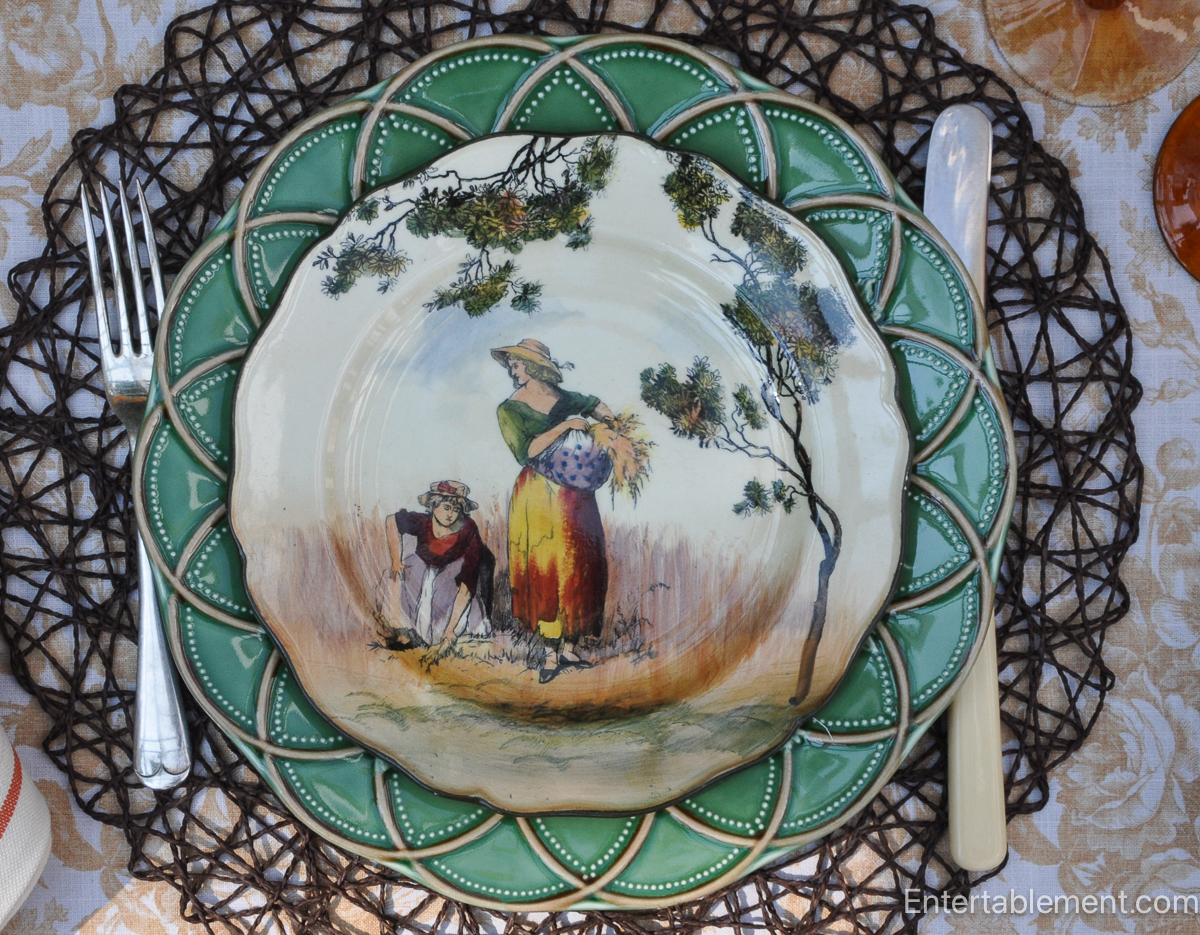
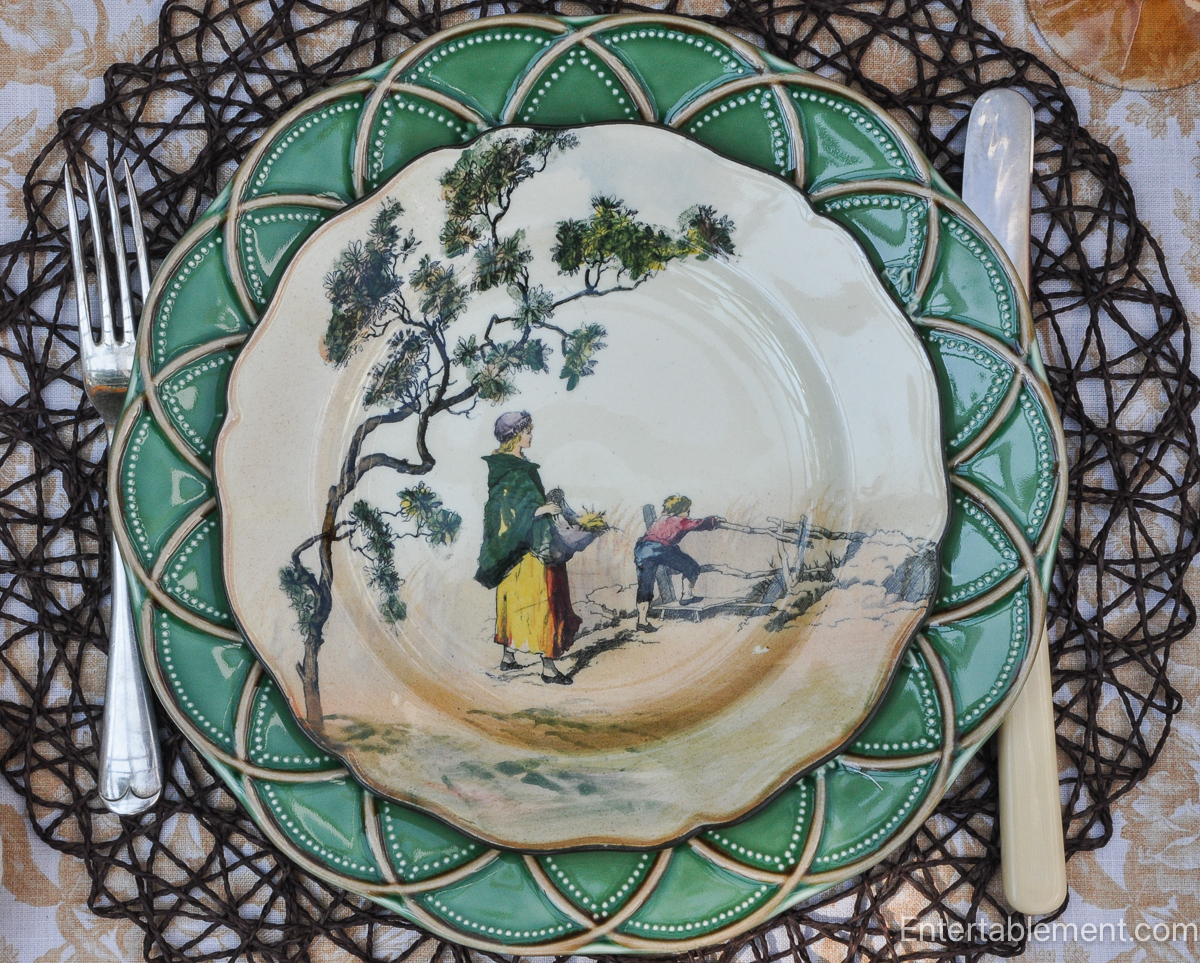
This setting, built around Royal Doulton’s The Gleaners and Gypsies series (1908), pushed me down a rabbit hole of thought. The exquisitely painted scenes, each capturing a moment of rural labour: bent backs, bundled sheaves, wheat carried home under an open sky. Romantic at a glance, yes. But as I began considering the setting and accoutrements, I started to reflect that, behind the loveliness, was something harder and deeper.

The Real Work Behind a Simple Bag of Flour
I began to consider how much work and time were required to produce something as ordinary as a 5-lb bag of flour — a pantry staple we now toss into our shopping carts for a few dollars and without a second thought. But for the gleaners painted on these plates, that flour represented days of exhausting labour.

Gleaning, historically, was a last resort. After the harvesters had passed, the poor, the elderly, widows, and the landless walked the fields picking up whatever stray heads of wheat remained.
It was work done bent over, hour after hour, yet yielding very little.

A bit of research revealed that to gather enough wheat for the modern equivalent of one 5-lb bag of flour, a gleaner would need roughly 6½ pounds of raw grain (the extra accounts for milling losses). At the typical rate of gleaned wheat (around 1½ pounds per day), that meant four to five days of continuous labour, sunrise to sunset. And if there was no access to a mill, grinding the grain by hand could take another full day. Five to six days of work for what we now use with merry abandon.

A Transformation in Two Lifetimes
As the table came together, I considered how rapidly our world has changed. In barely two or three generations, we’ve shifted from subsistence and scarcity to abundance so effortless we rarely stop to think about it.
A crofter in 1800 survived on oatmeal, potatoes, and whatever milk the cow gave that week. Calories were hard-won; “food security,” as we call it today, was nonexistent.

By 1900, mechanization and empire were reshaping diets — imported grain, cheaper white flour, sugar, and tea were creeping into even remote villages.
By 1950, supermarkets had appeared. Today, one farmer feeds a hundred people. Most of us exert more effort to avoid calories than to obtain them.
In that light, the delicately painted gleaners on these century-old plates serve as both artwork and reminder: a single loaf of bread once stood at the end of a very long chain of labour — cutting, binding, stacking, threshing, winnowing, grinding, kneading, baking. A choreography of hands, seasons, weather, luck.

A Window Into Rural Life
Now – to the table. I was able to snag six salad plates, four bread-and-butter plates and a jug in The Gleaners and Gypsies series on eBay and Etsy.

Created around 1908, The Gleaners and Gypsies belongs to a moment when English pottery was embracing sociocultural scenes — picturesque, sentimental, and sometimes moralizing.

With influences from Victorian rural nostalgia and the French Realist movement (think Millet’s The Gleaners), the series captures both the beauty and hardship of agricultural labour.

Each plate portrays:
Gleaners — those who gathered leftover grain after the main harvest, often women, the elderly, or the poor.
Gypsies — itinerant families living on the social margins, romanticized in art but often persecuted in reality.
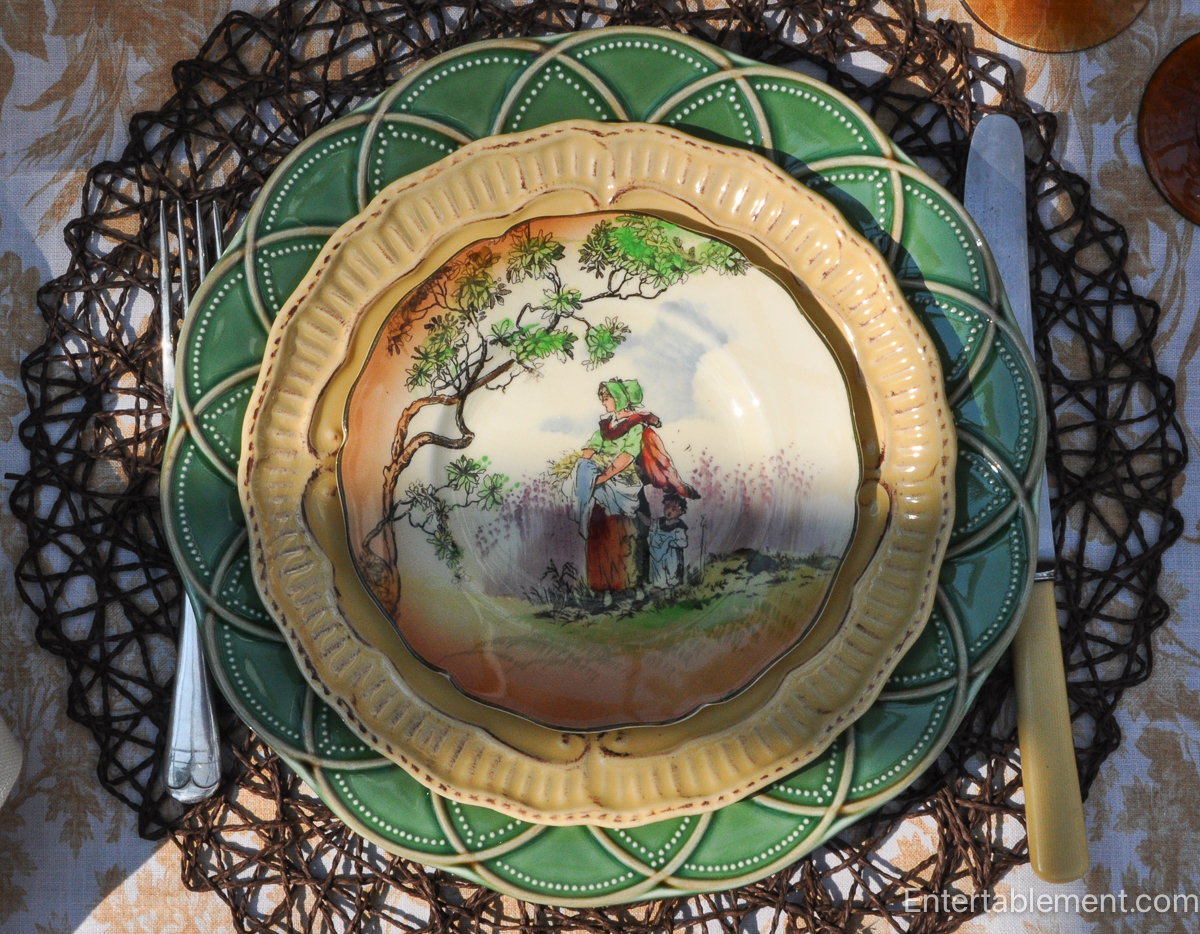
The scenes are pastoral but honest: bent figures, uneven fields, sheep grazing in the distance, wheat bundled and balanced on hips. They record tasks that fed families long before the age of mechanized agriculture.

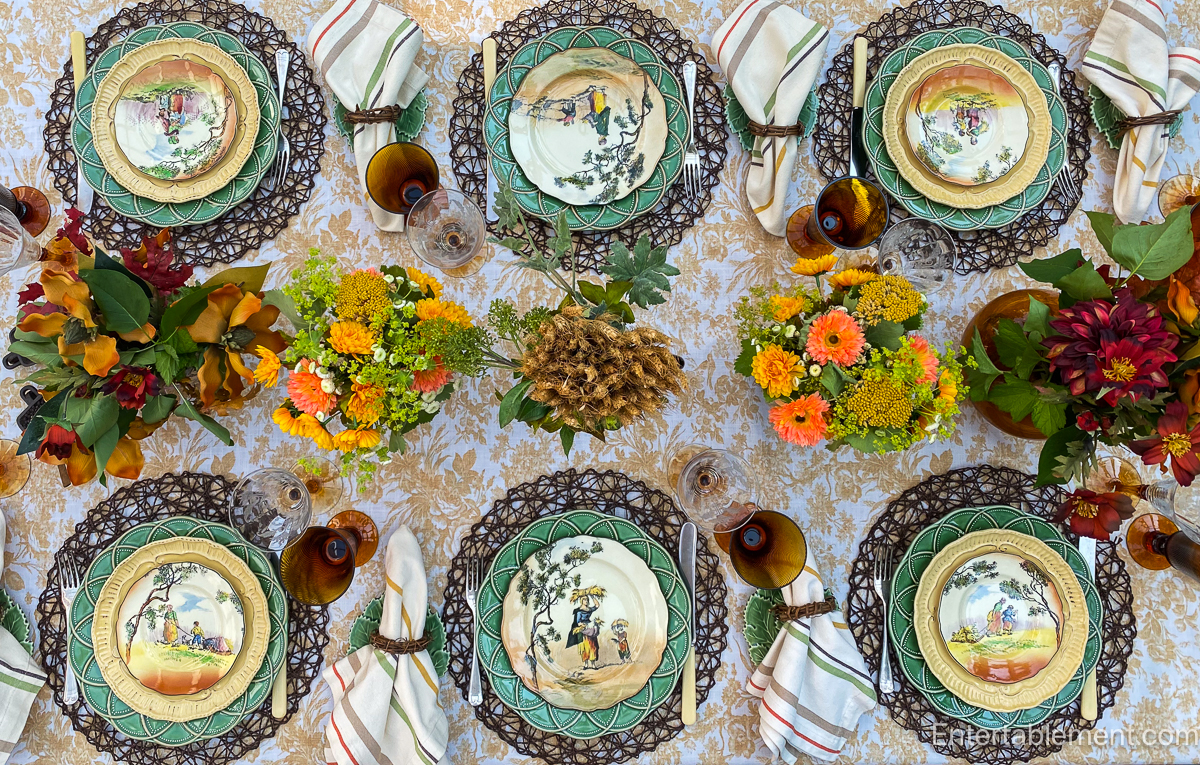
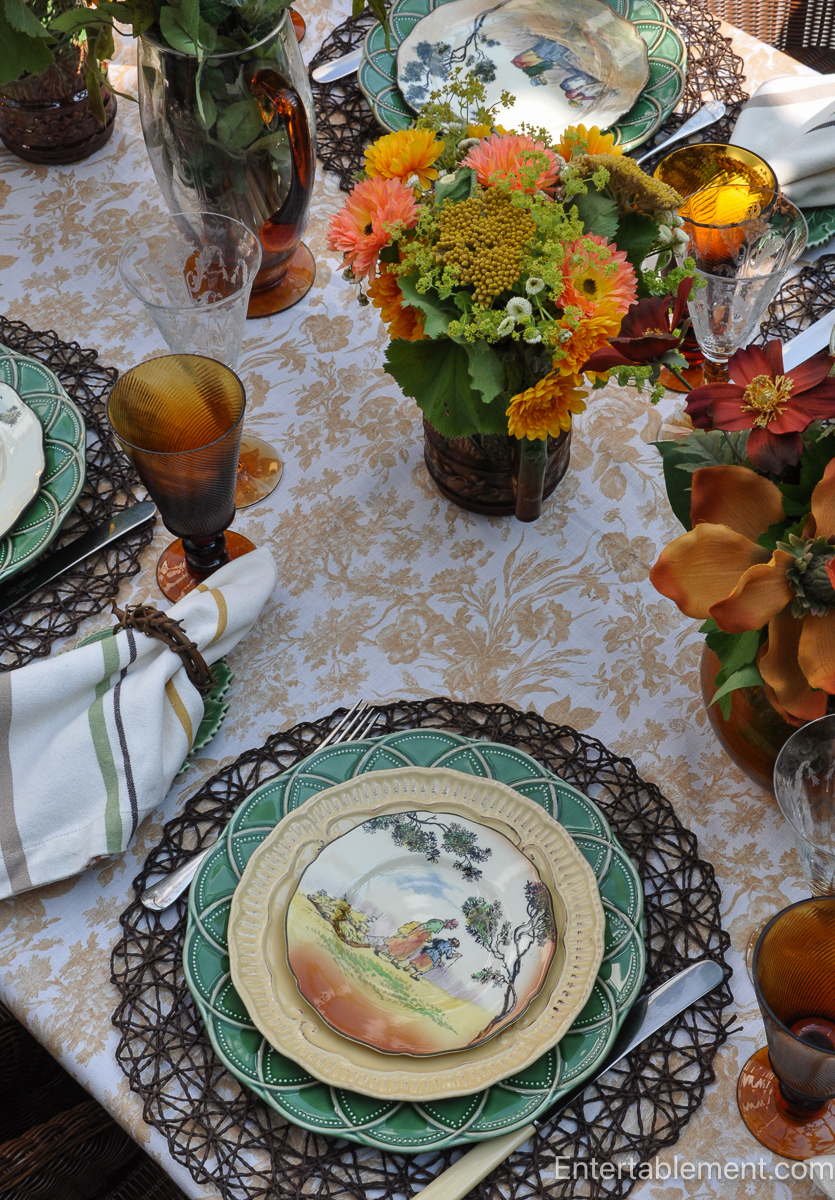
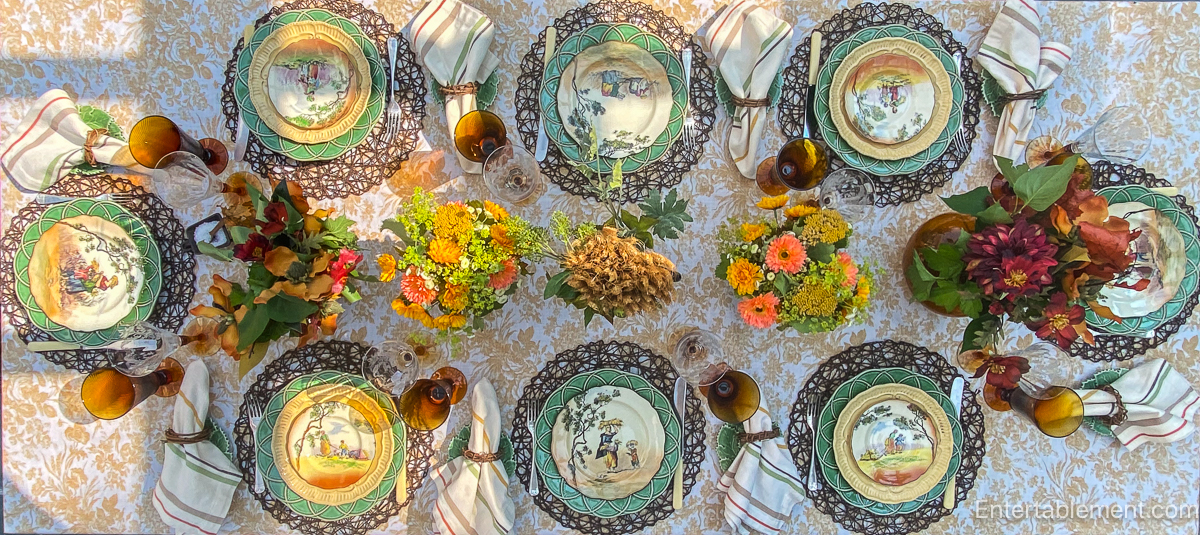
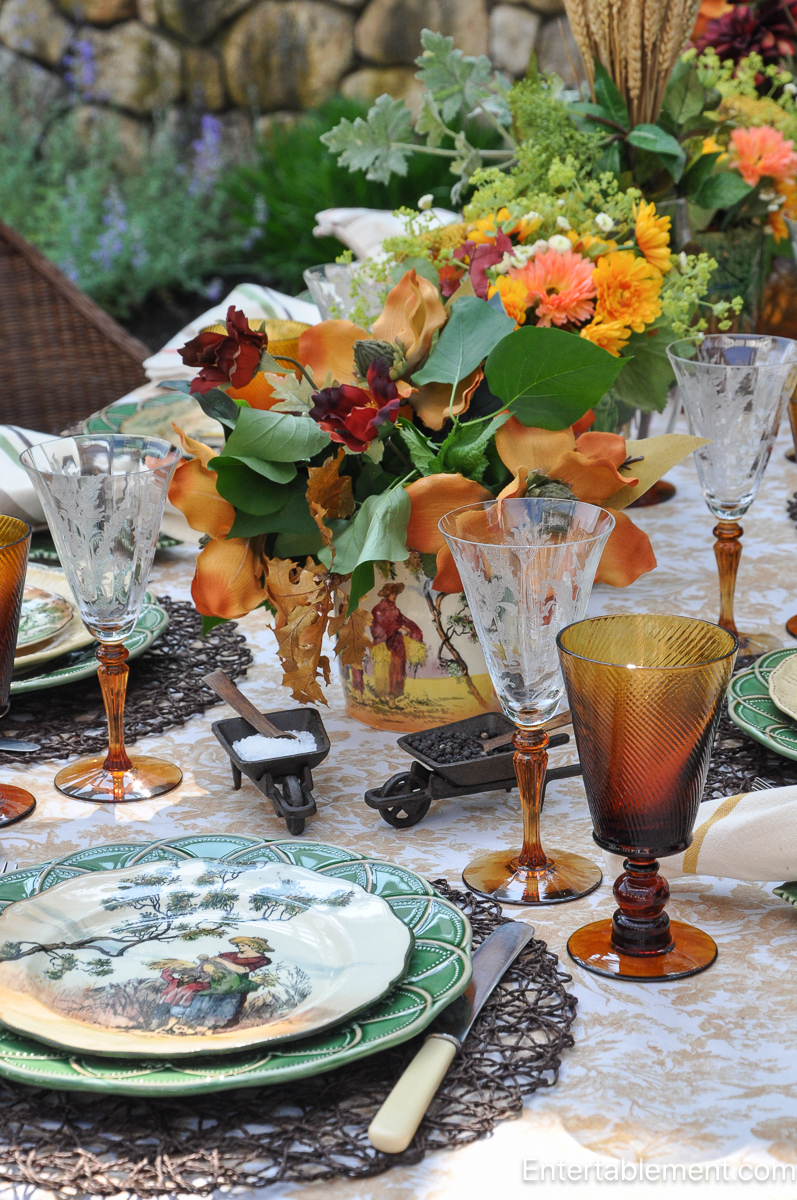
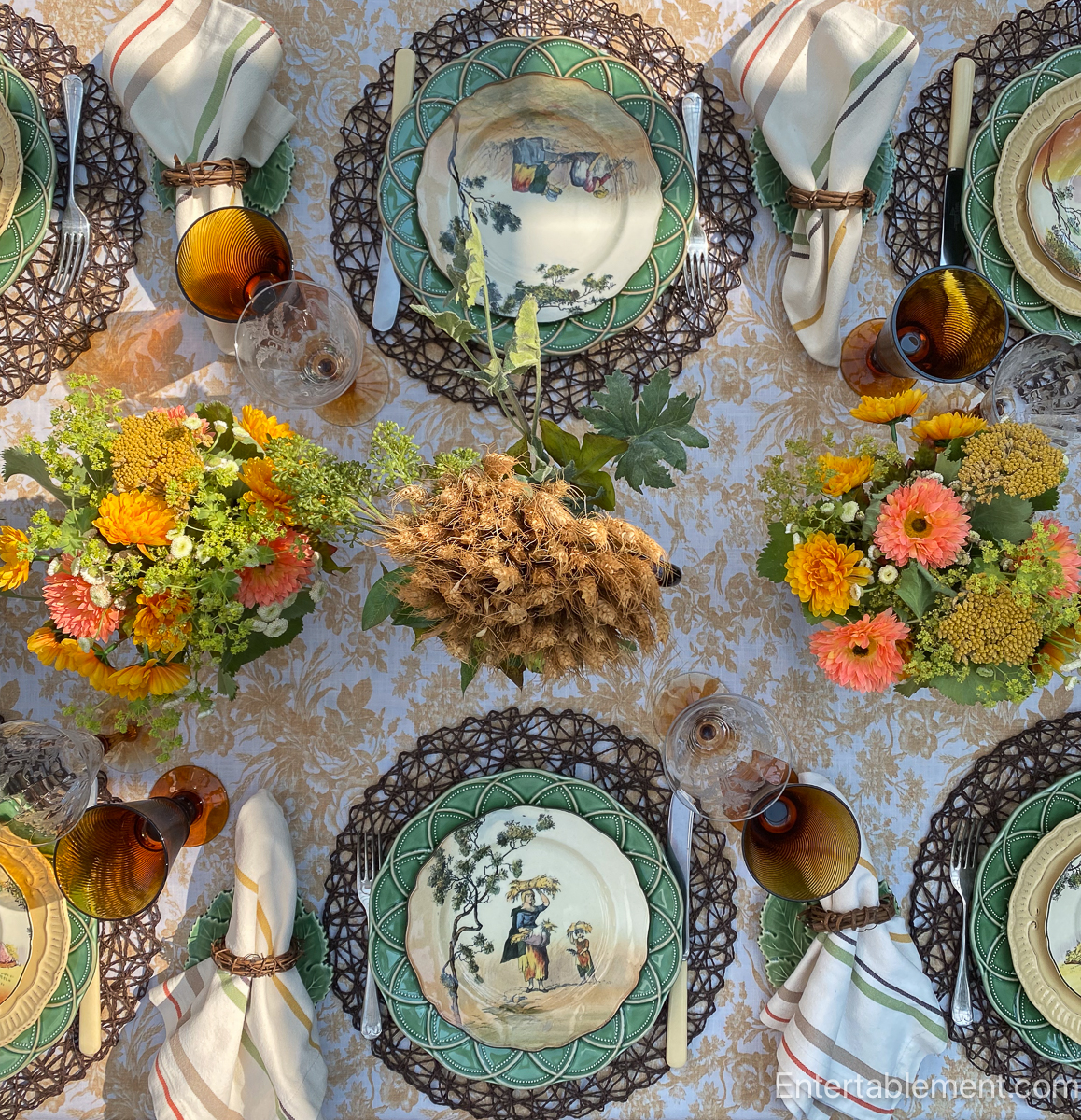
I used Bordallo Pinheiro Woods dinner plates as the grounding element at each setting — their deep green glaze echoing the foliage in the painted scenes.
To support the smaller bread-and-butter plates, I tucked in Home Accent’s Capri Buttercup salad plates (discontinued), their soft hue warming the palette without competing with the art.

For glassware, I employed my oft-used Julia Amber Depression glass by Tiffin Franciscan and Williams Sonoma amber twist stemware (discontinued).
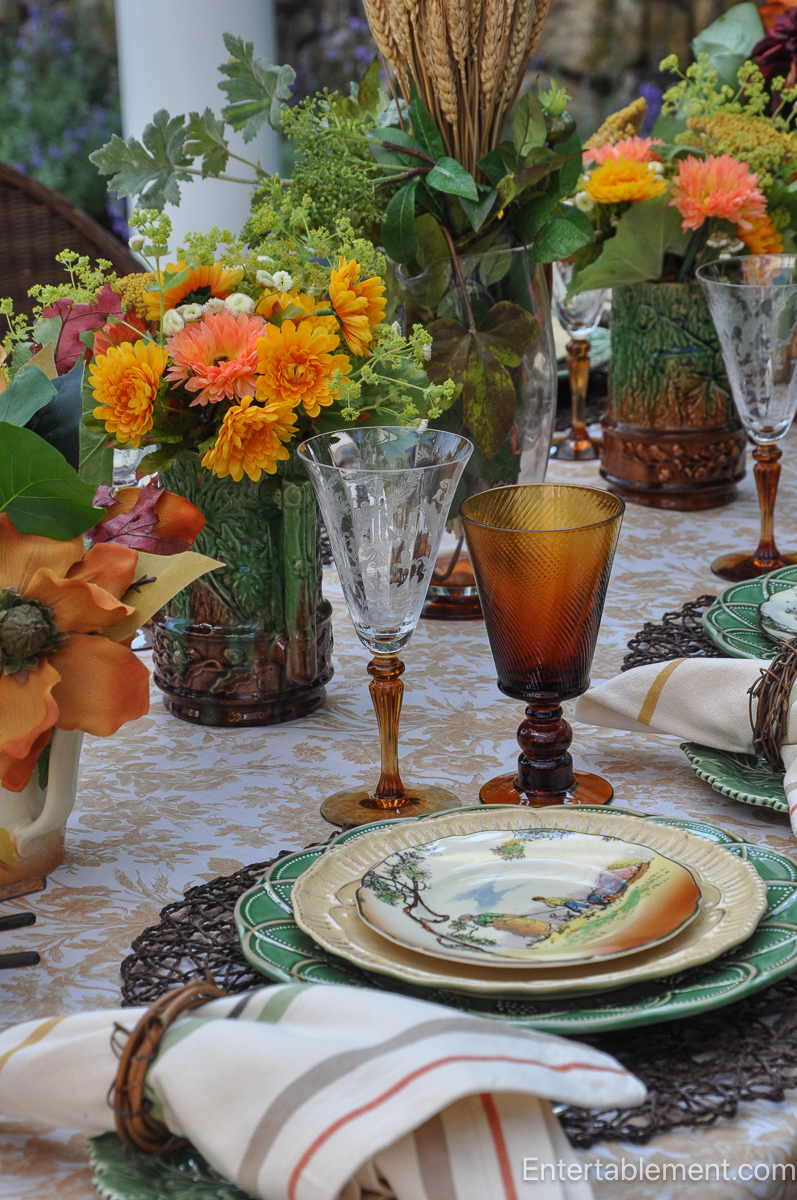
Taken all together, the pieces created a harmony of eras: early 20th-century plates, mid-century glass, and contemporary stemware — a gentle blend of old and new, much like the story the table tells.

Autumn flowers tuck into vintage majolica jugs.

A clear glass jug in the Julia pattern by Tiffin Franciscan holds a wheat sheaf.
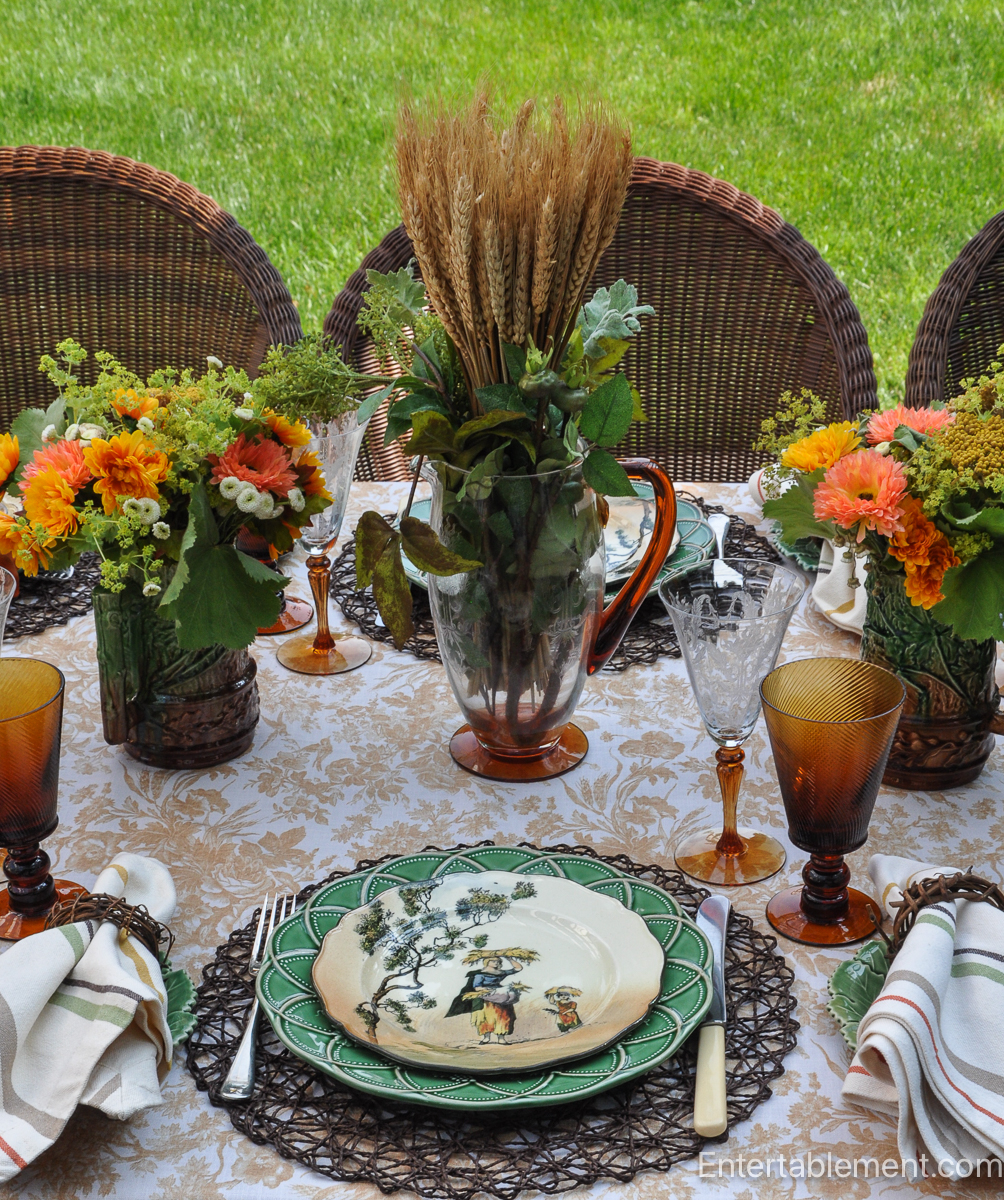
Quiet scenes painted on the Royal Doulton plates.
All invite us to pause, notice and remember that abundance doesn’t need to mean excess. It can simply mean enough: shared, savoured, and steeped in care.
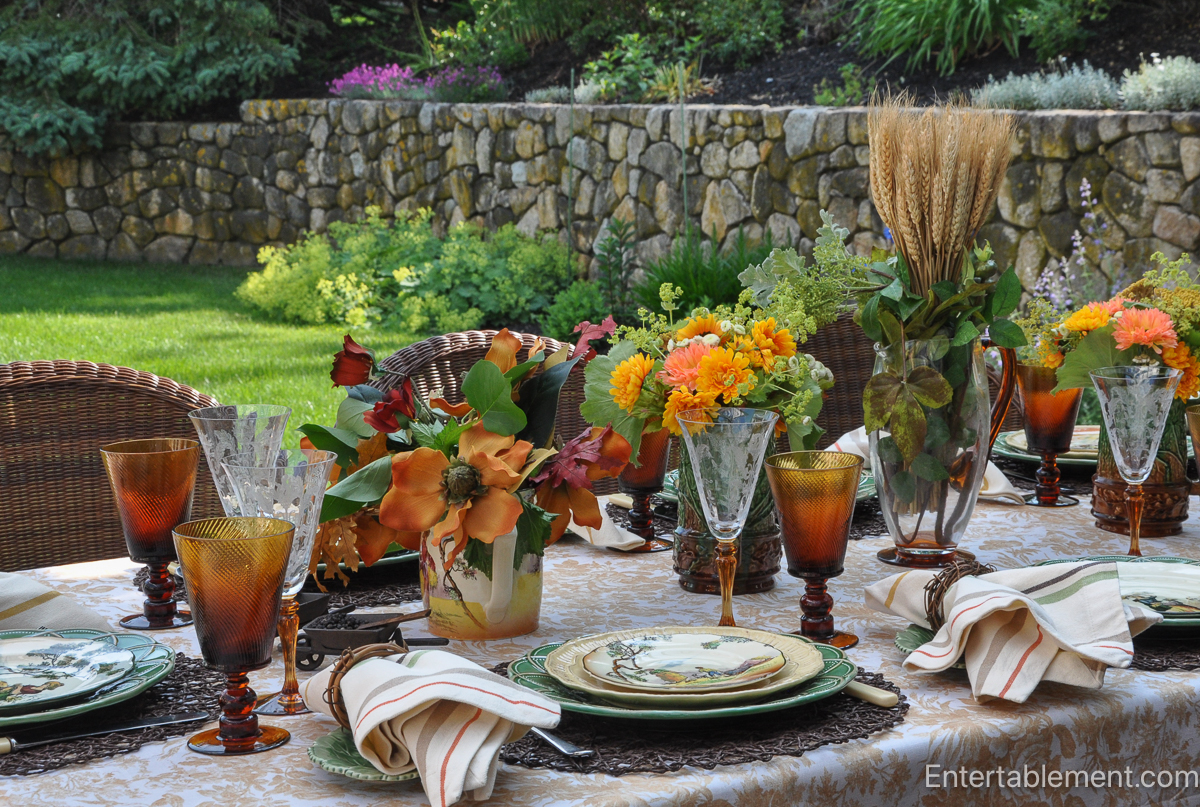
We live in a world that moves quickly, where food is plentiful and effort is often hidden. But the gleaners — romanticized though they may be — remind us of a truth worth holding onto as we approach the season of celebration.
Gratitude comes not from having everything, but from recognizing what it took — and who it took — to bring even the simplest things to our table.
And perhaps that is the quiet beauty of this “between” moment in November: an invitation to look back with appreciation, and forward with hope.
As we cross from autumn into winter, from harvest to holiday, may this table, and the stories painted upon it, serve as a gentle reminder that abundance is sweetest when it’s understood, shared, and appreciated. The gleaners of a century ago bent to gather single stalks of wheat. Today, we lift a bag of flour with barely a thought. But between those two gestures lies a world of history, memory, and effort worth remembering.
Thank you for joining me at this late-autumn table. May your season ahead be warm, grateful, and full of enough. And Happy Thanksgiving to all my American readers!



I love this table, your writing and everything I learned by reading. Thank you for sharing.
Thanks, Lisa! I always enjoy it when there is a story behind the tableware, especially something historical. We just got back from visiting the Christmas markets in England, so more to come!
Reading this story makes one realize how much we take everything for granted. Thanksgiving is appreciation for all that we have. Thanks for sharing that story and sharing another beautifully set table.
Isn’t it the truth, Maura? We frequently complain about how “not perfect” things are and sometimes lose perspective. Setting the table was a good reflective exercise for me. Happy Thanksgiving!
Dear Helen, this is a quiet and thoughtful table, with a sober message we all need to hear. It isn’t so long ago that entire areas of Switzerland and the EU were so poor they were forced to emigrate. Now our food in Europe is local, plentiful, of high quality, and much cheaper than across the pond. As I reach for a bulb of fennel, I wonder how on earth they can even transport it for its one-dollar price. Our local farmers brave capricious weather, fluctuating labour costs, and thin margins. Like farmers in the UK, they are trying to revive heritage foods and animals, and I am thankful to them. I am also thankful to you for reminding me. Now where did I put my tinsel? I am more than ready for Christmas.
God bless farmers! Such a thankless job and yet so very important. European markets have to be experienced to be believed. Multiple different types of strawberries in the spring, sparklingly fresh produce of every sort! We are also very fortunate to live here in Ontario, with the Niagara region’s microclimate nearby. The wine is nothing to write home about, but the fruits and vegetables are fabulous. We have several apple orchards nearby that are still producing heritage varieties. Love, love it.
Enjoy the Christmas season, Beatrice! It’s a magical time of year.
Wow. This really hit home for me. We belong to a CSA where we are often asked help our farmers plant, weed, and harvest. It’s backbreaking work – I don’t know how our farmers manage. To think there was once a time when the poor would come after and glean what was left is unthinkable. We are so fortunate, and take so much for granted. Thank you for sharing these special stories. I’ve learned so much from you.
Hi Barb,
It’s astonishing how quickly and how much things have changed, isn’t it? For centuries, we were connected to the land and had first-hand experience of how food was grown and harvested. I grew up on a small beef farm, myself. And I am forever grateful for what I learned. It is tough work.
Hope all is well in your world and you are anticipating the upcoming holiday season with joy!
Best,
Helen
Helen, this was one of the most heartfelt stories and tables you have ever presented. Love those plates and the floral arrangements. Some years ago I saw a sign that said “Someone else would be happy to have what you have.”
Happy Thanksgiving
Thanks, Myrna. That sign says it all, and we could all do a bit more to be mindful of the message. I hope you and yours have a lovely Thanksgiving!