
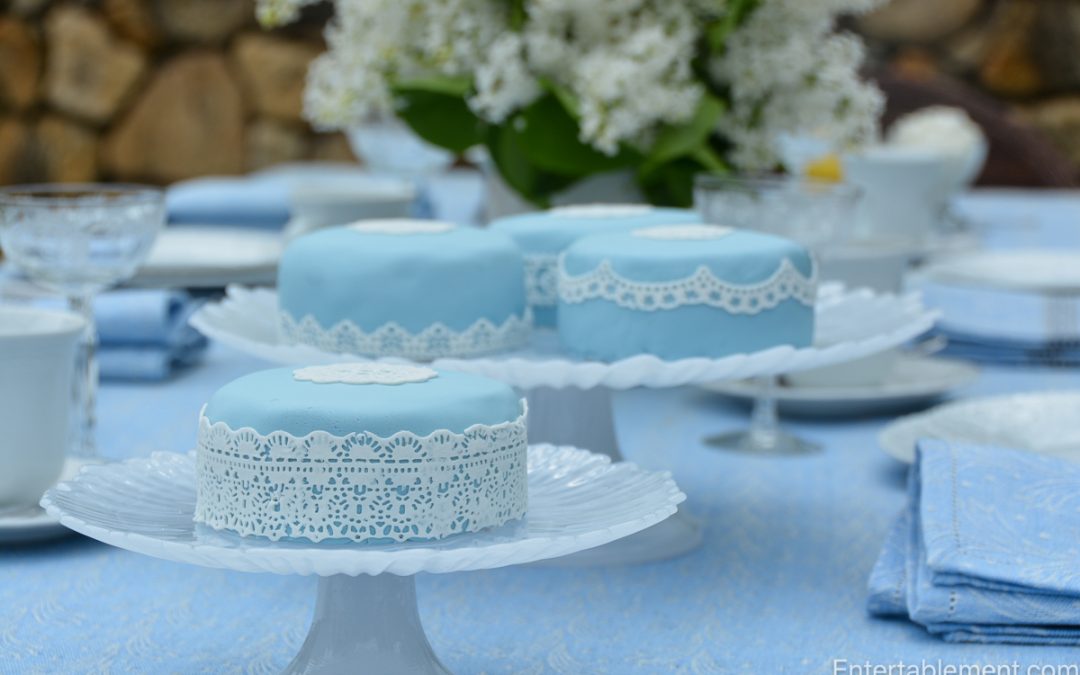
Inspired by the delicate elegance of Wedgwood china, these small layer cakes combine pale blue fondant, seedless raspberry jam, and intricate edible lace details for a dessert that feels both refined and faintly theatrical. While the decorative work requires patience — and perhaps a sense of humour — the process offers its own peculiar satisfaction. Beautiful enough for afternoon tea tables and special gatherings, the cakes are a reminder that ambitious baking projects are often equal parts creativity, concentration, and optimism.
Wedgwood Cakes
- Yield: Makes four 6" cakes 1x
Ingredients
Scale
For the Cakes
- 200 g or 1 cup granulated sugar
- 113 g or 4 oz unsalted butter, softened
- 2 large eggs
- 15 ml or 1 tbsp vanilla extract
- 200 g or 1⅔ cups all-purpose flour
- 4 ml or ¾ tsp salt
- 10 ml or 2 tsp baking powder
- 4 ml or ¾ tsp baking soda
- 240 g or 1 cup yoghurt, preferably Greek
- 120 ml or ½ cup seedless raspberry jam
For the Swiss Meringue Buttercream
- 3 large egg whites
- 180 g or ⅞ cup granulated sugar
- 270 g or 9½ oz unsalted butter, softened and cut into 1.25 cm or ½-inch cubes
- pinch of kosher salt
- 2 ml or ½ tsp vanilla extract
For the Fondant Decoration
- 150 g or 1½ cups Satin Ice white fondant
- 25 g or ¼ cup gum paste
- Americolor food gel in Wedgwood blue
- confectioners’ sugar, for dusting moulds
- corn syrup or clear piping gel, as needed
Equipment
- Silicone lace mould, approximately 2.5–5 cm or 1–2 inches wide
- Silicone snowflake moulds
- Fondant tools
Instructions
Make the Cakes
- Preheat the oven to 175°C or 350°F. Prepare six 10 cm or 4-inch round cake pans. If using baking spray, apply just before filling the pans.
- In a medium bowl, whisk together the flour, salt, baking powder, and baking soda.
- In the bowl of a stand mixer, beat the sugar and butter until light and fluffy, about 3 minutes.
- Add the eggs one at a time, beating well after each addition. Increase the mixer speed to high and beat until the mixture is light and airy, about 2 minutes. Add the vanilla and beat for another minute. Scrape down the sides of the bowl.
- Beginning and ending with the flour mixture, alternately add the dry ingredients and the yoghurt, beating well after each addition.
- Scrape down the sides of the bowl and mix briefly to ensure everything is fully incorporated.
- Divide the batter evenly among the prepared pans.
- Bake for 15 to 20 minutes, or until the cakes spring back lightly when touched.
- Let the cakes cool in the pans for 10 minutes before turning them out onto a wire rack to cool completely.
Make the Swiss Meringue Buttercream
- Place the egg whites and sugar in a heatproof bowl and whisk to combine.
- Set the bowl over a saucepan of simmering water, ensuring the bottom of the bowl does not touch the water. Whisk continuously until the mixture reaches 71°C or 160°F, or until the sugar no longer feels grainy when rubbed between your fingers.
- Transfer the mixture to the bowl of a stand mixer fitted with the whisk attachment. Beat until glossy, room-temperature peaks form.
Tip: Holding a couple of bags of frozen peas or corn against the outside of the bowl helps cool the mixture more quickly.
- With the mixer running on medium-low speed, add the softened butter one piece at a time, allowing each addition to incorporate fully before adding the next. This process takes patience — approximately 5 to 10 minutes.
- If the buttercream briefly looks soupy or curdled, do not panic. Continue beating. Swiss meringue buttercream has a dramatic temperament but usually comes around in the end.
- Add the vanilla extract and pinch of kosher salt. Beat until smooth and silky.
Assemble the Cakes
- Using a serrated knife, level each cake layer and cut each cake horizontally in half.
- Spread a thin layer of buttercream over each layer and top with 15–30 ml or 1–2 tbsp raspberry jam.
- Stack the layers and apply a thin crumb coat of buttercream to each cake. Set aside.
- Lightly grease a work surface with white vegetable shortening.
- Knead 2 ml or ½ tsp food colouring gel into 125 g or 1¼ cups of the white fondant until evenly coloured.
- Roll out one quarter of the fondant on the greased surface. Lift it carefully using a rolling pin or your hands and drape it over a cake. Smooth the fondant over the top and sides and trim away the excess with a sharp knife. Repeat with the remaining cakes.
- Dust the silicone moulds lightly with confectioners’ sugar.
- Knead the remaining 25 g or ¼ cup white fondant together with the gum paste until smooth and fully combined.
- Press the fondant mixture firmly into the lace moulds, scraping away the excess with a sharp knife. Carefully remove the lace pieces using fondant tools or a pick.
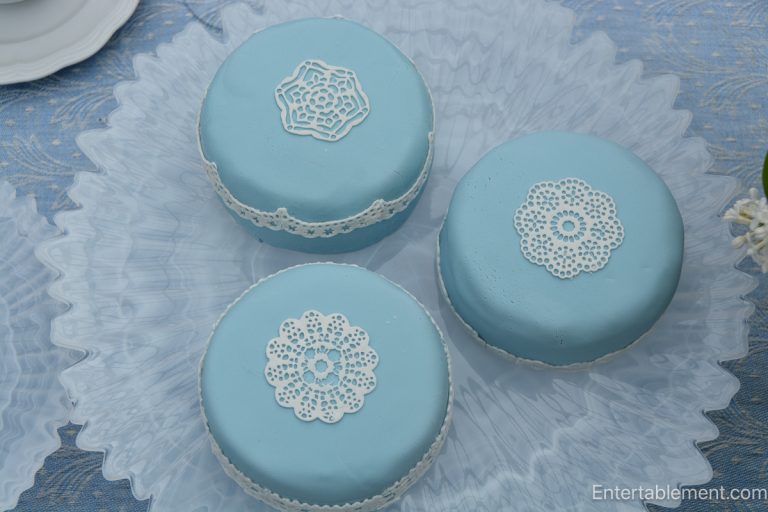
- Attach the fondant decorations to the cakes using a small amount of corn syrup or clear piping gel.