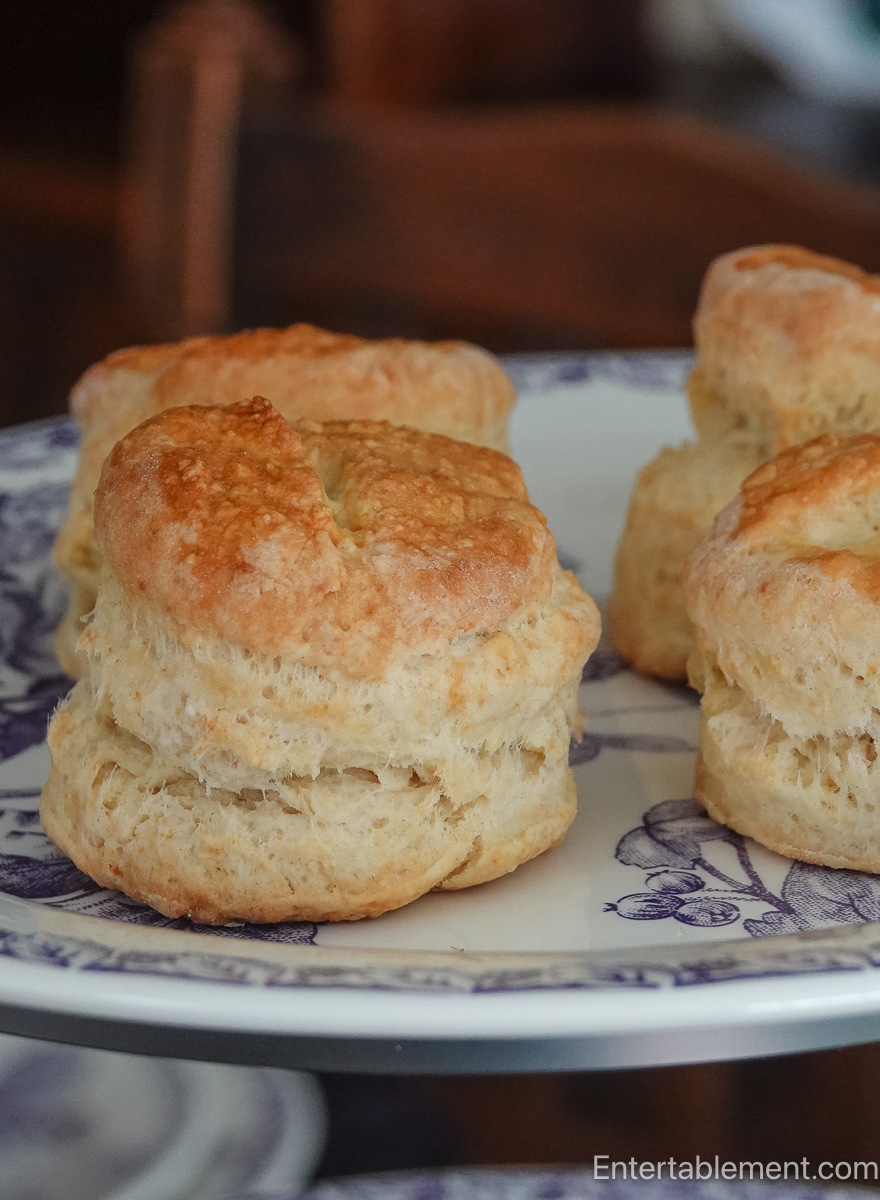
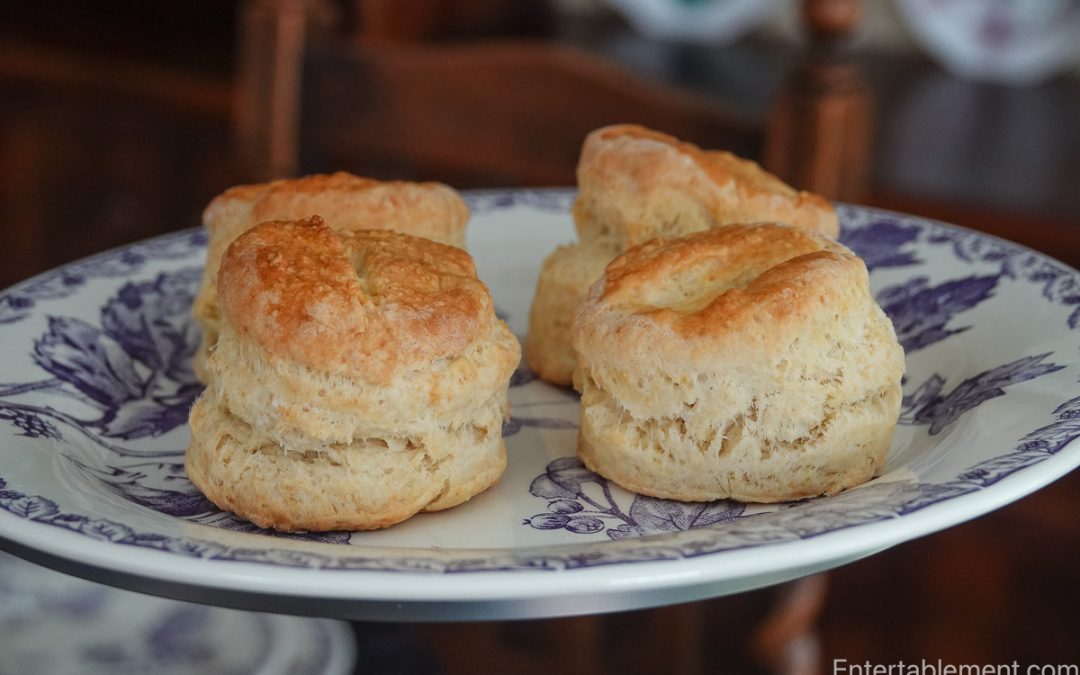
There are scones… and then there are proper English tea scones.
Light, flaky and delicately buttery, these classic scones are the sort you’ll find served warm in village tearooms and country houses across Britain, ready to be split by hand and generously spread with butter, strawberry jam or clotted cream. Unlike richer cream scones or sweeter American-style café scones, these rely on a light hand, cold butter and minimal mixing to create their beautifully tender layers.

Gien Mûres Tea
This is my foundation recipe—the one from which currant, Christmas spice, chocolate orange and countless other variations are made. Whether you’re serving a traditional afternoon tea or simply putting the kettle on for a friend, every good scone begins here.
Print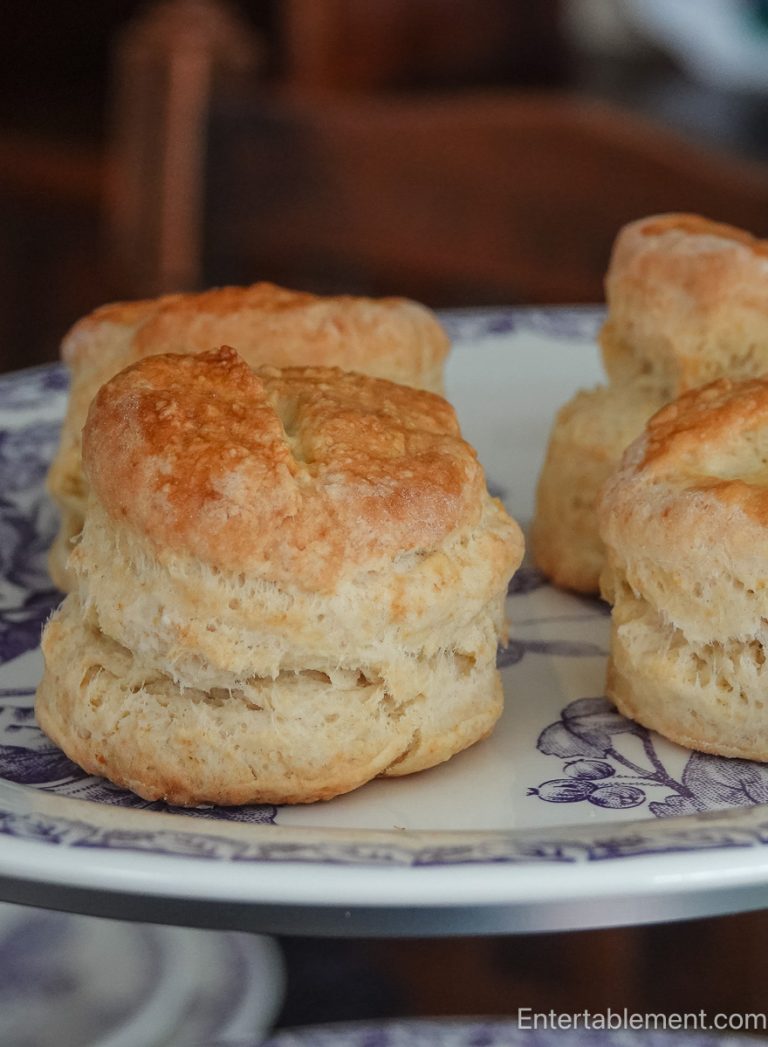
Classic English Tea Scones
Classic English tea scones with a light, flaky crumb and buttery flavour. Perfect served warm with butter, jam and clotted cream for a traditional afternoon tea.
- Yield: Makes 8. 1x
Ingredients
- 330 g or 2¾ cups all-purpose flour
- 15 g or 1 tbsp baking powder
- 3 g or ½ tsp kosher salt
- 40 g or 3 tbsp granulated sugar
- 85 g or 6 tbsp cold unsalted butter, cubed
- 1 large egg
- 150 ml or about ⅔ cup whole milk
- Extra milk for brushing
Instructions
Prepare the Dough
- Preheat the oven to 220°C or 425°F. Line a baking sheet with parchment paper.
- In a large bowl, whisk together the flour, baking powder, salt and sugar.
- Using a pastry cutter or your fingertips, cut the cold butter into the flour until the mixture resembles coarse crumbs with some pea-sized pieces of butter still visible. These small pieces of butter will create the flaky layers as the scones bake.
- In a measuring cup, whisk together the egg and milk. Make a well in the centre of the flour mixture. Pour the milk mixture into the dry ingredients and stir gently with a fork just until the dough begins to come together. The mixture will look a little shaggy—that’s exactly what you’re after.
- Turn the dough onto a lightly floured surface and gently bring it together with your hands. Resist the temptation to knead it. Two or three gentle folds are all that’s needed to create a smooth dough while preserving those lovely buttery layers.
Shape the dough
- Pat the dough into a circle approximately 2½ cm or 1 inch thick.
- Using a 6 cm or 2½ inch round cutter, cut out the scones, pressing straight down without twisting the cutter. Twisting seals the edges and can prevent the scones from rising evenly.
- Gather the scraps together gently and cut additional scones until all the dough has been used.
- Arrange the scones on the prepared baking sheet, leaving a little space between them.
- Brush only the tops with a little milk, taking care not to let it run down the sides.
- For the flakiest texture and best rise, refrigerate the scones for 15–20 minutes while the oven finishes heating.
Bake
- Bake for 14–17 minutes, or until the scones have risen well and are lightly golden on top.
- Transfer to a wire rack and allow to cool for a few minutes.
- Serve warm with butter, strawberry or raspberry jam and, of course, clotted cream.
Notes
- Keep everything as cold as possible. Cold butter creates the flaky layers that make a proper English tea scone.
- Mix the dough as little as possible. A light hand is the secret to a tender crumb.
- If making ahead, freeze the unbaked scones on the tray. Bake straight from frozen, adding 2–3 minutes to the baking time.
- These are at their very best on the day they are baked, but leftovers freeze beautifully and can be refreshed in a warm oven for a few minutes.