
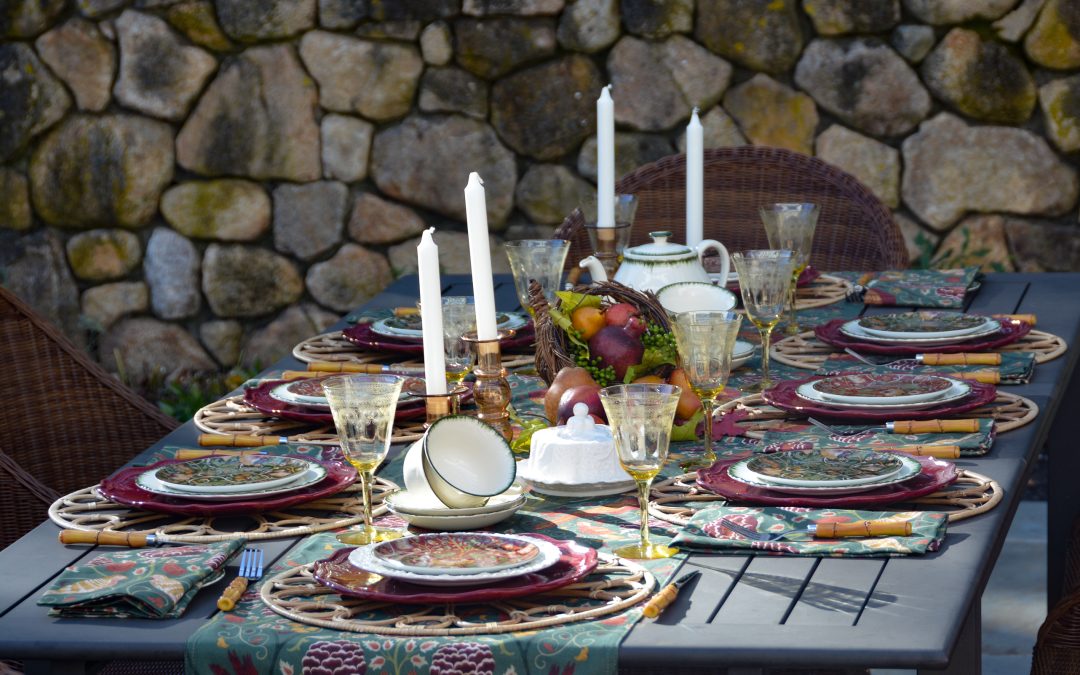
Have you noticed how much colour and pattern have been creeping back into tableware lately? After years of pale neutrals, I’m delighted to see florals, botanicals and richly coloured china appearing again.

Williams Sonoma seems to have embraced the shift with particular enthusiasm, dipping into the archives of venerable English design houses for inspiration.

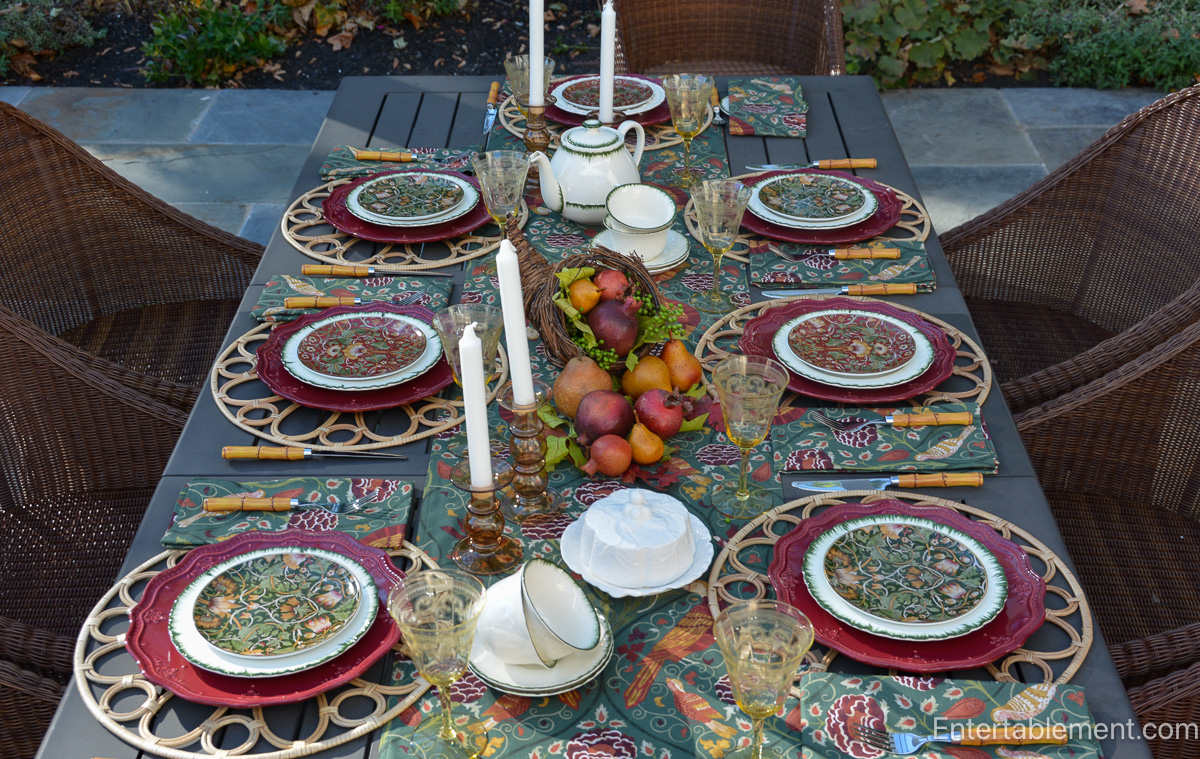
William Morris is certainly a good place to start. His curling leaves, flowers and birds seem particularly at home in autumn, especially in the deep greens, reds and burgundies of these Morris & Co. Essex appetizer plates. Last year, the plates came as a set of four—two predominantly green and two a wonderful rich burgundy. This year, Williams Sonoma has introduced a set of four different plates—adding a white and a gold background.

There were coordinating salad plates, but oddly, the burgundy was much paler and rather washed out. I liked the little appetizer plates much better and decided to see what I already had that might work with them.
Pulling the Table Together
The deep burgundy Farmhouse Lace dinner plates from Pioneer Woman turned out to be almost exactly the colour I was looking for. I tried the Essex plates directly on top, but it was all getting a little intense. The Williamsburg green salad plates provided some welcome breathing room. Their creamy centres separated the two stronger patterns, while the narrow green feathered edge picked up the foliage in the Morris plates.
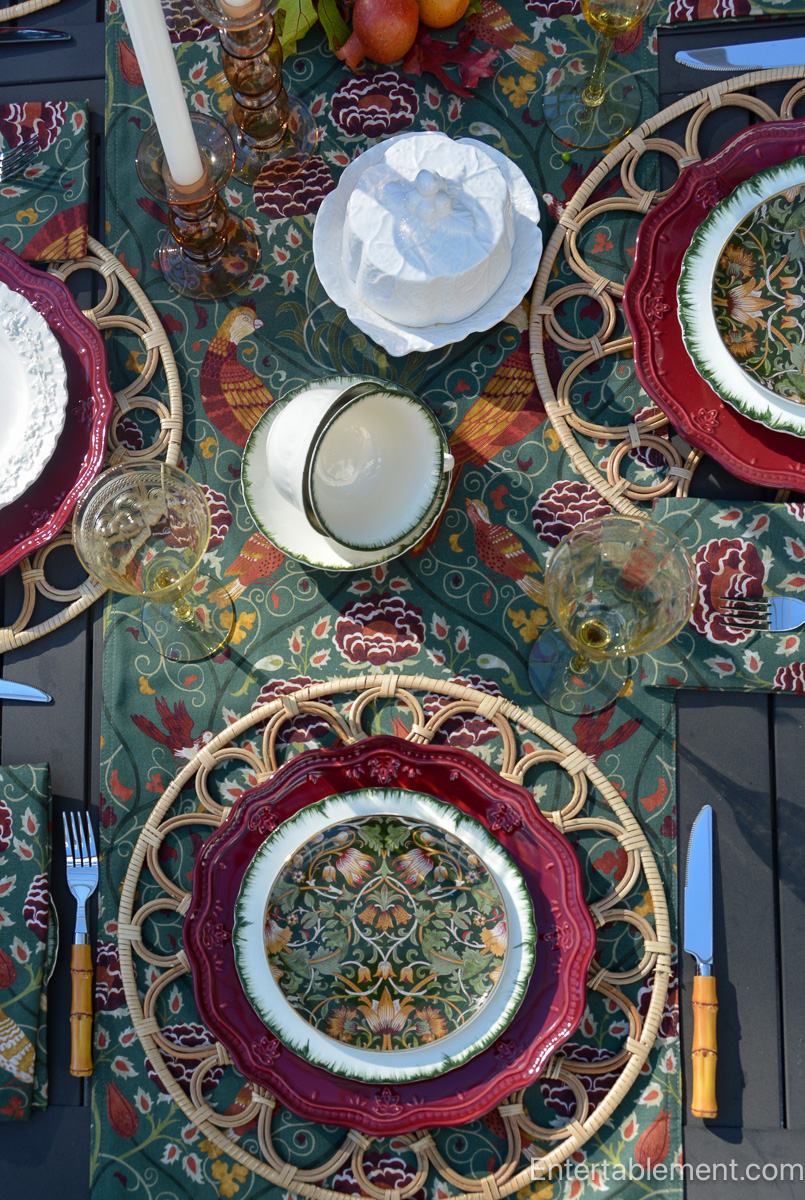
I have only six of them, however, so I used Wedgwood’s cream on cream shell-edged plates to fill in the remaining two place settings.

Rattan chargers went underneath, followed by bamboo-handled flatware. I liked the natural texture against all that china and pattern.
Then came the linens.
Enter May Morris
The runner and napkins are Morris & Co. Seasons by May, and this is where the story becomes especially interesting. The design is based on an embroidery called Spring and Summer, dating from about 1895 and designed—and most likely stitched—by May Morris, William Morris’s younger daughter.
May was no dilettante trading on the family name. An accomplished designer and embroiderer, she took charge of Morris & Co.’s embroidery department in 1885, when she was only twenty-three, and went on to design textiles, wallpaper and jewellery, as well as teaching and writing about embroidery.
In Seasons by May, parakeets perch amongst stylized roses and tulips, surrounded by curling stems and leaves. It’s a glorious pattern.

While the Essex plates and Seasons by May linens are two different patterns, they speak much the same language.
A Few Quieter Notes
By now there was quite a lot going on, so I began looking for places to give the eye a rest. The Wedgwood Green Shell Edge tea service was an easy choice. I was already using the salad plates, and the simple cream body of the teapot and other pieces brought some welcome quiet to the centre of the table.
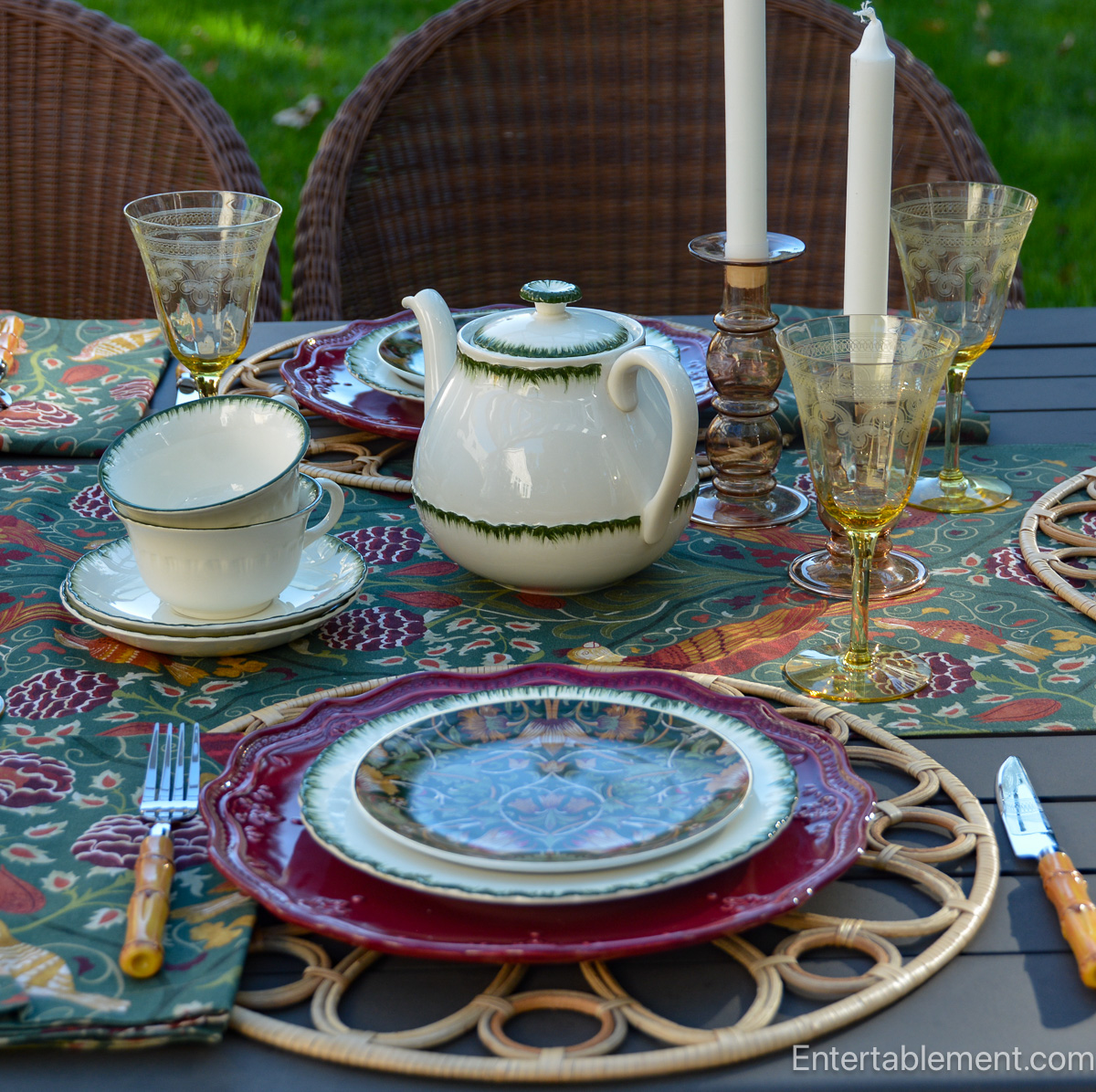
The amber Depression glass did something similar. It added another autumn colour, but because the glass is transparent, it didn’t seem to add to the busyness. I scattered a few amber glass candlesticks along the table, too. By this point, flowers seemed entirely unnecessary. William and May had already supplied quite enough.

Instead, I filled a wicker cornucopia with pears and pomegranates and let them tumble down the centre of the table with berries and autumn leaves.
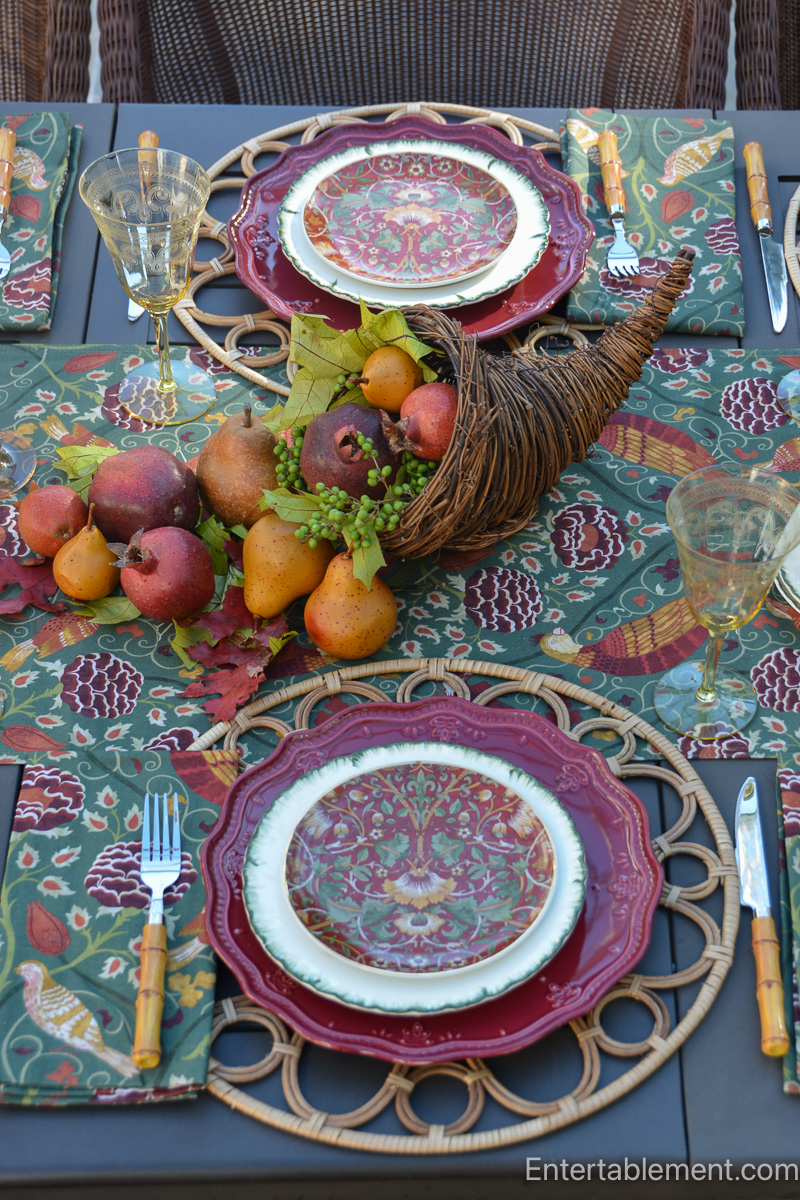
The fruit picked up the russets, burgundies and greens in the china and linens, while the wicker echoed the rattan chargers. And pears and pomegranates are wonderfully cooperative centrepieces. No arranging into submission required.
William—and May—Morris
Regular readers of Entertablement Abroad may remember our visit to Kelmscott Manor, William Morris’s beloved Oxfordshire home.

I’ve also written there about Morris himself and the ideas that helped give rise to the Arts and Crafts Movement.
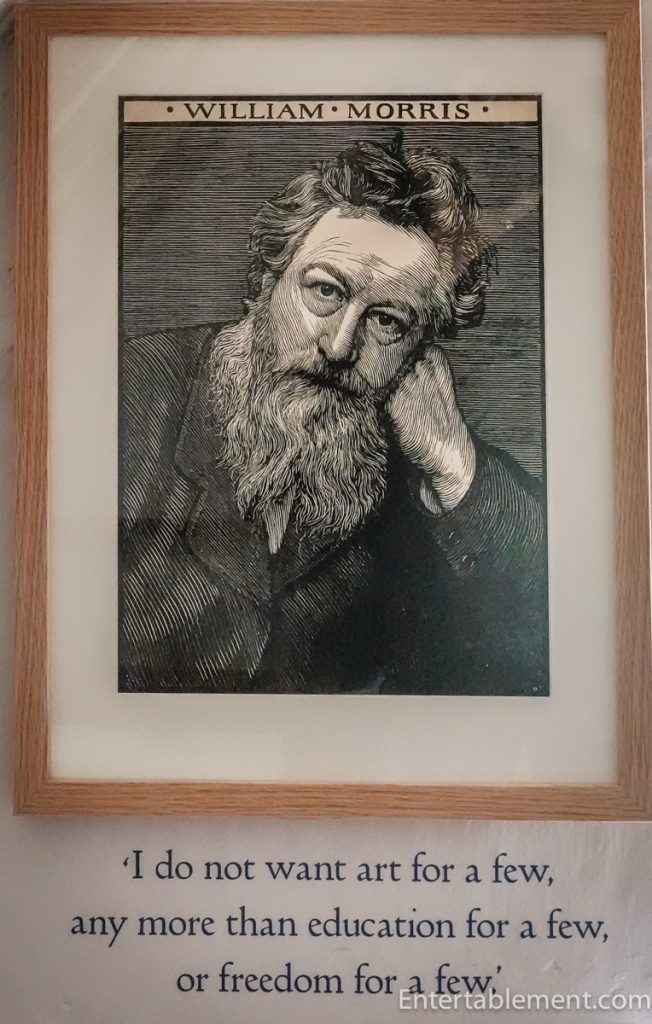
We’ve recently been exploring that story further for Makers Behind the Magic: The Arts and Crafts Movement—When Handmade Still Mattered, including the rather complicated relationship between craftsmanship and the machine.
But setting this table made me especially interested in May.
William’s name has become shorthand for an entire decorative world, which makes it very easy to overlook the other talented people working around him—including his own daughter. Finding one of May’s designs on a twenty-first-century table is a rather lovely reminder to look a little more closely at who actually made what.

And perhaps that’s also why these patterns remain so appealing. They don’t need a Victorian room around them. Here they are with Pioneer Woman dinner plates, Wedgwood, Depression glass, rattan and bamboo, looking perfectly content together.
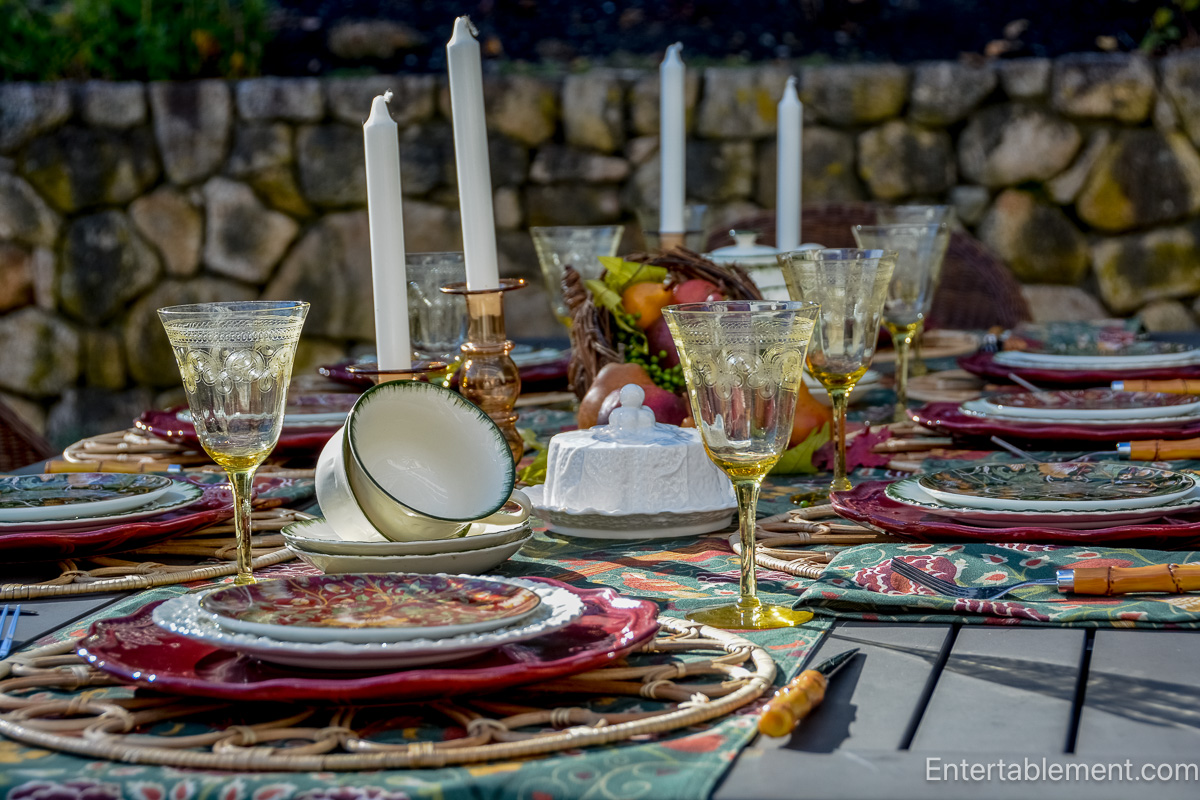
Looking at the photographs again, I think that’s what pleases me most about this table. There are birds and flowers everywhere, pears and pomegranates tumbling out of a cornucopia, amber glass catching the light—and an improbable combination of Morris & Co., Pioneer Woman and Wedgwood all getting along perfectly well.
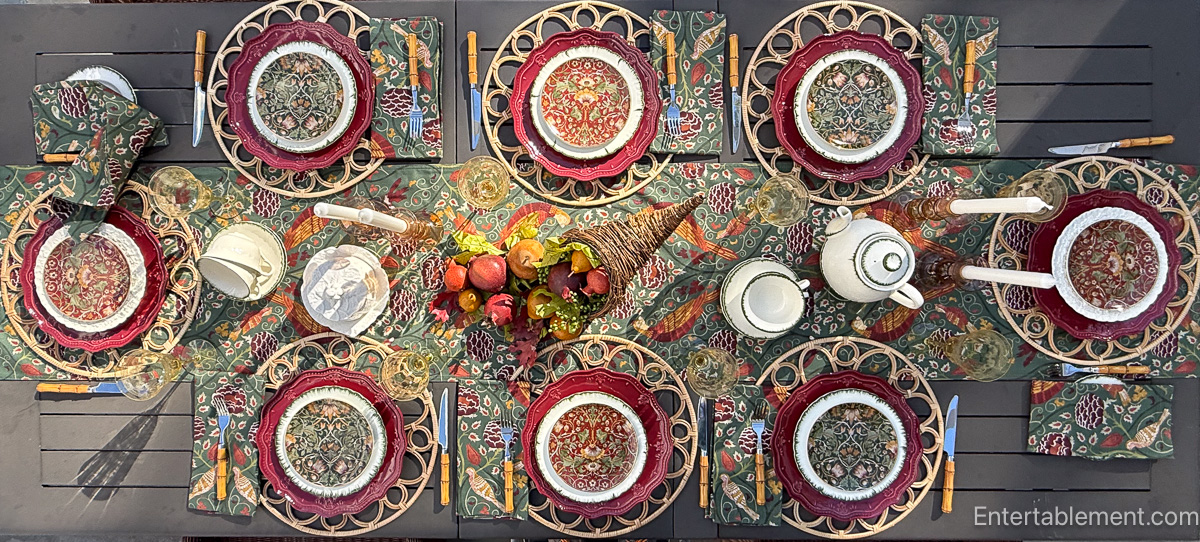
After years of restrained neutrals, I’m thoroughly enjoying the return of colour and pattern. Long may it continue.
Sources:
- Dinner plates: Farmhouse Lace Claret (Pioneer Woman – discontinued)
- Salad Plates: Williamsburg Green and Cream-on-Cream Shell Edged (Wedgwood)
- Appetizer Plates: Morris & Co. Essex (Williams Sonoma)
- Teapot, cups & saucers: Williamsburg Green (Wedgwood)
- Linens: Morris & Co. Seasons by May (Williams Sonoma)
- Goblets: Tiffin-Franciscan 14196-11 Amber (Depression glass)
- Chargers: Monique Lhuillier Antibes (Pottery Barn)