
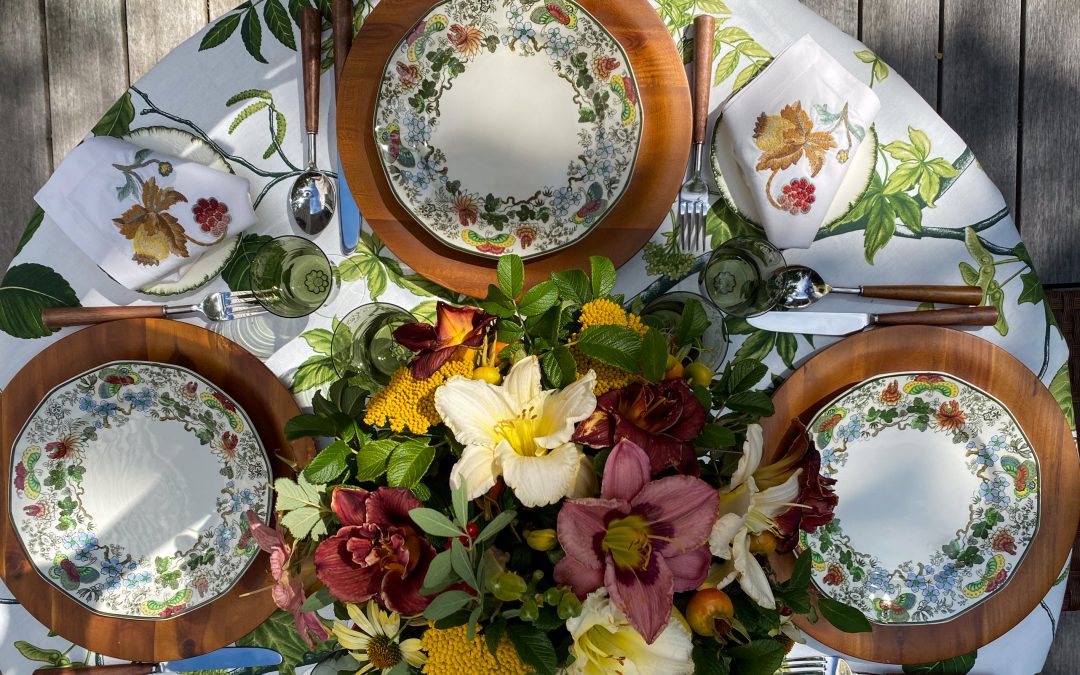
In the heart of British pottery lies a story of artistry, craft and quiet transformation. For over two centuries, Royal Doulton has married functional utility with high-style design, shaping not just tableware but culture itself. From the salt-glazed stoneware of Lambeth to the bone-china flourish of the early 20th century, each piece carries the hand of a maker, the skill of a painter, and the pulse of a moment in history. In this “Makers Behind the Magic” post, we explore how Royal Doulton became a medium of British style — and how each image below captures not just a plate or jug, but a narrative of craft, place and tradition.
Origins in Lambeth: Practical Beginnings
Founded in 1815 by John Doulton, the company began as a maker of utilitarian stoneware in Lambeth, London. Early wares focused on water bottles, drainage pipes, and storage jars—products of the growing urban infrastructure of industrial England. But Doulton’s commitment to quality and design set it apart even then.
By the mid-19th century, the firm had embraced the artistic possibilities of ceramics, hiring sculptors and decorative artists who would lay the groundwork for its transformation into a household name.
A Royal Warrant and New Heights
In 1901, under the direction of Henry Doulton, the company received a Royal Warrant from King Edward VII and was officially renamed Royal Doulton. The warrant solidified the firm’s reputation as a purveyor of elegant, reliable ceramics fit for both palace and parlour, such as the Poppy Plates.
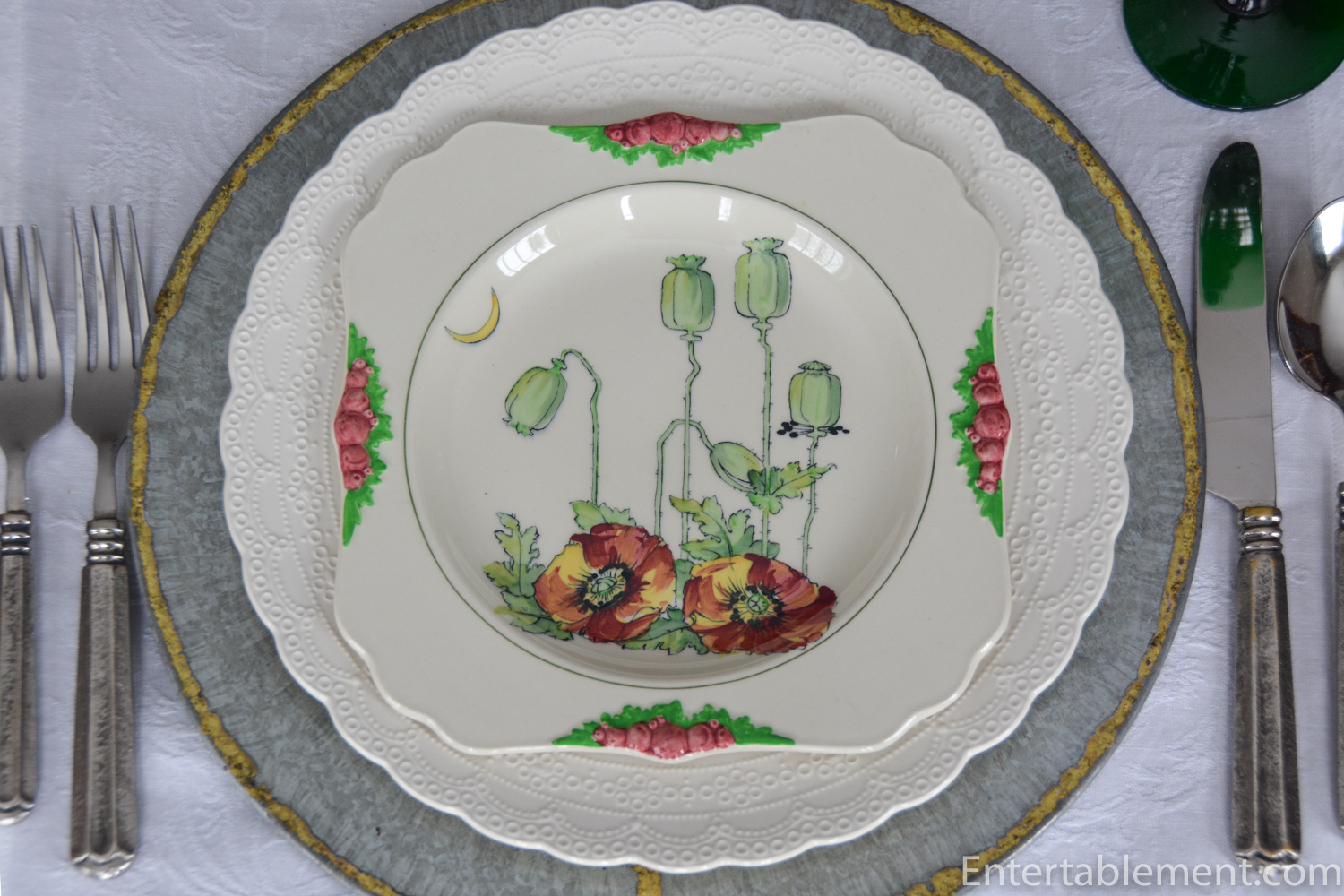
Indian (1912)
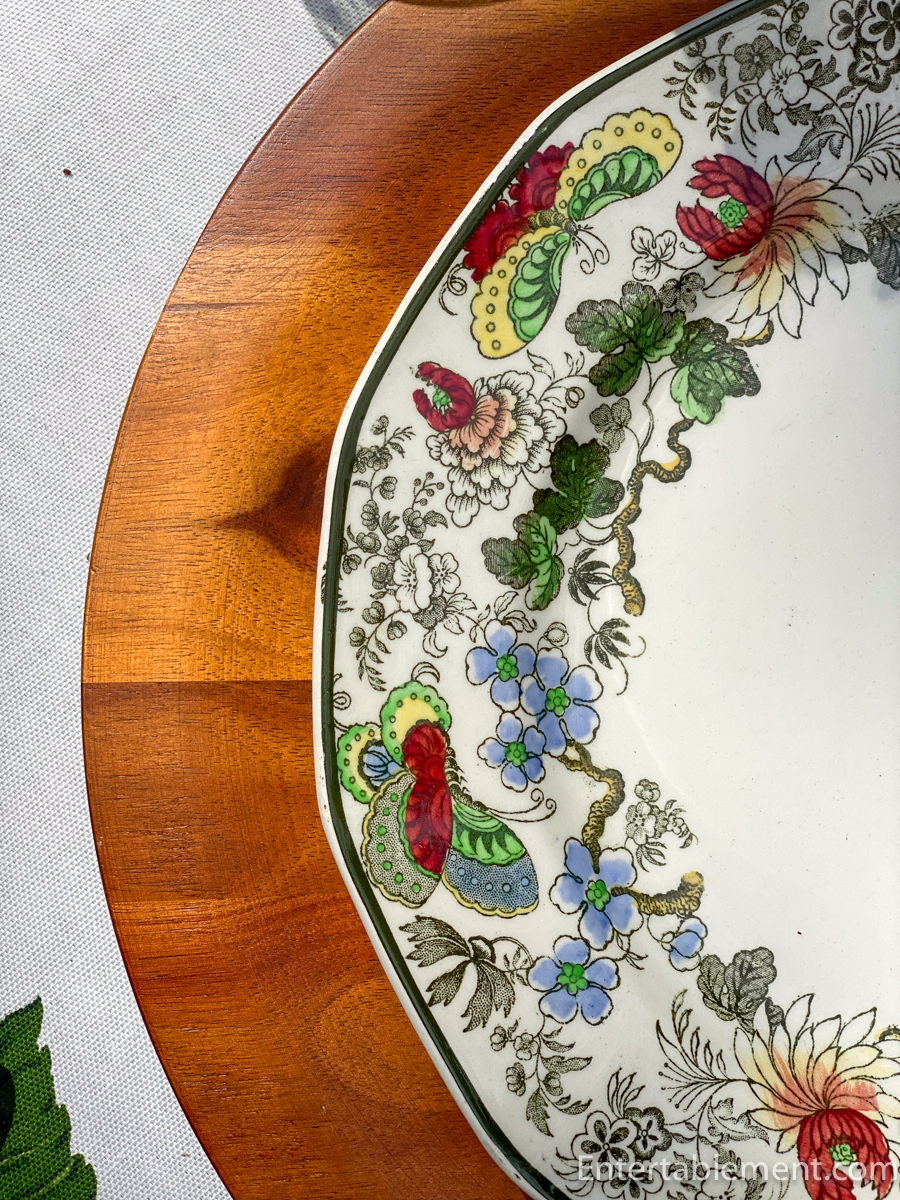
And Nankin (popular in the 1920s and 30s).

Royal Doulton also produced some very elaborate Gilded Age pieces, such as the cobalt service plates below. The Royal Gold soup cups and bread-and-butter plates are modern.
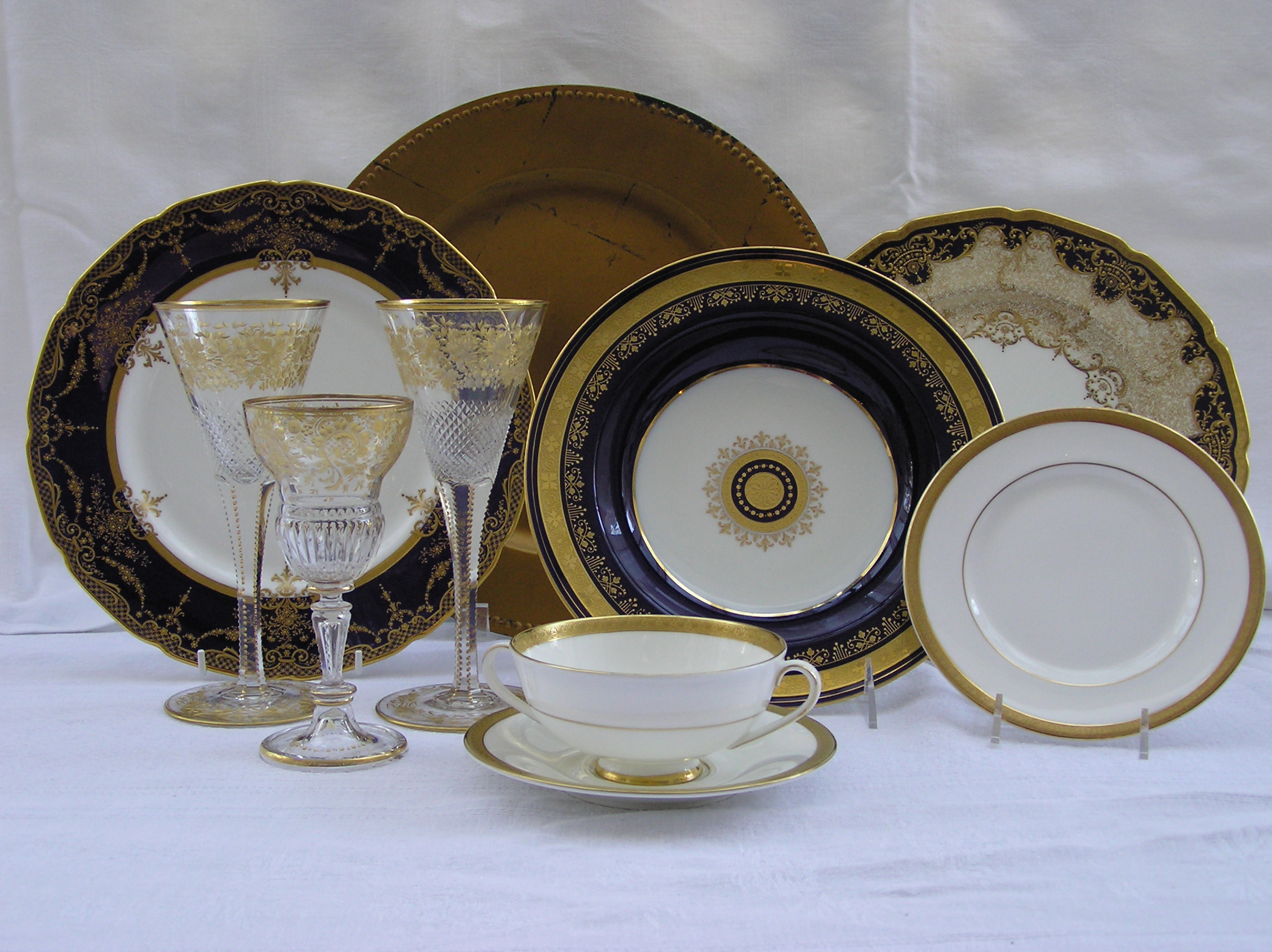
Cobalt Service Plates by Royal Doulton; Soup Bowl, Minton; Soup Cup Royal Gold by Royal Doulton
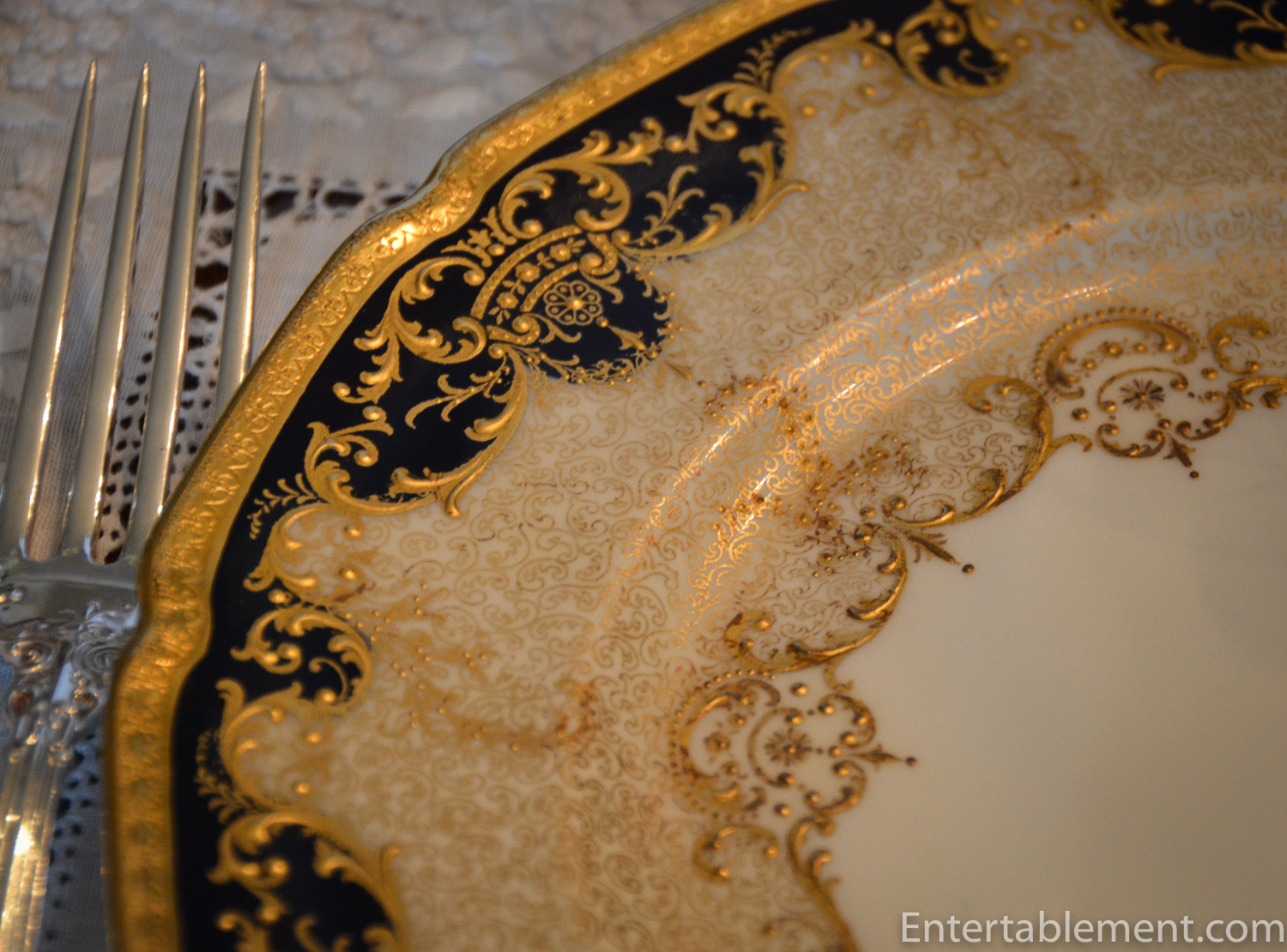
Today, they still produce fine china dinnerware that balances beauty with durability, including the modern Provence pattern.

Doulton struck the perfect balance between classic formality and everyday use—an enduring appeal that helped define British domestic style.
Innovation Meets Collectibility
In addition to dinnerware, Royal Doulton developed a robust market in collectible wares:
- Their figurines became treasured heirlooms, especially among post-war collectors
- The Character Jugs series brought personality and humour to the table
- Collaborations with designers and illustrators, including Bunnykins and Bunnikins, expanded their visual vocabulary
Royal Doulton: Series Ware as Storytelling
Royal Doulton was renowned not only for the quality of its bone china but also for its innovative and evocative series ware, patterns that told stories and reflected everyday life, contemporary and historical. Beloved collections such as The Gibson Girl
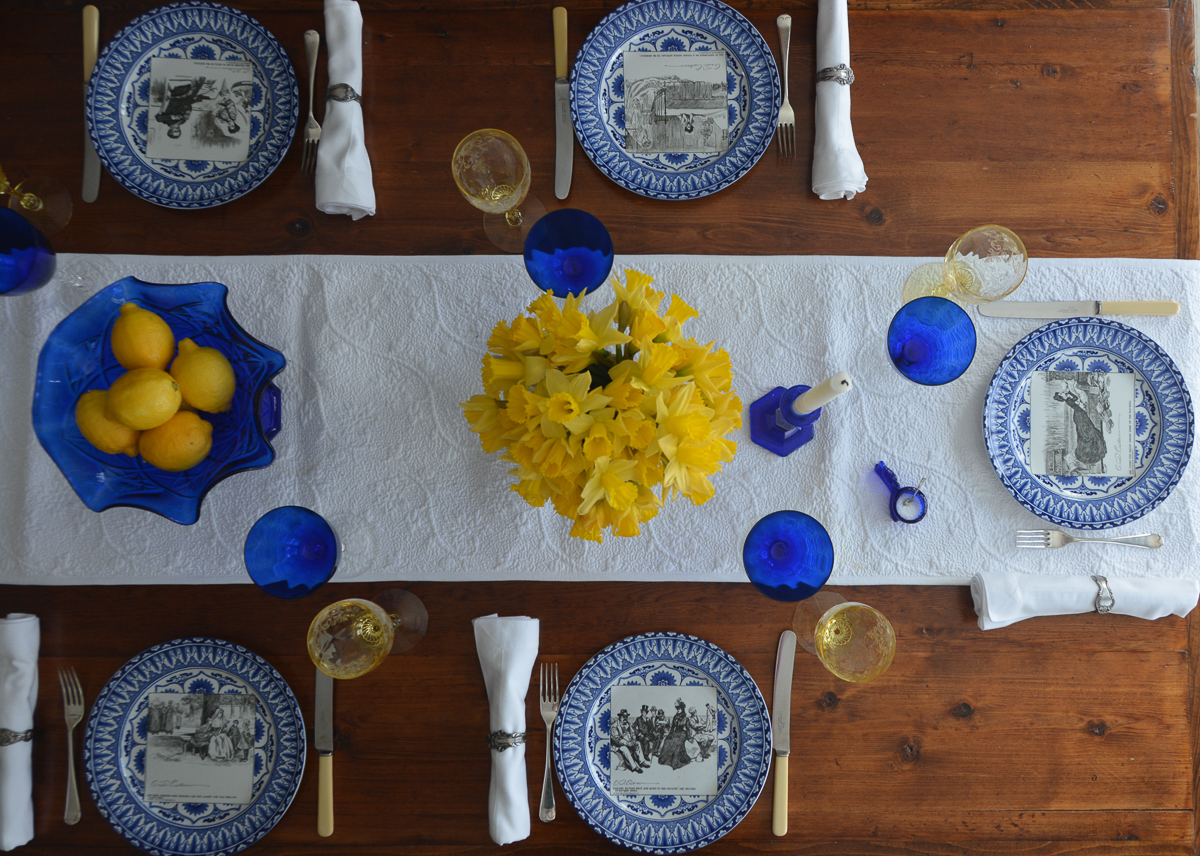

Castle Plates

Harlech Castle
And the more richly decorated Cathedral series
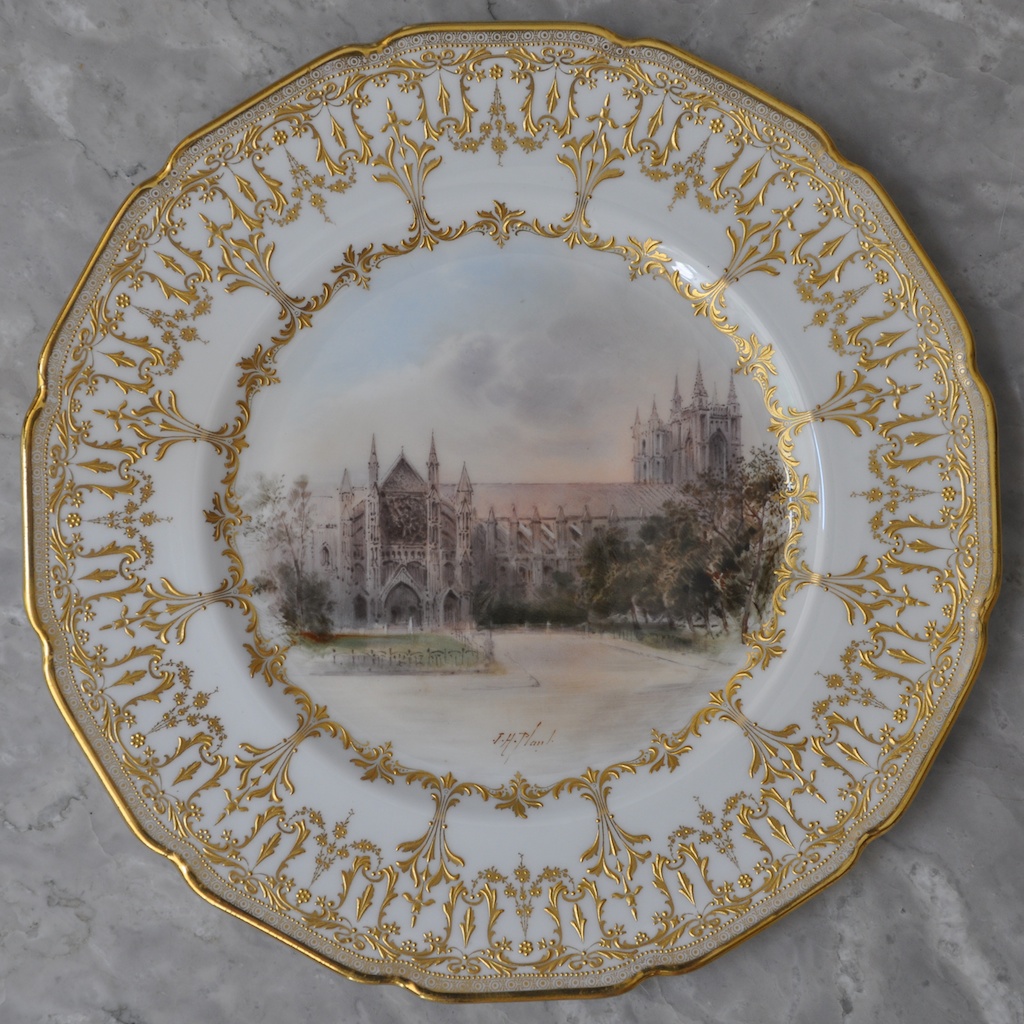
Westminster Abbey
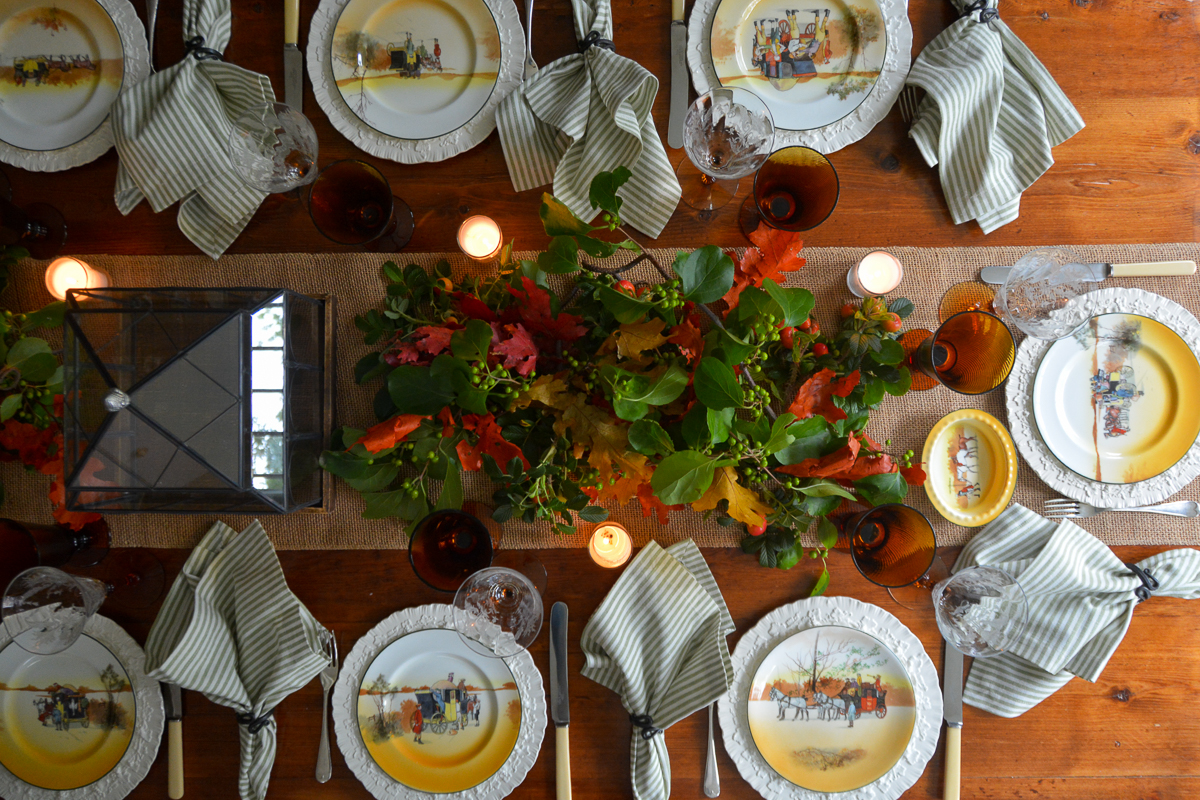
Coaching Days (Featured in Entertablement—The Four Seasons)
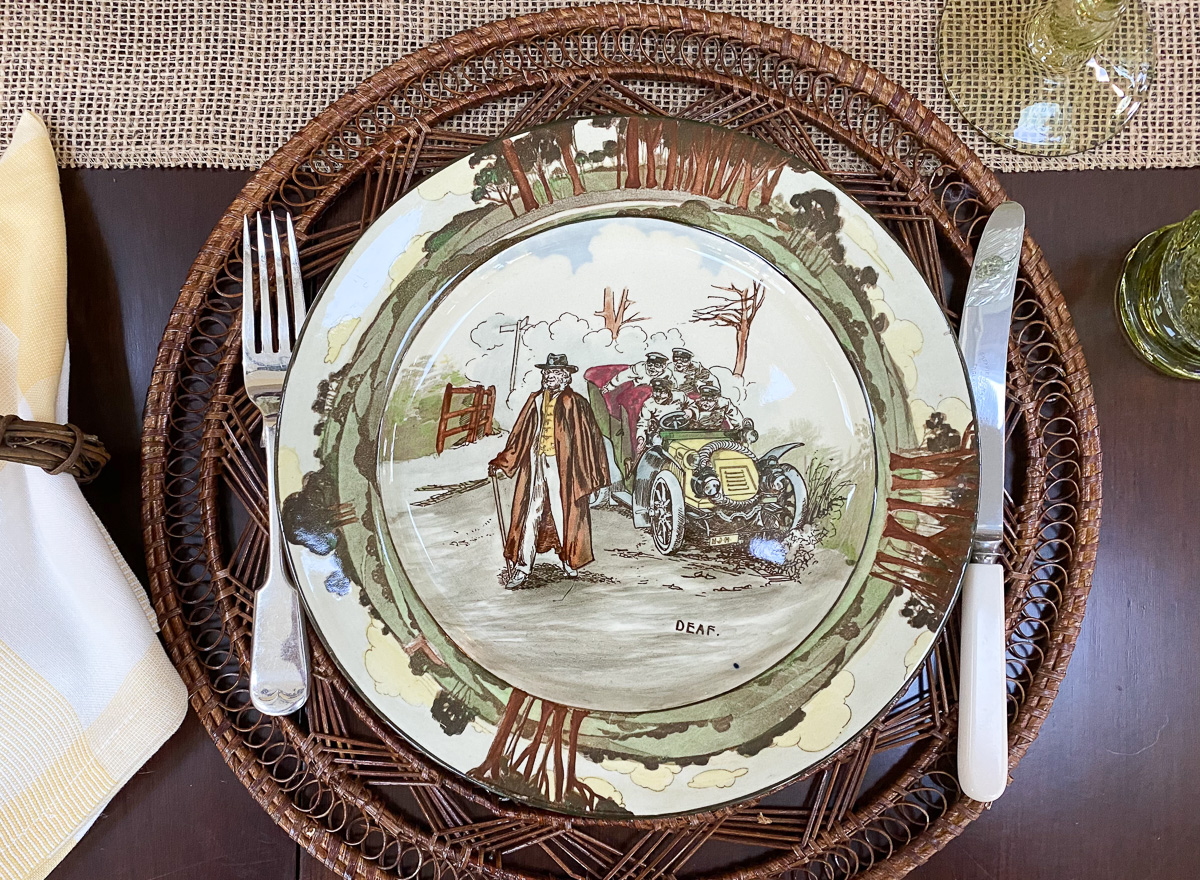
Victorian Christmas (featured in Entertablement—The Four Seasons).

All capture moments and eras in richly detailed illustrations. These series remain favourites among collectors and historians alike for their narrative charm and exceptional technical execution. Royal Doulton excelled at turning functional wares into miniature canvases of social commentary and nostalgia.
Why Royal Doulton Still Matters
Even amid a changing ceramics landscape, Royal Doulton continues to resonate. It has adapted through modern manufacturing methods and refreshed design partnerships, but the essence remains: a deep respect for tradition, balanced by a willingness to evolve.
Today, vintage Royal Doulton pieces remain beloved by collectors and stylists alike. Whether layering older floral patterns into a spring table or setting an autumn feast with robust stoneware, Royal Doulton offers both beauty and reliability.
A Legacy at the Table
Royal Doulton reminds us that elegance doesn’t have to be fragile. Across centuries and shifting styles, it has remained a symbol of domestic grace, combining form and function with quiet distinction.
Have you enjoyed this post? Discover more stories in our Makers Behind the Magic series—featuring Wedgwood, Spode, Mitterteich, and more.


