

When this pattern caught my eye about five years ago, I wondered how much I would use it. It certainly is vivid with large curling leaves, flowers, insects, butterflies and vegetables all jostling companionably across the plate. It turns out to be remarkably adaptable.
With lilacs, it became romantic—almost eighteenth-century.

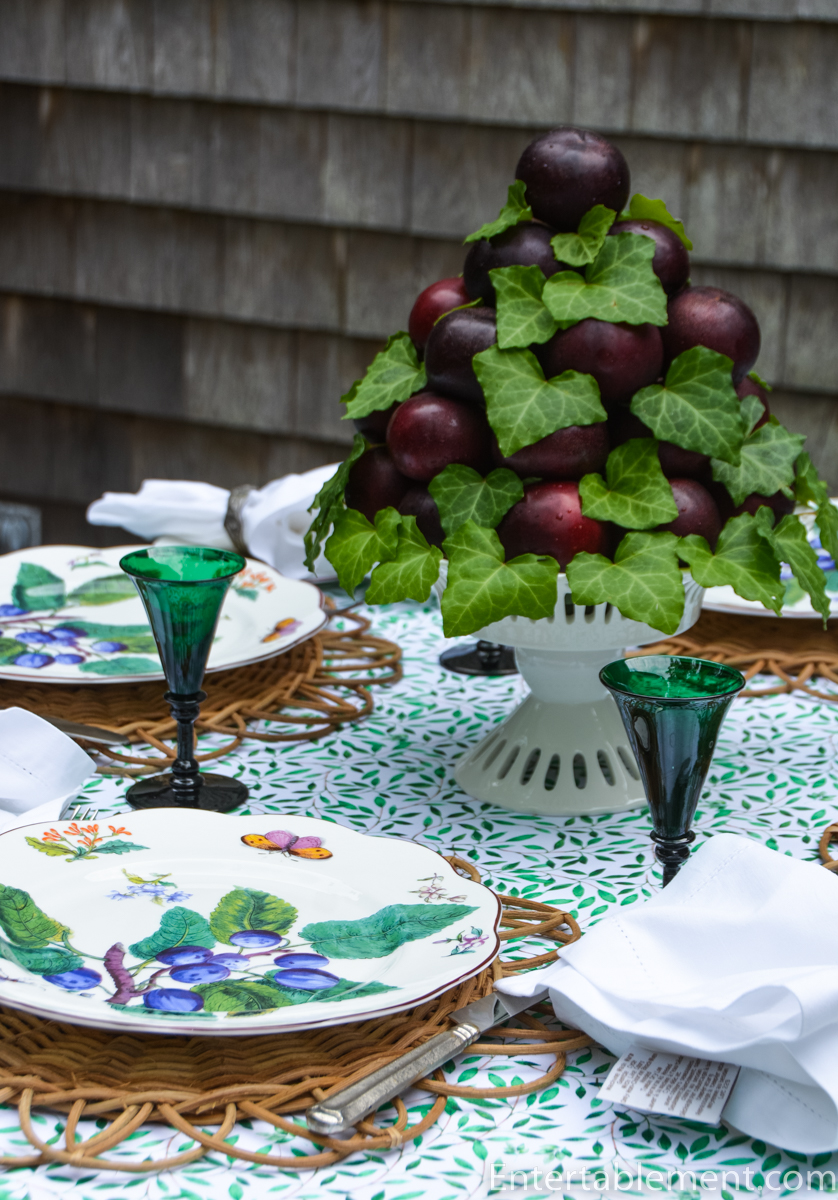
With plums, it had a richer, late-summer mood.
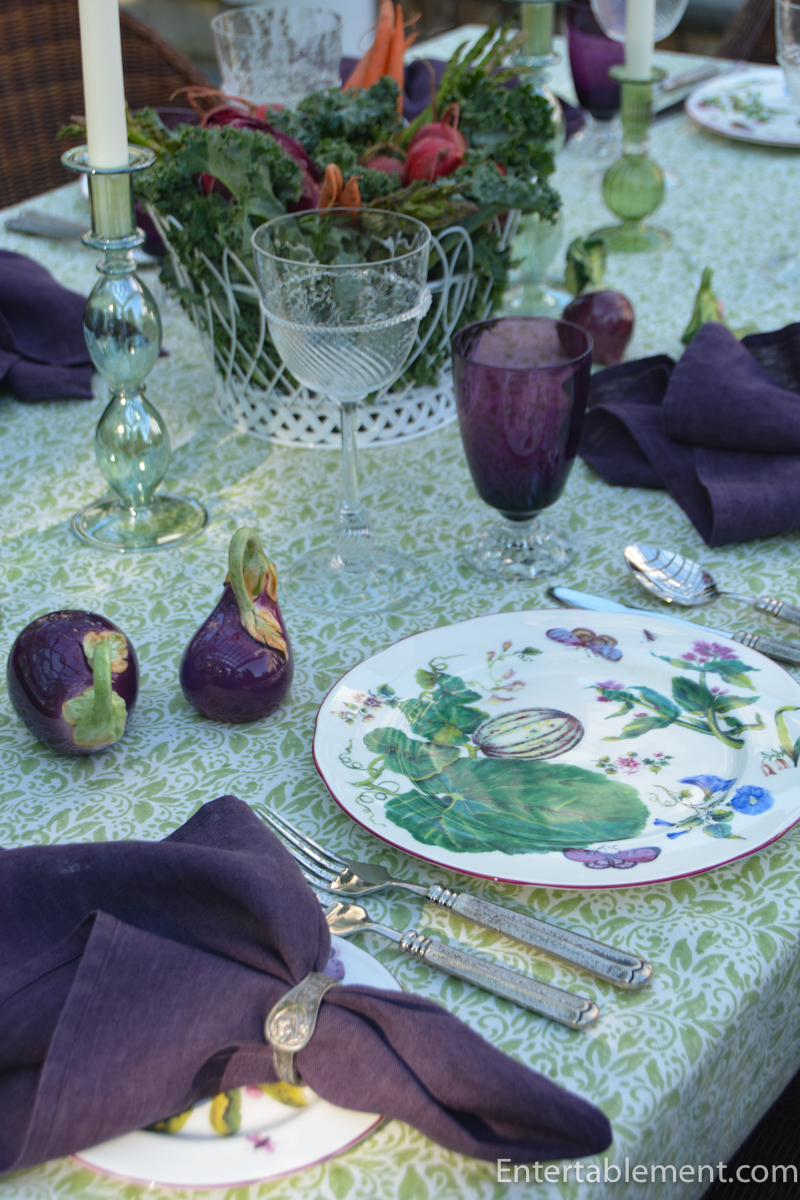
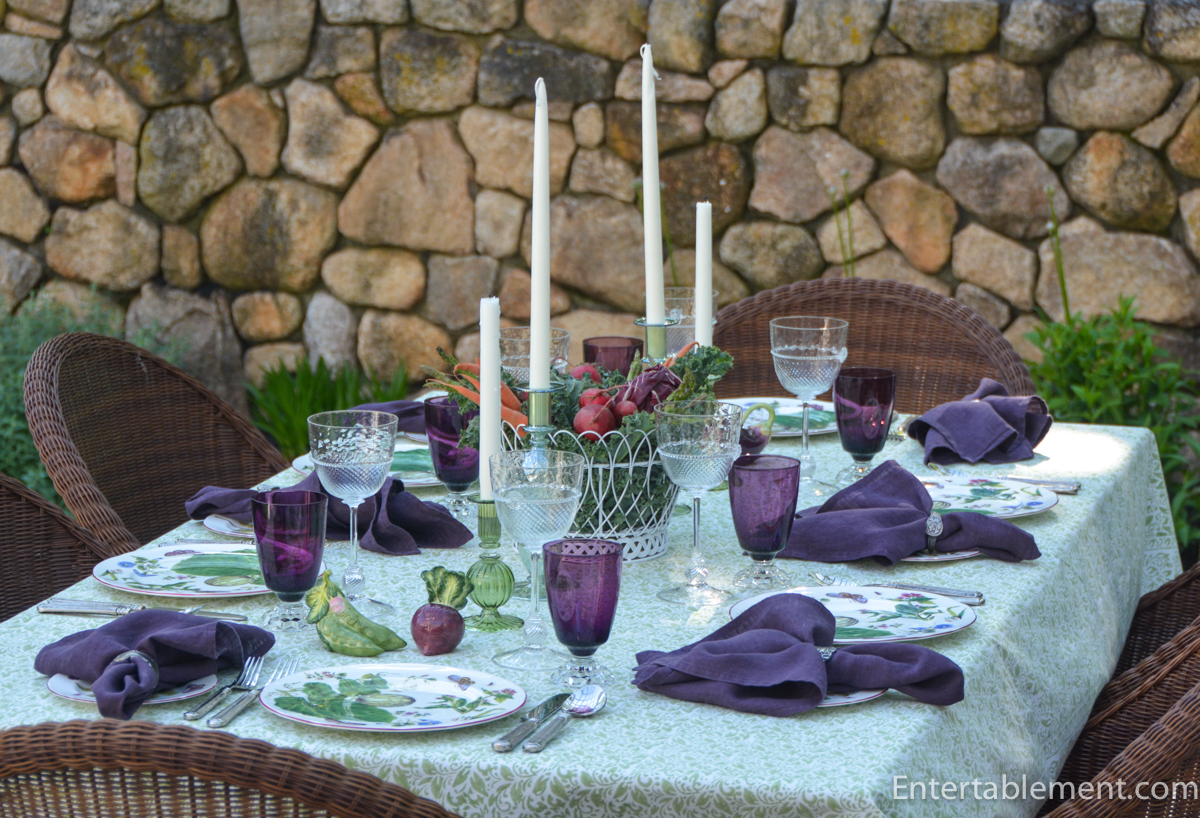
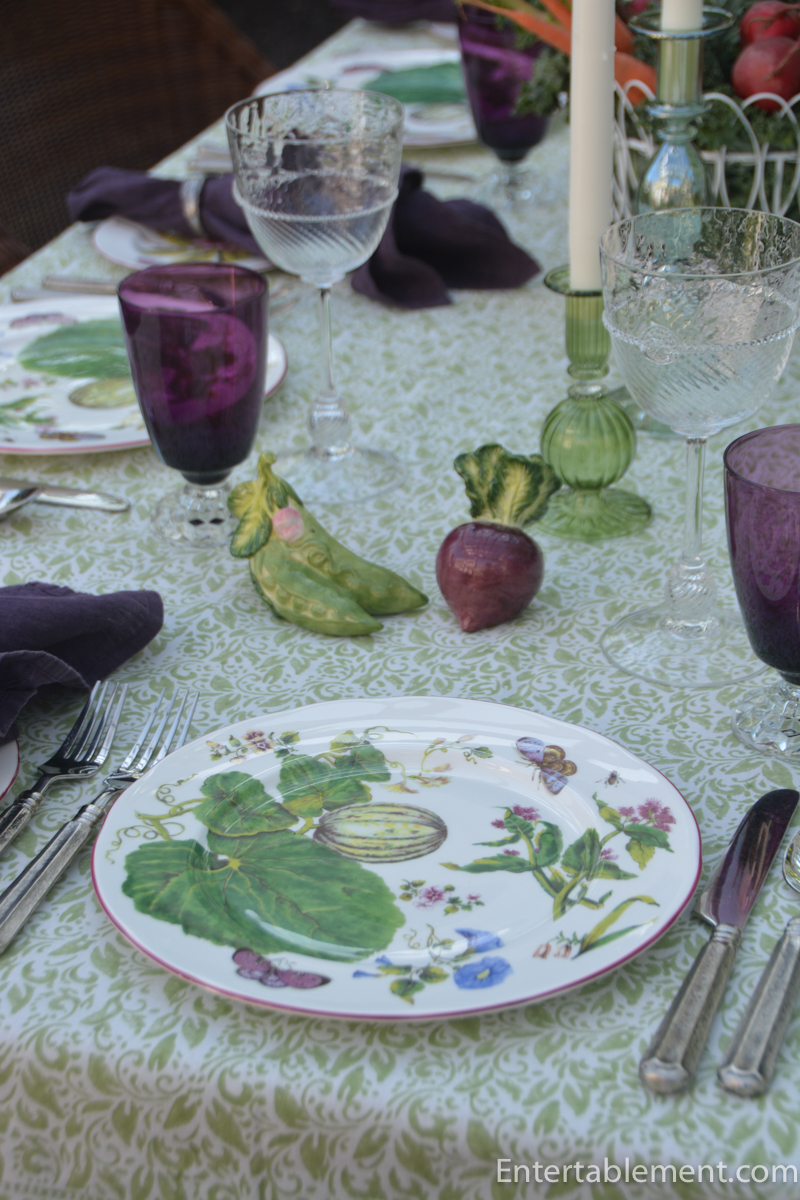
Here, set outside against the stone wall and featuring purple glassware and napkins, it took on another mode entirely: a garden supper built around the vegetable patch.
The pattern was a favourite of Queen Elizabeth II, and her mother, before her. From the Royal Collection website description: With a design closely derived from the large royal collection of botanical porcelain acquired over a long period, beginning in 1947, by Queen Elizabeth, The Queen Mother.
I have collected the pieces gradually from the Royal Collection gift shop. Lately, King Charles has added new pieces to the collection, featuring flora included in The Highgrove Florilegium, a two-volume set of botanical prints depicting the plants, vegetables, fruit and trees grown in the garden at Highgrove. This publication is a culmination of seven years of work by 72 of the leading botanical artists from around the world and is accompanied by text compiled by botanists at the Natural History Museum.
The mugs, with their green handles and fine bone-china rims, are especially lovely for tea.
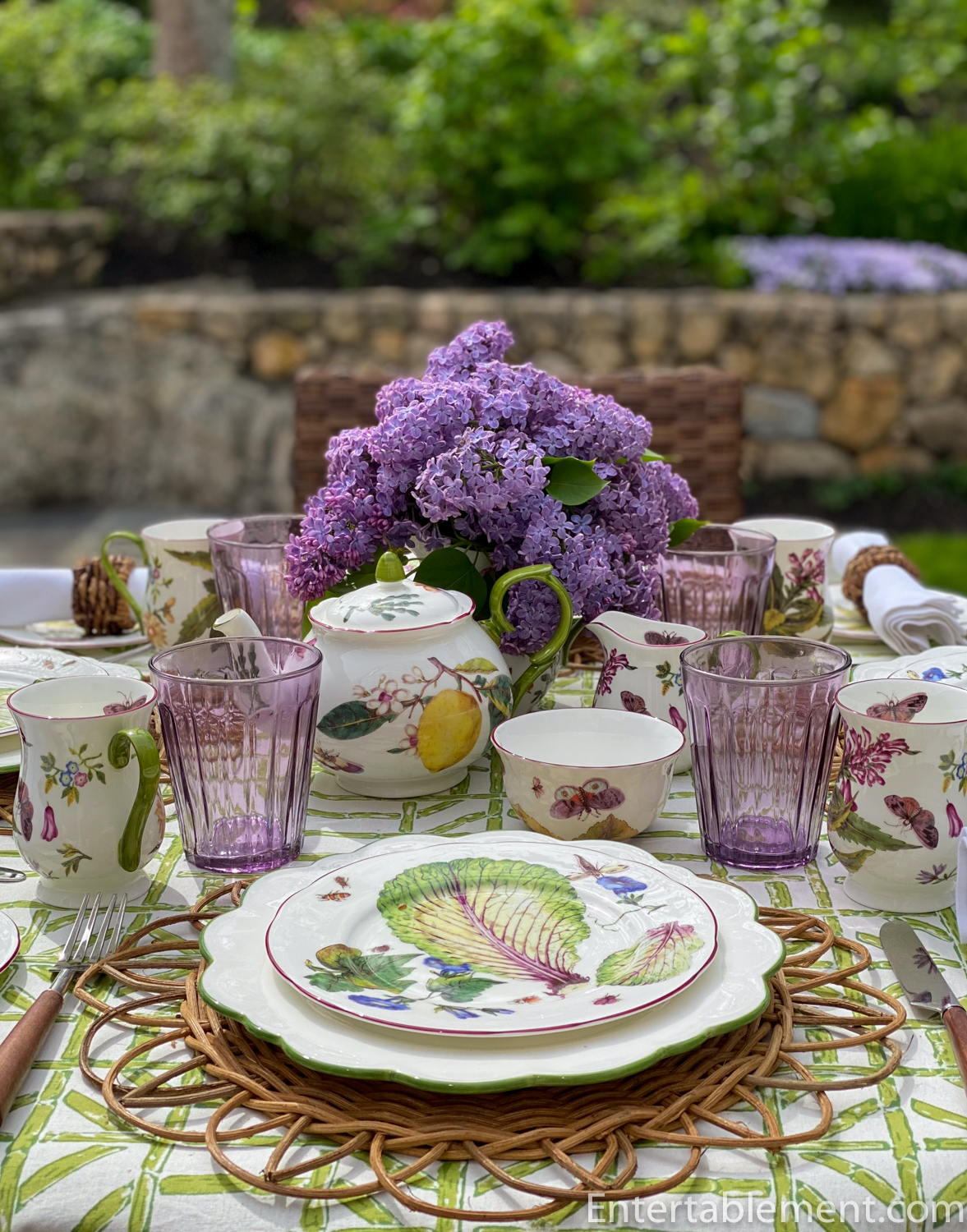
But the dinner plates are where the pattern really gets to stretch its legs.
For this table, I began with a pale green printed cloth—a gentle enough background to support the porcelain without competing with it. Deep purple linen napkins pick up the butterflies and the aubergines, while green glass candlesticks carry the colour upward.

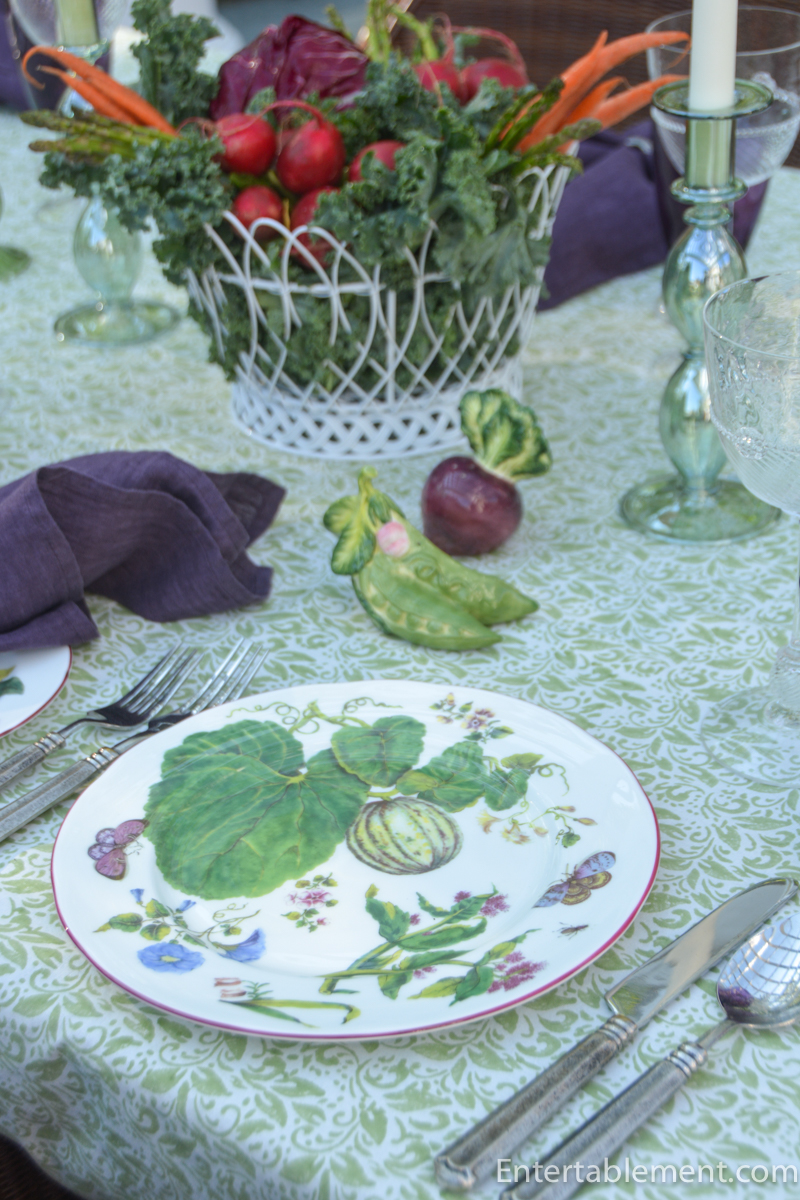
The clear stemware keeps the setting from becoming too dense. The centrepiece is not flowers at all, but a basket of market vegetables: radishes, carrots, asparagus, kale and leaves in every shade of green.
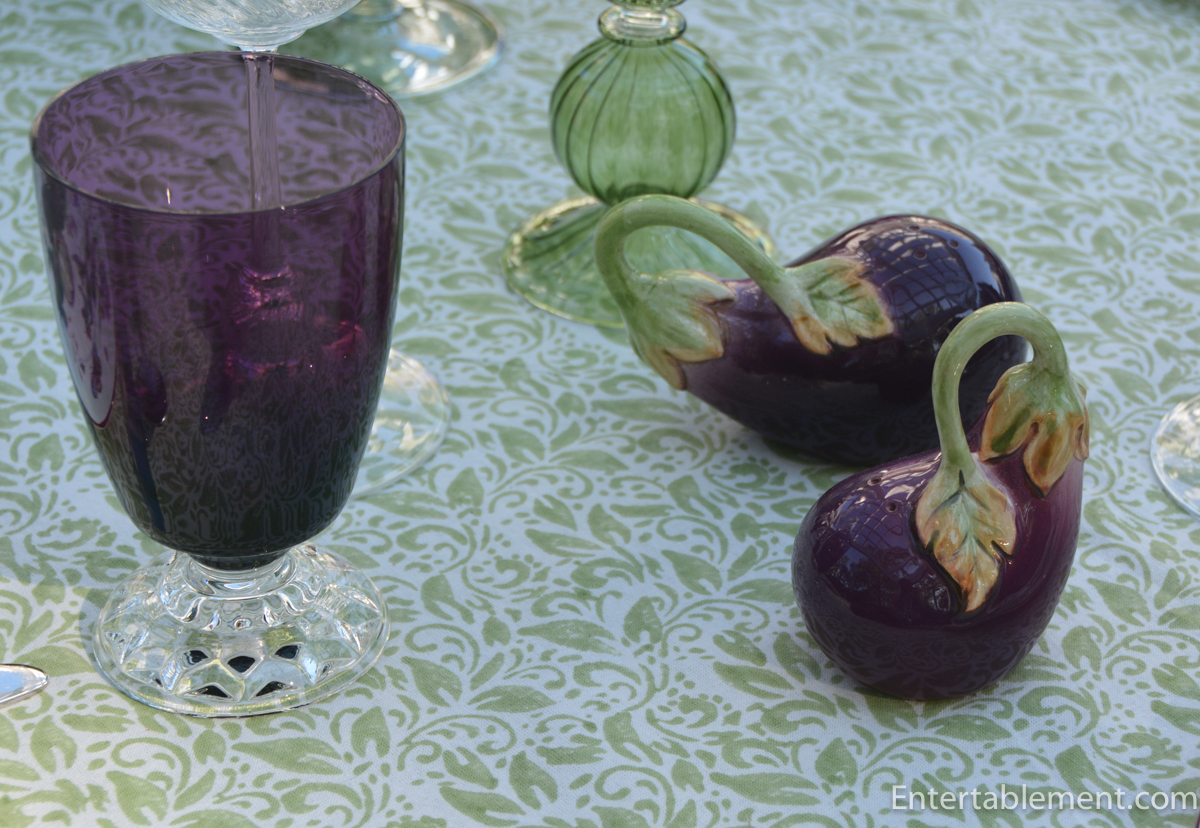
The aubergine and pea pod salt & peppers have had many outings over the years.
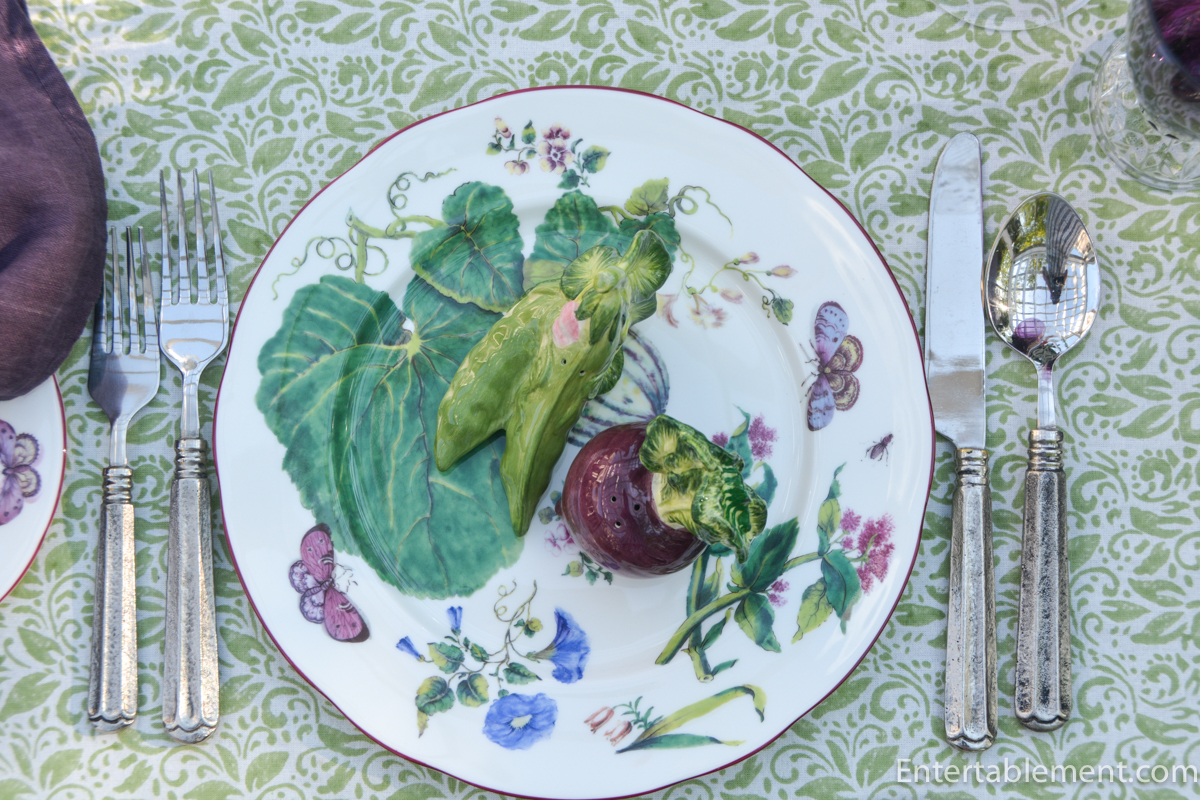
What I particularly love about this pattern, is I am always discovering new details, like the fine tendrils sprouting from the vines, the tiny insects and the patterns on the butterfly wings.
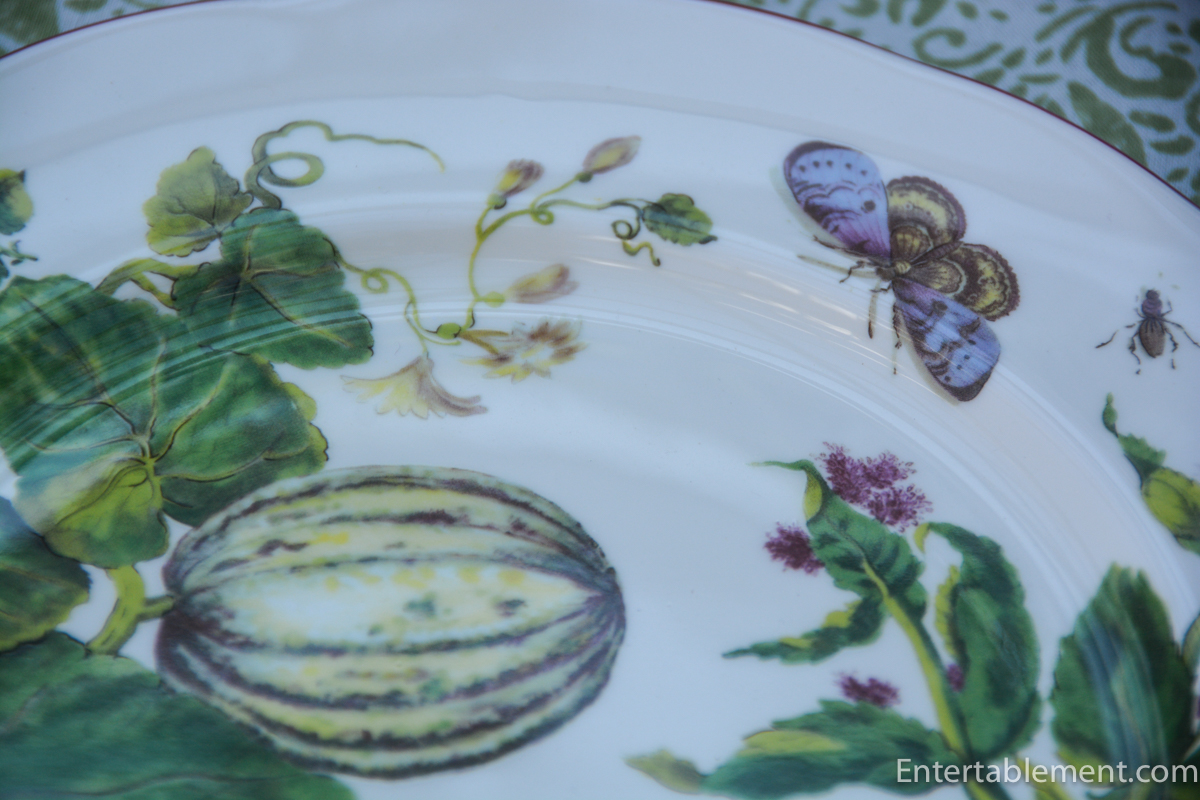
Pansies are among my favourite flowers.

The purple butterfly is charming, with the nearby convolvulus (or its less romantic name and attribute: bindweed).
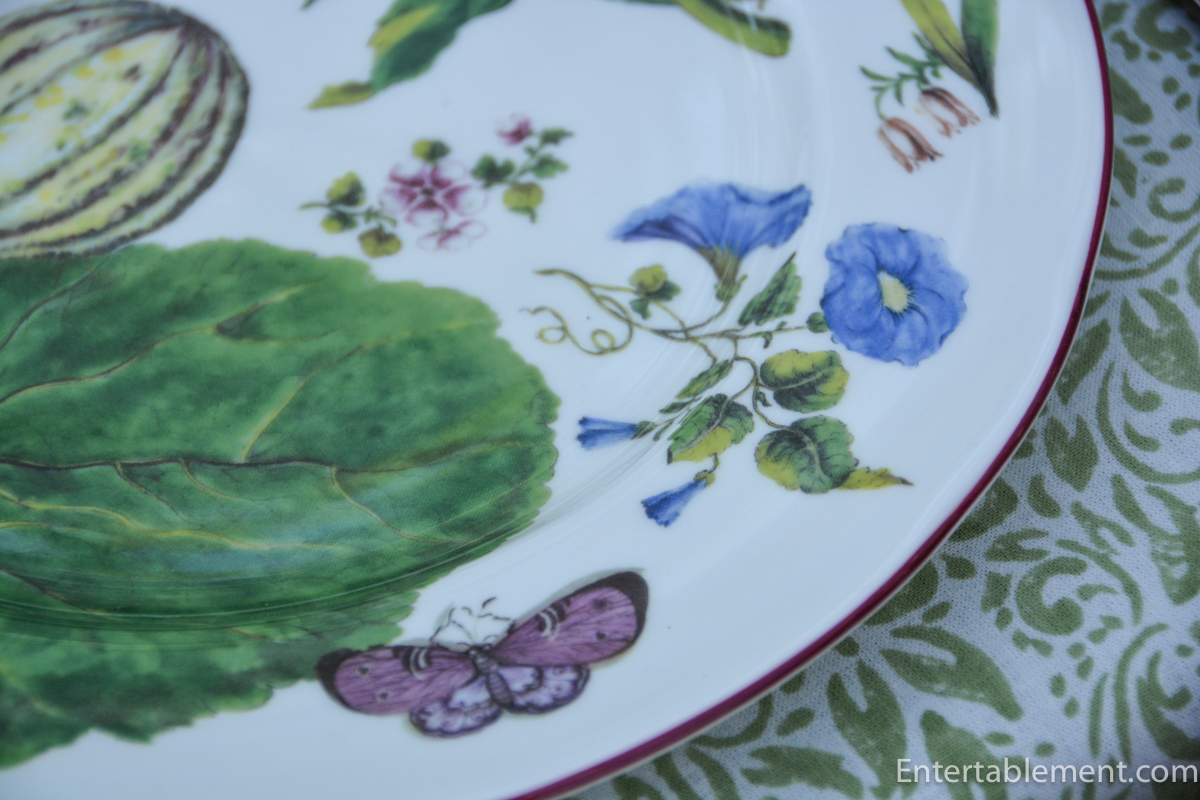
Looking back at the pictures, I am once again reminded not to be afraid of a vivid pattern. The same china can look entirely different with a change of season, cloth, food and light. Sometimes, I am searching for a predominant colour in the pattern because there is a particular flower or fruit in season. This time, the vegetables were what stood out to me.
It’s nearly the end of July, and a month past the longest day. Aghgh!!! Summer is flying by. Let’s make the most of it.
Sources:
- Plates: Chelsea Porcelain – Royal Collection and Highgrove Gardens
- Purple Glasses: American Lady by Fostoria (discontinued 1948 – 1964)
- Clear Glasses: Juliska Graham Clear (this shape discontinued—replaced with a rounder one)
- Aubergine Salt & Pepper (eBay)
- Fitz & Floyd Pea Pod and Turnip (discontinued)
- Wire Basket: Mrs. Alice (discontinued)
- Tablecloth: Amanda Lindroth Nira (discontinued)