
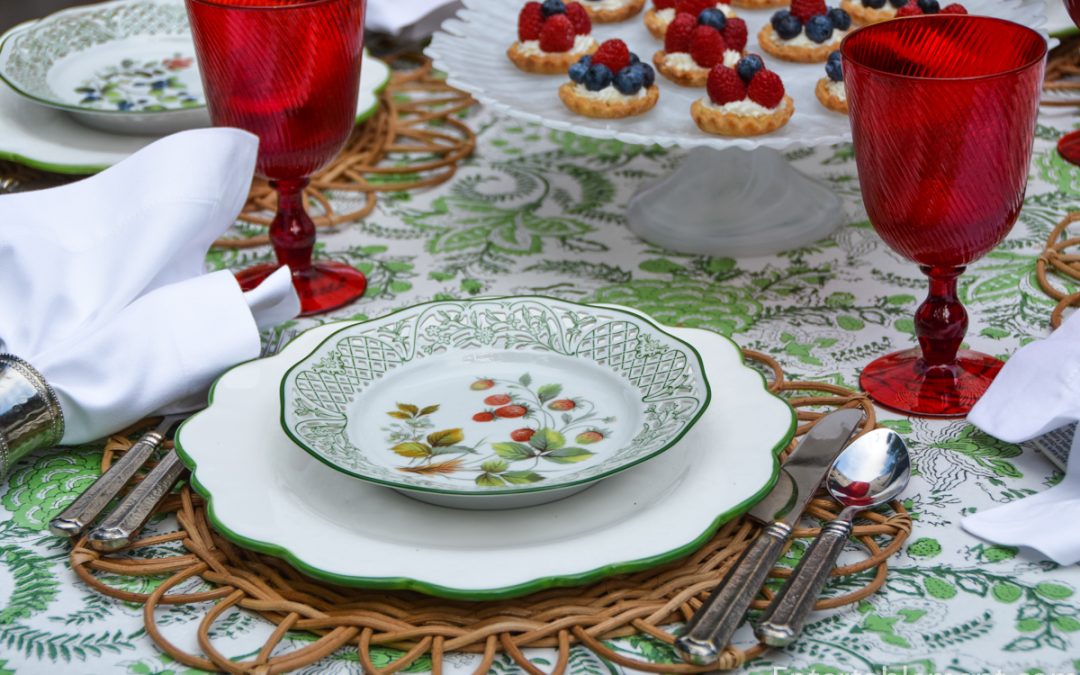
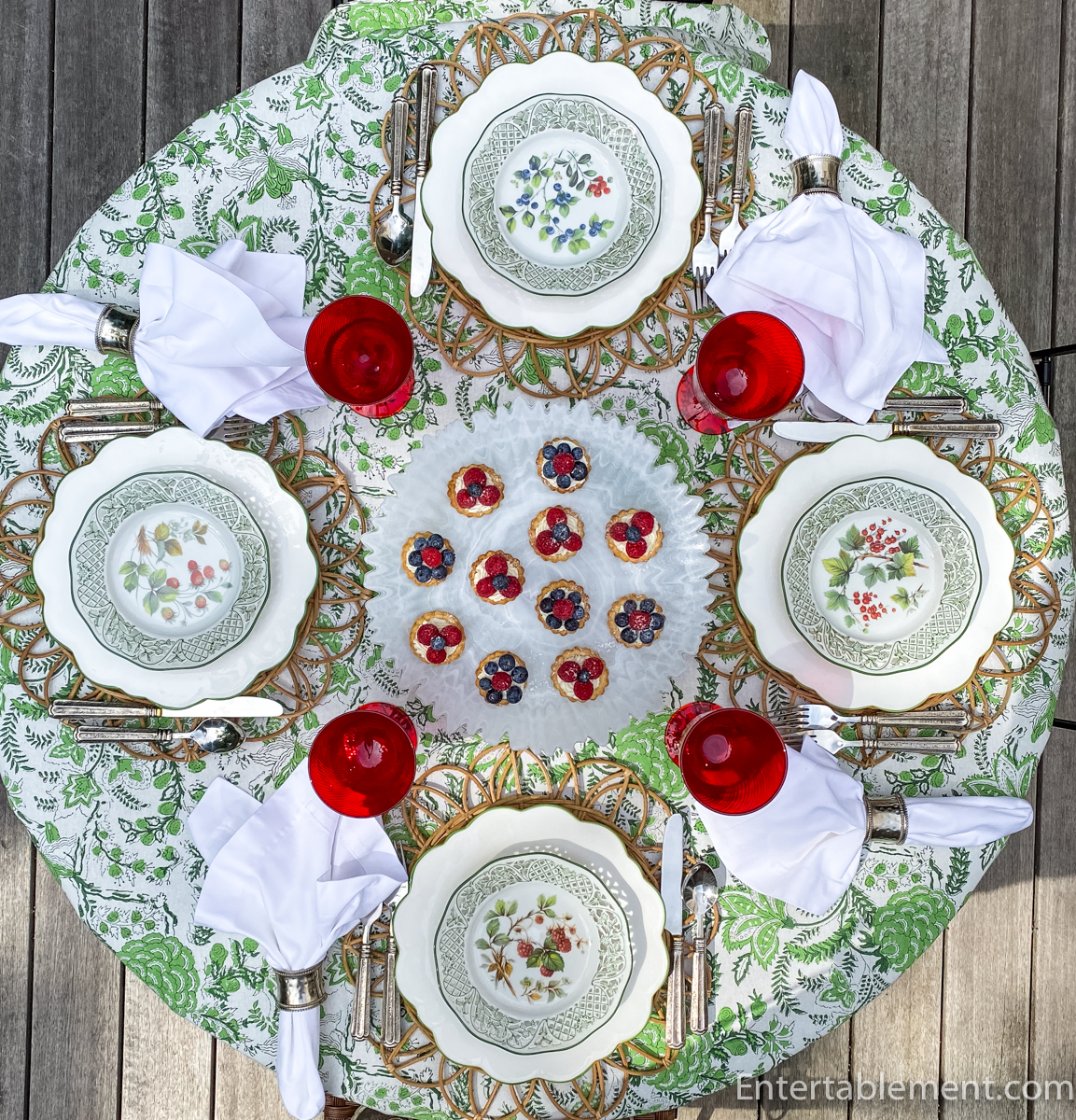
A delicate reticulated border lends an air of gracious fragility to these Schumann Fruit Plates, which celebrate old-fashioned fruits.
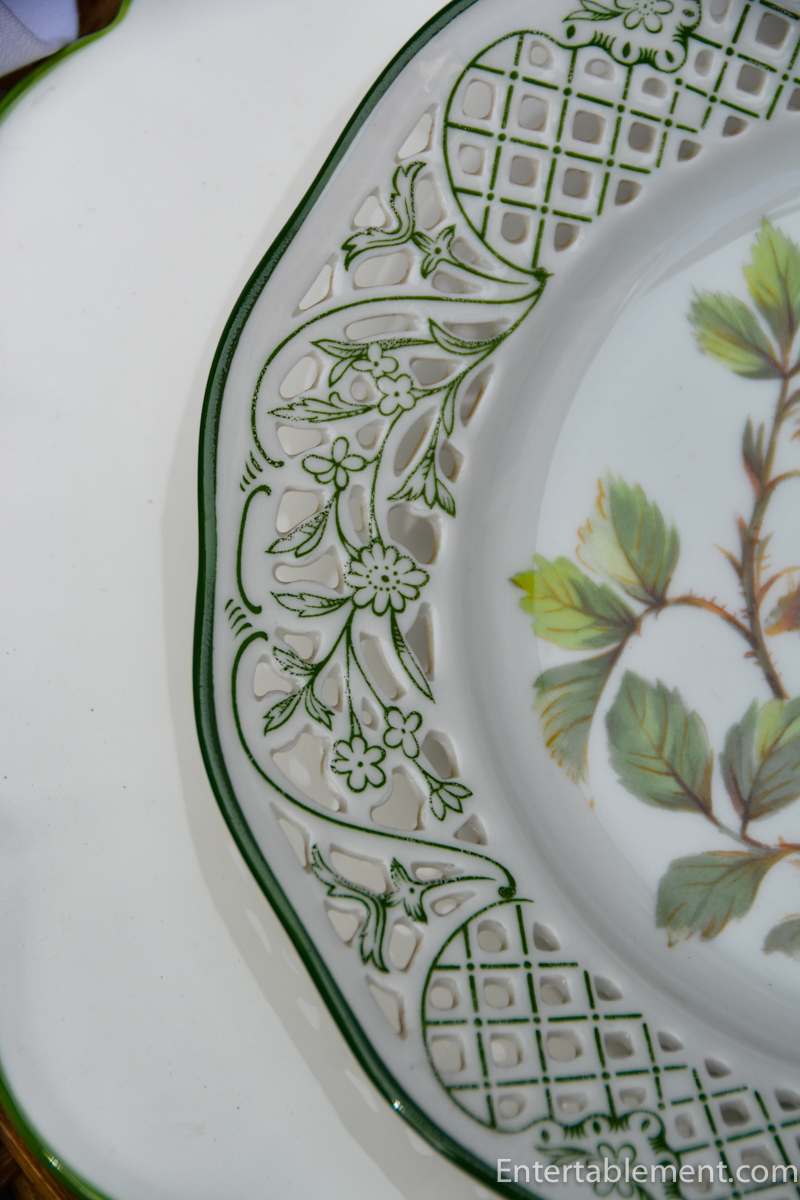
The company that created them, Schumann, was founded by Christian Heinrich Schumann and a financial backer, Franz Ferdinand Riess, in 1881.

By 1957, three successive generations of Carls Schumann parlayed a tiny porcelain factory into a vibrant company employing more than 1100 workers. However, increased competition in ceramic production and evolving taste towards more casual dinnerware saw Schumann sold to Hutschenreuther in 1990. Sadly, manufacturing ceased in 1994.

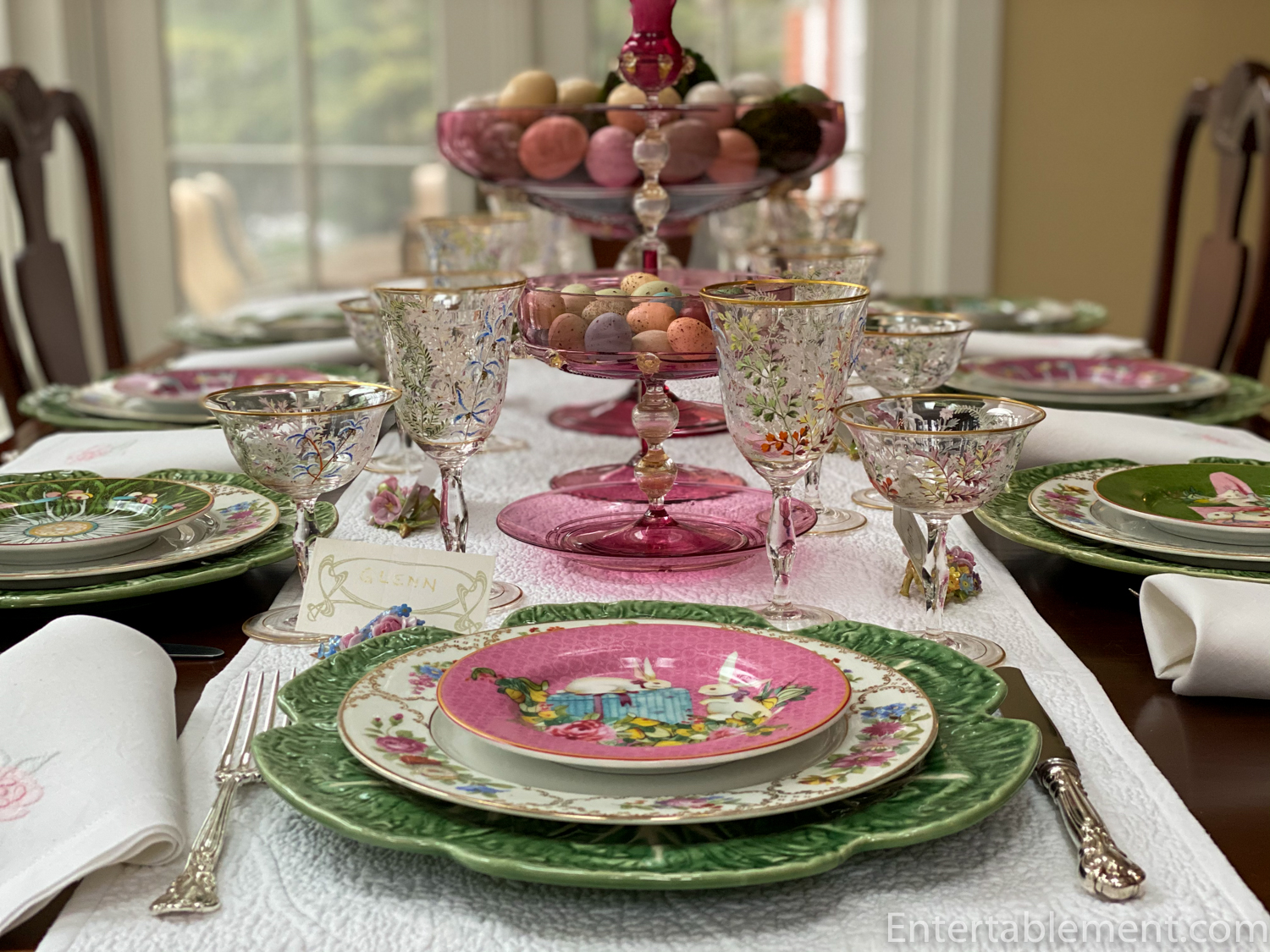
Schumann is best known for its prolific output “Between the Wars” — from 1919 to 1939. Replacements stock many of their patterns, especially those in the Dresden style. The Chateau Dresden pattern shares the reticulated border, as displayed in this table.

A solid border dinner plate in the same pattern appeared on this Famille Rose Easter table a few years ago.
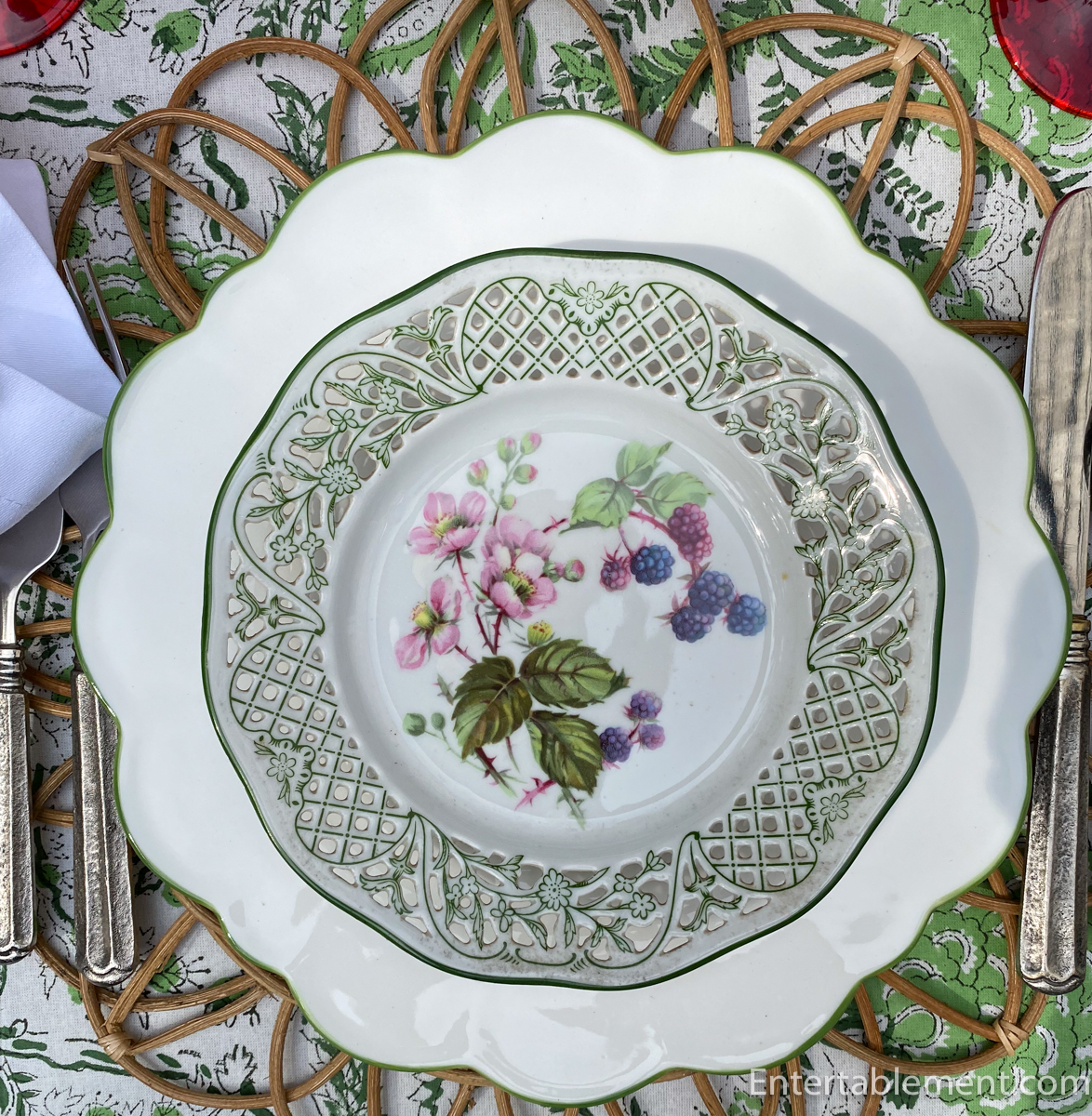
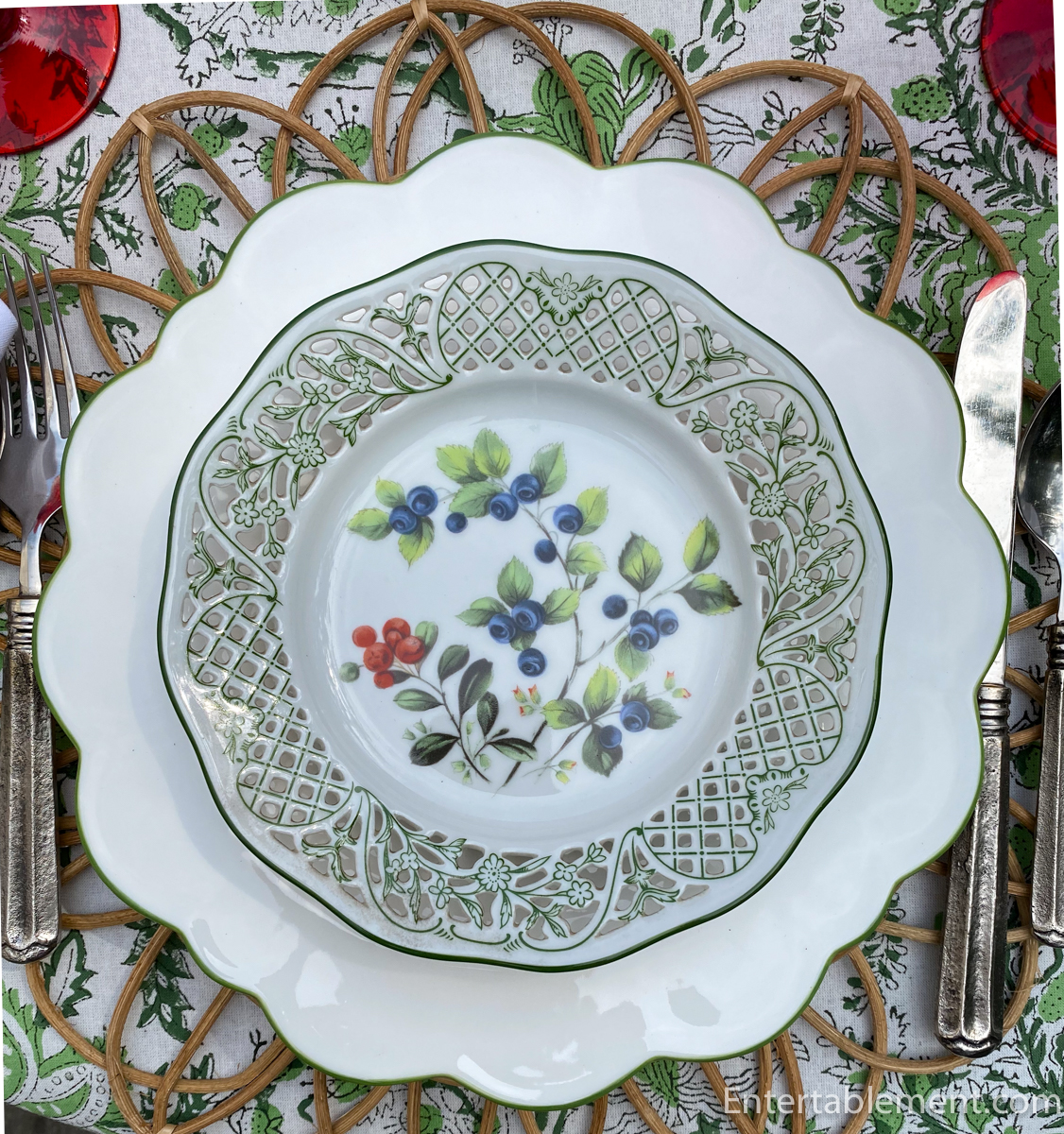
Six plates in this green-edged fruit series swam into my view on eBay a few years ago. Replacements call them Schumann Bavarian 816.

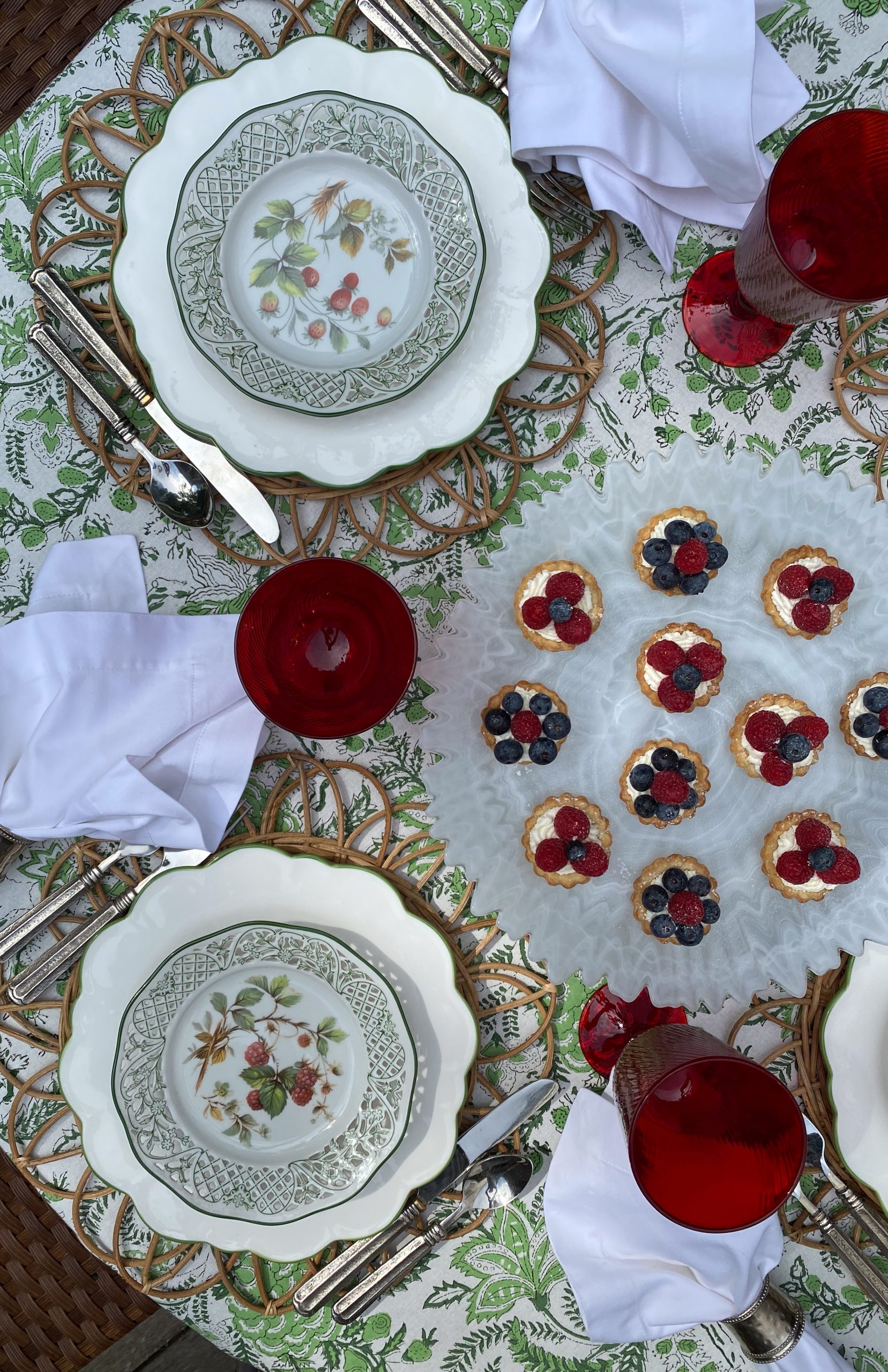
The raspberry, blackberry and blueberry plates got me thinking about fruit tarts. Yum!
I whipped up a batch of Sweet Butter Pastry and made some small tart shells. Filled with whipped cream and topped with fresh berries, they make a colourful, edible centrepiece.
The other three plates feature gooseberries and currants—underrated, old-fashioned fruits. Cultivated for centuries and held in great affection in the UK and Europe, these members of the Ribes family are relative strangers to Americans. Gooseberries used to have their own societies—more than 170 of them in the mid-1800s. In midsummer, local pubs held annual contests for the largest gooseberry. Gooseberries were big back then, literally; the winners were as big as a goose egg. Gardeners packed their carefully picked berries in specially made wooden boxes lined with cotton and sealed with wax. You can still find trophies for the most colossal gooseberry in a few pubs in Cheshire, England.
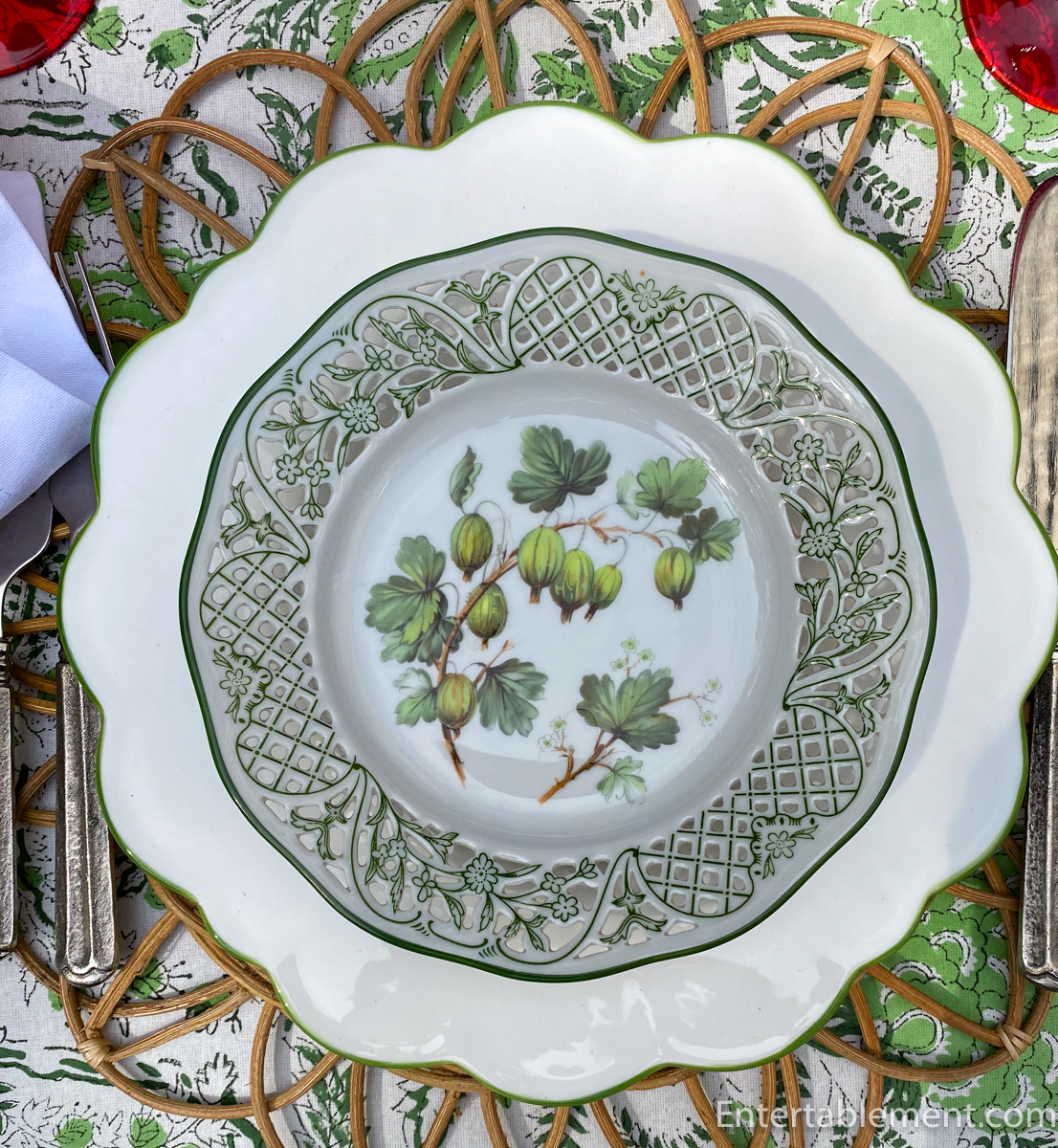
Gooseberries, like currants, their fellow Ribes, come in a variety of colours. Green is the milder and more common variety; red has more sugar and is more apt to be eaten raw. Compared to raspberries, blueberries and strawberries, they’re pretty tart, making them perfect for jams and jellies, fruit wines, or preserving whole in syrup.

Gooseberry Chutney
For the last century, the absence of Ribes in America was due to a 1911 federal ban on growing the plants. Ribes served as an intermediary host for white pine blister rust. Not unnaturally, the timber industry took exception. Happily, with the development of new disease-resistant plants, the federal ban was lifted in 1966, and individual states now decide what types of Ribes plants their gardeners can grow.
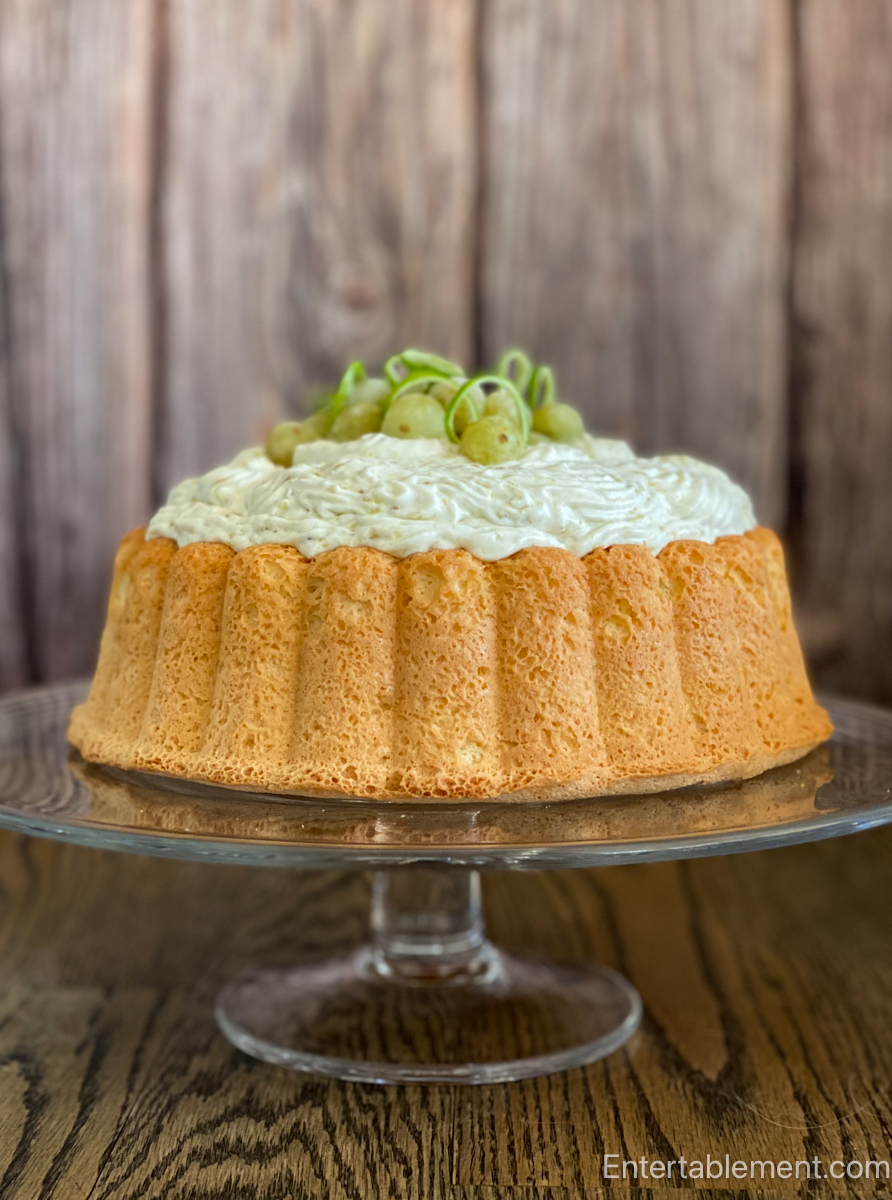
Gooseberry Charlotte
I managed to snag some frozen gooseberries from Northwest Wild Foods and made both a gooseberry mousse for a Gooseberry Charlotte and a Gooseberry Fool and some Gooseberry Chutney for Entertablement—Much Depends on Dinner.

Gooseberry Fool
Currants are on par with wild blueberries for being finicky to pick.
The black ones make the most luscious jam. The red ones are more often found in jelly form, marvellous with cheese and charcuterie platters or cold meat pies. Note: black and red currants are not the same as the dried currants you will find in your supermarket’s bulk food or bakery section; those are tiny dried grapes.

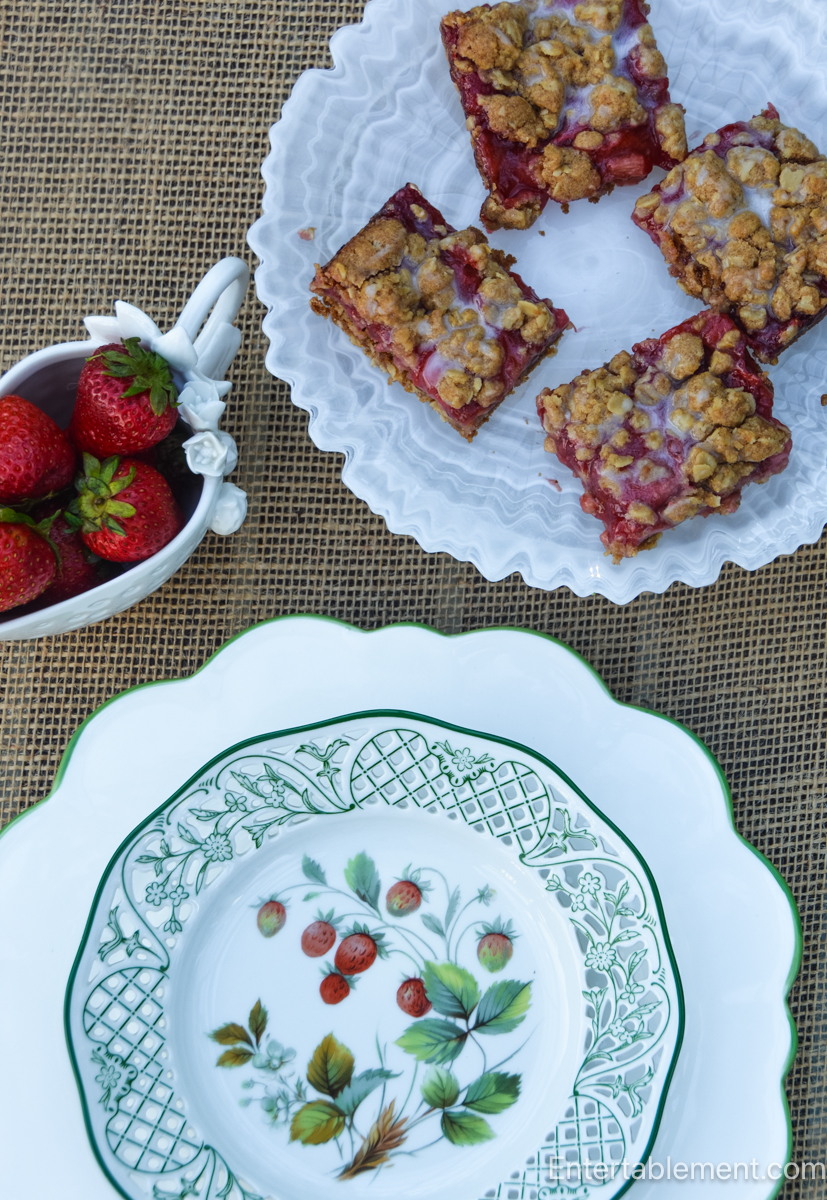
Rhubarb, another underappreciated old-fashioned fruit (though it’s actually a vegetable), is better known on both sides of the Atlantic. In desserts, rhubarb is frequently combined with strawberries. I made some Rhubarb Strawberry Bars, thinking I would use them on this table setting, but the tarts looked pretty on their own. Rhubarb also has excellent potential in savoury applications. Cooked with ginger, a little brown sugar and some pink peppercorns, it’s a delicious accompaniment to pork roast.
Our taste for old-fashioned fruits waned as our collective palate turned sweeter with the proliferation of packaged, engineered food and ubiquitous high-fructose corn syrup. They’re making a comeback, though, and can be found at fruit stands and farmer’s markets during the summer months. They’re available frozen from speciality growers such as NorthWest Wild Foods in Washington State, Trader Joe’s, and even Amazon.



Dear Helen,
I have been severely remiss in commenting on your beautiful posts lately. I will reveal what we’ve been up to later. This lovely pattern I have never seen, and the reticulated edge gives additional delicacy. I also appreciate your picking up the red in the plates, echoing it in the tarts and goblets, and the greens in the cloth somehow do not spell Christmas.
As to the subject of plates and tarts, ribes have never gone out of style here in Austria…my neighbour grows red and, black currents and gooseberries every year. Of course, my palate was introduced early to cassis, because Ribena was necessary to provide vitamin C when I was in Scottish boarding school. Unfortunately, they also served vile gooseberry fool, which was borderline inedible, spoiling the fruit for me for life. Rhubarb in its pink early stage makes the most wonderful crumble, served with Creme Anglaise. Add a shaving of ginger for a treat!
Hi Beatrice,
I hope all is well and that nothing is amiss. I’m eager to hear what you’ve been up to.
You are so right about green and red morphing into Christmas unawares. Somehow it didn’t happen with this table, thank goodness.
I’d forgotten all about Ribena. We had it as children in Canada. I think my parents managed to track it down through a British shop or perhaps a relative sent it to us along with the 5 lb tins of Quality Street chocolates we used to get at Christmas.
The texture of fools can quickly render them inedible, particularly if cream-substitutes are used. Bleah. So sorry you had a bad experience. I continue to like gooseberries, particularly the chutneys.
I’m with you on rhubarb crumble. We often get it when visiting England; I like it with hot custard (when you can get the real stuff).