
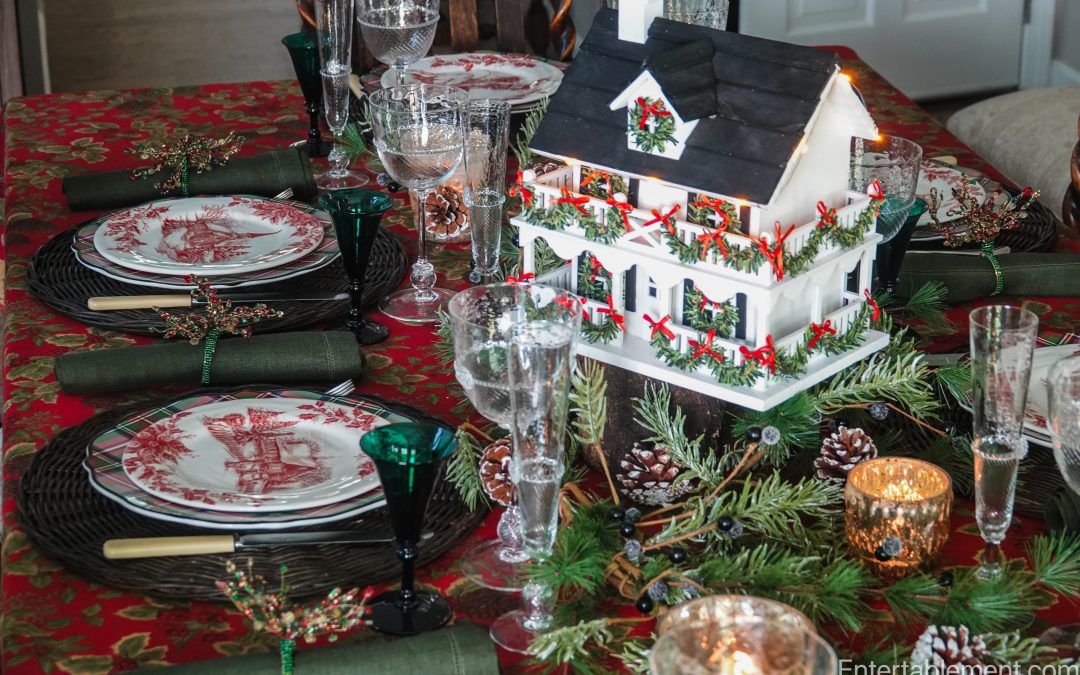
Digging around online for inspiration for a spring table a couple of years ago, I came across an assortment of beautiful wooden birdhouses. I was utterly charmed by this yellow one, perfect for the setting I was designing.
Though Christmas was the last thing on my mind, a white colonial birdhouse decked out for the festive season also caught my eye. I’ll figure out that table later, I muttered as it joined its yellow companion in the online cart. Both birdhouses duly arrived; I eagerly set and photographed the spring table, which will debut in 2025.
The white birdhouse is getting its outing first! Its colonial-era style called for traditional elements — greenery, tartan, and red transferware.
It wasn’t just the birdhouse that inspired the setting. Autumn in Cape Cod is Cranberry Season, and a package of fresh cranberries seduced me. Usually, I’d make Cranberry Chutney, but there are restrictions on bringing food over the border when we return to Canada, where the chutney would be used for Christmas. I was in the middle of a mystery series by J A Whiting, whose characters are always cooking, and one of the recipes was for a crumble-topped fruit tart with a cheddar cheese crust. So I dug out my Emile Henry Mini Ruffled Pie Dishes and baked up an adaptation of the recipe, Crumble Topped Cranberry Apple Pear Pie with a Cheddar Crust.
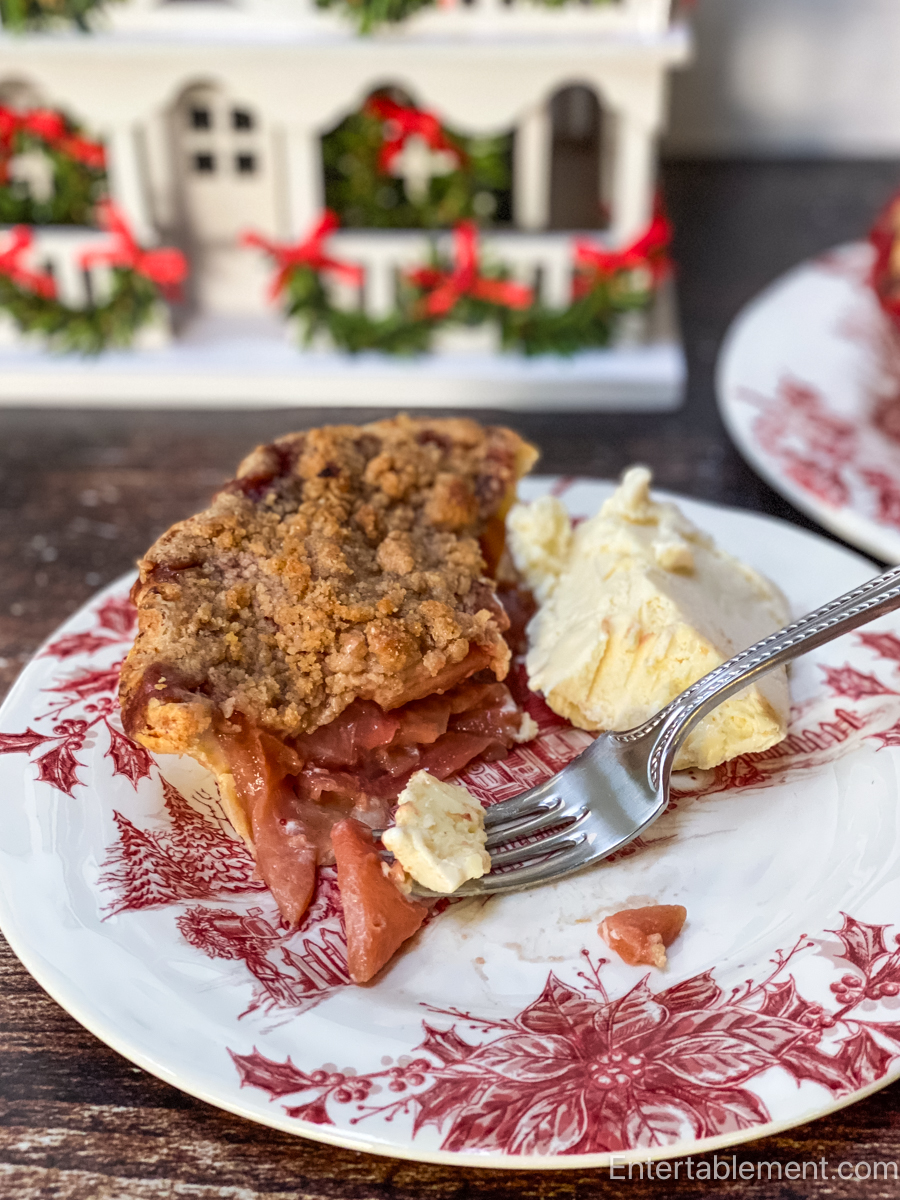
Yum, yum, yum.
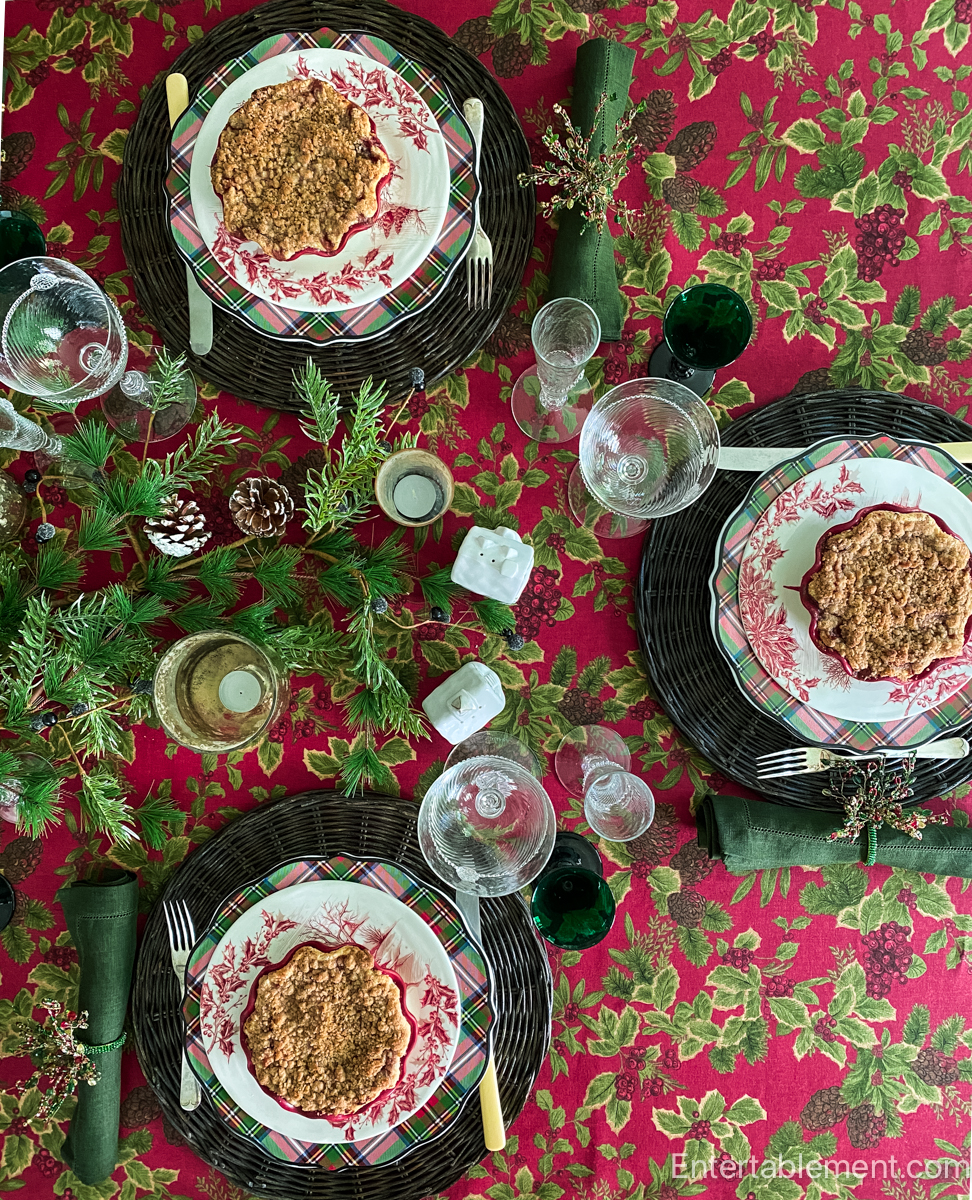
They provided the perfect toothsome accoutrement to the setting.

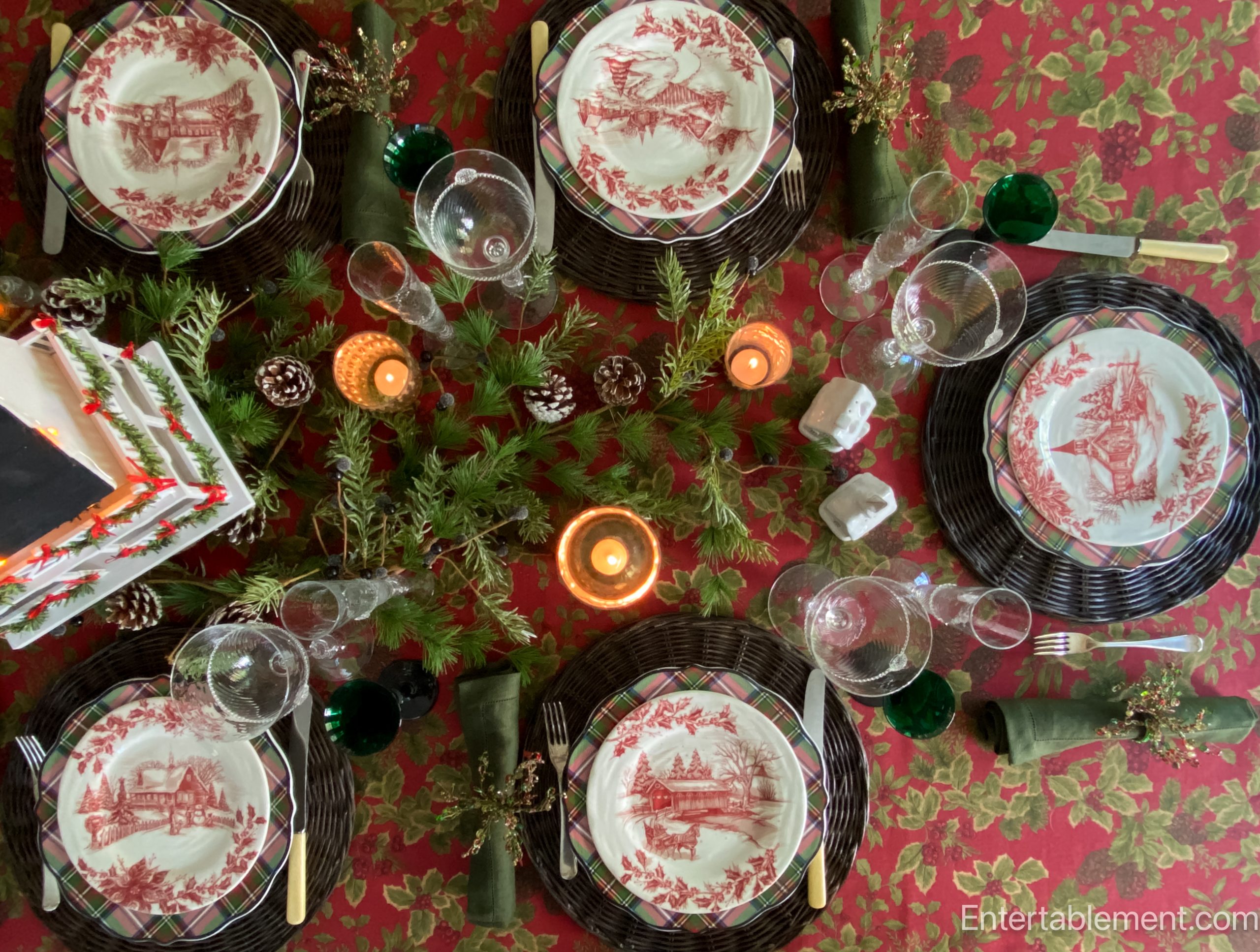
Okay, back to our regularly scheduled program. The deep red tablecloth (HomeGoods) sets a richly coloured background.

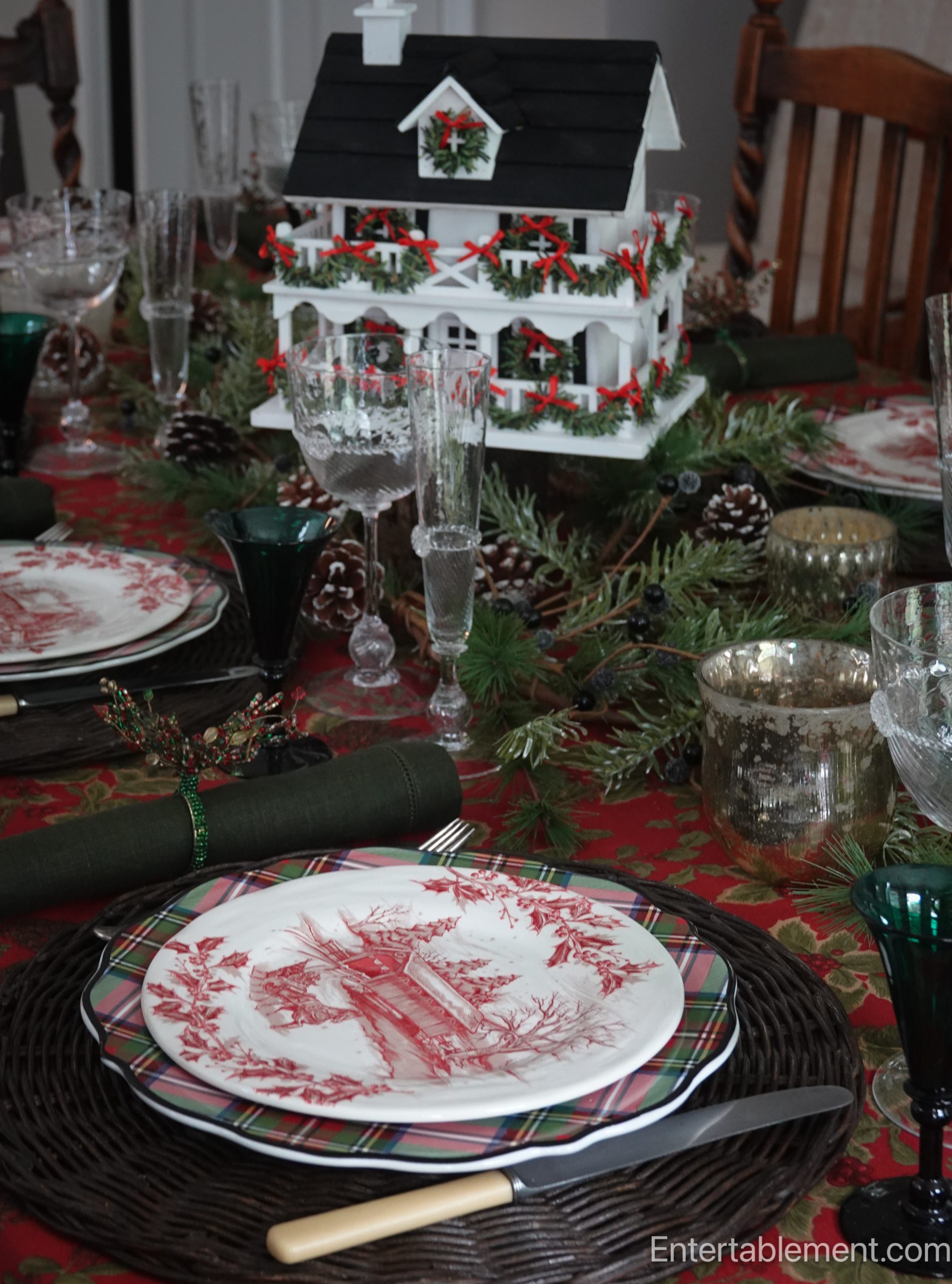
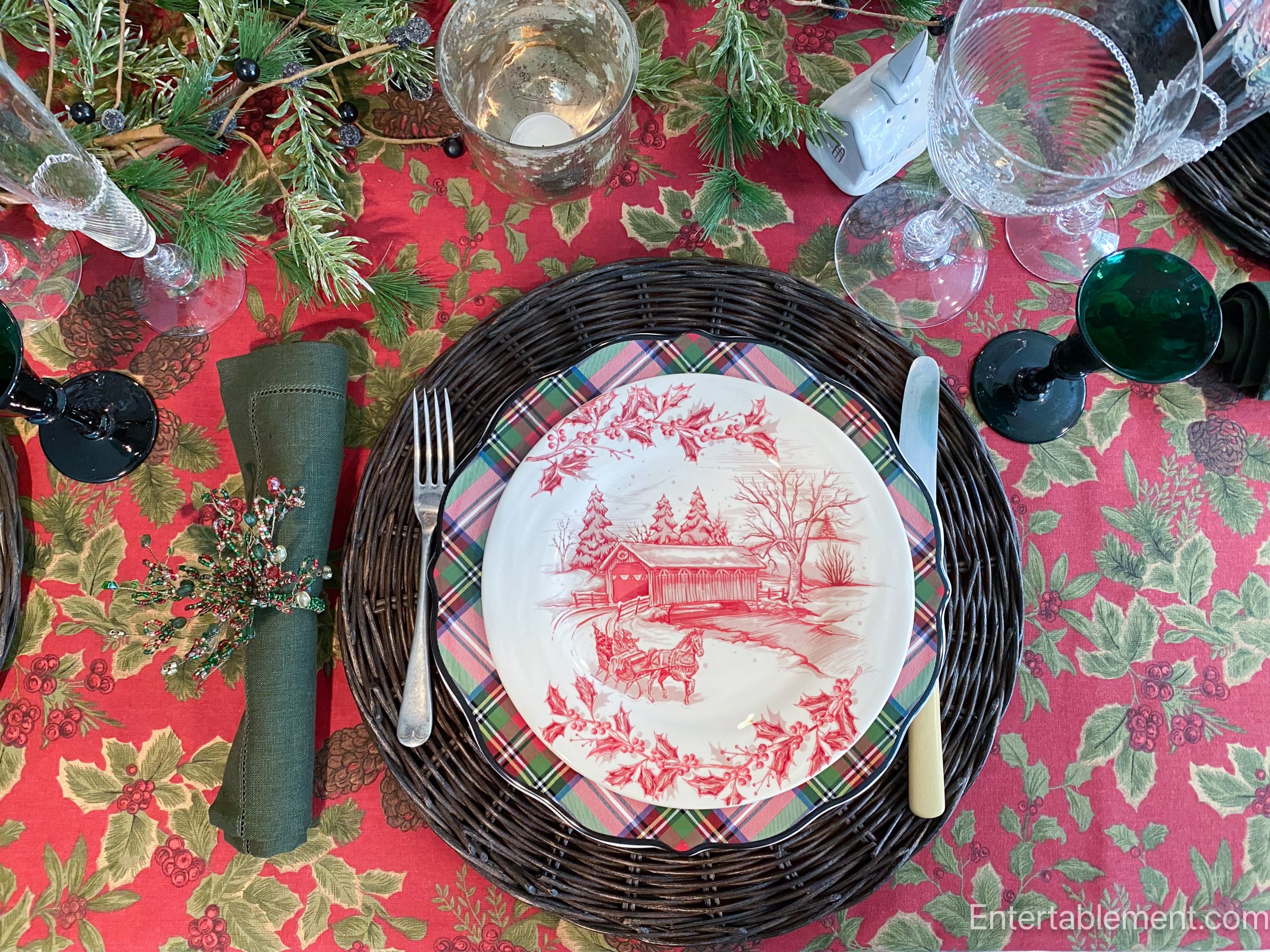
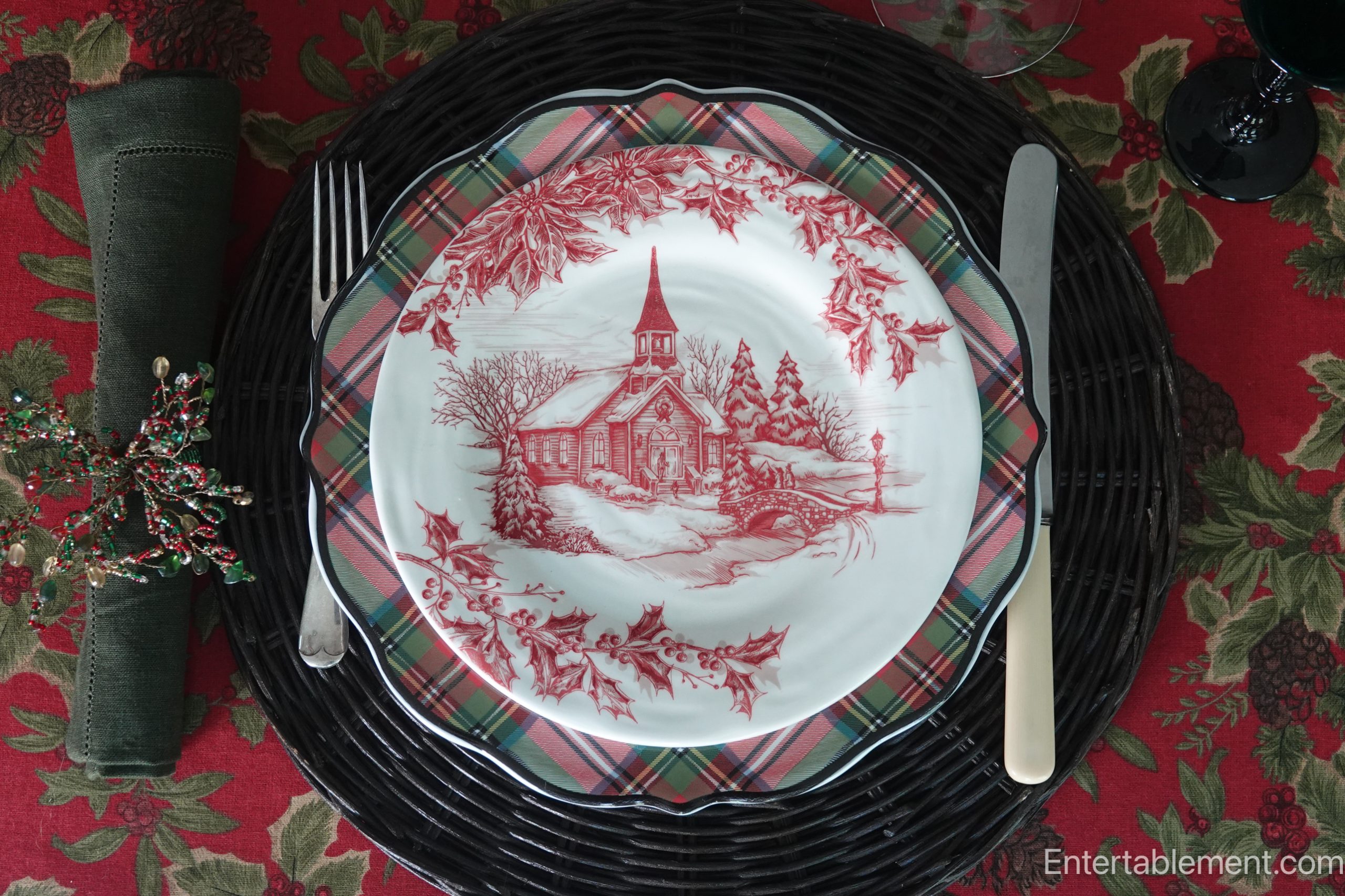
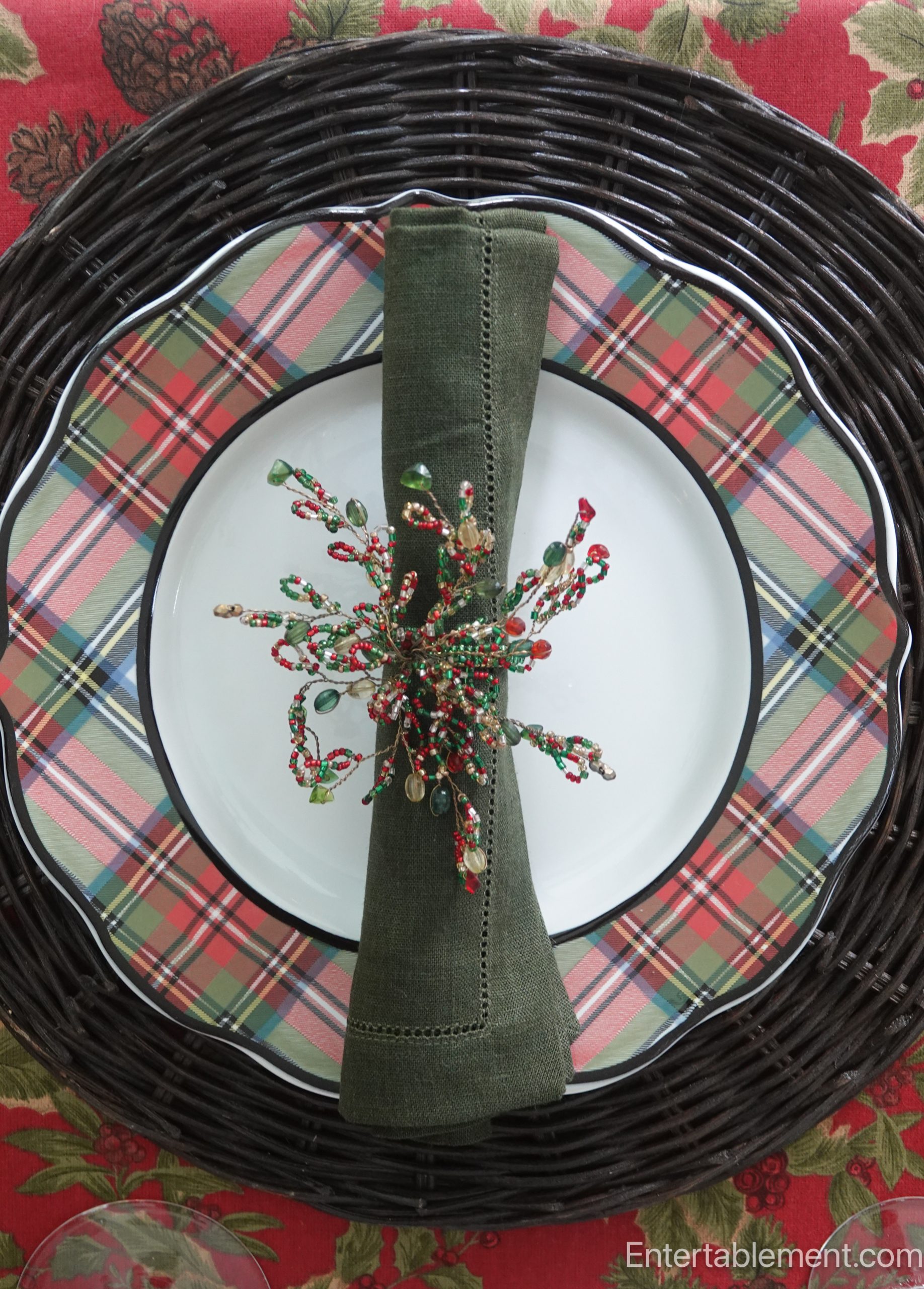
I layered dark willow placemats and tartan dinner plates (Stewart by Juliska). The red transferware salad plates (Snowland Village by Pier 1) are a modern take on a centuries-old process which “democratized” ceramic tableware for the masses.

Transferware emerged in England in the late 18th and early days due to advancements in the transfer printing technique, allowing intricate designs to be applied to ceramics more efficiently than hand-painting.
The early process involved engraving a design onto a metal plate, inking it, and then transferring the inked image onto a piece of earthenware. Blue was the most common colour, using ink containing cobalt oxide. As the popularity of transferware grew, the colour palette expanded. Iron oxide, which created a rich, warm hue, was typically used to achieve the vivid red colour.

We visited the Wedgwood Museum and the Gladstone Potteries on an earlier trip to England. It was fascinating to see how the processes of the Staffordshire potteries have and have not changed in three hundred years! Their pieces often featured popular themes of landscapes, floral designs, and historical scenes. Mason’s (one of my favourites—see Game Bird Green, Strathmore Blue, Ashworth Ironstone, and Quail Blue); Spode (see Copeland Spode Upland Game, Scottish Tea, Romney, Buttercup) and Wedgwood, famous for creamware and Jasperware (see Prunus) were prolific manufacturers.

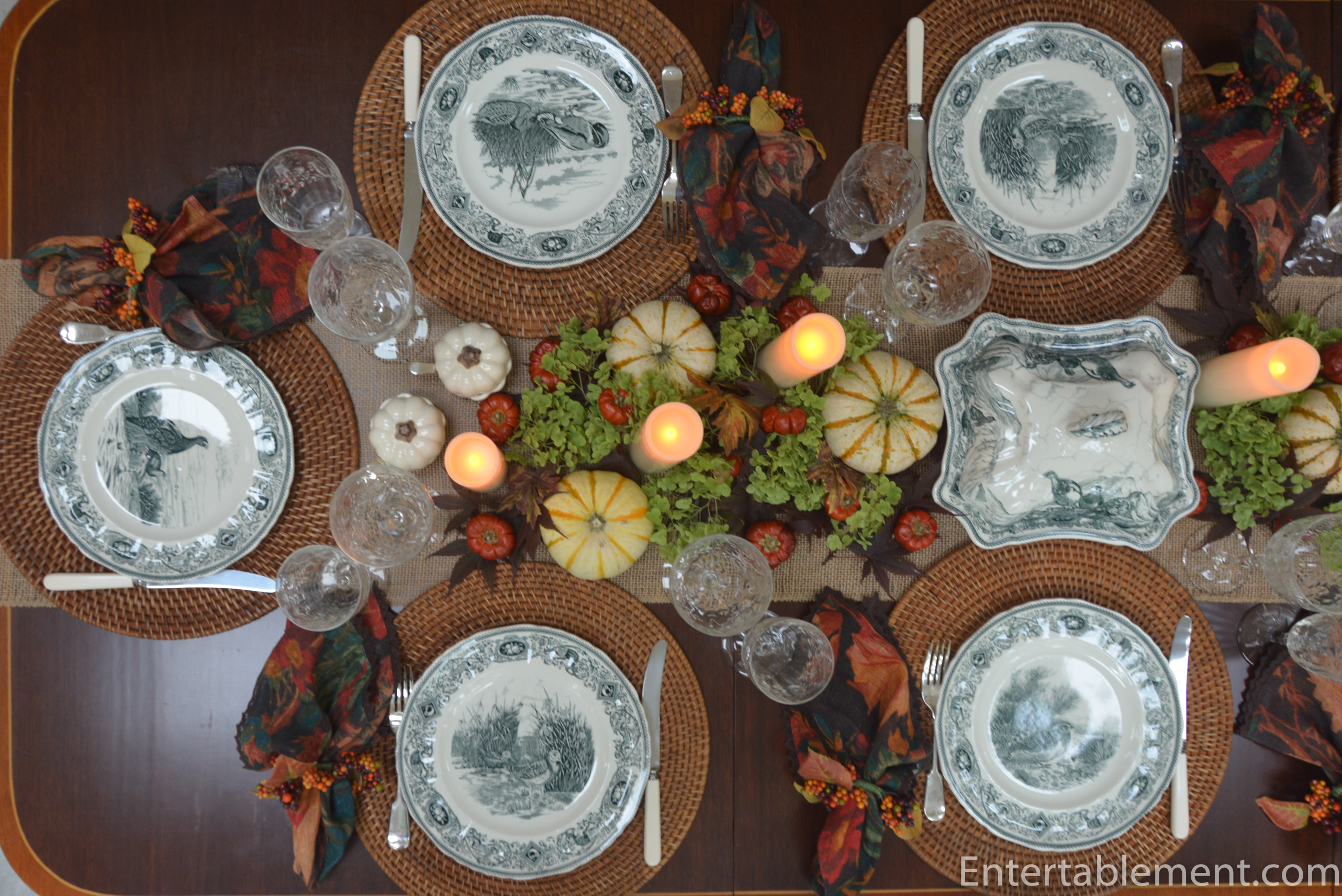


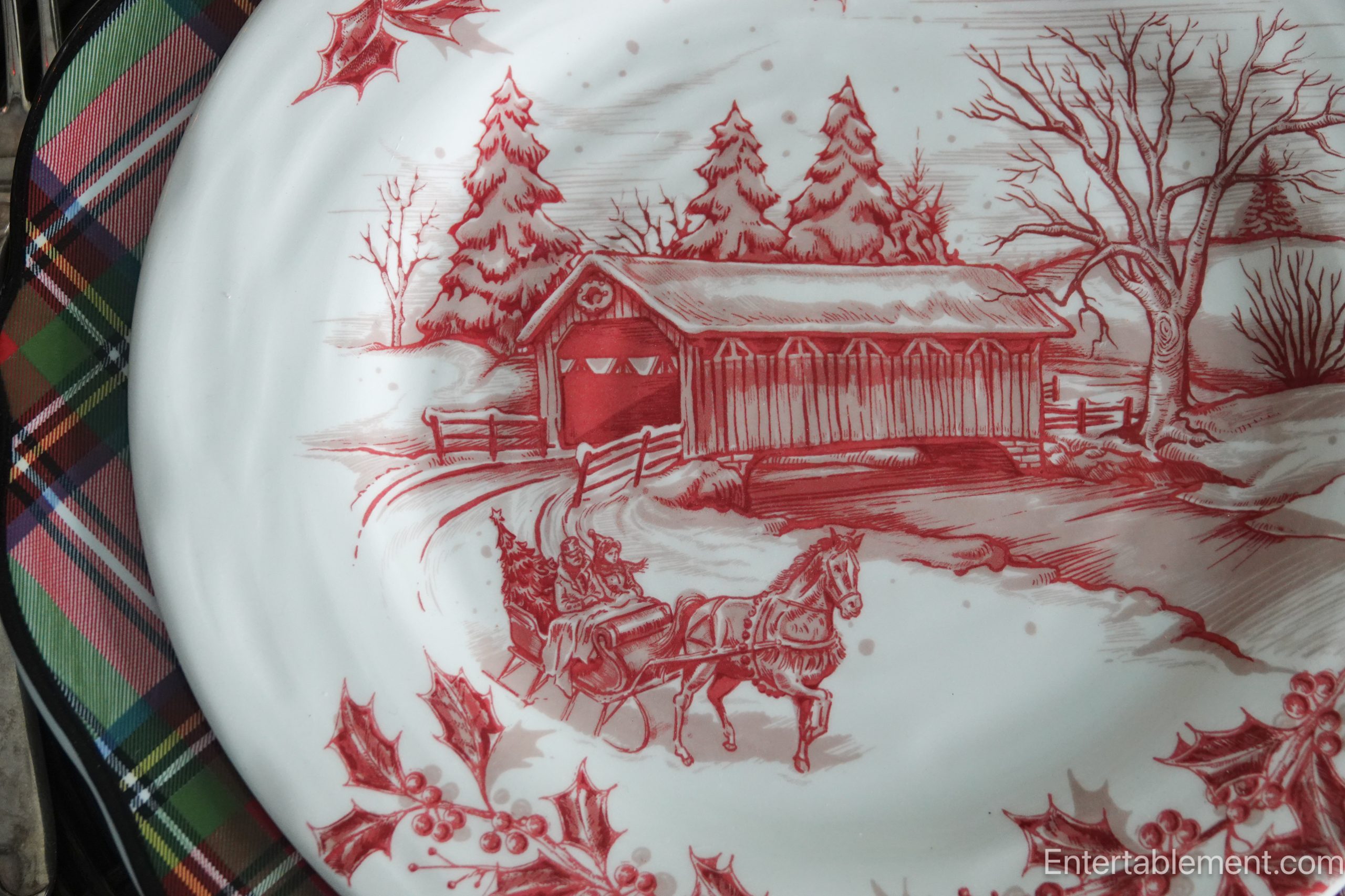
Today’s tableware comes in various mediums, including porcelain and stoneware, and can range from vibrant, colourful patterns to more subtle, monochromatic designs. Snowland Village by Pier 1 (discontinued but sometimes available at Replacements or eBay) is on the more cheerful end of the spectrum. There was a dinner plate, but I have only the four salad plates featuring nostalgic winter scenes. Here we have a covered bridge with a horse and sleigh in the foreground.
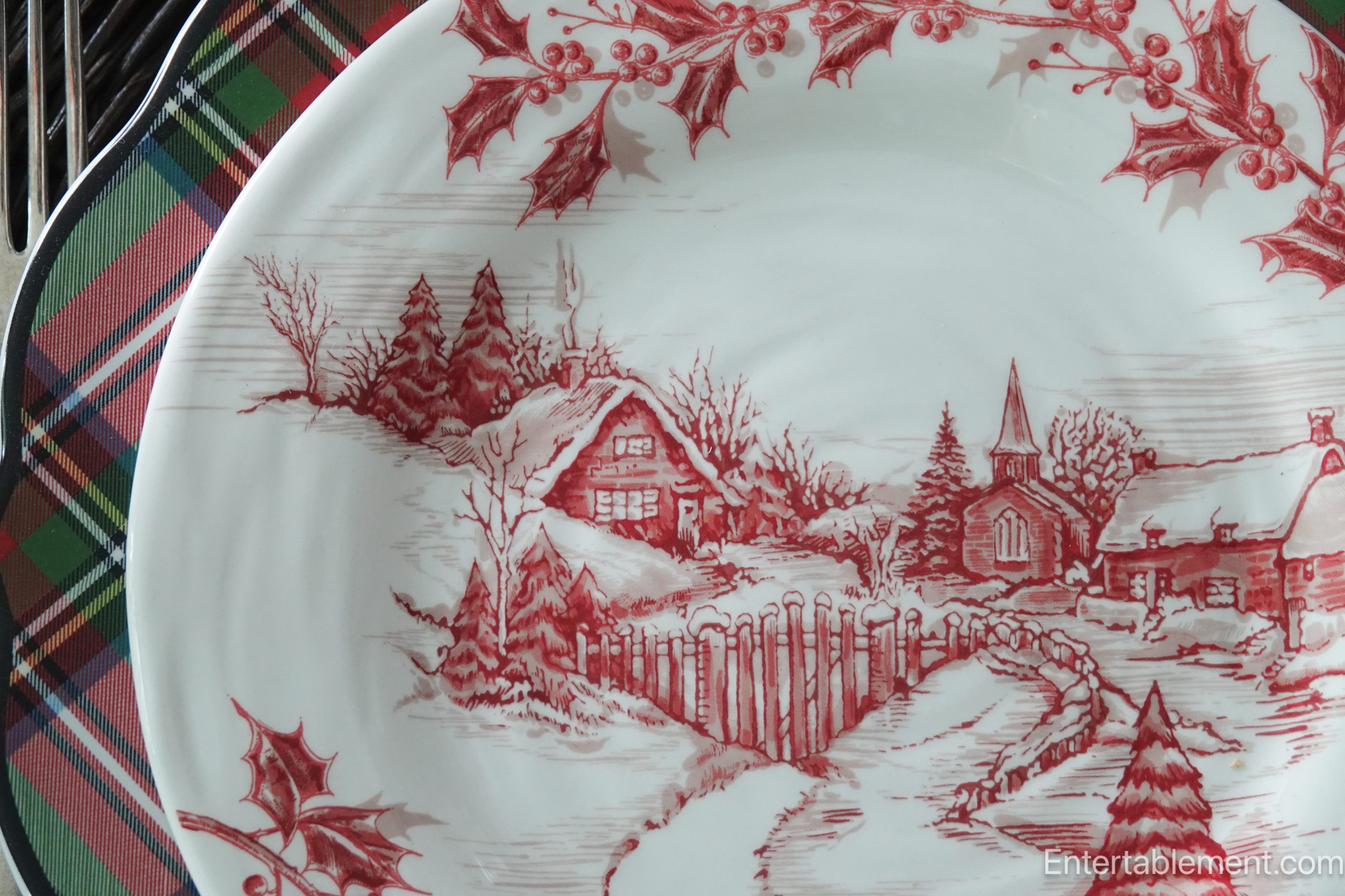
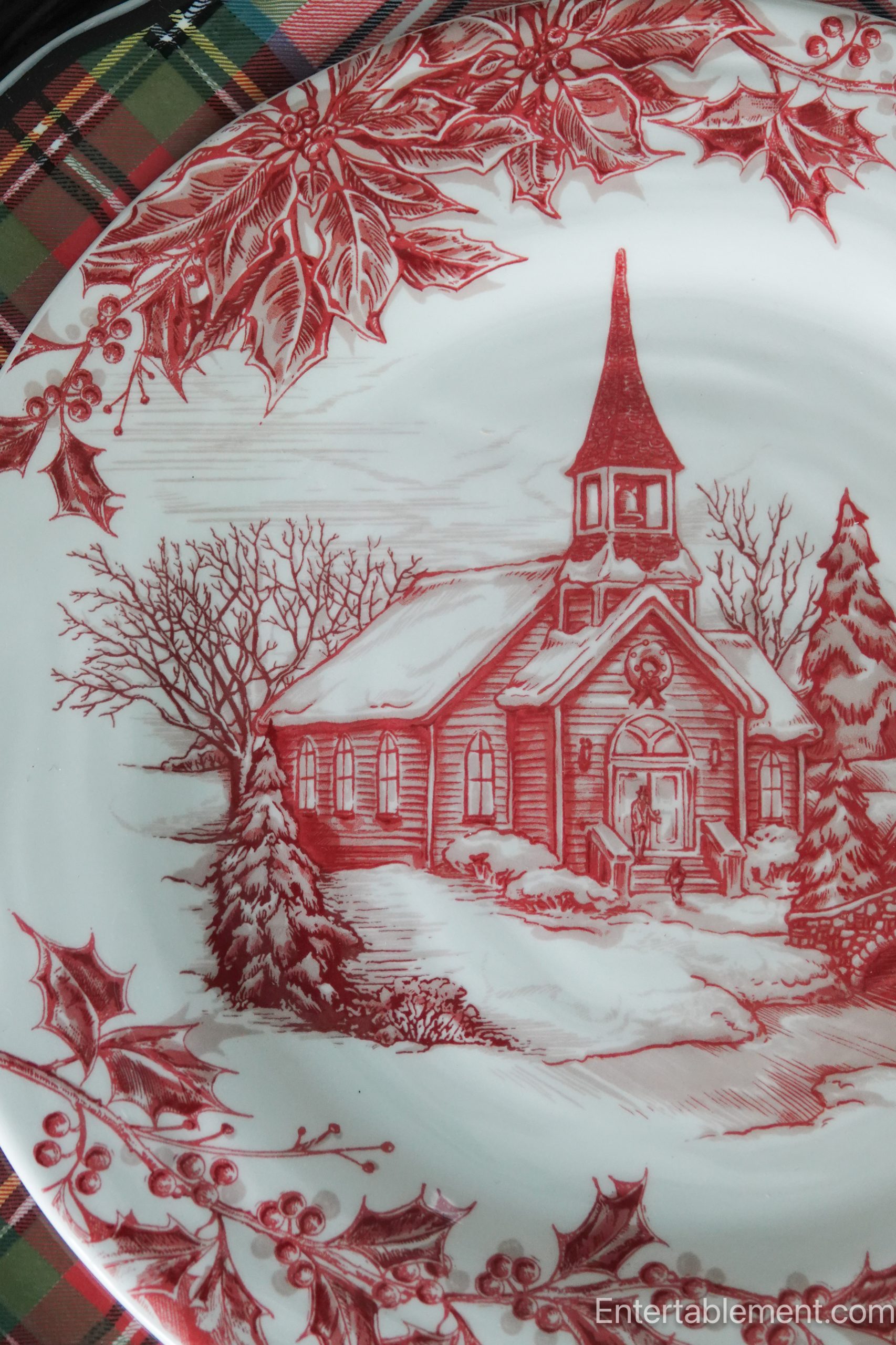
A typical colonial-era church with a pointed steeple nestles beside a stone bridge.
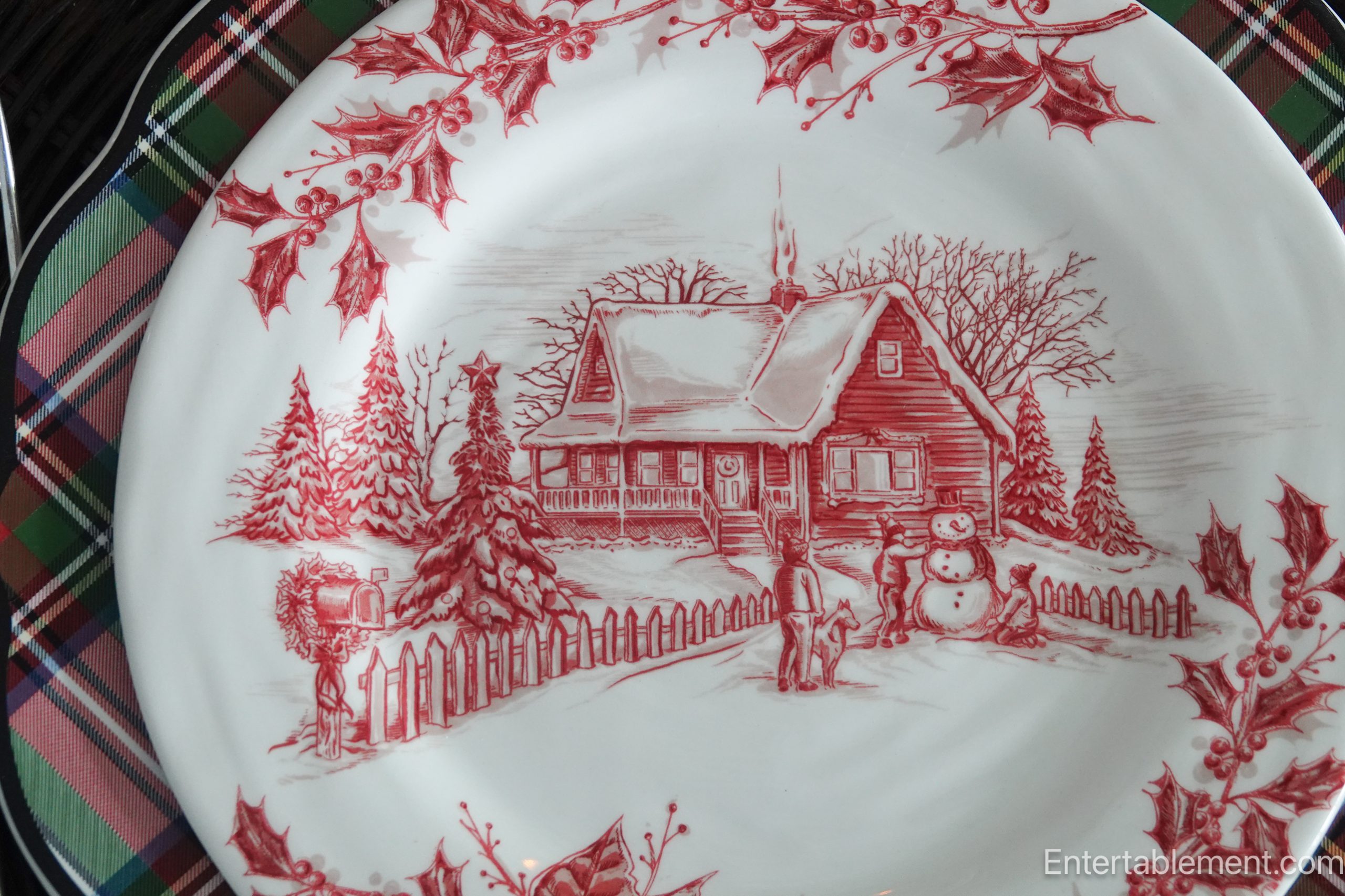
A log cabin with a picket fence provides a background for children making a snowman.
The final plate shows the entire Snowland Village.
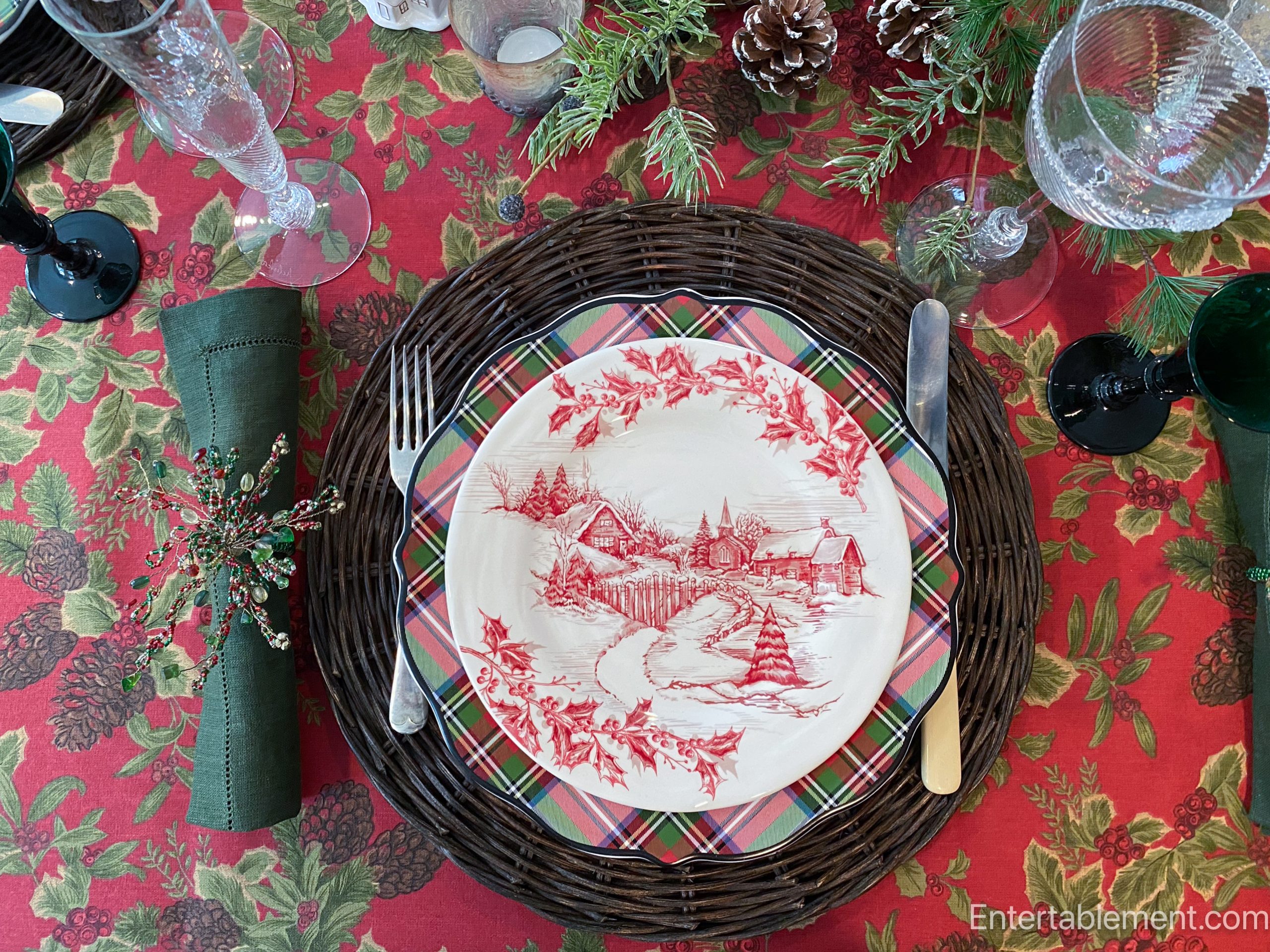
Sprays of holly and Poinsettia drape around the rim of the plates,
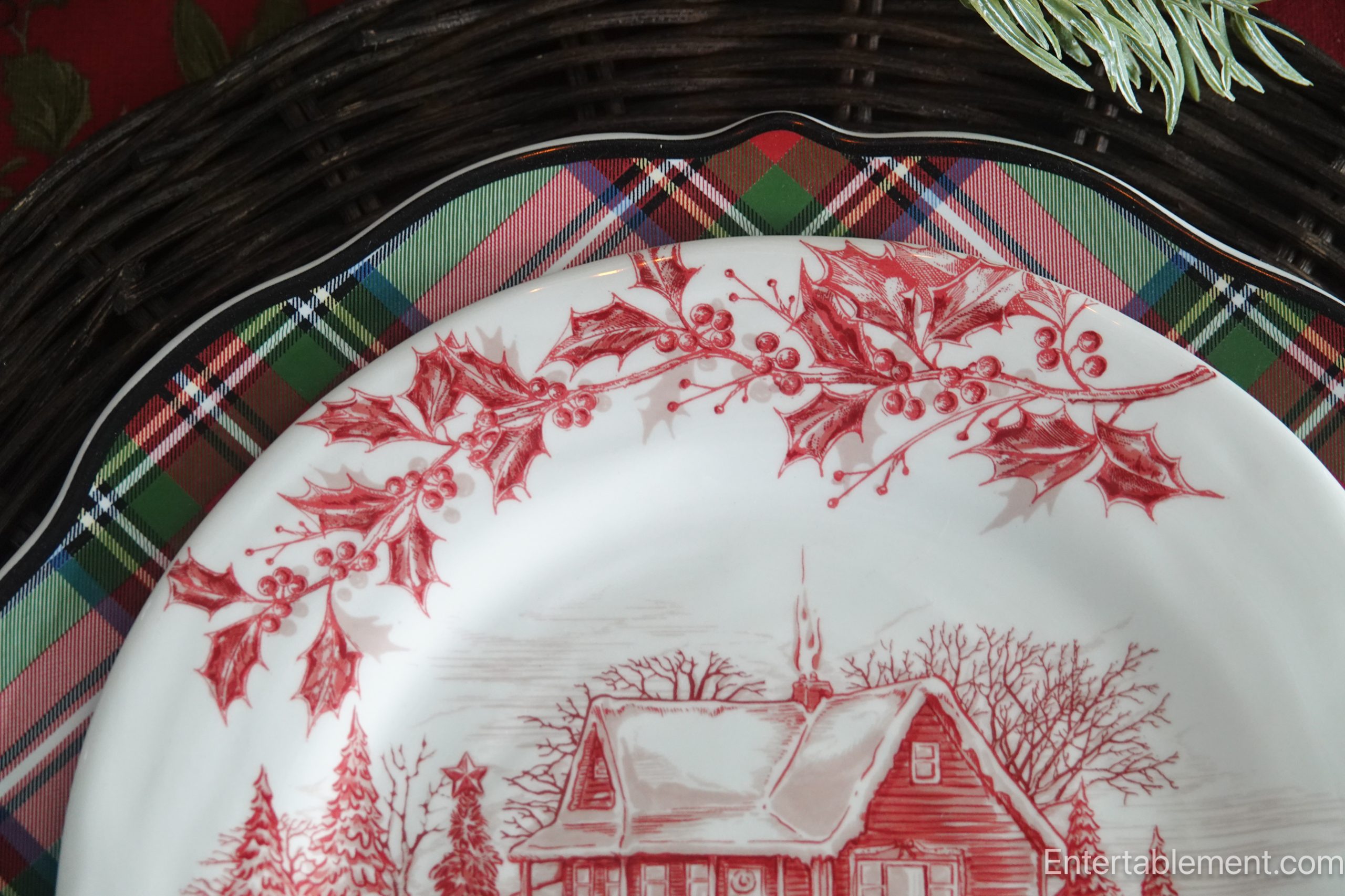
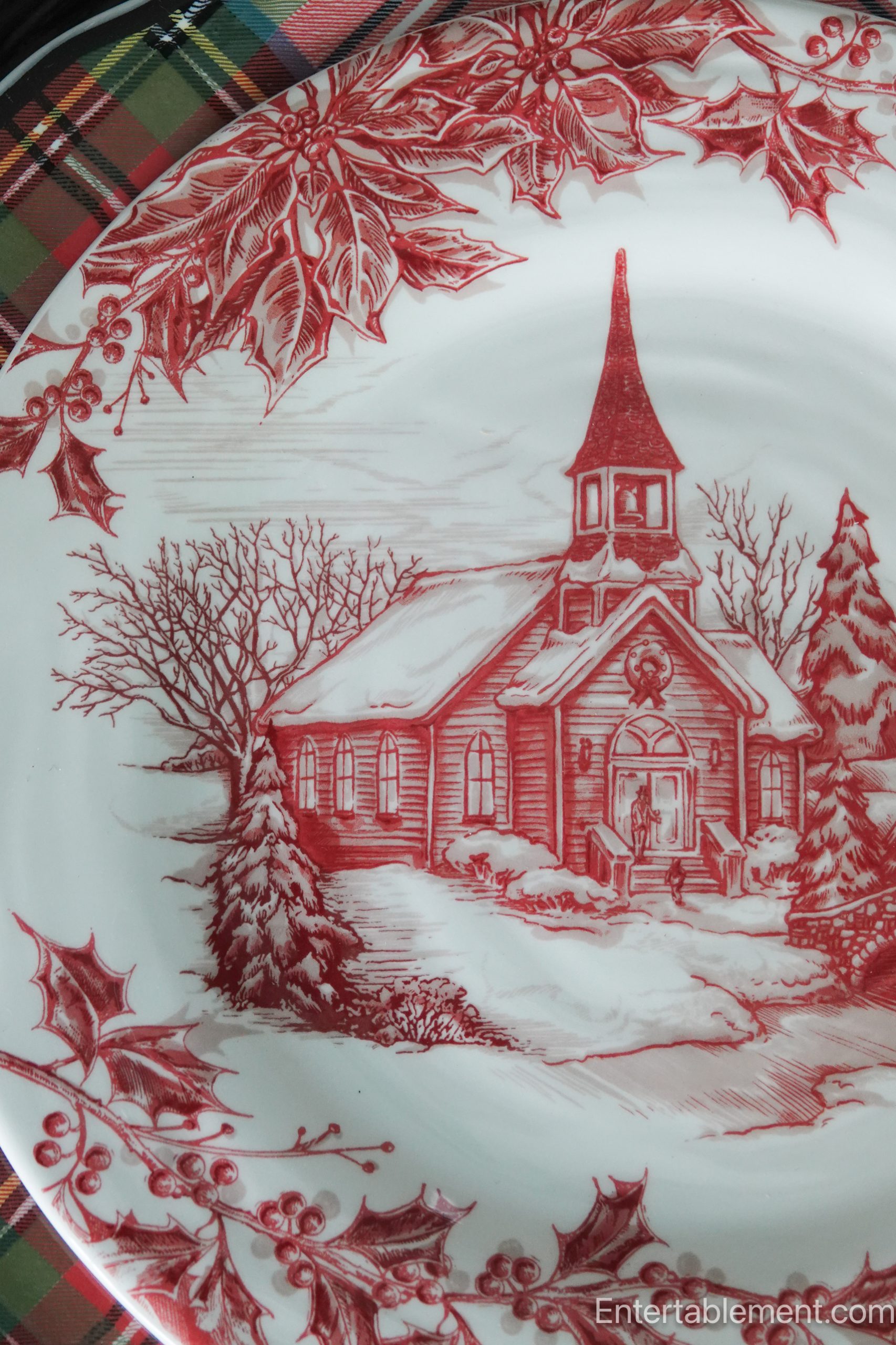
I picked up the Stewart dinner plates by Juliska a few years ago from their factory outlet store, where they sell seconds with barely discernable flaws.
The clear wine glasses and champagne flutes are Graham by Juliska, which is now sadly discontinued. The coloured goblets are antique Bristol green glasses named for their city of origin. Bristol was an important centre for glass production from the 17th to 19th centuries. Its location near the port allowed easy access to raw materials, such as sand and coal, and a means to export the finished products. Green was one of the most popular colours; its rich hue was achieved by adding metal oxides, including iron or chromium, during the glassmaking process.

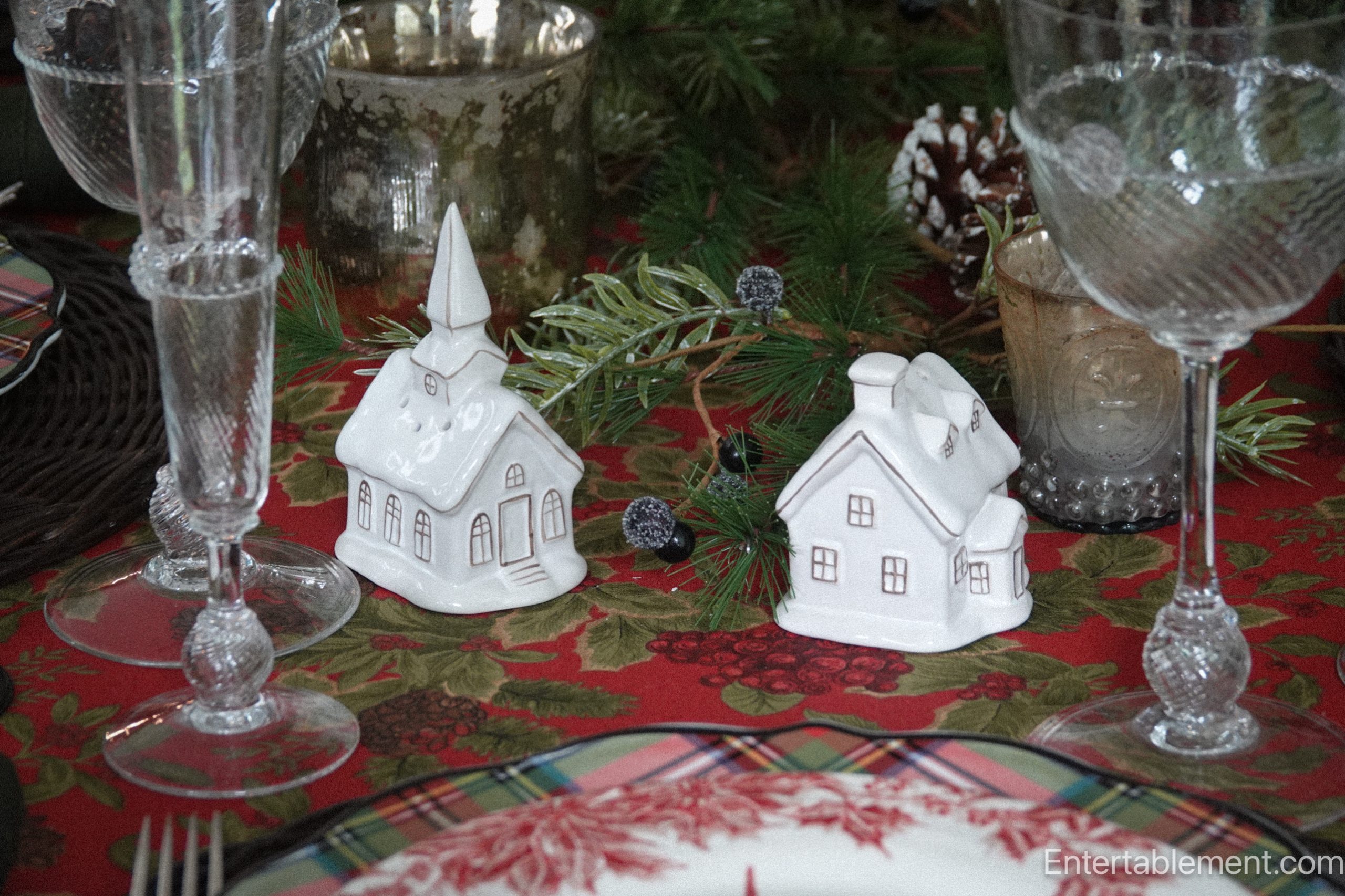
Little stoneware salt and pepper shakers continued the theme.
All the elements came together for a festive, seasonal table.

December has undoubtedly galloped. The shortest day of the year arrives on Saturday; it’s all to the good from there! My spirits invariably lift as the days slowly become lighter.
In the Entertablement household, the presents are wrapped and under the tree. Tomorrow, I begin the Christmas baking blitz ready for our family dinner on Christmas Eve. I’m mulling a couple of options for the setting; Juliana has requested, “Birds, please, Nana. Lots of birds.” The Twelve Days of Christmas is likely to get another outing. Surely, there is no more “birdy” setting than that one!



Dear Helen, transferware is not usually on my radar, but this makes a cozy and traditional table that is, well, rather quiet. I have loved those Graham glasses since I saw a shop window full of them in the early aughts. They and the Bristol glasses lend a refined air to this otherwise rustic table. The birdhouse is the bee’s knees–thanks for the Christmas cheer. We have a new inch of snow on the ground, and the mountains are all white. OH had a good ski this week, and there is more snow on the way for the day. Merry Christmas to you and yours!
Thanks, Beatrice. I don’t have a lot of transferware, but it does have its place in more relaxed settings, as you note.
We too have snow and it’s a winter wonderland out there. The pups are in heaven, tearing through it and wrestling each other to the ground. Merry Christmas to you and your loved ones. How goes the house hunt?
Best,
HK
Beautiful table! That tablecloth is a perfect backdrop and I like the tartan and transferware combination. But that darling decorated birdhouse is the star of the table to me! Merry Christmas!
Thank you so much, Joy! That birdhouse just ticked my fancy. It actually lights up! I forgot to turn the lights on when I clicked the photos. Oh well, maybe it’s next table. 🙂
Merry Christmas to you and yours, also!
This is just beautiful Helen and so cute!! I love the birdhouse, and I love your transferware too. It’s so perfect for the holidays. Thanks for the great ideas – I always am inspired by your tablescapes and the stories and information that goes with them. I hope we get to see your bird table – I’m sure your granddaughter will be pleased with whatever lovely idea you come up with! Thanks again and Merry Christmas!
Thanks so much, Barb! I’ll be setting the dining room table this morning and am pondering a few options for the centrepiece. I wish I had the boxwood topiaries that live in our house on the Cape as they’d be perfect to hold a few clip-on feathered birds. I’ll have to come up with something else. A few ideas are floating around…
All the best of the Christmas season to you and yours! I hope Santa is good to everyone.
Best,
Helen