

During the Great Depression, when dinner tables were scanty and budgets tight, American glassmakers offered something extraordinary: a glimmer of beauty in the form of coloured glass. Whether it came free in a box of oats or as a treasured wedding gift from a department store, glassware brought colour, cheer, and a bit of aspiration into everyday life.
Today, collectors distinguish between two categories: Depression Glass and Elegant Glass of the Depression Era. Both types flourished, but they tell very different stories—and knowing the difference makes the hunt even more rewarding.
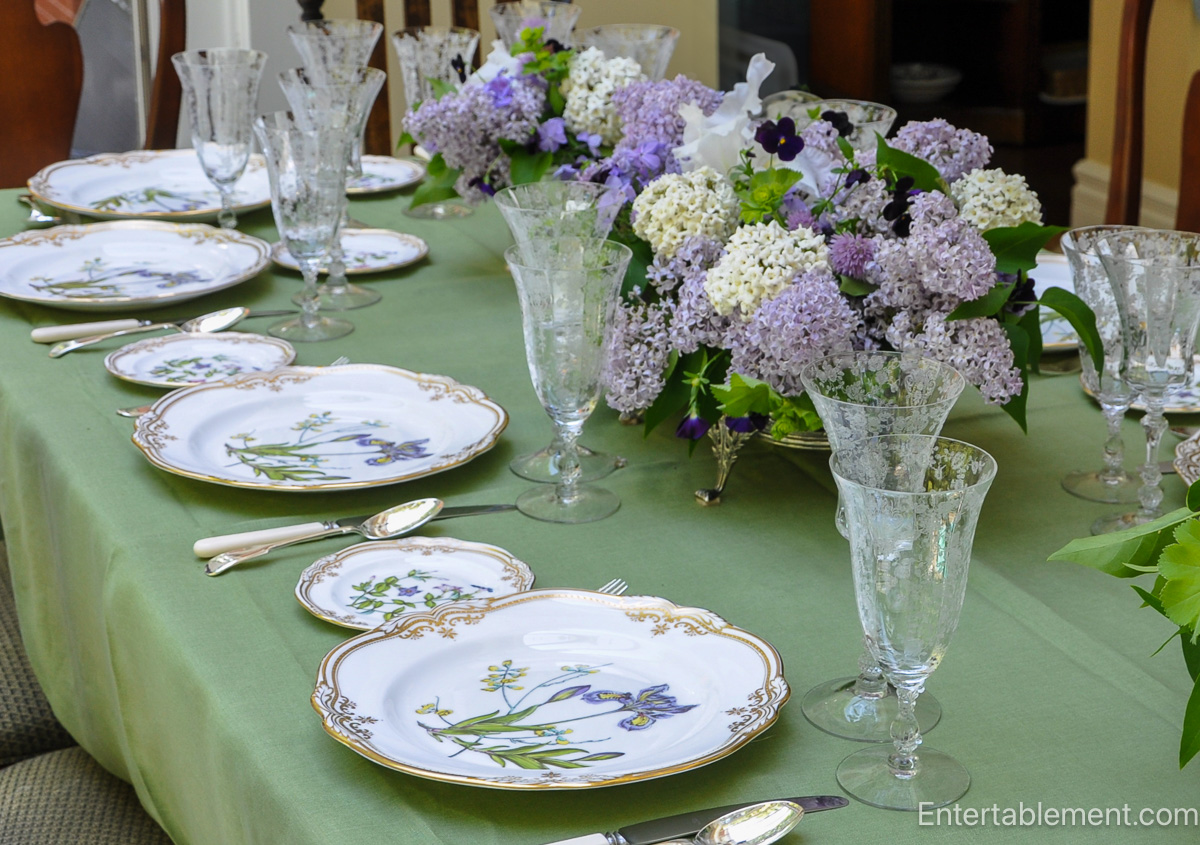
Rosepoint Clear by Cambridge
Depression Glass: The Everyday Sparkle
Mass-produced and widely distributed, Depression Glass was made to be affordable and accessible. Companies like Jeannette, Hazel-Atlas, Federal, and Imperial churned out thousands of pieces, often in bright pastels—pink, green, turquoise, amber, and clear. It was given away in soap cartons, cereal boxes, gas station promotions, and dime stores.
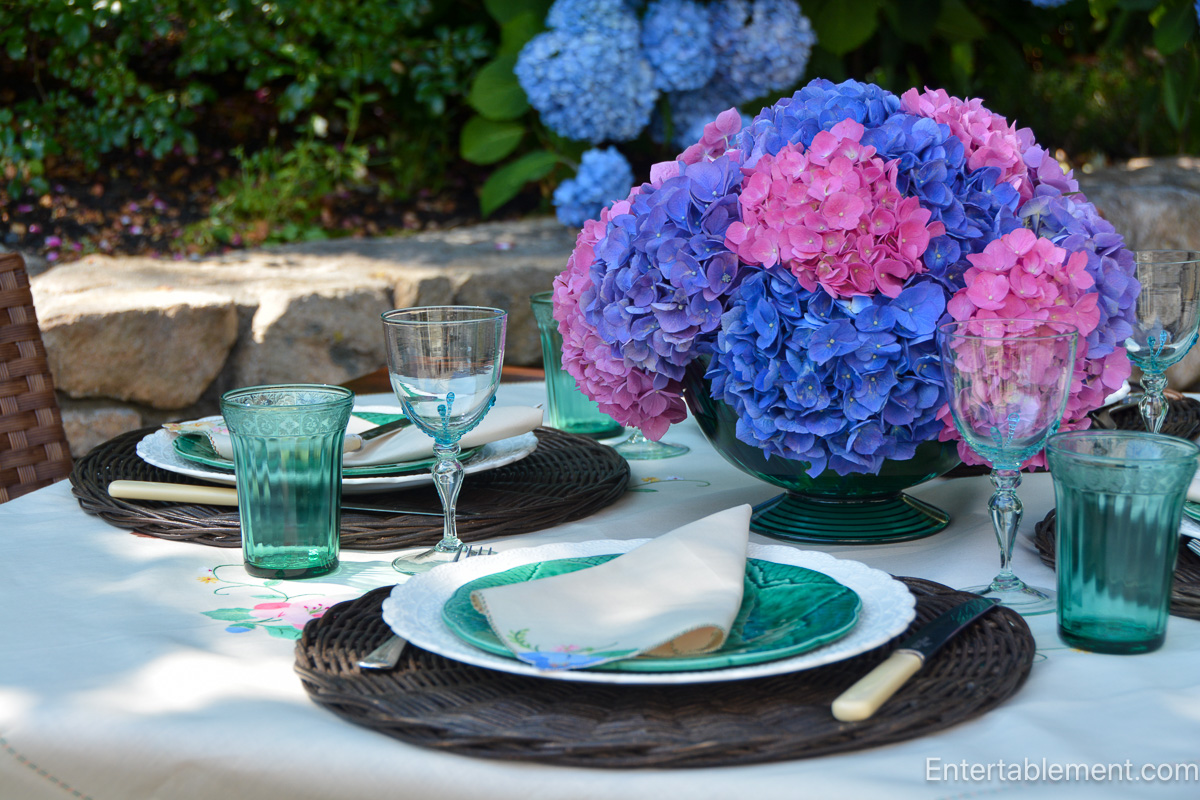
Turquoise Jeanette Doric and Pansy Tumblers with Antique Venetian Glass Goblets
These pieces were typically pressed, not cut, meaning their patterns were moulded rather than etched. Their charm lies in their simplicity: Cherry Blossom, Madrid, Princess, and Adam are just a few of the whimsical, floral patterns that remain favourites today.
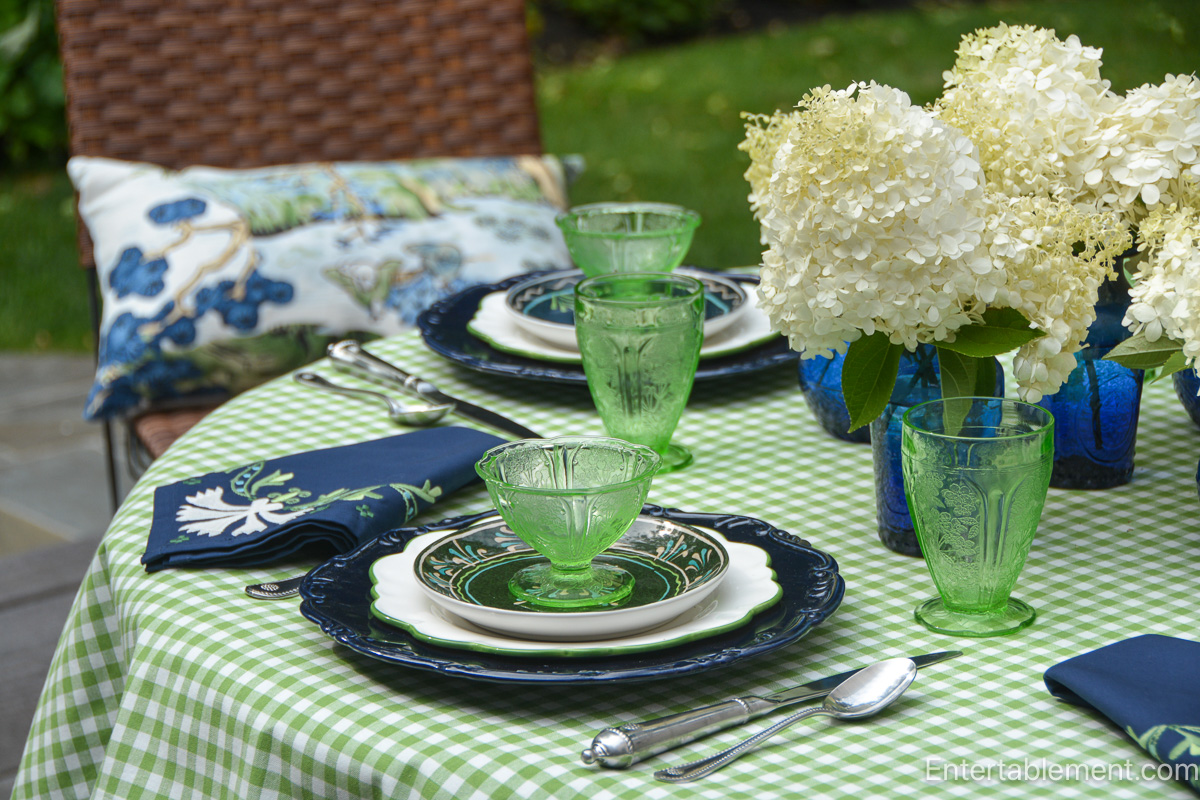
Jeanette Green Cherry Blossom Glasses and Compotes
Despite their humble origins, these pieces have endured. There’s something incredibly endearing about the idea that a beautiful pink dessert plate was once a bonus tucked into a sack of flour.
Elegant Glass: Affordable Glamour
At the same time, other companies were creating glassware of a different calibre. Cambridge, Fostoria, Heisey, and Tiffin (Franciscan) produced what we now call Elegant Glass—a step above, both in materials and finish.
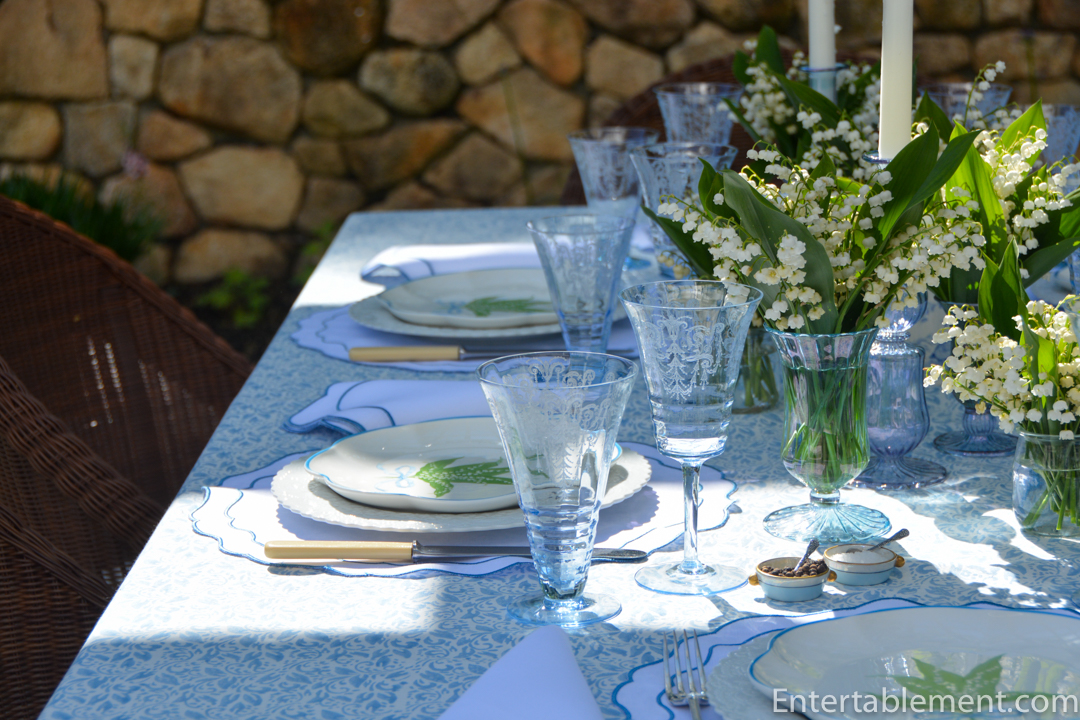
Lilies of the Valley: Cambridge Elegant Cleo Blue Water and Iced Tea Glasses
Elegant Glass was:
- Often hand-etched or cut, with delicate floral and geometric motifs.
- Made with higher clarity and weight, and frequently polished by hand.
- Sold in department stores, bridal catalogues, or jewelry shops—not giveaways.
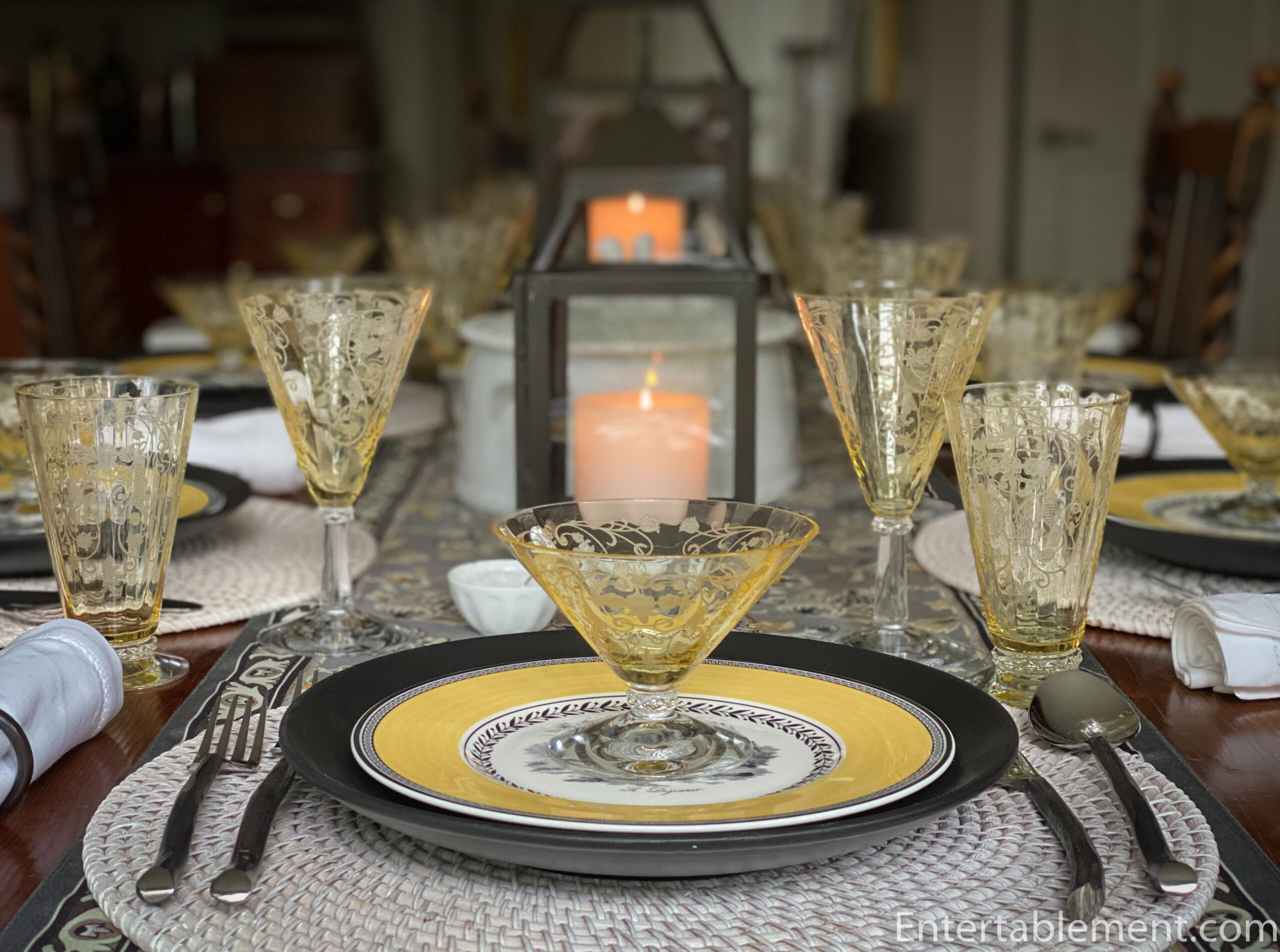
Auden Ferme with Minuet Yellow by Fostoria
Patterns like Cleo and Rosepoint by Cambridge, June, Buttercup and Navarre by Fostoria and Julia Amber by Tiffin (Franciscan) represent the best of this category: delicate, romantic, and unmistakably refined.

June Pink by Fostoria with Castleton china.
These are the pieces that feel luxurious in the hand, slightly heavier, with a satisfying ring when tapped.

Beyond the Depression: The Legacy Continues
Though the term “Depression Glass” anchors these wares in the 1930s, production continued into the 1940s and 1950s. As the economy recovered, so did taste, and Elegant Glass evolved into the kind of formal glassware used alongside fine china and sterling silver at mid-century dinner parties.
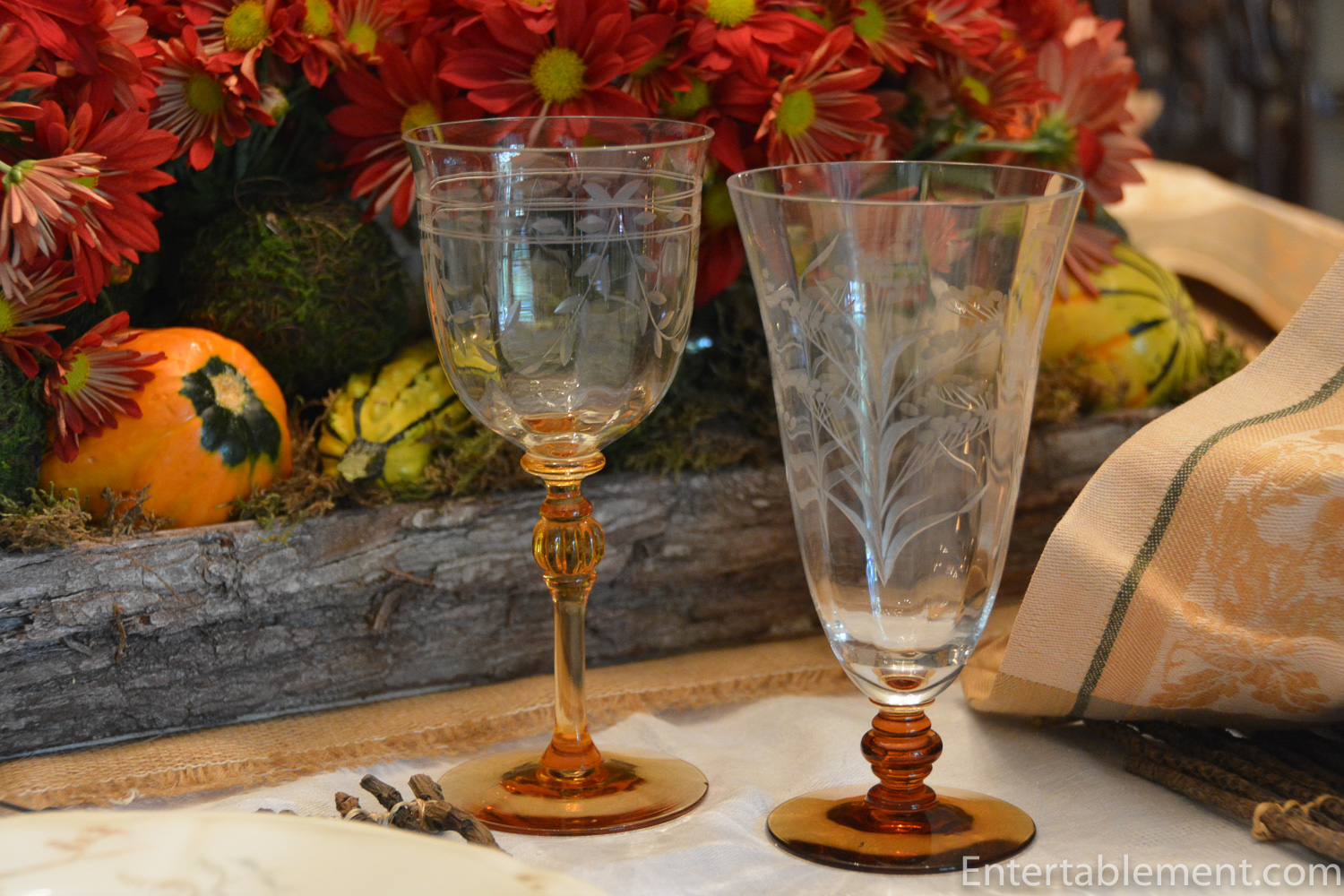
Solonge by Gien: Morgantown 7617 wine and Tiffin Franciscan Julia Iced Tea
Depression Glass, meanwhile, found a second life in the collector revival of the 1960s and 70s, when people began searching for these pastel relics in earnest. What was once tucked into a grocery bag became a sought-after heirloom.
Why Collect Both?
Both types of glass have their place at the table—and on the shelf.
- Elegant Glass: Perfect for formal tablescapes, pairing with porcelain or silver, or adding graceful height with etched candlesticks and footed compotes.
- Depression Glass: Brings warmth and whimsy to more casual or vintage-themed settings. Use pink sherbets for summer sorbet or green plates for a St. Patrick’s Day brunch.
Even better? Mix them. A Depression Glass plate layered with a Fostoria etched goblet and a few garden blooms feels collected, storied, and entirely your own.
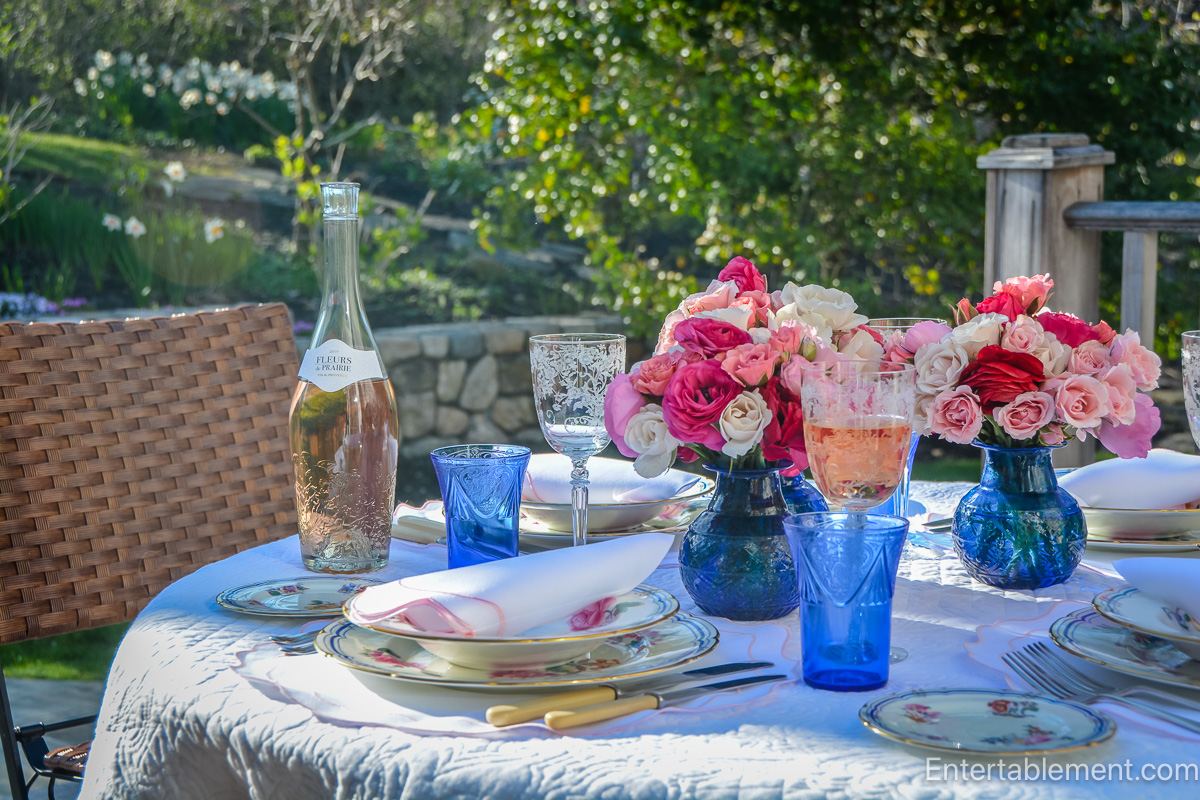
Clear Buttercup goblets with Hazel Atlas Cobalt Royal Lace tumblers.
Tips for Collectors:
- Check clarity and polish: Elegant Glass has a crisper, clearer finish.
- Observe etched vs. moulded patterns: Moulded patterns are usually Depression Glass; etched are often Elegant Glass.
- Beware of reproductions, especially in popular patterns like Cherry Blossom.
- Condition matters: Chips, cloudiness, and scratches affect value.
Whether you’re building a full table of Cambridge Cleo or just finding joy in a single turquoise bowl from Jeannette, these pieces offer more than utility. They carry history, heart, and the resilient sparkle of the era from which they came.
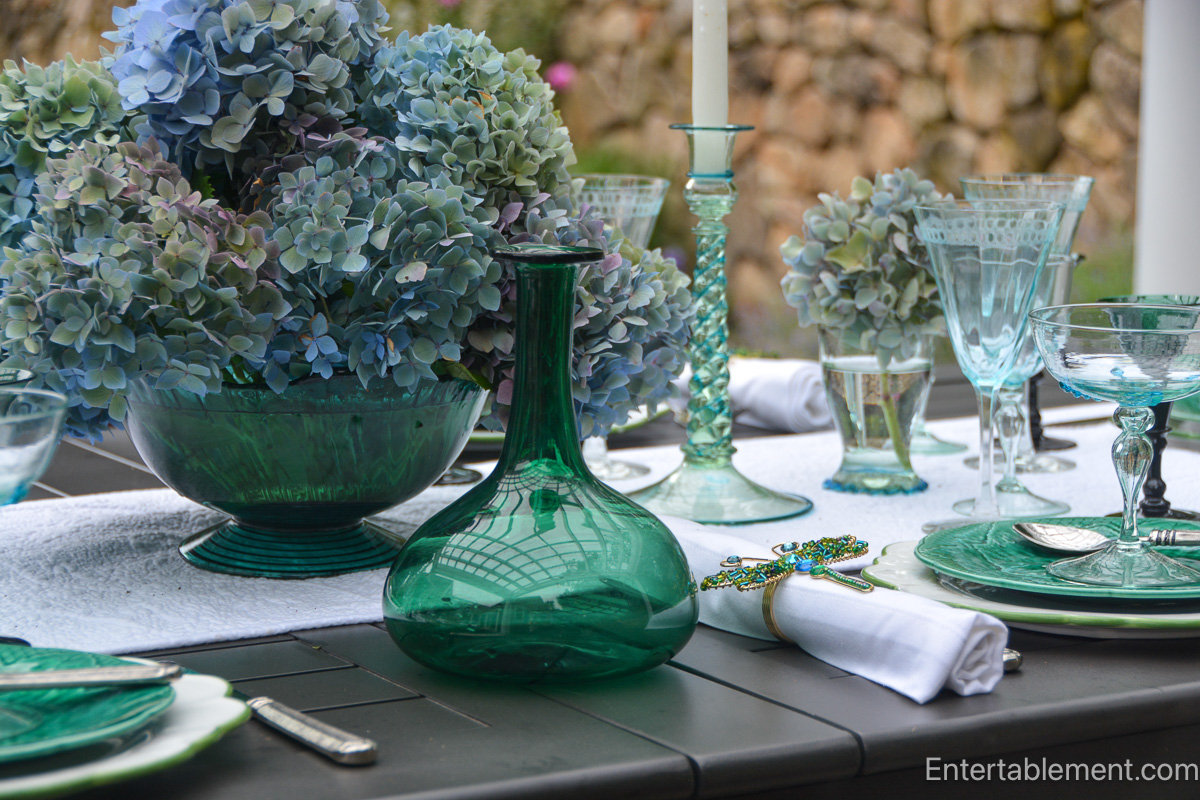
Turquoise Dragonflies Inspire Mix & Match: Turquoise Bowl by Jeanette, Antique Bristol Green Decanter, Antique Venetian twisted candlesticks and glass compotes, Turquoise etched Elegant Glass (unknown manufacturer).
The hunt, as ever, is worth it!
Part of our new series: The Hunt Is Worth It—a look at the collectible treasures that bring beauty, story, and sparkle to the table.


