
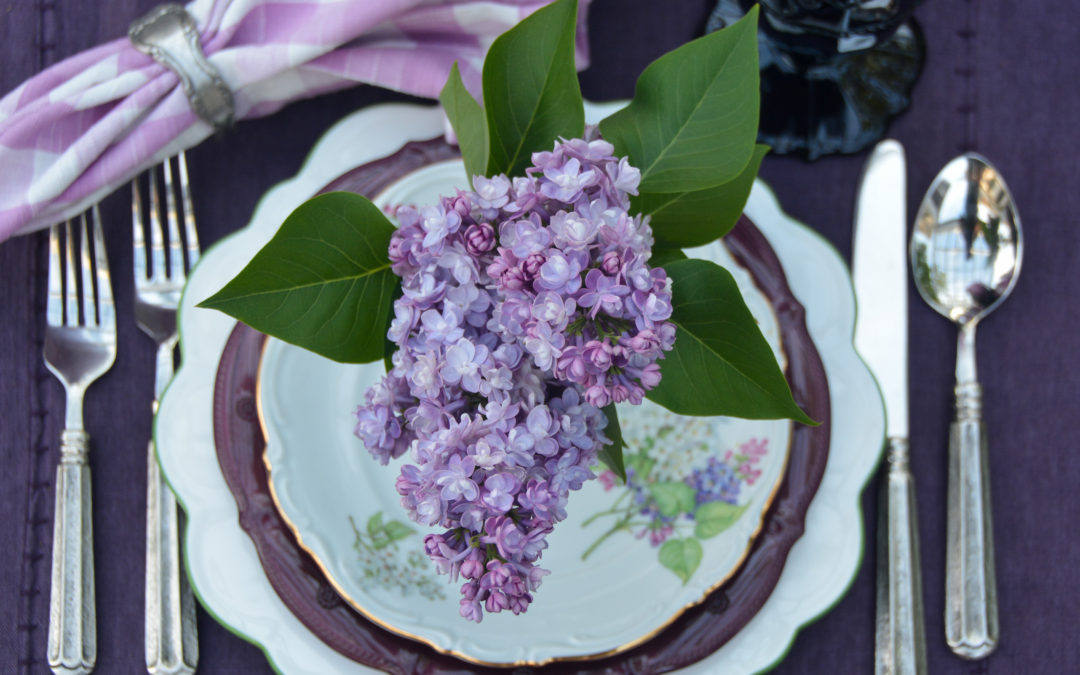
Originally published in 2019, this post has become a seasonal favourite. I’ve updated it with a few new thoughts and images to celebrate this year’s lilac season.
It’s that blissful time of year when the air is redolent with the heavenly scent of lilacs.

I can’t get enough of them. We have three bushes on our Cape property, two of the “common” pale purple colour and one of the deeper purple French variety.
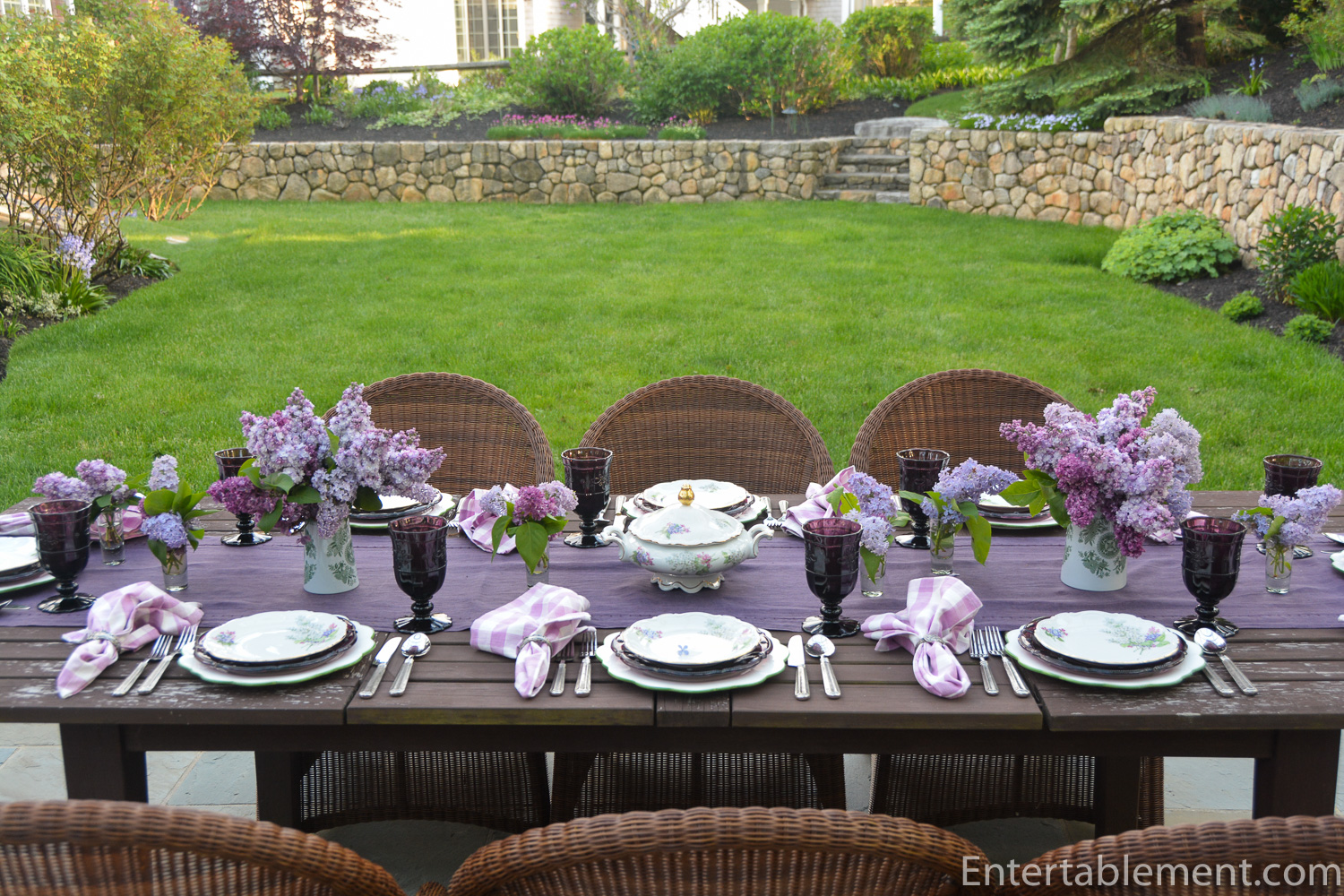
I have no white lilacs but plan to rectify that this year with the addition of a dwarf shrub to go near the back door and have earmarked space for a large one in the side garden, above the wall you see in the background. Meanwhile, I’ve been reduced to begging them from neighbours or hastily pulling over to the side of the road when a likely candidate for snipping is spotted.
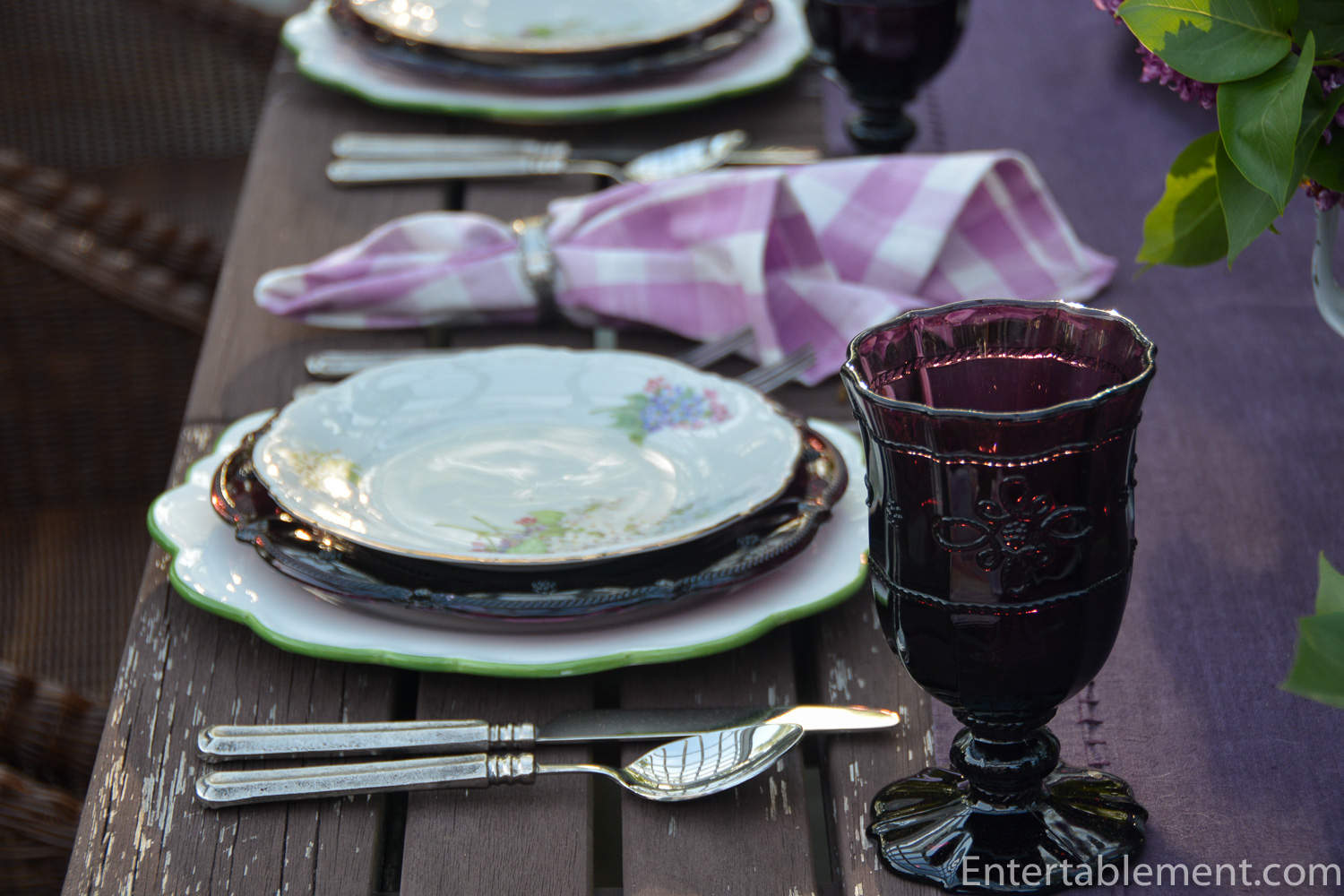
I have a small vase of lilac blooms on my bedside table; their divine scent greets me if I wake at night, and is a welcome way to meet the morning. The only downside is Dundee the Diabolical, who likes to liberate one of the stems with his teeth and scamper off with it, leaving an overturned vase and a trail of shredded florets in his wake.
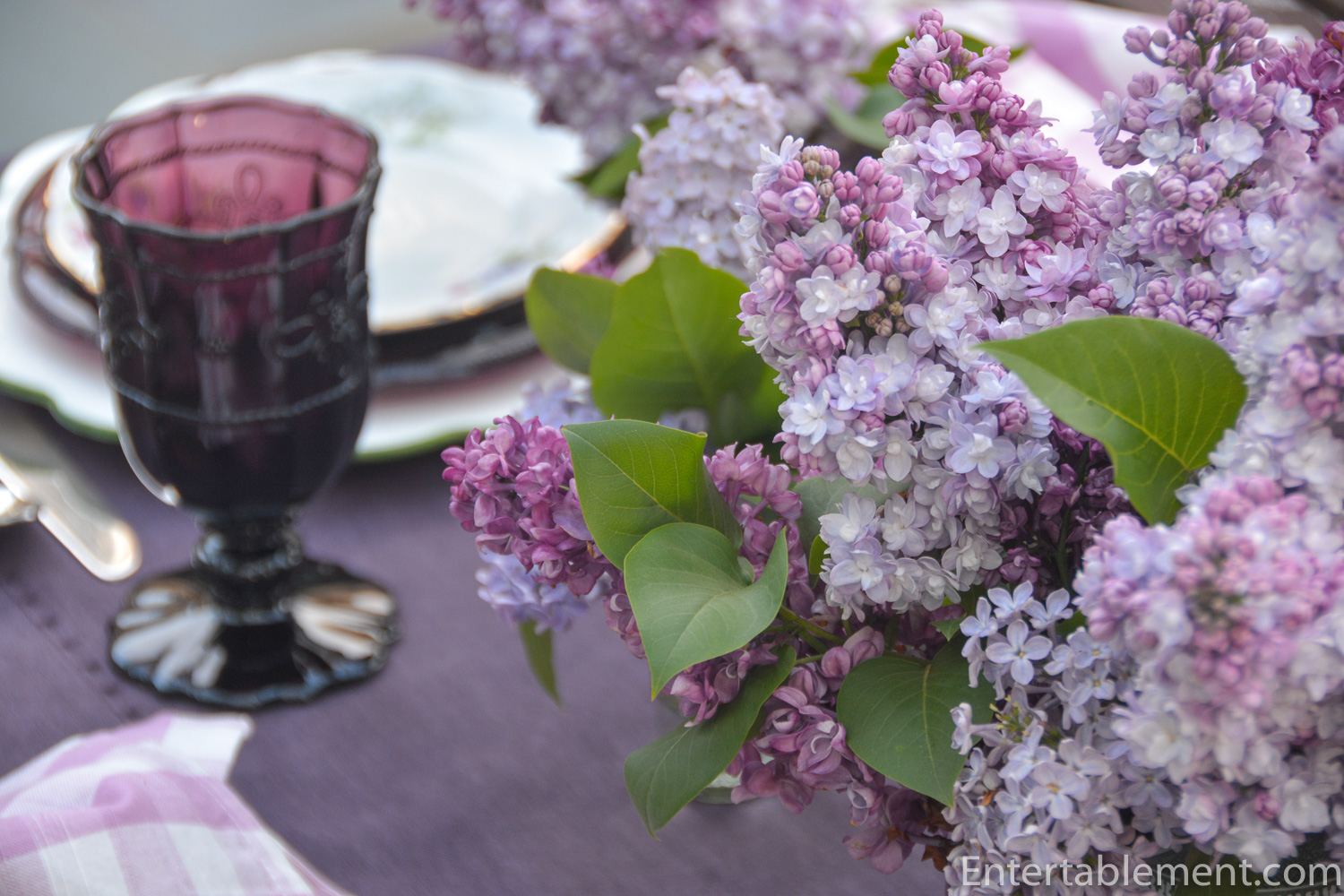
The large bush in our side garden provides outstanding blooms on straight, thick stems. They last really well. I find the blooms from the more straggly branches wilt very quickly, likely because the stem doesn’t support sufficient water uptake. So this year, once the blooms are finished, the shrubs are getting a good pruning, even if it involves buying some lopping shears to get to the top branches.

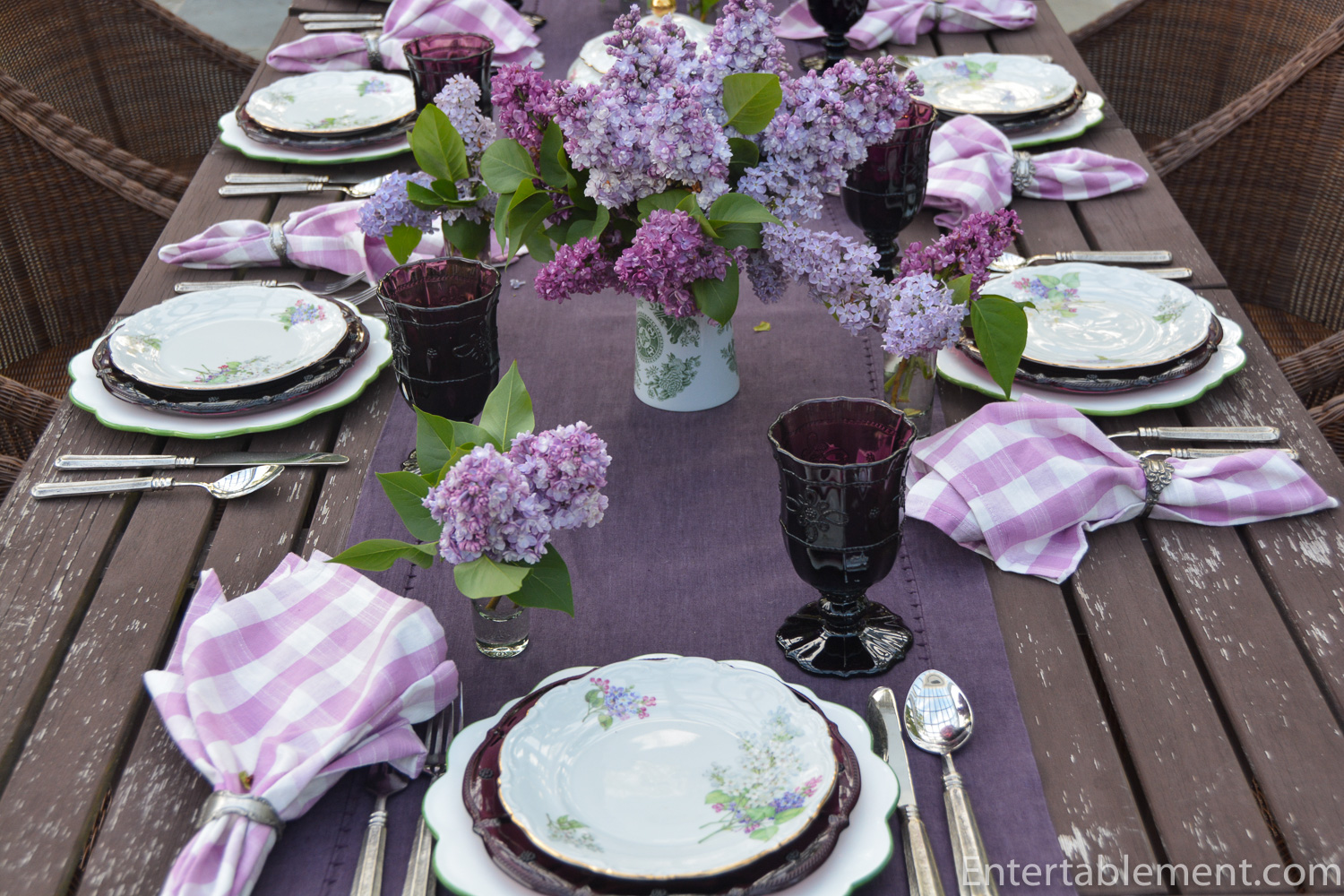
The star of the table is the dessert plates: Lilac by Mitterteich, a porcelain pattern produced in Bavaria, Germany, during the 1920s. Mitterteich was known for its fine bone china and elegant floral motifs; Lilac is no exception. The design captures the delicate beauty of lilacs in soft lavender and green hues, framed by gently scalloped edges and a hint of gold trim—a reflection of the refined aesthetic popular during the interwar period in Europe.
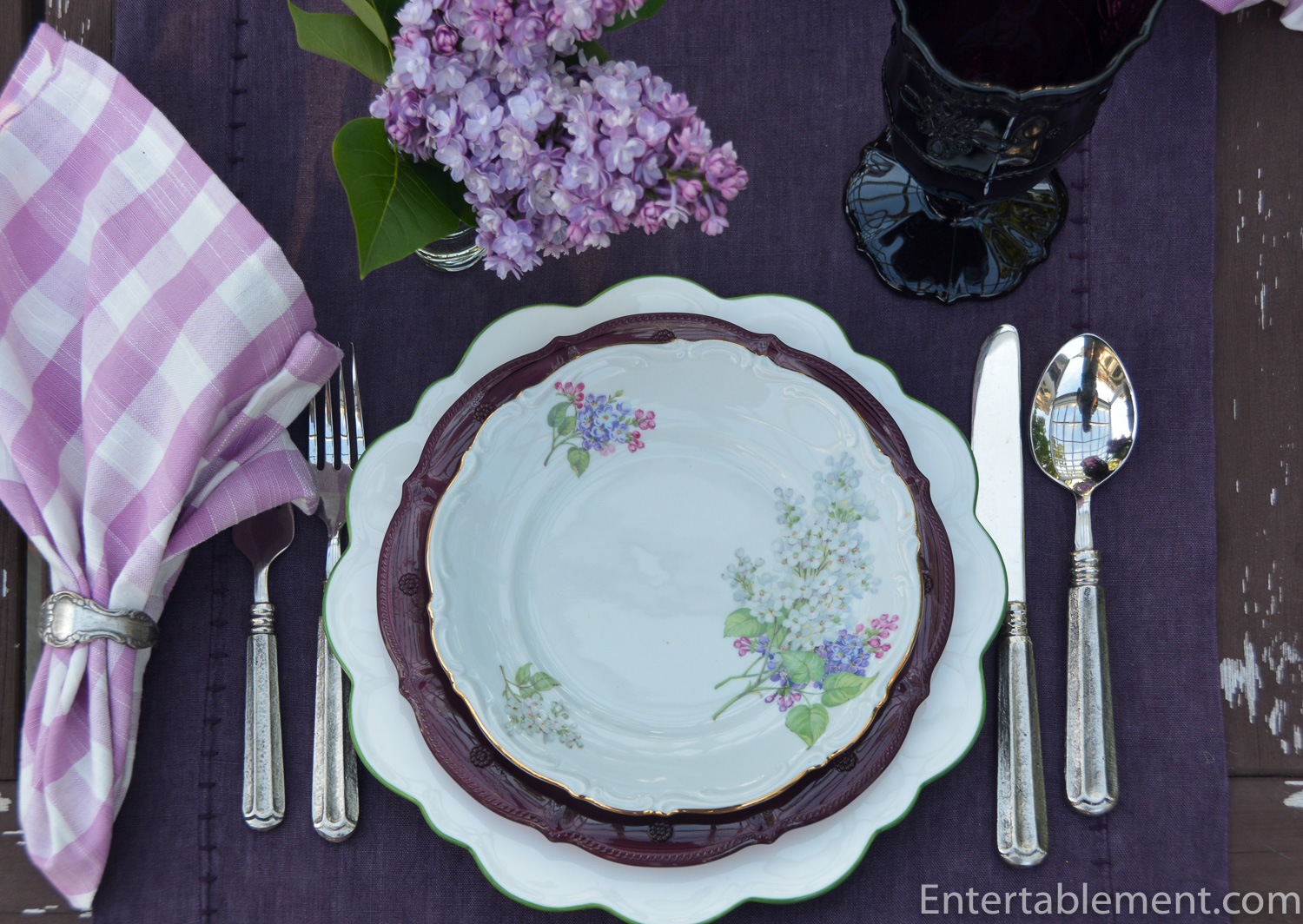
I was thrilled to come across this set—it’s a rare find, and its vintage charm adds a sense of quiet romance to the table. There’s something truly timeless about pairing century-old porcelain with fresh spring blooms.
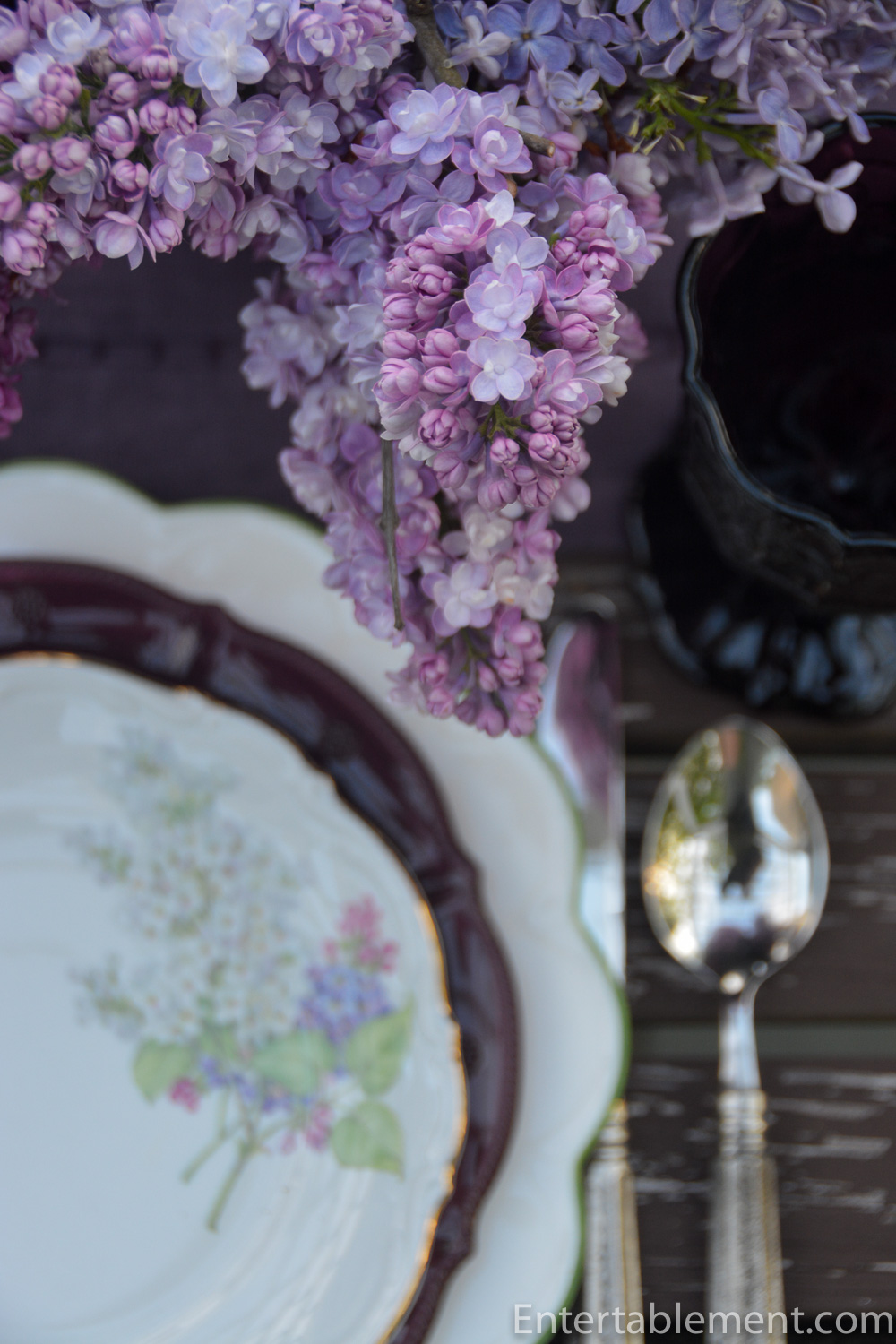
The plate beneath is Colette Plum by Juliska, and the footed tumbler is the same pattern—both are now sadly discontinued but available at Replacements.com.


The dinner plate is Aerin Scalloped Rim Green from Williams Sonoma (also discontinued but sometimes available on eBay).

I can’t remember where I got the napkins. The napkin rings are from many years ago. The flatware is Danieli from World Market.

When I bought the Lilac plates (all on eBay), I was lucky to snag a covered vegetable dish.

Pitchers in the Fitzhugh Green by Spode pattern make good lilac vases. They’re wide enough at the top to accommodate all the fiddly branch bits.

I recently learned that lilacs belong to the Oleaceae family, which encompasses more than twenty different plant species, including olive, ash, and jasmine.

There are more than 1,000 varieties of lilacs, including some trees. Lilac trees usually reach about 20 feet in height, though some varieties, such as the Peking and Japanese tree lilac, can grow more than 30 feet tall.

Lilacs are rooted in Greek mythology. The Greek god Pan was in love with a nymph named Syringa. Afraid of him, she turned herself into a lilac shrub when he pursued her one day. Pan found the shrub and used part of it to create his panpipe.

Syringa’s name comes from the Greek word for pipe, syrink, from whence the lilac’s scientific name, Syringa, originates.

Because they’re such early bloomers, lilacs are synonymous with spring. They’re also thought to symbolize other things. For the Celtics, they’re magical because of their sweet scent.

During the Victorian age, widows often wore lilacs to represent old love. In Russia, holding a sprig of lilac over a newborn baby is thought to bring wisdom. Hmmm. This is a non-political blog, so I will withhold any comment.
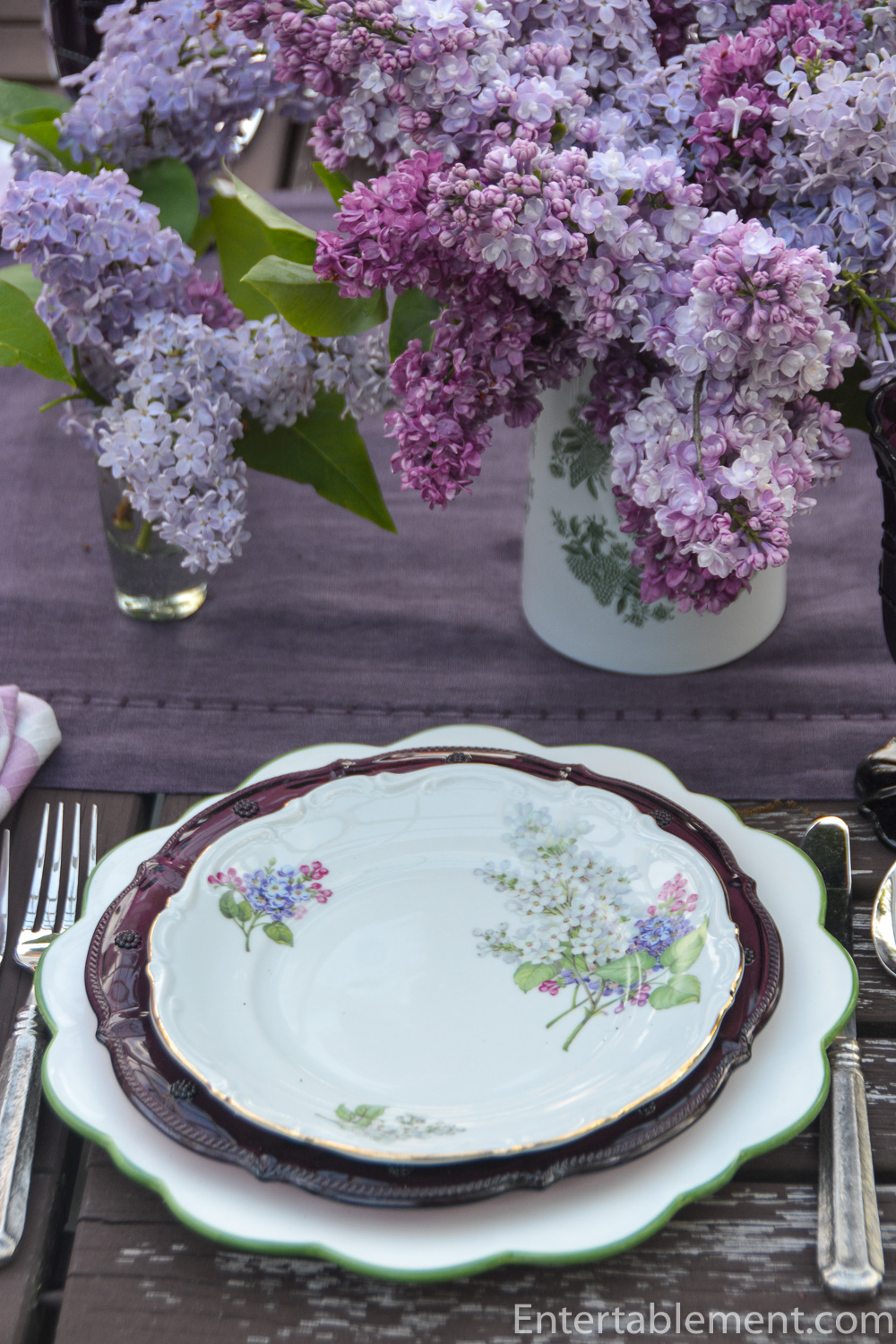
Each lilac colour has a specific meaning. White lilacs indicate purity and innocence, while purple lilacs signify spirituality.
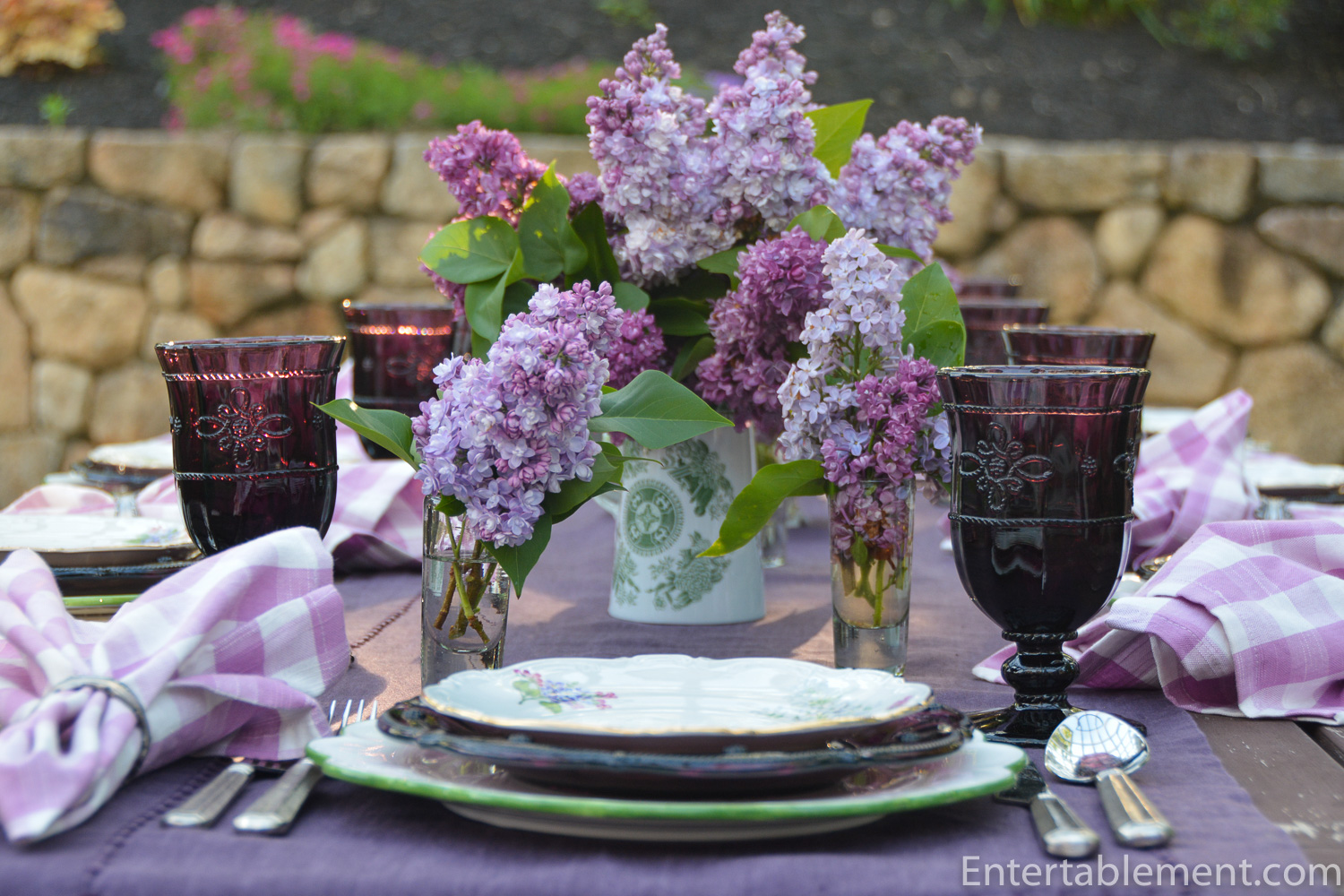
Among the purples, the bluer blooms symbolize happiness and tranquillity. Magenta lilacs are for love and passion.
Although uncommon in North America, there is also a yellow variety, ‘Primrose’. It was only introduced in 1949 and has yet to accumulate any symbolic meaning.

Whatever the colour, I adore lilacs. It’s such a short season, let’s make the most of it.



So beautiful! I love lilacs but they don’t grow so well here.
They demand a very specific climate, don’t they? I like to think they’re the reward for putting up with ice and snow! 🙂
I love lilacs…and the plates are gorgeous
Thanks, Cindy. Lilacs are fleeting, but that probably makes them all the more special. Maybe we’d get jaded if we had them all year round.
Good to hear Dundee is up to his same old tricks! Need to see pic of him. As usual, beautiful tablescape. Lilacs were a favorite of my mom’s and she had a lilac bush planted right smack in the middle of our backyard.
Dundee will be starring in an upcoming post showing his latest tricks, which include snagging passersby with his extended paw. Most of the time it’s for treats, but more and more frequently it’s to be picked up and cuddled. Melt my heart!
I adore lilacs. In grade school, I used to give bouquets of them to my teacher for the classroom. I wonder how many allergies I affected. lol
Worth every Claritin pill, I’m sure!
Such a sweet table in every way! You must have had a few nice sunny hours to be able to set such a pretty table. I should have told you to go over and prune mine since we probably missed their Bloom and won’t be on the cape until June 9. Now in VA for our granddaughter’s graduation. C U soon.
I’ve been keeping a weather eye out for sunshine, Maura. We had a gorgeous weekend, but it’s been cloudy and rainy ever since. The lilacs are just ending. I’m going to snip the last of the blooms from our latest bloomer today. 🙁
Enjoy the graduation. Heavens time flies!
Dear Helen,
A delightful table, as always. Who doesn’t love lilacs? Well, my poor neighbour, who loves lilacs but whose OH is allergic to them. Imagine!!
Lilac time is over here, I’m afraid, but it was very long–almost a month because of the cold. We had so many that extravagant experimentation with the conflicting online cut-flower advice became possible. Cut long stems, cut short stems; leave leaves on, take them all off; condition in ice water, condition in 135-degree water; smash stems, cut stems, split stems…on and on, and none consistent. I found that cutting long straight stems helped, and cold water helped. Smashing or splitting didn’t. Flower food didn’t. The only ones that lasted more than a few days were the ones I consistently left out in the cold, esp. at night, below 40F. And I agree about the weak twiggy ones–they are all coming off the trees this week to make way for new strong growth.
I can recommend the following, all of which I had in France: Dwarf Korean earlies “Miss Kim” and “Palibin,” for sturdy short growth and winter-hardiness; “Souvenir de Louis Spaeth,” with massive cerise torches and vigorous growth (loved that one!); my new “Sensation,” with white picotee edge, which has performed magnificently from the time I put it in 2 years ago; and “Mme Lemoine,” a double white with heavy fragrance–my favorite white on earth.
Time to clear some space for my next addition. (Sorry…didn’t mean to turn this into a gardening blog!)
Hi Beatrice,
Gardening advice and ideas are most welcome. For what it’s worth, here’s my list of what works with lilacs: long straight stems, cut on a 45-degree angle, cold water, cold temperatures, leaves off below the water line. I use flower food, but who knows if it’s efficacious?
Thanks for the information on the varieties, too. I’m going to track down “Mme Lemoine” and “Souvenir de Louis Spaeth” for the side garden which has plenty of room for both a white and a cerise. I’m thinking of Edith Cavell for near the back door. The advice is that dwarf white lilacs are best achieved by keeping plain old Edith heavily pruned. So I’ll give that a shot, too!
Enjoy the weekend.
Best,
HK
Well, at least Cavell is deer-resistant! But it suckers and is invasive, so you’ll have to keep in in check. Not so with Mme Lemoine…she stayed petite with little care. Good luck with your choices. Do look for Spaeth–it’s gorgeous.
BTW, I love the blackberry-coulis look of those plates and goblets!
Ah – thanks for that advice, Beatrice. I may swap them in that case and put Mme Lemoine near the door and let Cavell have at it in the side garden. There are lots of other things to keep in check over there – lilies of the valley, for instance.
I can’t understand why Juliska discontinued that luscious colour. You’ve described it perfectly – blackberry-coulis.
Helen, Lilac here is truly a beautiful pattern. I am loving this table and the fresh lilac blooms are so perfect, I can almost smell their lovely scent. I noticed at Replacements, Lilac pattern has items greatly discounted. The 16 inch platter melted my heart, half off. I hope you snap it up to add to this set you have. On this cold cloudy November day, your lilacs here are such a treat. Thank you!
Aren’t lilacs the most heavenly scent? You really know spring is here when the fat buds burst into flower and the scent permeates the air.
Revisited this post today because I remembered the goblets. Recently I trotted out mine that are in light sky blue. My husband said the pressed glasses are much more to his liking than the thinner, lightweight, too tall kind I often set out. Who knew?!!
I like both, but the pressed glass sure are handy for outdoor meals and anything involving kids. They generally have a lower centre of gravity, too.
So pretty! Beautifully tablescape..
Thanks, Liz. It’s funny how some of them just stick with you, isn’t it?